Why this works
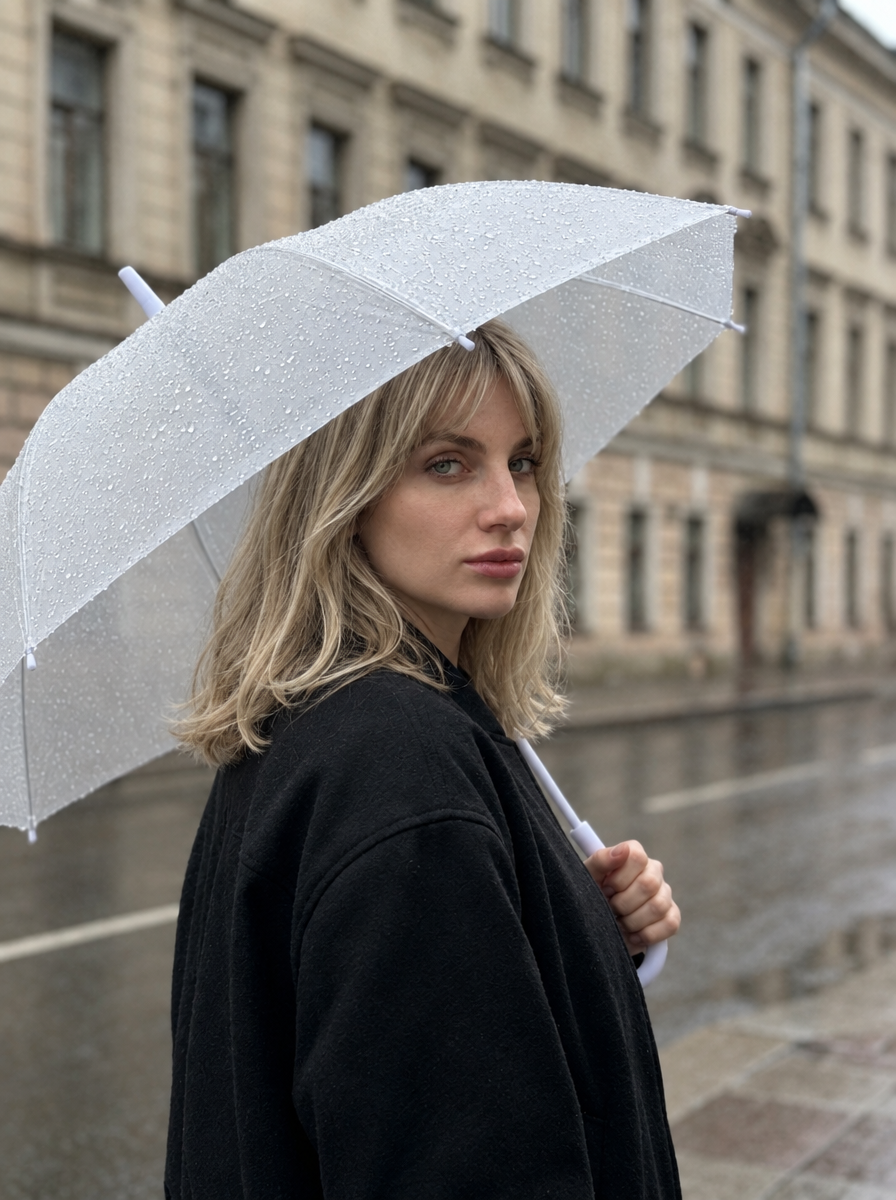
The phrase “candid framing” and the “portrait-full-body” composition keep the woman present as a complete figure while preserving an unposed street-photography feel. “Cool overcast natural light,” “cooler color temperature,” and “muted tones” produce the subdued mood, with the image’s black and beige dominance reinforcing the restrained palette rather than introducing bright color. “Shallow depth of field” separates her from the “classic stone buildings in the background,” while “slightly higher contrast than the original” keeps the wet street, umbrella, and dark clothing from flattening into the gray weather.
FAQ
→How do I make the woman’s face and umbrella more central and prominent?
Replace “portrait-full-body” with “waist-up editorial portrait” and change “candid framing” to “centered three-quarter composition.” Add “face and frosted white umbrella sharply in focus” while keeping “shallow depth of field” to soften the stone buildings behind her.
→How do I shift this from subdued rain to a warmer, more hopeful street mood?
Replace “cool overcast natural light with slightly higher contrast” and “cooler color temperature” with “soft late-afternoon sunlight with warm golden color temperature.” Change “muted tones” to “warm beige, amber, and soft cream tones,” while retaining “wet city street” so the pavement still carries reflective highlights.
→How do I create a coordinated series with different weather and architecture?
Keep the fixed subject language, especially “young woman with shoulder-length blonde hair” and “frosted white umbrella,” then swap “light rain” and “classic stone buildings” for controlled variants such as “misty dawn and Art Deco facades,” “after-rain reflections and red-brick row houses,” or “fine snowfall and modern glass buildings.” Retain “photorealistic editorial street portrait,” “candid framing,” “realistic skin texture,” and “shallow depth of field” so the series shares the same visual grammar.
Learn the technique behind this
- Why can't AI spell, and how do I get readable text in an image? — Older diffusion models had no character-level representation of text, so they produced letterform-shaped texture instead of words.
- Why does AI get hands and faces wrong, and how do I fix it? — Hands fail because they're small in frame, extremely variable in pose, and self-occluding — the model has less usable signal per pixel than for any other body part.
- How do I keep the same character across multiple images? — Text prompts alone won't hold a face across images — a description defines a type, not a person.
Related prompts
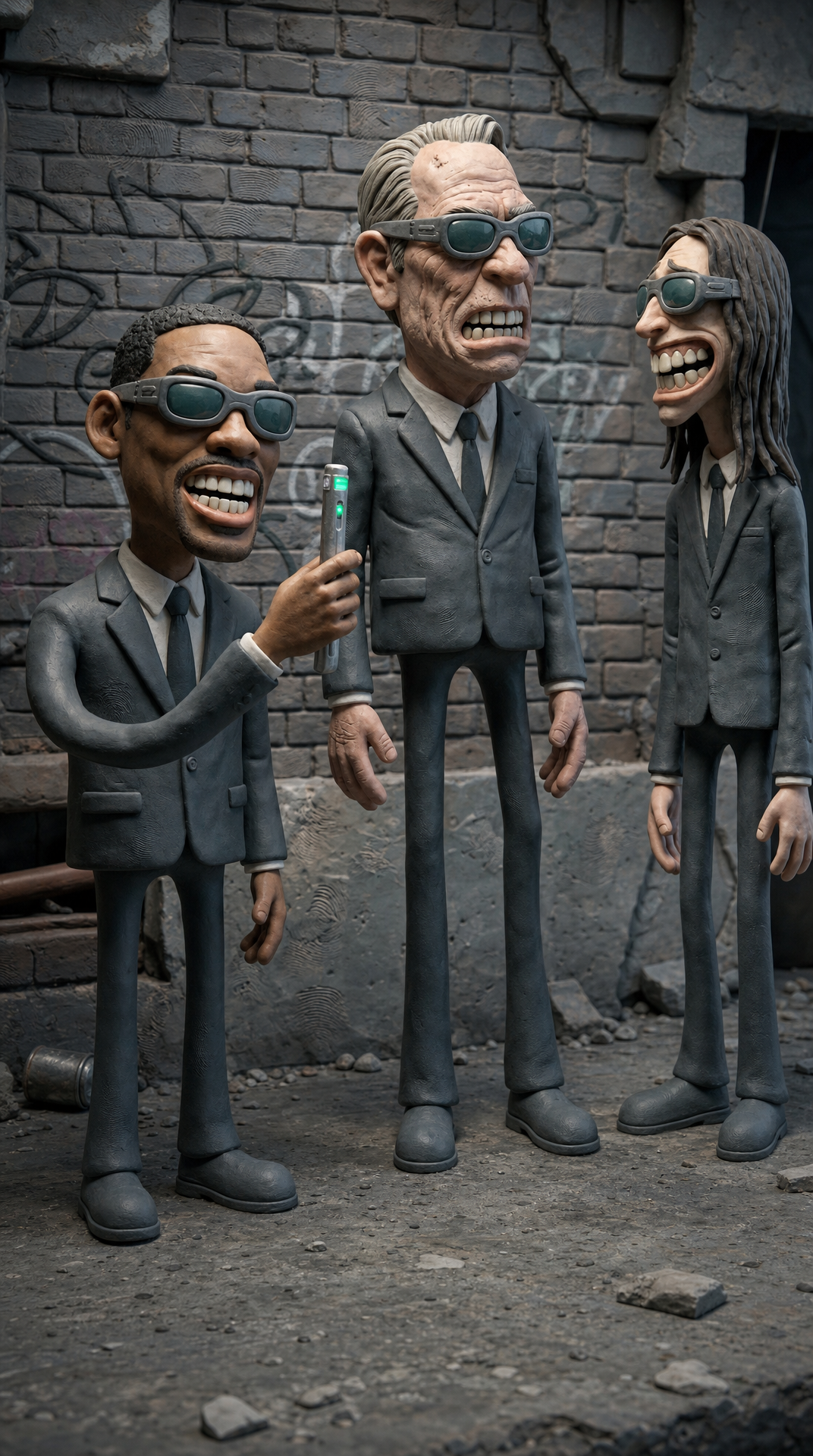
Grotesque Claymation Gangsters in Gritty Alley
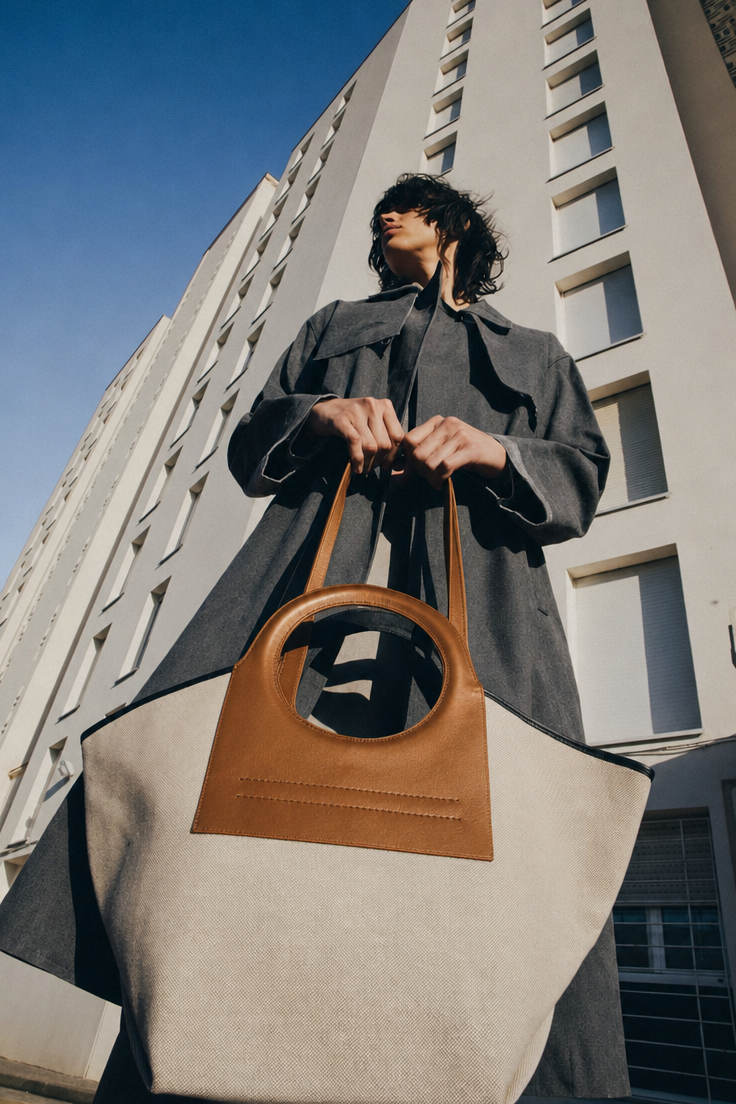
Charcoal coat with tan-handled tote
Woman in Teal Jacket Capturing Twilight Reflection
Red Gummy Bear Monster Attacks