Why this works
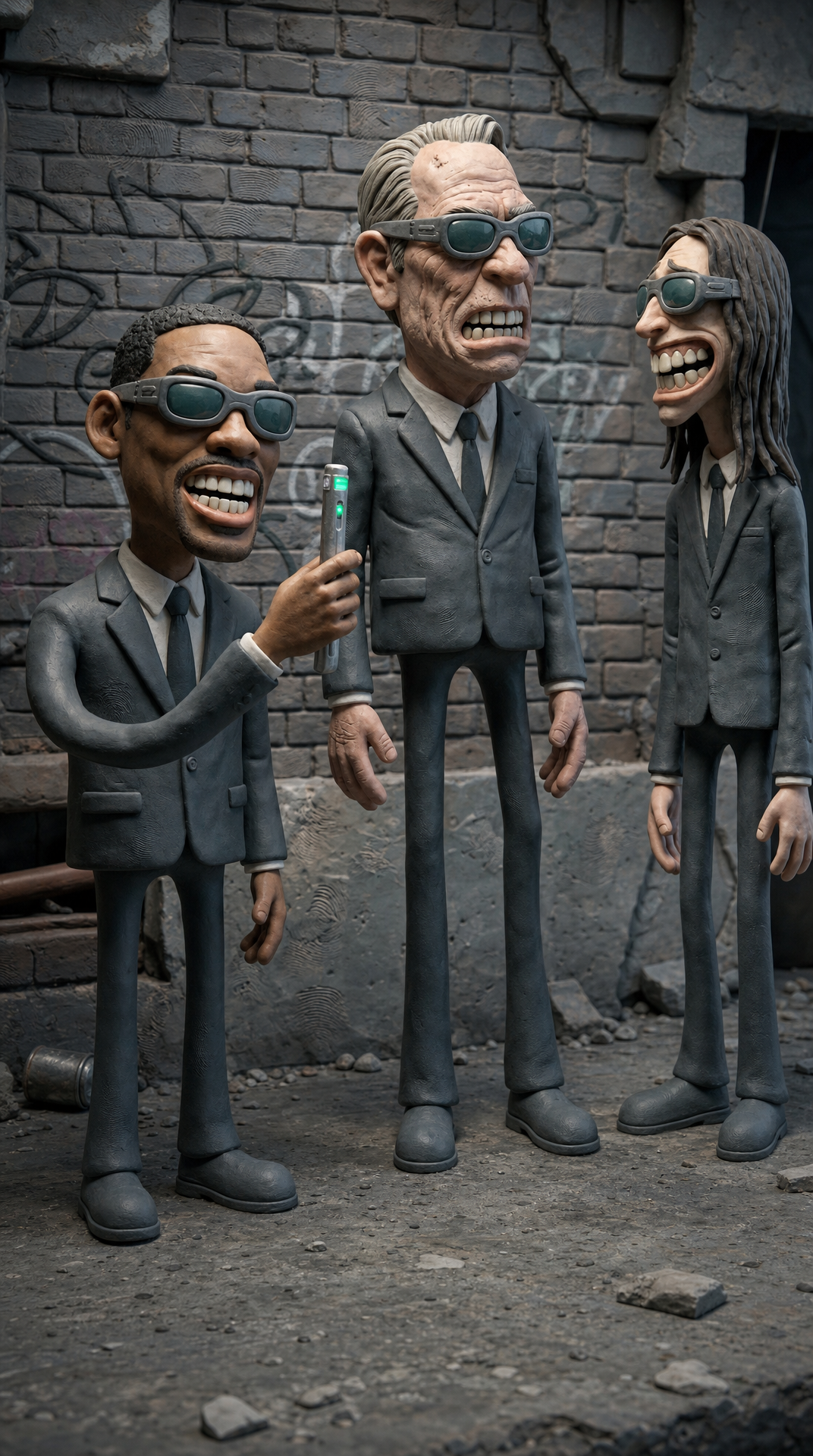
The slightly low-angle framing and “tight depth” give the three figures a looming, portrait-full-body presence, while “detailed character close-ups” keeps their exaggerated facial features and oversized grins readable. “Heavy matte plasticine texture, visible fingerprints, subtle scratches, and fine micro-cracks” supplies the handmade stop-motion identity, and “desaturated with cold steel blues and dusty concrete tones” reinforces the gritty mood against the graffiti-covered brick wall. The dark humor comes specifically from the collision between “gangster figures in matte gray suits and tinted goggles” and their grotesque, oversized grins, rather than from the alley setting alone.
FAQ
→How do I make one gangster the clear central figure?
Replace “Three grotesque claymation gangster figures” with “one central grotesque claymation gangster in the foreground, two smaller figures receding behind him,” and change “slightly low-angle framing with tight depth” to “slightly low-angle centered composition with shallow depth of field focused on the central figure.”
→How do I shift the image from gritty and cold to a warmer comic-book tone?
Replace “desaturated with cold steel blues and dusty concrete tones” and “cold steel-blue ambient light” with “saturated mustard yellow, rust red, and cream tones” and “warm amber streetlight with hard graphic shadows.” Keep “darkly humorous surrealism” and the oversized grins to preserve the absurd character of the trio.
→How do I create a series of variations while keeping the same claymation characters?
Keep “handcrafted stop-motion claymation,” “matte plasticine 3D render,” “visible fingerprints,” and “subtle scratches and micro-cracks” unchanged, then swap “weathered graffiti-covered brick wall in a narrow urban alley” for settings such as “a cramped diner after closing,” “a rain-soaked subway platform,” or “a neon-lit pawnshop.” Change only the environmental lighting phrase, such as “cold steel-blue ambient light,” to match each location.
Learn the technique behind this
- Why can't AI spell, and how do I get readable text in an image? — Older diffusion models had no character-level representation of text, so they produced letterform-shaped texture instead of words.
- Why does AI get hands and faces wrong, and how do I fix it? — Hands fail because they're small in frame, extremely variable in pose, and self-occluding — the model has less usable signal per pixel than for any other body part.
- How do I keep one consistent style across a whole set of images? — Style consistency is more achievable than character consistency because style lives in describable attributes.
Related prompts
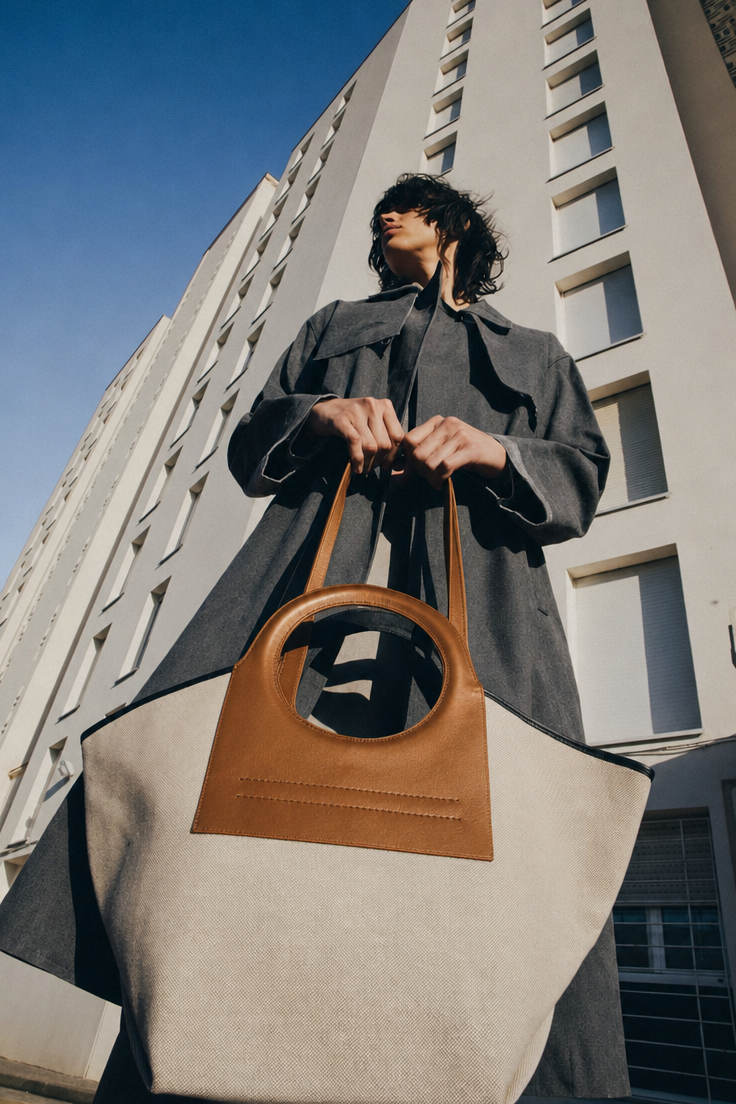
Charcoal coat with tan-handled tote
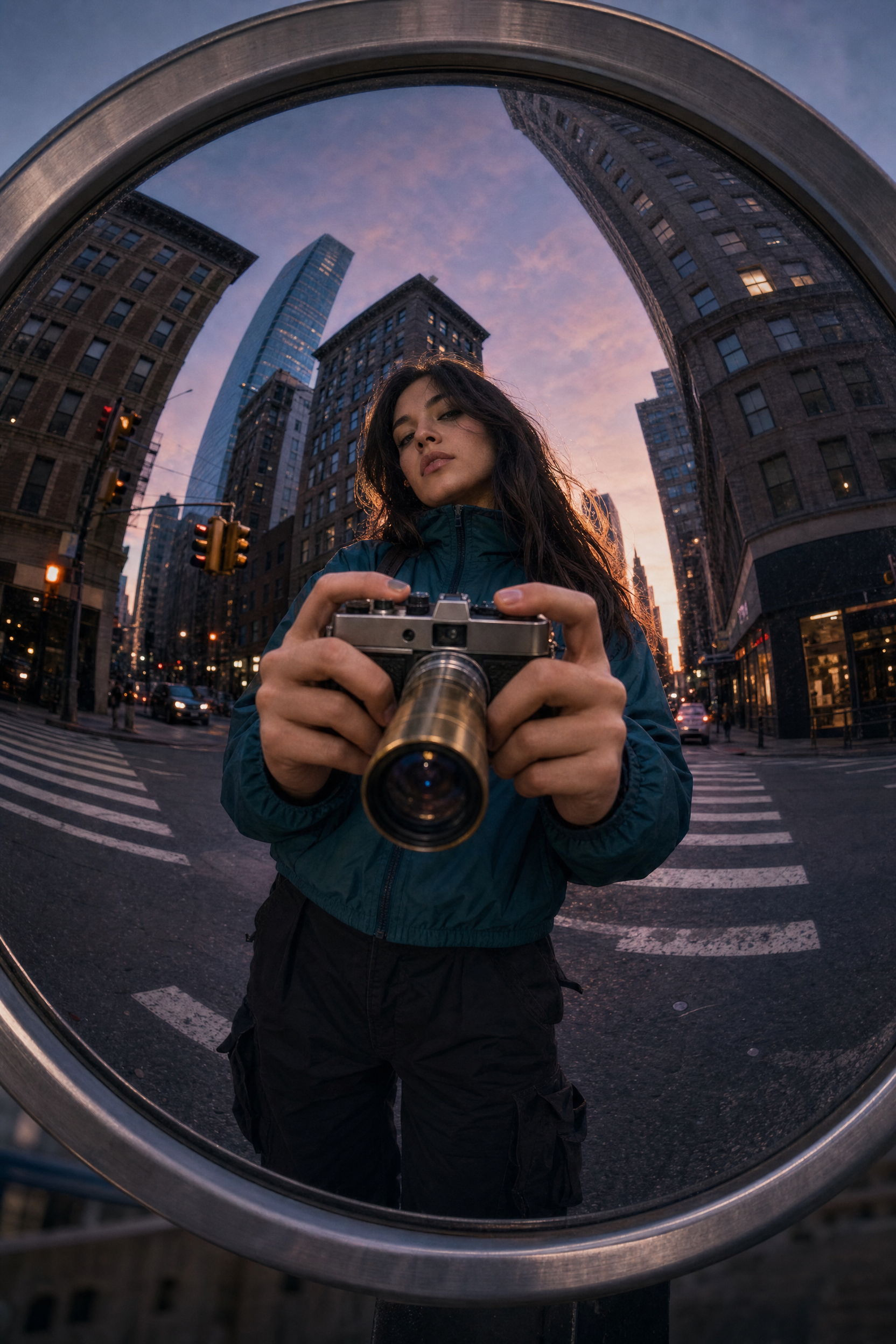
Woman in Teal Jacket Capturing Twilight Reflection
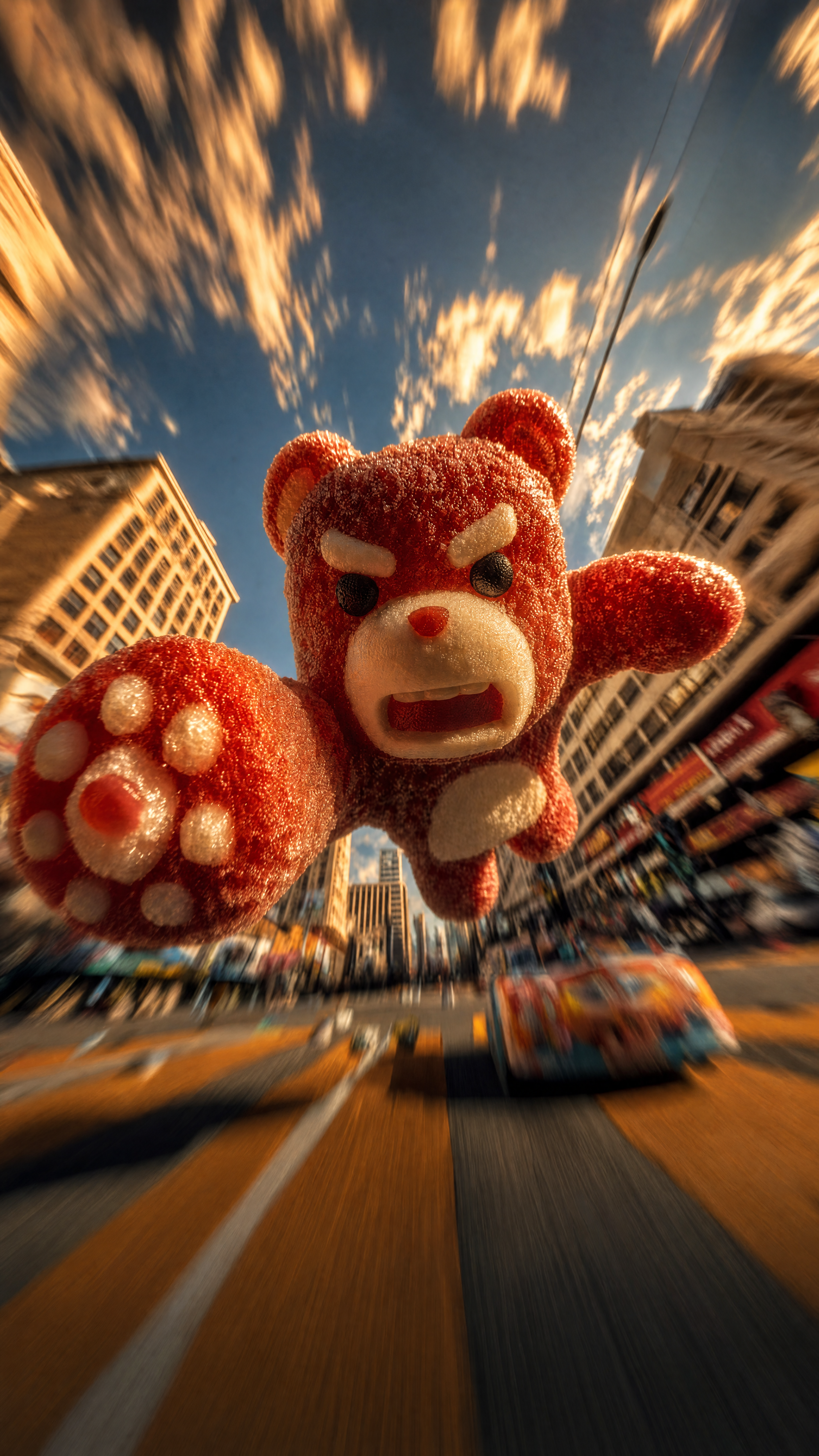
Red Gummy Bear Monster Attacks
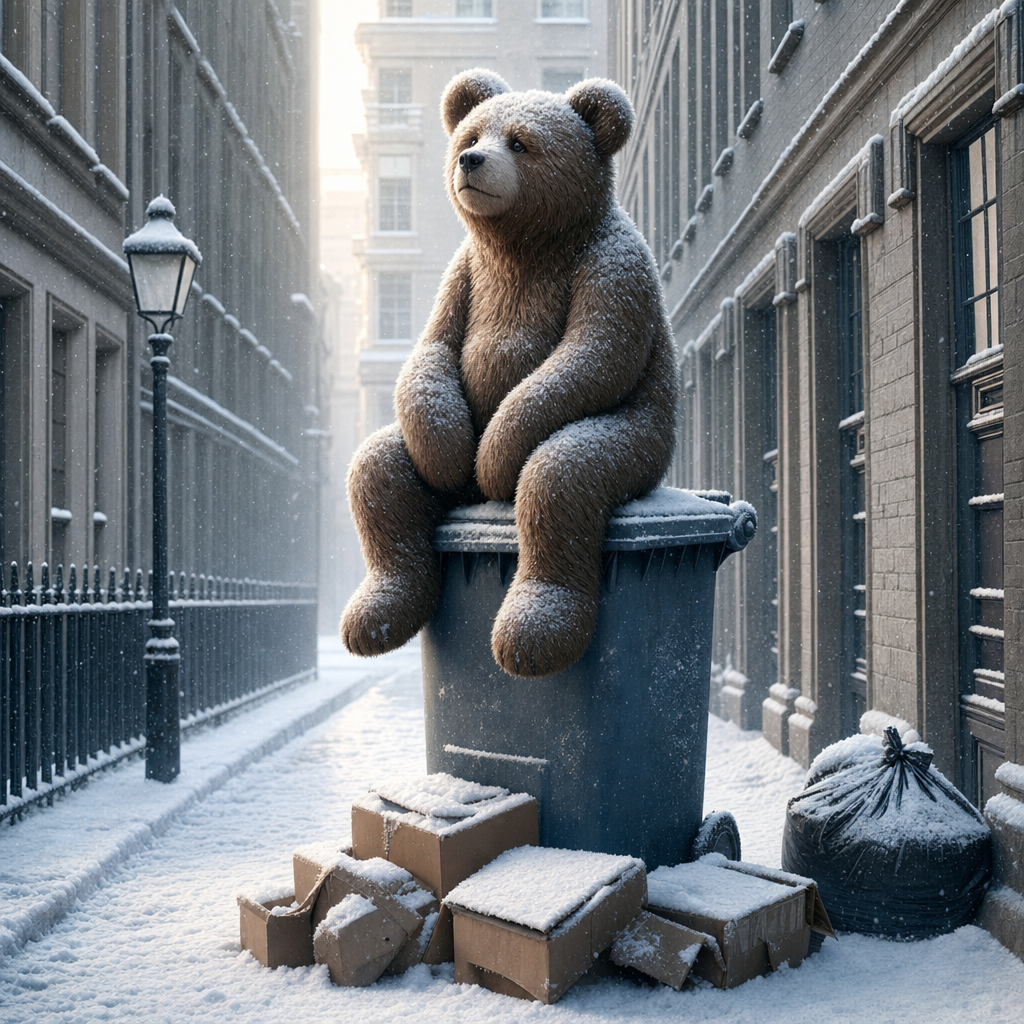
Stuffed Bear on Winter Dumpster at Dawn