Why this works
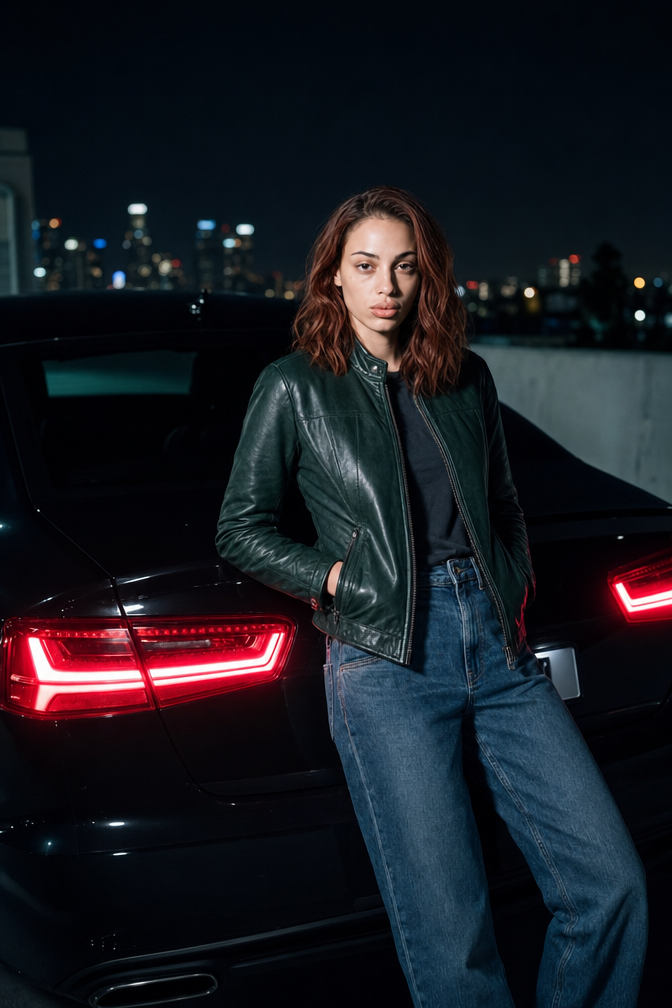
The phrase “close cinematic framing” keeps the full-body woman and black sports car readable as the paired subjects, while “softly blurred city skyline” and “soft background blur” push the blue-gray rooftop behind them into atmospheric context. “Deep black palette and warm highlights” gives the image its moody contrast, with “bright red taillights” supplying a precise accent against the dominant blue and gray tones. “Shallow depth of field,” “soft bokeh from distant streetlights,” and “detailed realistic skin texture” divide attention cleanly between the woman’s face, auburn hair, green leather jacket, and the car’s reflective body.
FAQ
→How do I make the woman more prominent than the car?
Replace “young woman standing beside a black luxury sports car” with “young woman as the central subject, standing in front of a partially visible black luxury sports car,” and change “close cinematic framing” to “full-body portrait framing with the woman occupying most of the vertical frame.” Keep “soft background blur” so the car and skyline remain secondary.
→How do I shift this from moody night drama to a warmer, more glamorous editorial tone?
Replace “deep black palette and warm highlights” with “rich amber and champagne-gold palette with soft luminous highlights,” and change “high-contrast cinematic lighting” to “controlled golden-hour-inspired key light with gentle fill.” Replace “urban rooftop at night” with “luxury rooftop lounge at blue hour” to retain the skyline while reducing the severe darkness.
→How do I create a matching variation with a different subject and setting?
Keep the structure “cinematic editorial night portrait,” “shallow depth of field,” “soft bokeh,” and “polished contemporary editorial portrait,” but replace “young woman” with “young man in a tailored charcoal suit” and “black luxury sports car” with “silver vintage motorcycle.” Replace “urban rooftop at night” with “rainy neon-lit street corner,” and change “bright red taillights” to “reflections of cyan and magenta signage on the chrome.”
Learn the technique behind this
- Why can't AI spell, and how do I get readable text in an image? — Older diffusion models had no character-level representation of text, so they produced letterform-shaped texture instead of words.
- How should a prompt be structured, and does word order matter? — A prompt that behaves predictably names one subject first, then what it is doing, then where, then the light, then the lens or medium, then the style.
- Why does AI get hands and faces wrong, and how do I fix it? — Hands fail because they're small in frame, extremely variable in pose, and self-occluding — the model has less usable signal per pixel than for any other body part.
Related prompts
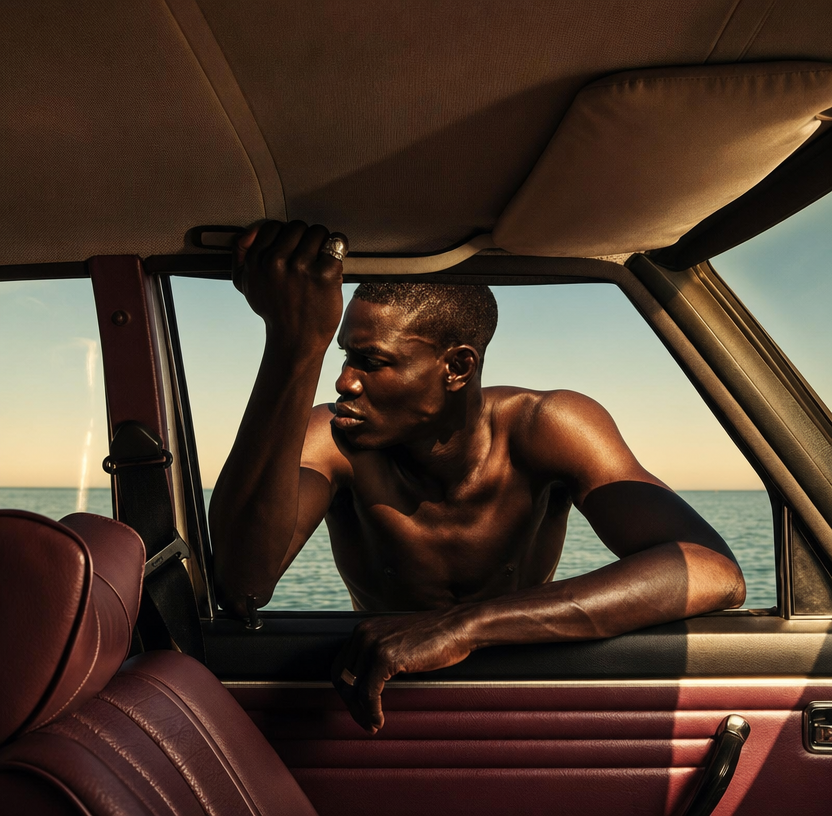
Shirtless Man, Vintage Car, Coastline Light
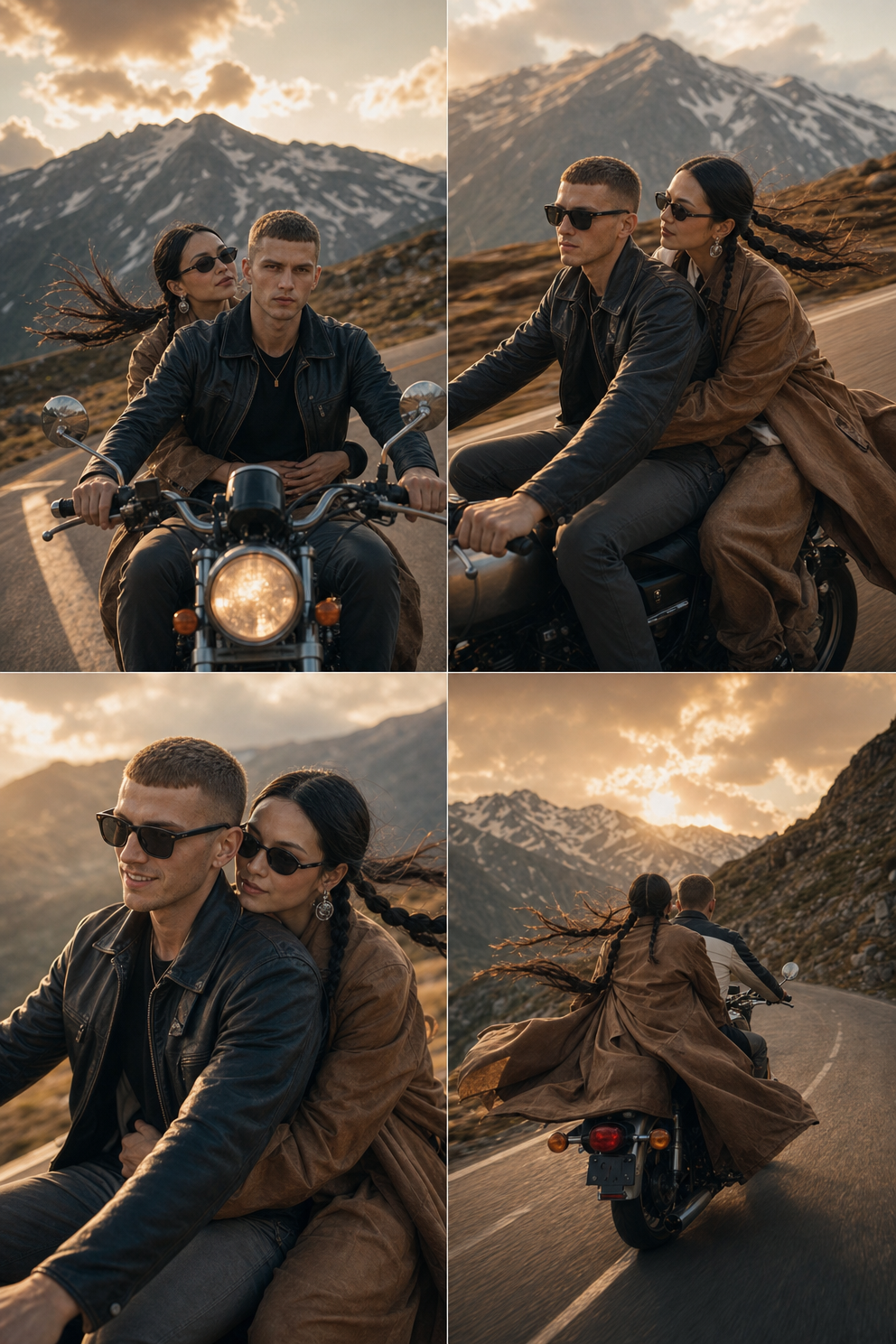
Golden-hour couple rides a classic bike
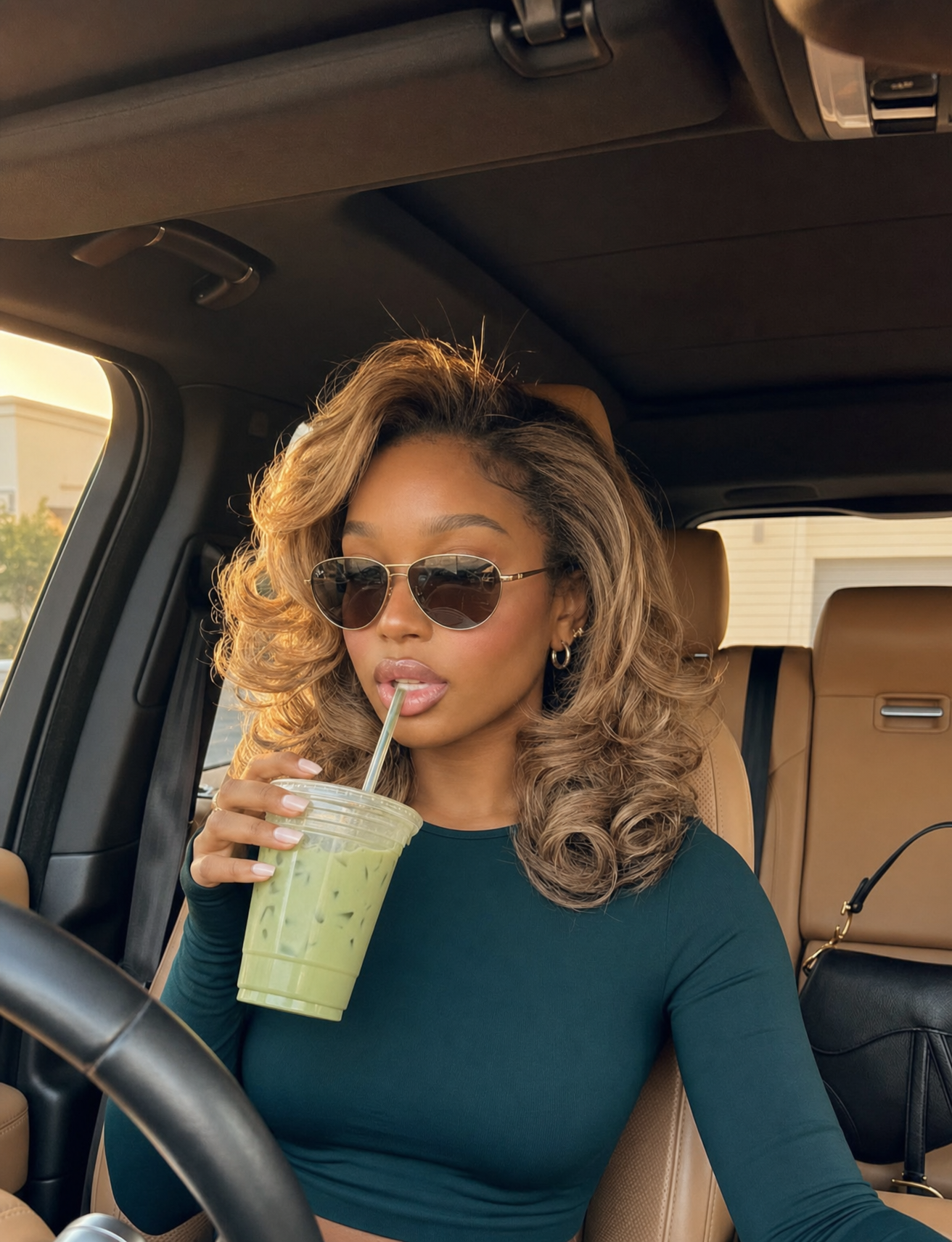
Golden-hour Matcha Sips in Luxury SUV
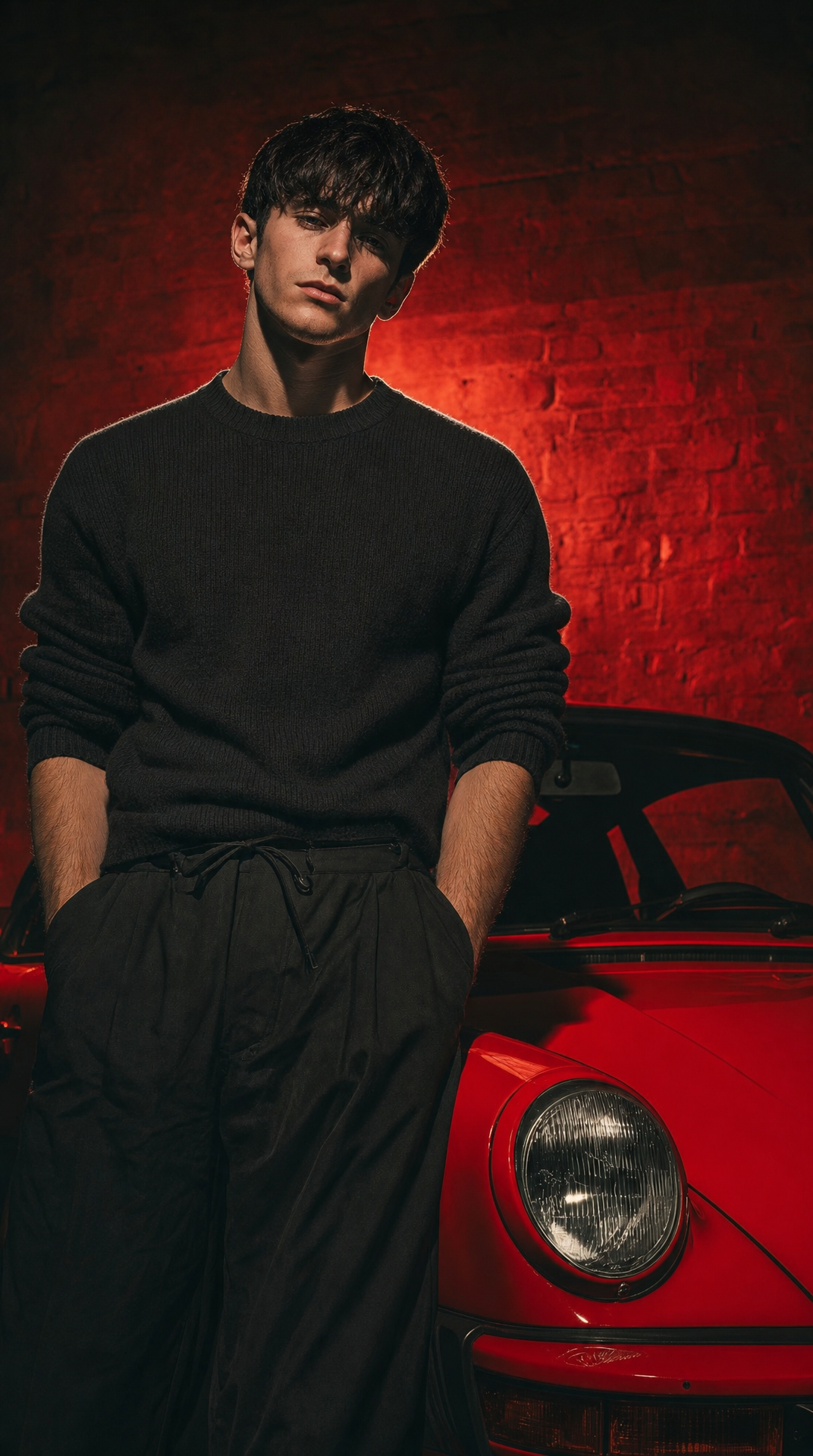
Young model in studio by sports car