Why this works
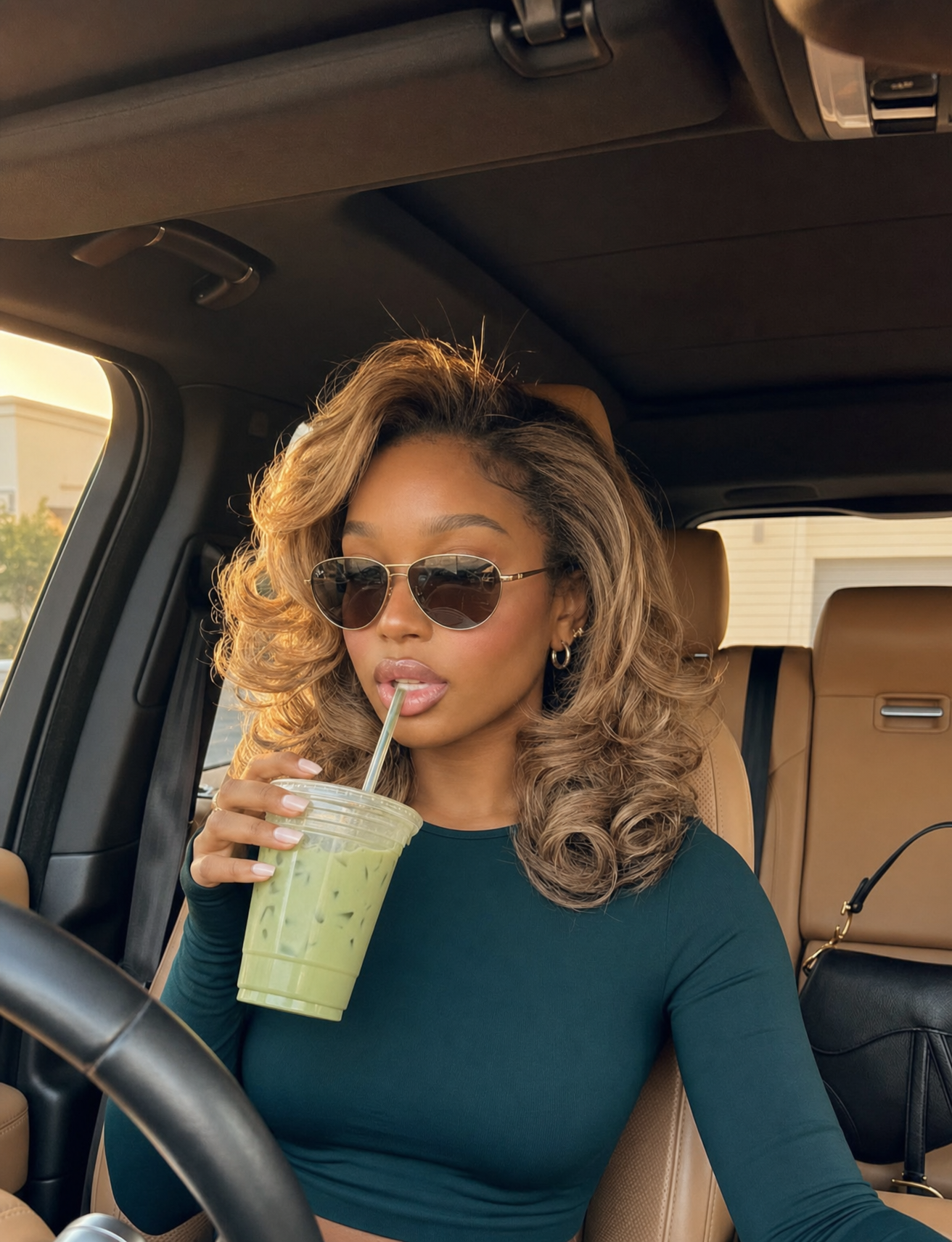
The close portrait framing comes directly from “lifestyle portrait” and “seated in the driver’s seat,” keeping the woman, silver hoops, aviators, and mint-green matcha drink within the visual hierarchy. “Natural golden-hour daylight” supplies warm highlights across the tan leather interior, while “deep teal long-sleeve top” and the mint-green drink create a controlled cool accent against the dominant black, beige, and tan palette. “Shallow depth of field” separates her face and drink from the SUV cabin, and “crisp realistic detail” preserves the clear straw, jewelry, leather texture, and iced beverage without losing the relaxed upscale mood.
FAQ
→How do I make the matcha drink the main focal point?
Replace “holding an iced mint-green matcha drink with a clear straw” with “matcha drink held prominently in the foreground near her face, cup sharply in focus,” and change “portrait-closeup” to “tight drink-and-face close-up.” Keep “shallow depth of field,” but specify “the drink and hand in sharp focus, eyes slightly softer” to shift emphasis.
→How do I make the image feel moodier and less sunny?
Replace “natural golden-hour daylight with warm highlights” with “soft overcast daylight with muted shadows and subdued contrast,” and change “warm upscale styling” to “quiet, cinematic luxury styling.” Reduce the color warmth further by replacing “deep teal” with “charcoal blue” and “tan leather” with “dark brown leather upholstery.”
→How do I build a consistent series with different vehicles or drinks?
Keep the anchor phrases “photorealistic lifestyle portrait,” “upscale casual fashion,” “shallow depth of field,” and “crisp realistic detail” unchanged. Swap only “luxury SUV” and “tan leather interior” for a controlled set such as “vintage convertible with cream leather interior” or “modern electric sedan with black leather interior,” then replace “iced mint-green matcha drink” with variations such as “sparkling citrus water” or “cold brew in a clear glass” while preserving “clear straw” or another repeated prop detail.
Learn the technique behind this
- Why can't AI spell, and how do I get readable text in an image? — Older diffusion models had no character-level representation of text, so they produced letterform-shaped texture instead of words.
- How should a prompt be structured, and does word order matter? — A prompt that behaves predictably names one subject first, then what it is doing, then where, then the light, then the lens or medium, then the style.
- Why does AI get hands and faces wrong, and how do I fix it? — Hands fail because they're small in frame, extremely variable in pose, and self-occluding — the model has less usable signal per pixel than for any other body part.
Related prompts
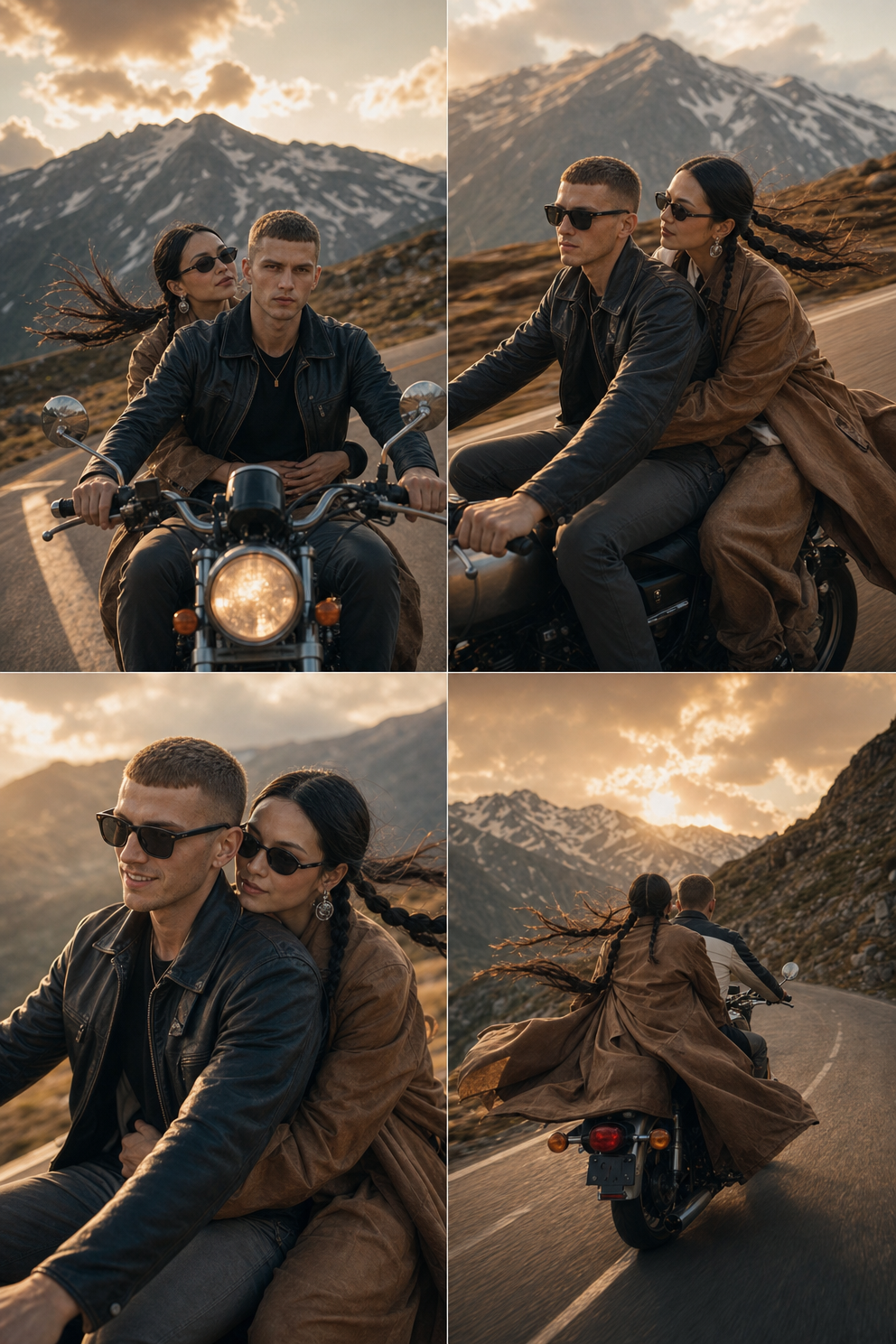
Golden-hour couple rides a classic bike
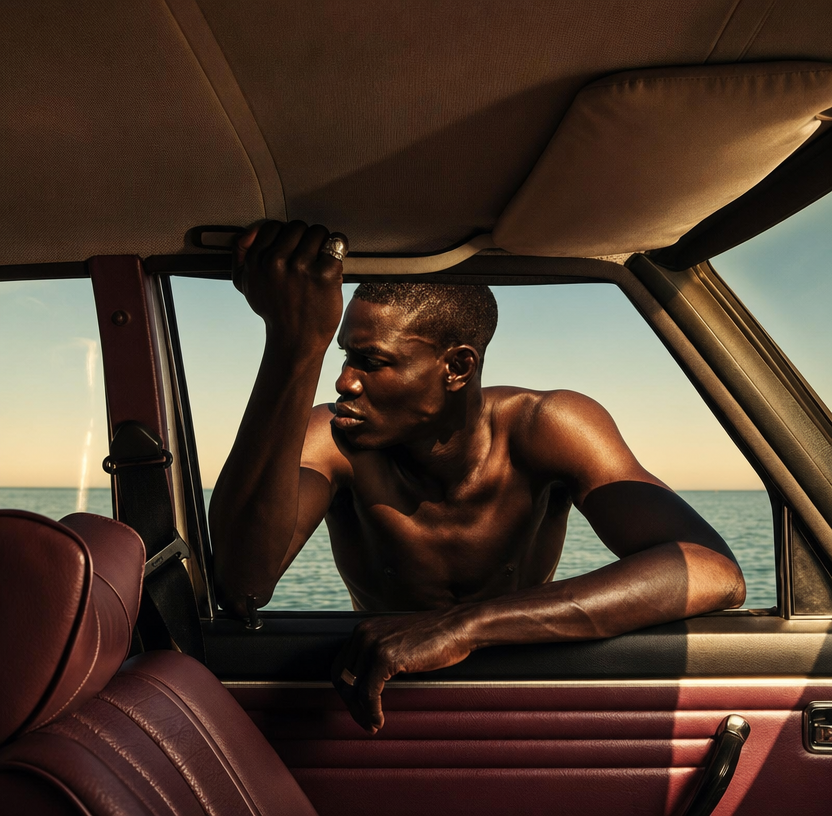
Shirtless Man, Vintage Car, Coastline Light
Young woman in green leather jacket by black sports car
Formula One start grid in golden late light