Why this works
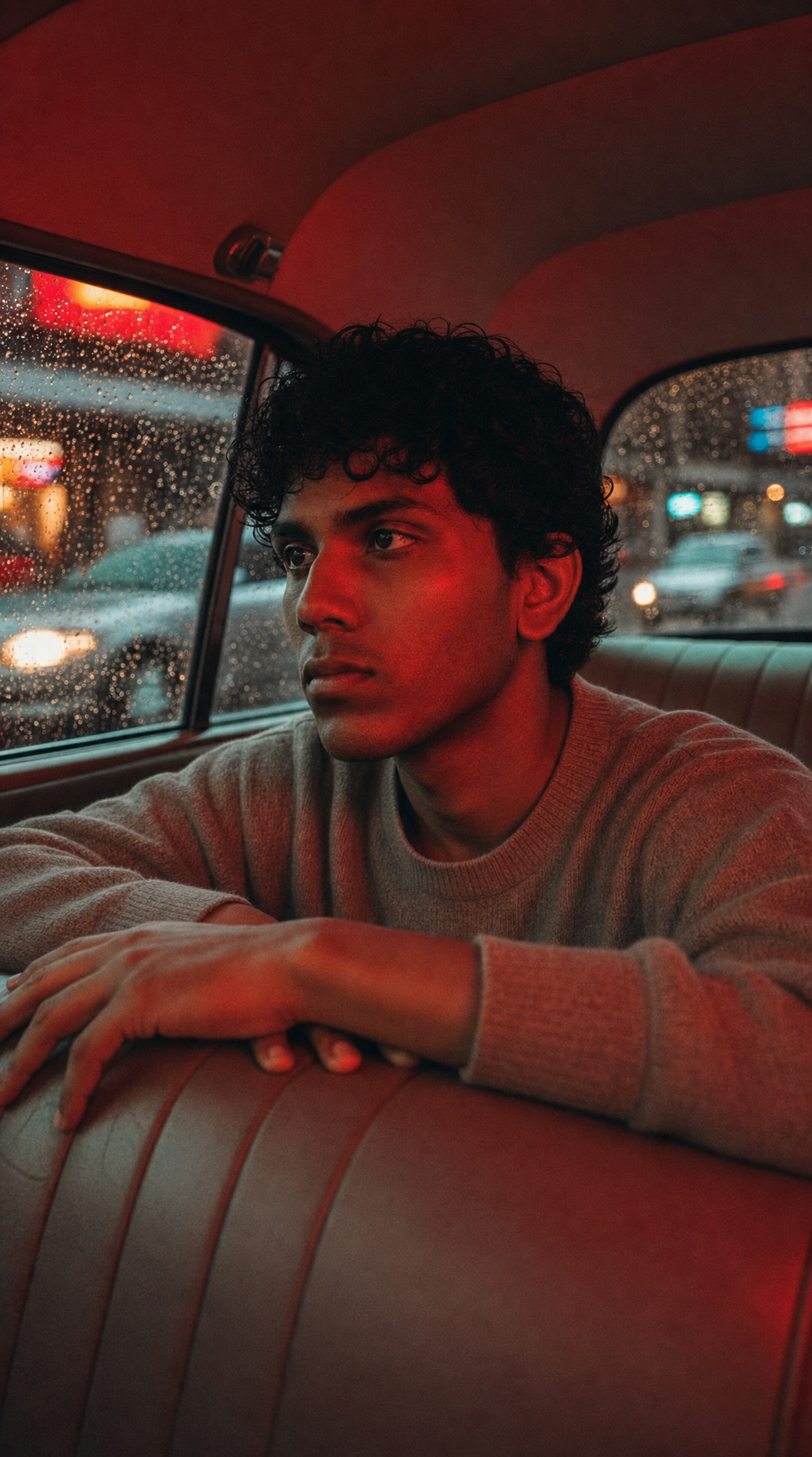
The intimate, trapped perspective comes from “seen through a slightly low angle from near the window,” “framed tightly for an intimate close-up,” and “shallow depth of field,” which keep the young man’s face dominant while the car interior recedes. “Raindrops beading on the glass” and “red and amber neon reflections ripple across the wet surface” add layered foreground texture and the brown-gray palette visible in the image, while “dramatic side lighting,” “contemplative, lonely expression,” and “Wong Kar-wai-inspired color grading” establish the nocturnal, introspective tone. “Soft film grain” and “realistic skin texture” balance the stylization with a tactile photographic finish.
FAQ
→How do I make the rainy city and neon more prominent than the man’s face?
Replace “framed tightly for an intimate close-up” with “medium portrait with the full car window and surrounding street visible,” and change “shallow depth of field” to “moderate depth of field keeping the raindrops, neon signs, and subject readable.” Expand “red and amber neon reflections ripple across the wet surface” to “large red, amber, and cyan neon signs reflected sharply across the entire window.”
→How do I shift this from lonely and introspective to tense and dangerous?
Replace “contemplative, lonely expression” with “alert expression, jaw tense, eyes watching the street,” and change “moody urban atmosphere” to “threatening urban atmosphere.” Replace “soft film grain” with “heavier gritty film grain,” and add “hard, high-contrast side lighting with deep shadows cutting across his face” after the existing lighting phrase.
→How do I create a matching series with different passengers while preserving this visual identity?
Keep “rainy city night,” “seen through a wet window with visible raindrops,” “dramatic side lighting with neon reflections on wet glass,” “Wong Kar-wai-inspired color grading,” and “soft film grain” unchanged. Replace only “a young man sitting in the back seat of a car” and its clothing and expression with entries such as “an older woman in a red wool coat, quietly determined expression” or “a teenage girl in a denim jacket, anxious expression,” while retaining “slightly low angle,” “intimate tight close framing,” and “shallow depth of field” for consistent composition.
Learn the technique behind this
- Why can't AI spell, and how do I get readable text in an image? — Older diffusion models had no character-level representation of text, so they produced letterform-shaped texture instead of words.
- How should a prompt be structured, and does word order matter? — A prompt that behaves predictably names one subject first, then what it is doing, then where, then the light, then the lens or medium, then the style.
- Why does AI get hands and faces wrong, and how do I fix it? — Hands fail because they're small in frame, extremely variable in pose, and self-occluding — the model has less usable signal per pixel than for any other body part.
Related prompts
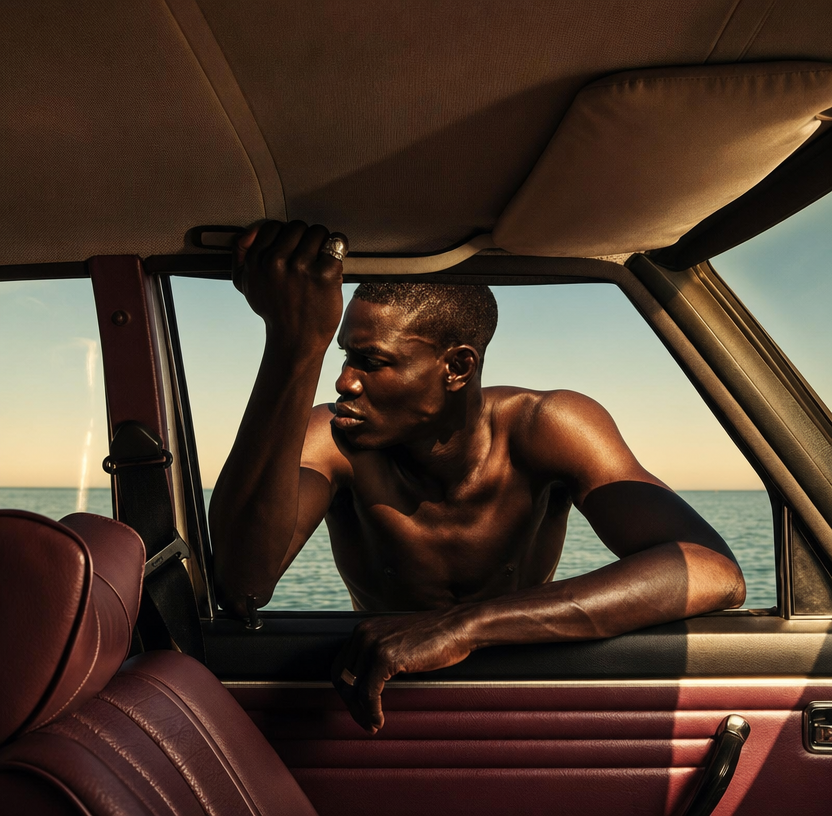
Shirtless Man, Vintage Car, Coastline Light
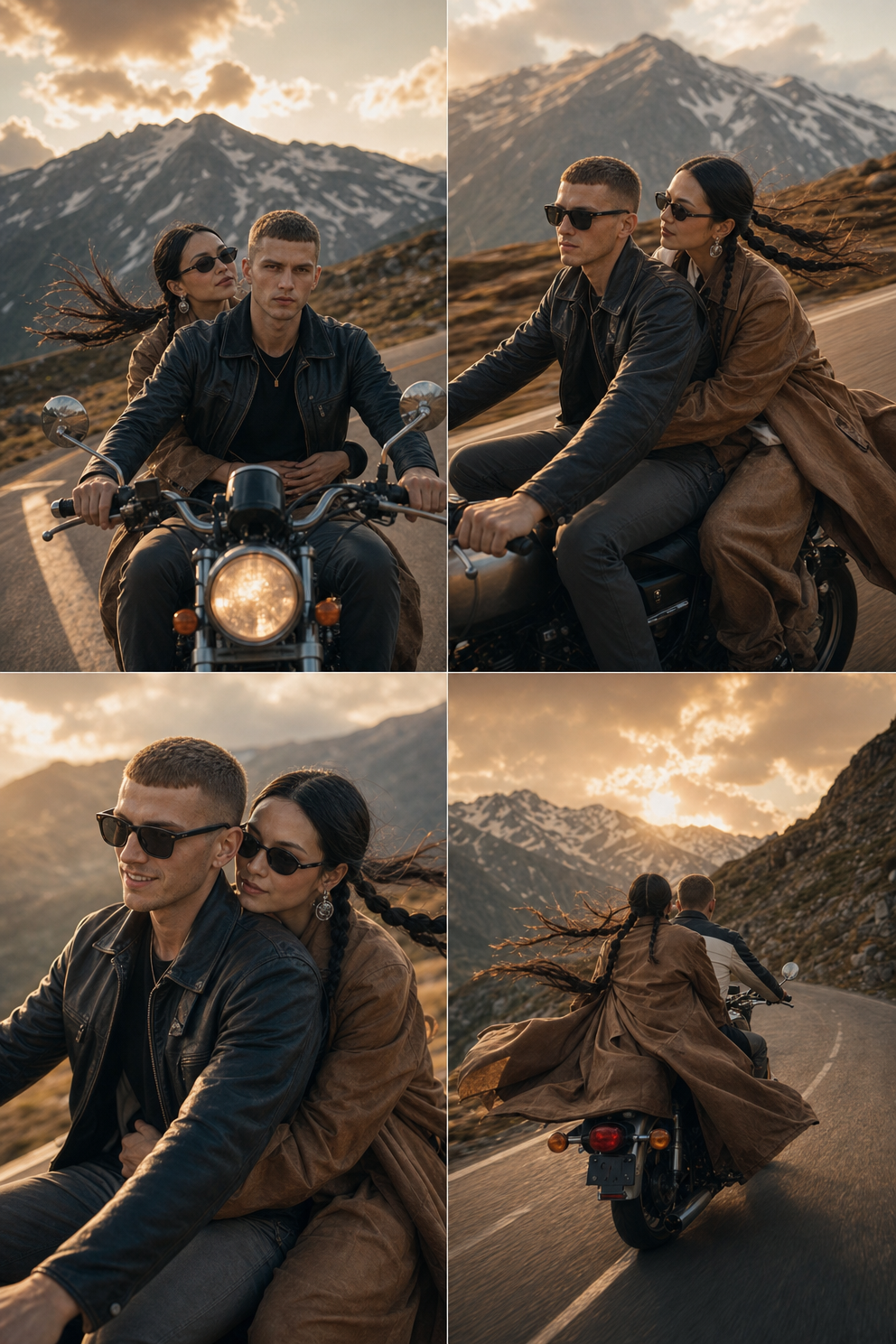
Golden-hour couple rides a classic bike
Golden-hour Matcha Sips in Luxury SUV
Young model in studio by sports car