Why this works
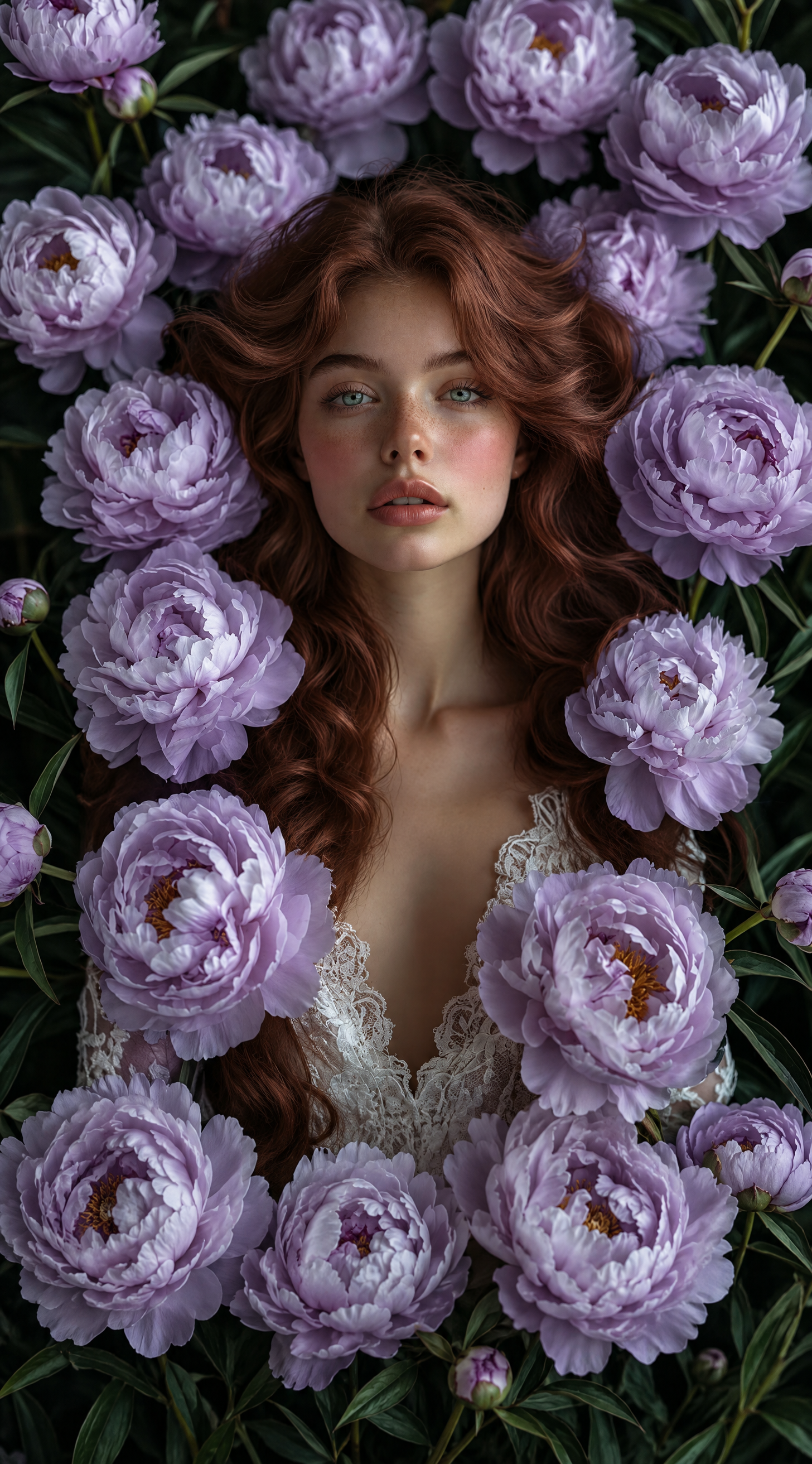
The close framing comes directly from “cinematic close-up portrait,” keeping the woman’s delicate facial features, naturally glowing skin, and long deep auburn wavy hair as the visual anchor while the peonies form a surrounding frame. “Soft diffused daylight,” “gentle highlights,” and “subtle bloom-like haze” establish the dreamy, ethereal mood, while “dark and moody floral background” adds contrast behind the pale lavender flowers and the dominant green, brown, and white tones. “Shallow depth of field” isolates the face and foreground petals, and “highly detailed skin and petals” preserves texture despite the soft cinematic treatment.
FAQ
→How do I make the peonies more central and visually dominant?
Replace “surrounded by abundant soft lavender peonies” with “an abundant wall of soft lavender peonies dominating the foreground, with the woman’s face partially framed between the blossoms.” Keep “cinematic close-up portrait,” but change “shallow depth of field” to “moderate depth of field keeping the nearest peonies and face sharply detailed” so the flowers do not dissolve into blur.
→How do I shift this from dreamy romance to a darker gothic mood?
Replace “romantic ethereal atmosphere” and “soft diffused daylight” with “gothic, melancholic atmosphere” and “low-key directional moonlight with deep sculpting shadows.” Change “gentle highlights” to “cold silver rim light” and “subtle bloom-like haze” to “thin smoky haze,” while retaining “dark and moody floral background” to preserve the existing contrast.
→How do I create a consistent series with different flowers and hair colors?
Keep the fixed structure “cinematic close-up portrait,” “soft diffused daylight,” “shallow depth of field,” and “elegant composition,” then swap only the variable phrases: replace “soft lavender peonies” with flowers such as “white garden roses” or “deep crimson dahlias,” and replace “long deep auburn wavy hair” with “short platinum-blonde curls” or “long black braided hair.” Use the same “dark and moody floral background” and “cinematic color grading” in every version to hold the series together.
Learn the technique behind this
- Why can't AI spell, and how do I get readable text in an image? — Older diffusion models had no character-level representation of text, so they produced letterform-shaped texture instead of words.
- How should a prompt be structured, and does word order matter? — A prompt that behaves predictably names one subject first, then what it is doing, then where, then the light, then the lens or medium, then the style.
- Which aspect ratio should I use, and how does it change the image? — Aspect ratio determines what the model composes, not how it's cropped afterwards.
Related prompts
Young woman in grass with cream wrap
Ethereal Peonies with Iridescent Vertical Trails
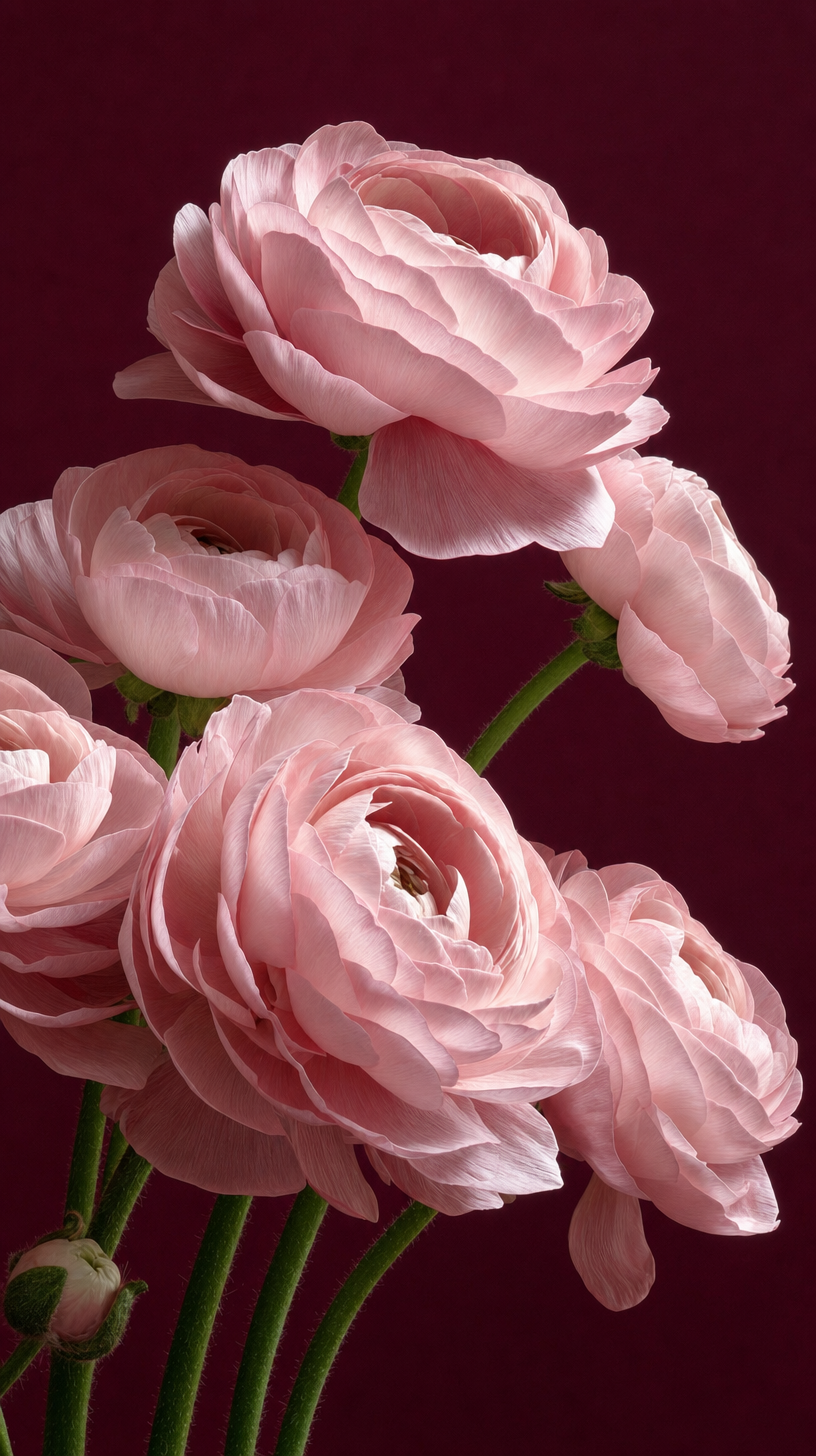
Blush-pink Ranunculus With Velvet Petals, Burgundy Background
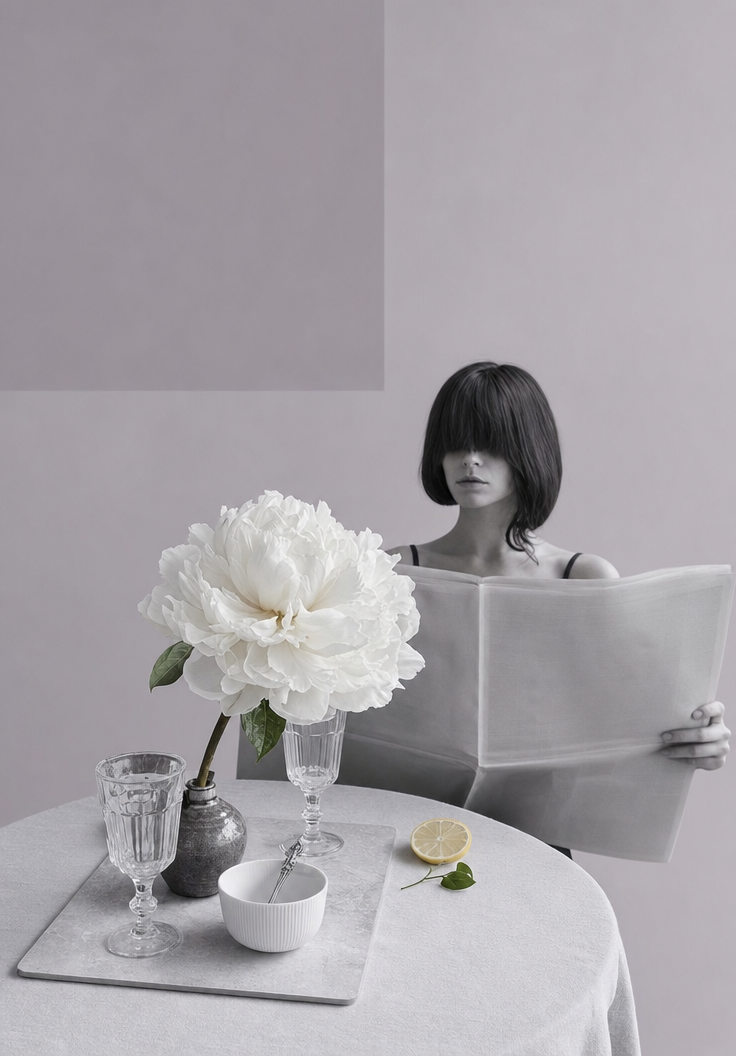
Dreamy Woman Reading by Soft Bloom