Why this works
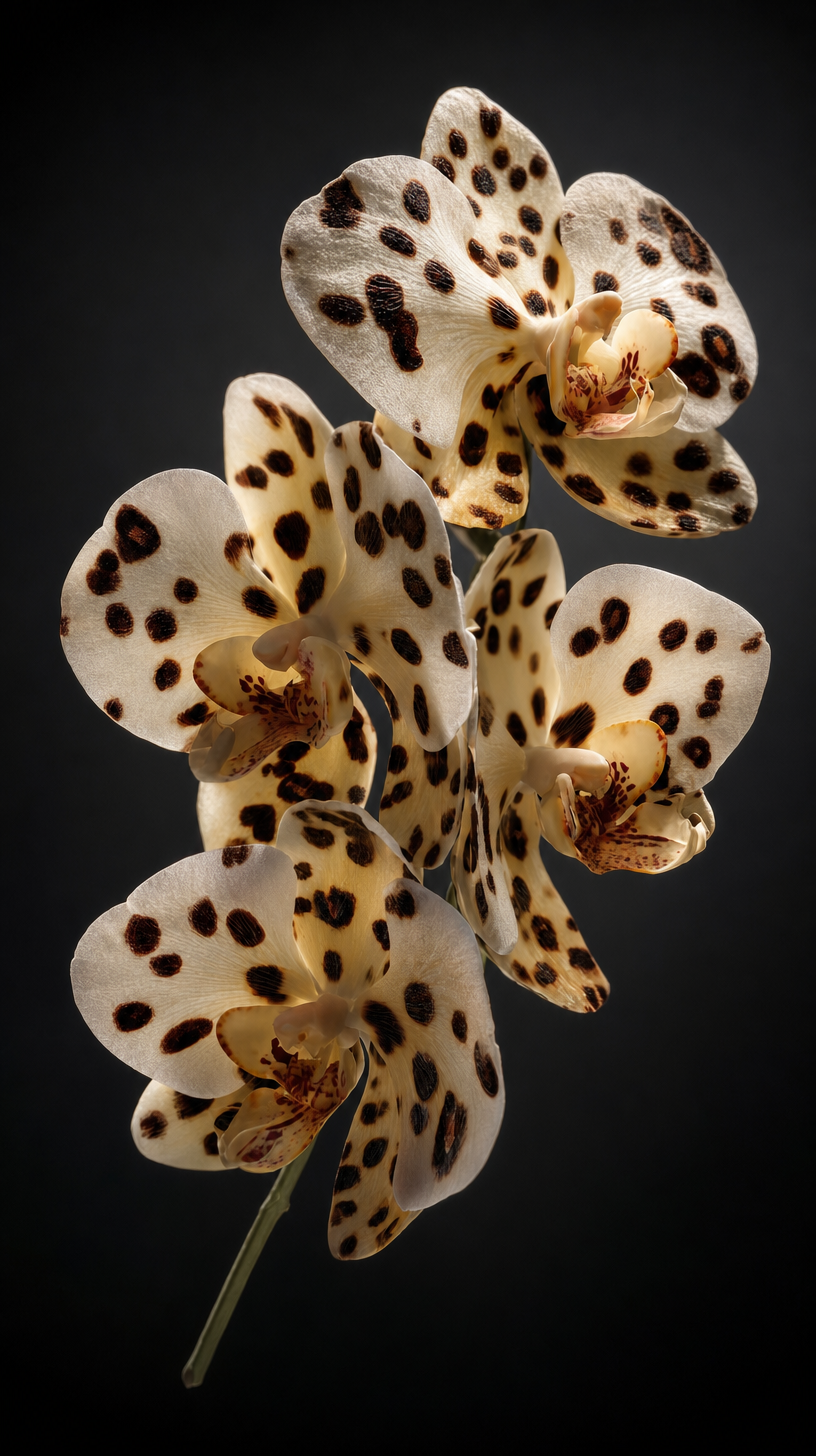
The phrase “cluster of white orchids with dark brown leopard-like spots” supplies the strongest visual contrast, echoed by the image’s beige-and-brown dominance while keeping the flowers naturalistic. “Isolated on a deep charcoal-black background with subtle vignette” creates the dramatic portrait composition by separating the full floral cluster from the edges, and “soft sculptural lighting” gives the slightly translucent petals their refined dimensionality. “Macro close-up,” “crisp high-detail focus,” and “shallow depth of field” make the central blooms feel tactile while allowing the surrounding petals to recede gently.
FAQ
→How do I make one orchid more central and prominent?
Replace “a cluster of white orchids” with “a single white orchid in extreme macro close-up, centered in frame,” and change “shallow depth of field” to “razor-sharp focus on the central lip and front petals, background petals fully blurred.” Keep “isolated on a deep charcoal-black background” to preserve the clean separation.
→How do I shift this from refined and elegant to moody and dramatic?
Replace “soft sculptural lighting” with “single hard side light with deep shadows and a narrow rim highlight,” and replace “refined, elegant floral cluster” with “brooding, theatrical orchid study.” Changing “subtle vignette” to “heavy vignette fading into pure black” will further concentrate attention on the spotted petals.
→How do I create a coordinated series of variations from this prompt?
Keep “photorealistic studio macro close-up,” “deep charcoal-black background,” and “macro lens look” unchanged, then swap the subject phrase for variations such as “pale pink orchids with burgundy spots,” “yellow orchids with crimson markings,” or “blue orchids with deep violet veins.” Match each new flower with a corresponding phrase such as “slightly translucent petals” and retain “soft sculptural lighting” so the series shares the same texture and studio treatment.
Learn the technique behind this
- Why can't AI spell, and how do I get readable text in an image? — Older diffusion models had no character-level representation of text, so they produced letterform-shaped texture instead of words.
- How should a prompt be structured, and does word order matter? — A prompt that behaves predictably names one subject first, then what it is doing, then where, then the light, then the lens or medium, then the style.
- Do negative prompts work, and what should go in one? — Negative prompts work on models that support a separate negative conditioning channel — mainly Stable Diffusion and FLUX-family models.
Related prompts
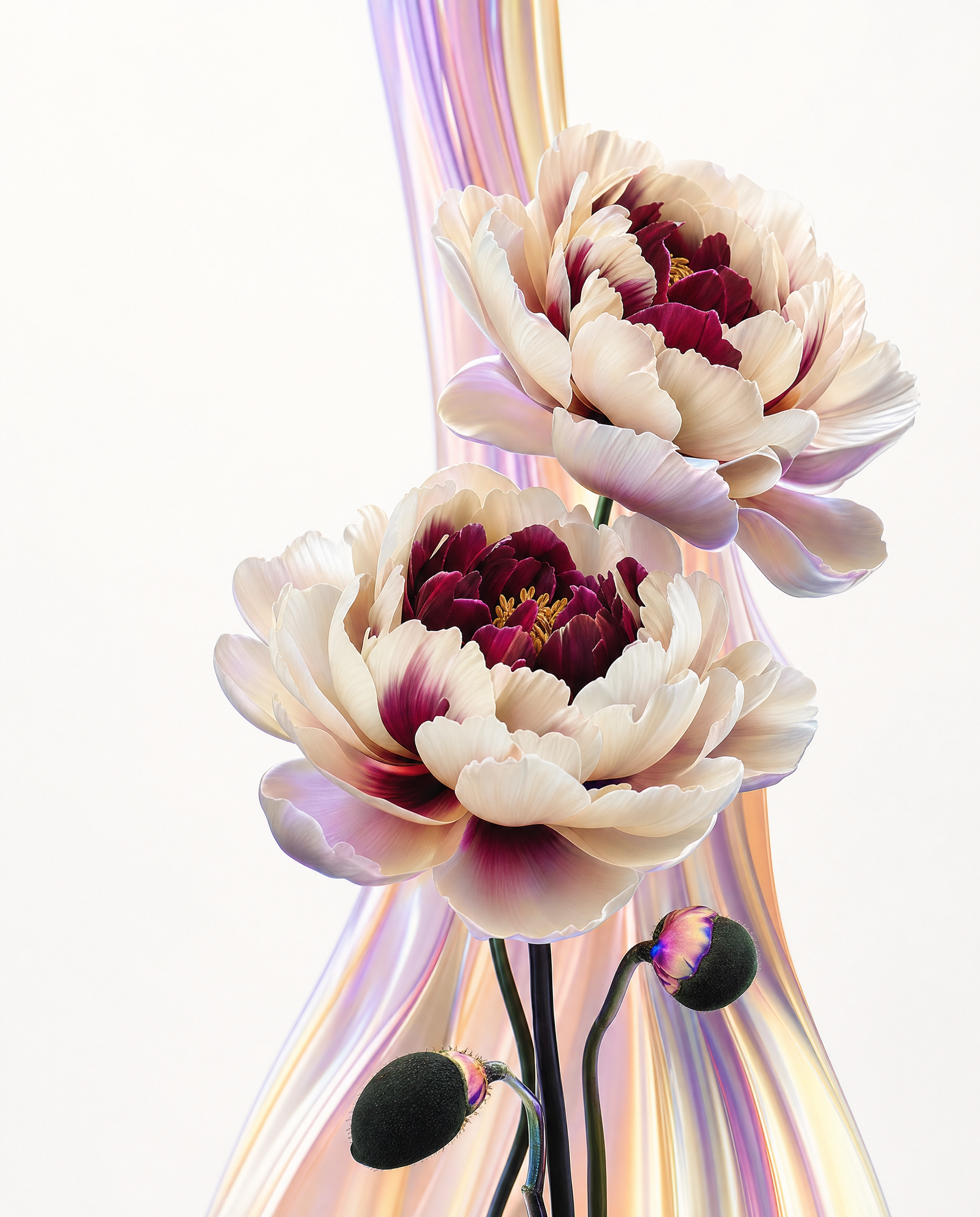
Ethereal Peonies with Iridescent Vertical Trails
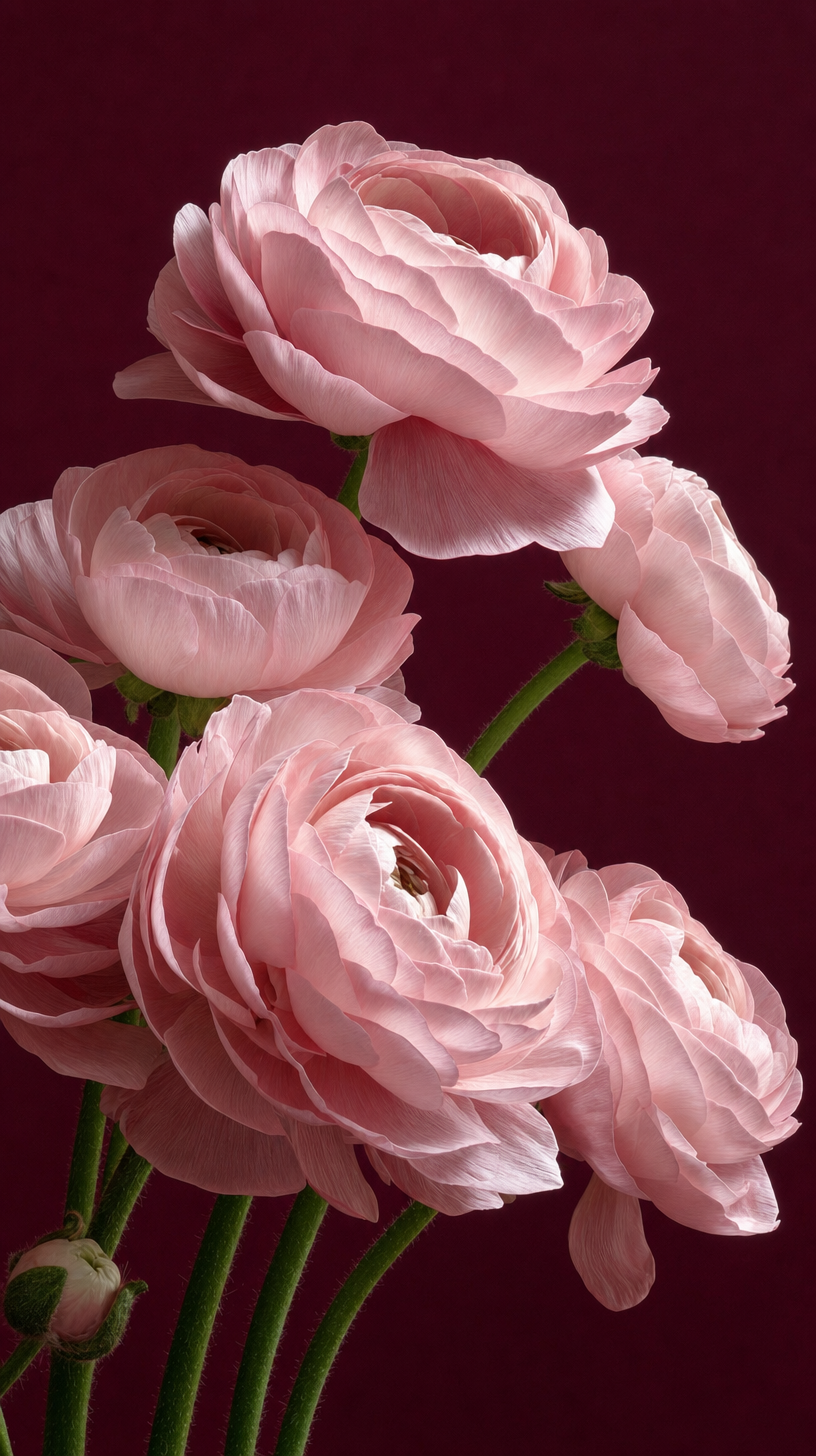
Blush-pink Ranunculus With Velvet Petals, Burgundy Background
Woman with auburn wavy hair, lavender peonies
Glittered Tulip Duo in Dramatic Light