Why this works
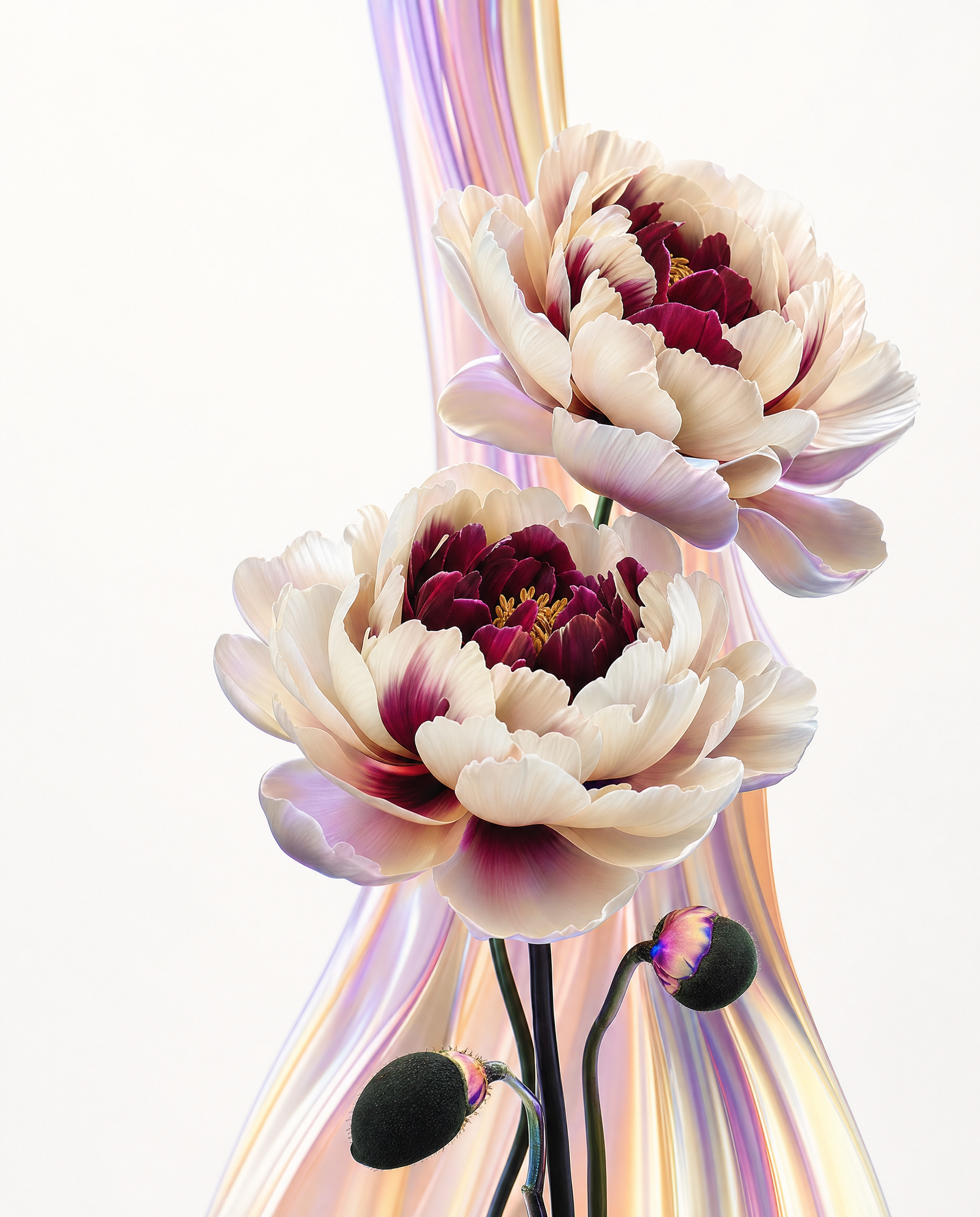
The phrase 'dissolving into cascading ribbon-like streaks of iridescent color trailing vertically downward' is what turns a static flower study into the ethereal melt effect that defines the image, not the peony description itself. 'Holographic pastel hues of gold, lavender, and coral' is the exact language driving the magenta-purple-gold palette you see, since without naming those specific hues the render could easily default to naturalistic pink and green. 'Centered frontal composition' paired with 'minimalist soft white background' is what isolates the two flowers against empty space, giving the ribbons room to trail without visual competition. 'Smooth glossy texture' plus 'soft studio lighting' is doing the work of the reflective highlights on the petals, since flat lighting alone wouldn't produce that liquid-glass sheen.
Learn the technique behind this
- Why can't AI spell, and how do I get readable text in an image? — Older diffusion models had no character-level representation of text, so they produced letterform-shaped texture instead of words.
- How do I keep one consistent style across a whole set of images? — Style consistency is more achievable than character consistency because style lives in describable attributes.
- Why does the model ignore parts of my prompt? — Ignored instructions are almost always conflicts, counts, or spatial relationships — three things current models handle badly — rather than the model failing to read you.
Related prompts
Dreamy Woman Reading by Soft Bloom
Glittered Tulip Duo in Dramatic Light

Serene Fashion Portrait in Blooming Garden
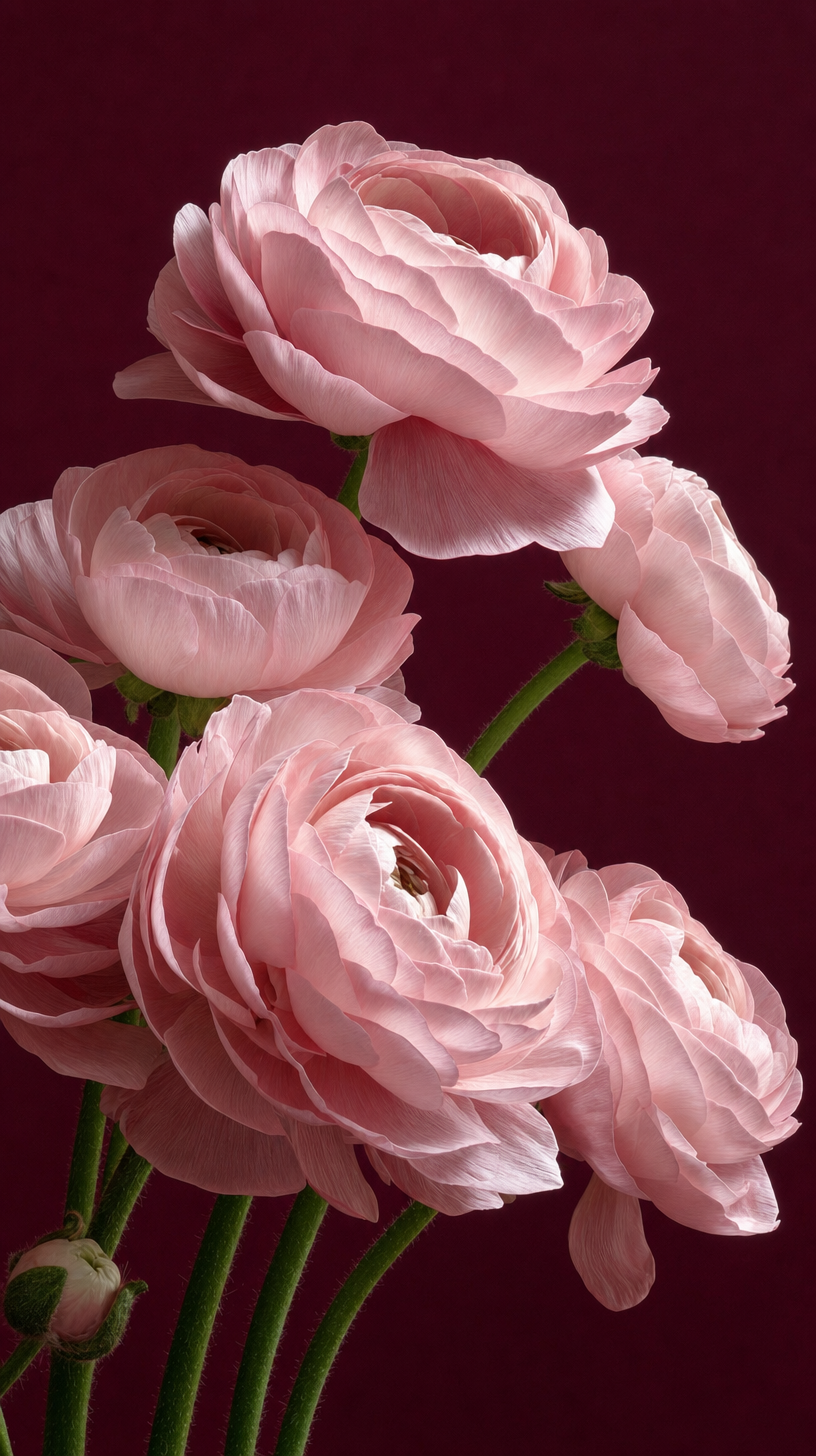
Blush-pink Ranunculus With Velvet Petals, Burgundy Background