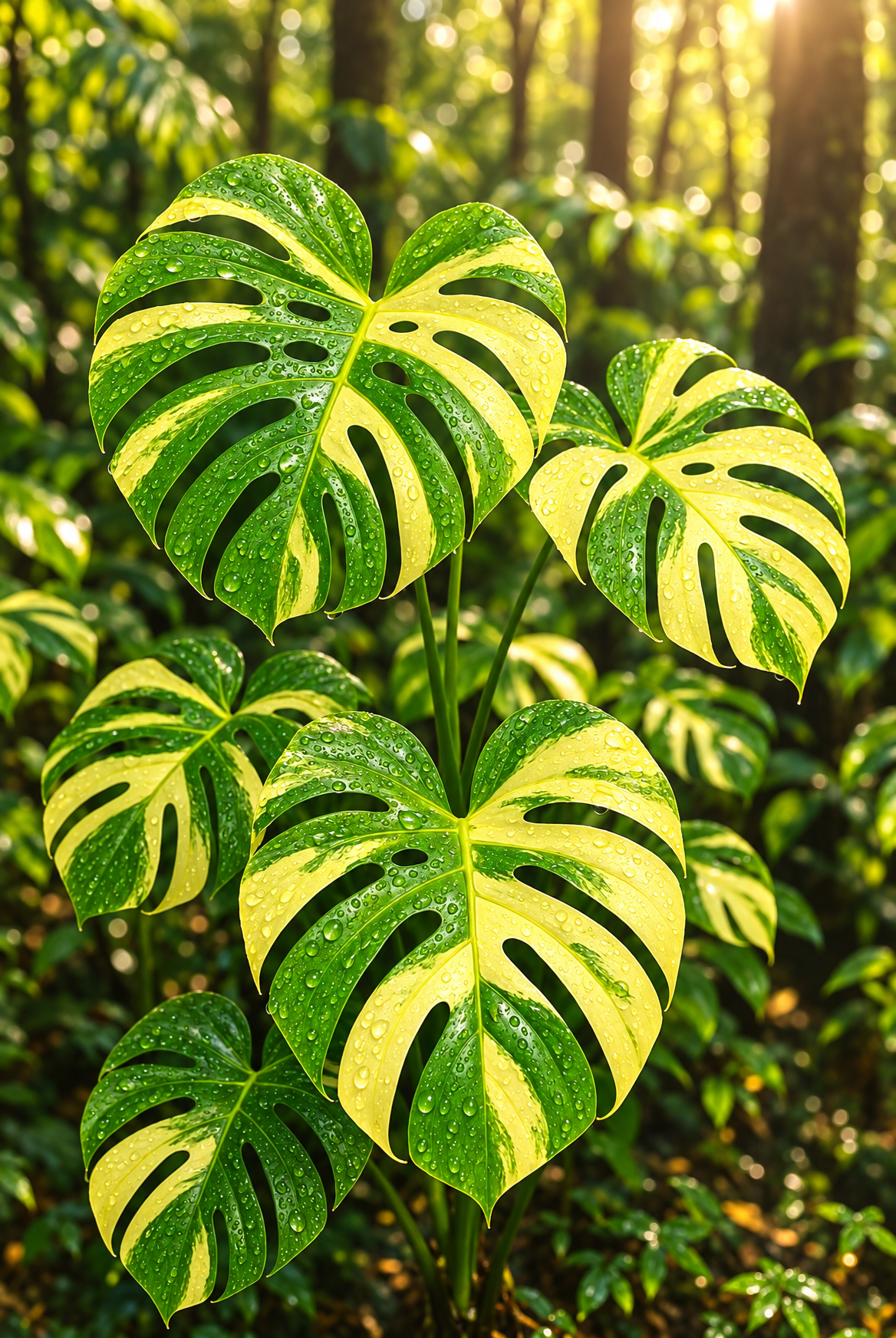
Why this works
The phrase “photorealistic close-up of several large variegated monstera leaves” makes the foliage fill the frame, while “shallow depth of field” and “softly blurred mid-depth jungle foliage behind them” separate the leaves from the rainforest setting. “Brighter lime-green and pale yellow creamy split patterns” establishes the dominant yellow-green harmony, and “warm morning light filtering through leaves with gentle bokeh highlights” gives the portrait composition a tranquil, softly luminous mood. “Ultra-detailed botanical texture” and “glossy droplets clinging to the edges” supply the crisp surface detail that contrasts with the blurred background.
FAQ
→How do I make one monstera leaf more central and prominent?
Replace “several large variegated monstera leaves” with “one enormous variegated monstera leaf centered in the frame, its split lobes extending toward the edges,” and add “sharp focus on the central leaf.” Keep “softly blurred mid-depth jungle foliage behind them” if you want the single leaf to remain isolated.
→How do I shift the tranquil morning mood toward a dramatic tropical look?
Replace “warm morning light filtering through leaves with gentle bokeh highlights” with “strong shafts of late-afternoon sunlight cutting through dense foliage, deep shadows, and high-contrast rim light.” Change “vivid fresh green palette” to “saturated emerald green with golden highlights and deep blue-green shadows” for stronger tonal contrast.
→How do I create a series of related botanical variations?
Keep the fixed visual anchors “photorealistic botanical photography,” “shallow depth of field,” “ultra-detailed botanical texture,” and “glossy droplets clinging to the edges,” then swap the subject phrase “variegated monstera leaves” for “bird-of-paradise leaves,” “calathea leaves,” or “banana leaves.” Replace “brighter lime-green and pale yellow creamy split patterns” with each plant’s defining markings, such as “bold white pinstripes” or “deep red undersides,” while retaining “warm morning light” for visual consistency.
Learn the technique behind this
- Why can't AI spell, and how do I get readable text in an image? — Older diffusion models had no character-level representation of text, so they produced letterform-shaped texture instead of words.
- How should a prompt be structured, and does word order matter? — A prompt that behaves predictably names one subject first, then what it is doing, then where, then the light, then the lens or medium, then the style.
- Why does the model ignore parts of my prompt? — Ignored instructions are almost always conflicts, counts, or spatial relationships — three things current models handle badly — rather than the model failing to read you.
Related prompts
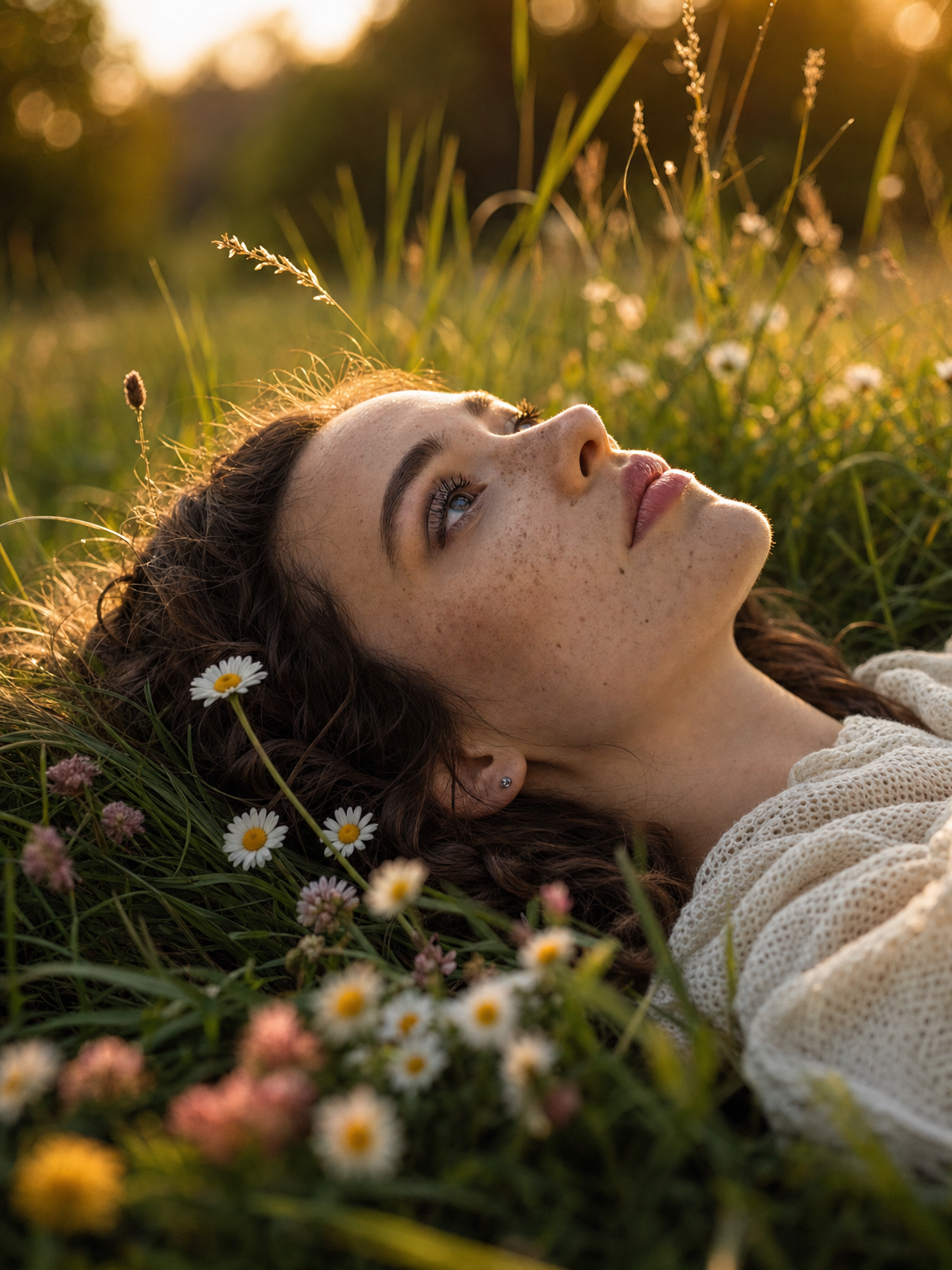
Young woman in grass with cream wrap

Ethereal Peonies with Iridescent Vertical Trails
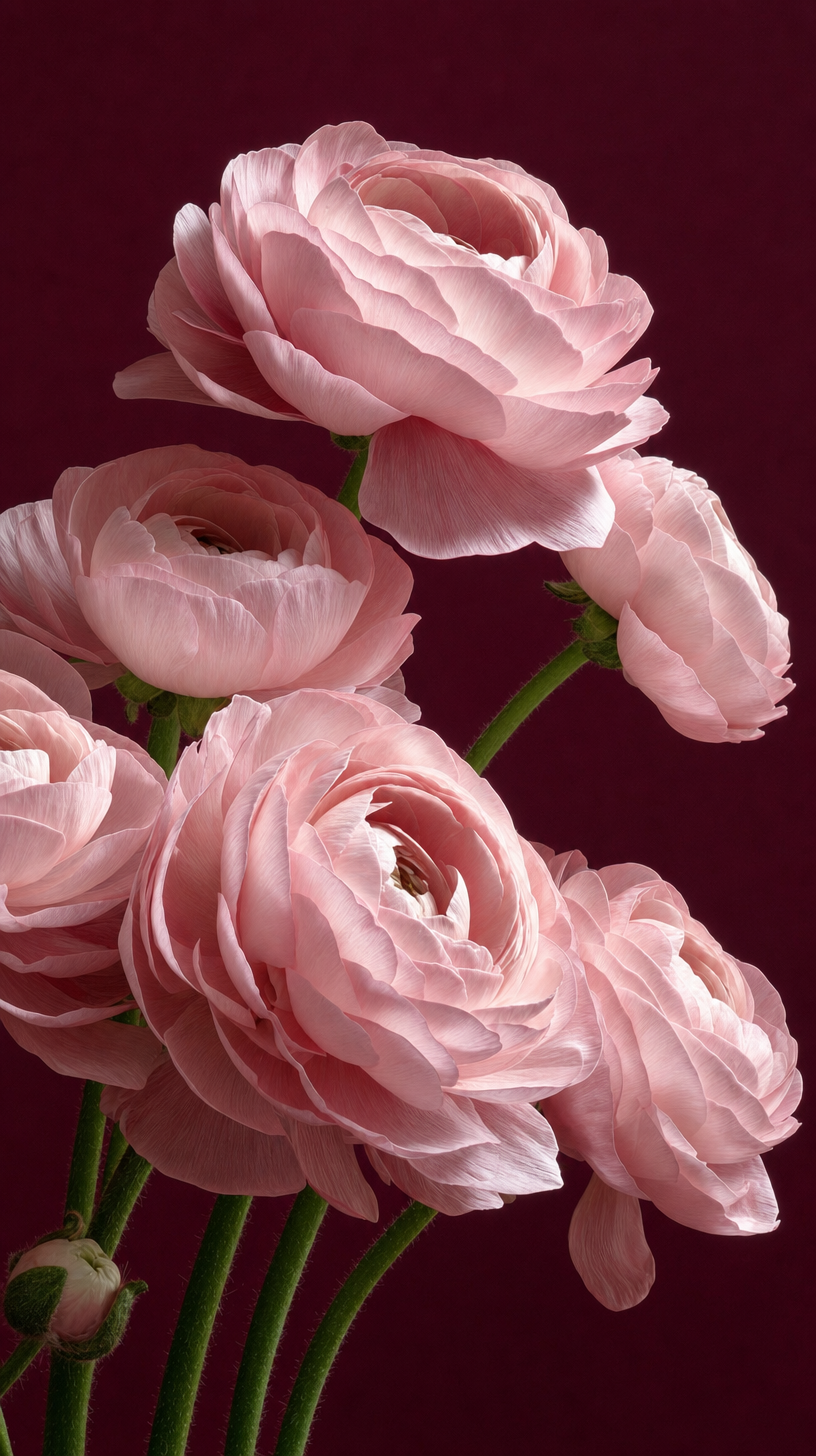
Blush-pink Ranunculus With Velvet Petals, Burgundy Background

Dreamy Woman Reading by Soft Bloom