Why this works
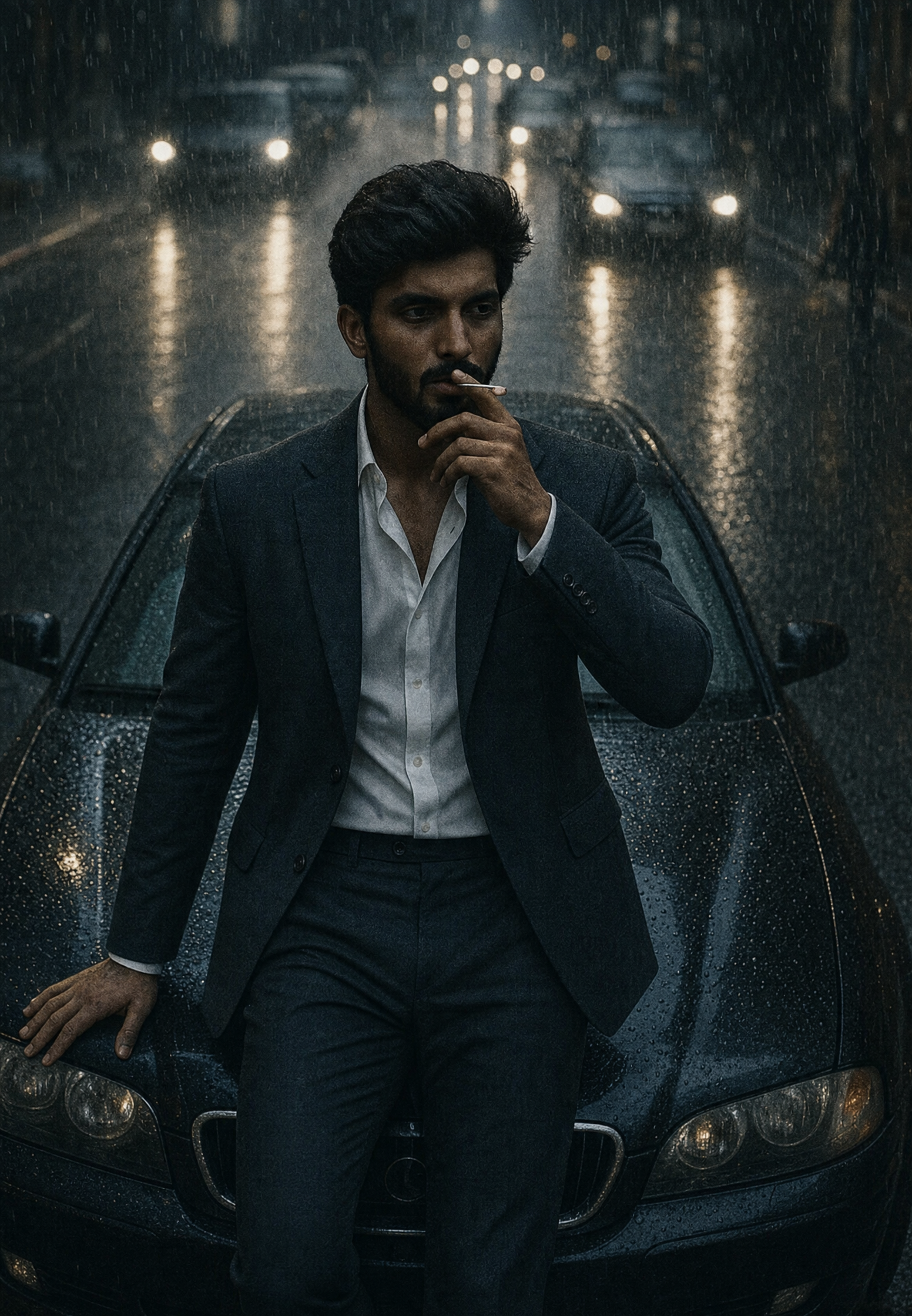
The phrase “overhead cinematic shot” establishes the portrait-full-body composition, while “sharp focus on the man” separates his dark silhouette from the streaky blur of headlights, vehicles, and pedestrians. “Gloomy, high-contrast lighting with wet reflections” produces the black-and-white-dominant palette and tense noir mood, with the “rainy city street,” “puddles and mist,” and “35mm film look” adding texture without competing with the subject. The black sports car, cigarette, and fixed pose give the motion-filled surroundings a deliberate still point.
FAQ
→How do I make the man feel more dominant and central in the frame?
Replace “overhead cinematic shot” with “low-angle medium-full shot from the front of the car,” and change “sharp focus on the man” to “tack-sharp close focus on the man, occupying the central two-thirds of the frame.” Keep “streaky blur of headlights, passing vehicles, and people” but reduce it to the background so the subject gains visual priority.
→How do I change the tense noir mood into a warmer, more hopeful scene?
Replace “gloomy, high-contrast lighting” with “soft golden-hour backlight,” and change “dark charcoal suit” to “mid-gray suit with a pale blue dress shirt.” Replace “dramatic tense urban atmosphere” with “quiet, reflective urban atmosphere,” while retaining “wet reflections” to preserve the rainy-street texture.
→How do I create a series of variations while keeping this visual identity?
Keep the fixed anchors “35mm film look,” “rainy city street,” “black sports car,” and “shallow depth of field,” then swap the subject or action phrase in controlled steps. For example, replace “a man leaning against the front fender” with “a woman standing beside the driver’s door,” “a courier crouched near the rear wheel,” or “two detectives under an umbrella,” and replace “his right hand holds a cigarette” with a matching prop such as “holds a folded map,” “grips a motorcycle helmet,” or “checks a glowing phone.”
Learn the technique behind this
- Why can't AI spell, and how do I get readable text in an image? — Older diffusion models had no character-level representation of text, so they produced letterform-shaped texture instead of words.
- Why does the model ignore parts of my prompt? — Ignored instructions are almost always conflicts, counts, or spatial relationships — three things current models handle badly — rather than the model failing to read you.
- Why does AI get hands and faces wrong, and how do I fix it? — Hands fail because they're small in frame, extremely variable in pose, and self-occluding — the model has less usable signal per pixel than for any other body part.
Related prompts
Shirtless Man, Vintage Car, Coastline Light
Golden-hour couple rides a classic bike
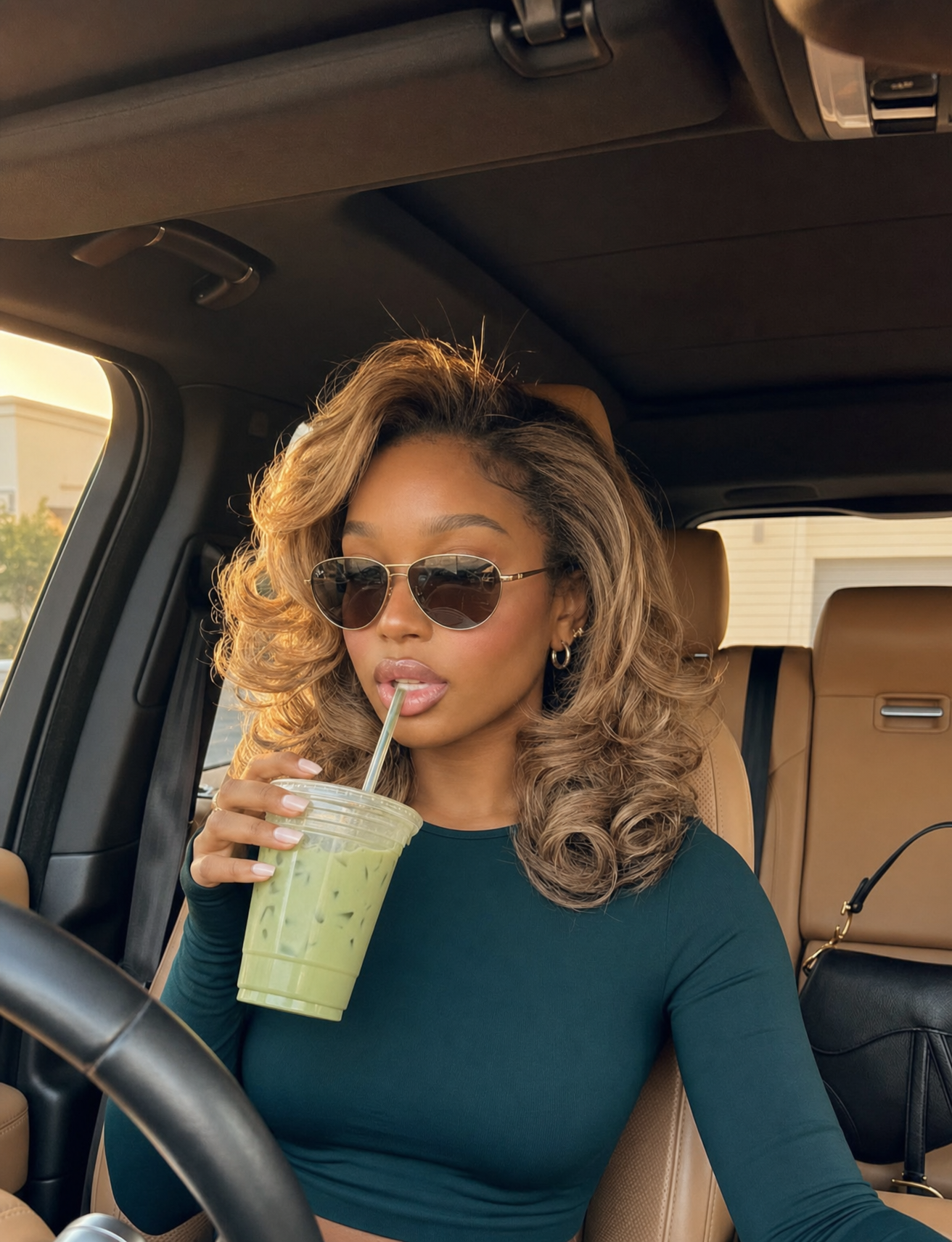
Golden-hour Matcha Sips in Luxury SUV
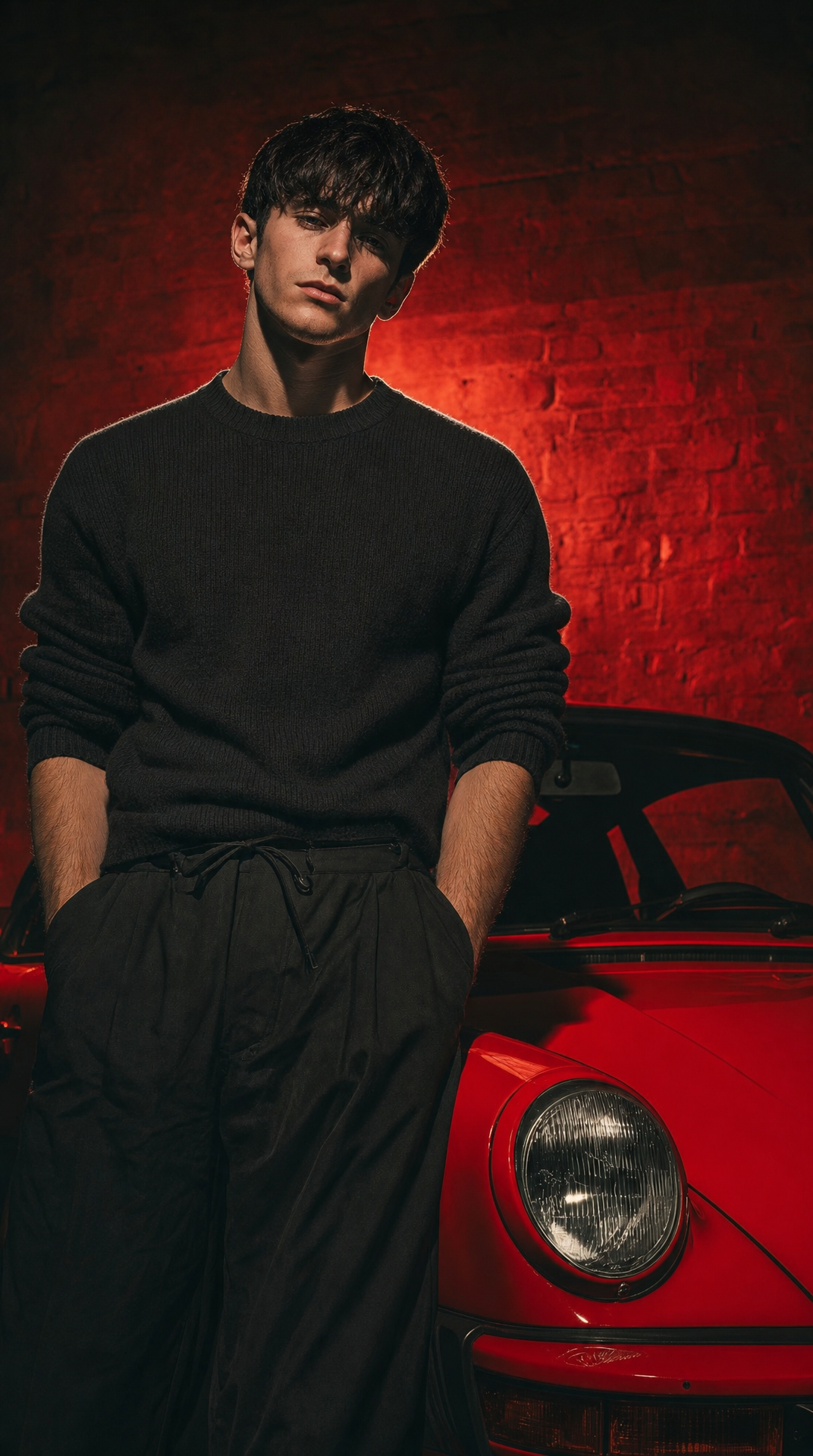
Young model in studio by sports car