Why this works
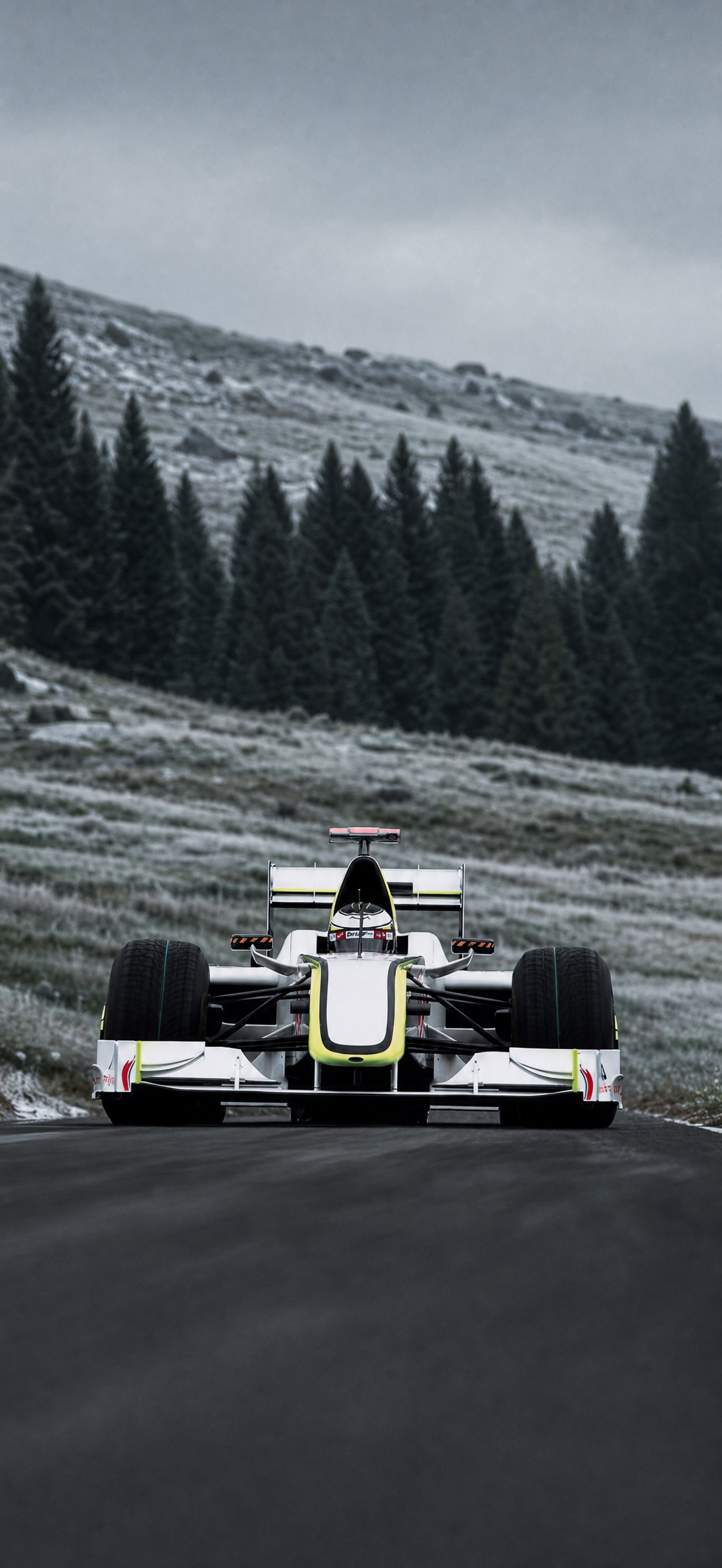
“Front-facing,” “low-angle telephoto shot,” and “strong centered symmetry” make the Formula One car an immediate, centered focal point with a forceful sense of scale. The “frosty alpine meadow,” “dark pine forest,” and “dusting of snow” establish a black-and-white dominant palette, while “overcast sky” and “moody dramatic cinematic atmosphere” keep the tone restrained rather than colorful or celebratory. “Shallow depth of field” isolates the car, and “subtle motion blur on the road edge” adds speed without sacrificing the “crisp realistic motorsport photography” detail on the vehicle.
FAQ
→How do I change this prompt to make the race car feel faster and more aggressive?
Replace “subtle motion blur on the road edge” with “strong directional motion blur across the road and background,” and replace “overcast sky, moody dramatic cinematic atmosphere” with “hard storm light, high-contrast dramatic atmosphere.” Keep “front-facing” and “centered symmetry” if the car should still charge directly toward the viewer.
→How do I make the alpine environment more prominent than the car?
Replace “front-facing Formula One race car” with “Formula One race car seen at a small scale within a sweeping alpine pass,” and replace “shallow depth of field” with “deep depth of field, sharp mountain meadow, road, and pine forest.” Add “wide environmental composition with the winding road leading through the frame” while removing “strong centered symmetry.”
→How do I build a varied series from this prompt without losing its visual identity?
Keep “realistic motorsport photography,” “85mm telephoto look,” “frosty alpine meadow,” and “dark pine forest,” then swap the weather and action phrases for controlled variants such as “golden sunrise with long shadows,” “heavy snowfall with tire spray,” or “blue-hour mist with headlights cutting through the forest.” Change “front-facing” to “three-quarter front view” or “side profile” for distinct compositions while retaining the same mountain-road setting.
Learn the technique behind this
- Why can't AI spell, and how do I get readable text in an image? — Older diffusion models had no character-level representation of text, so they produced letterform-shaped texture instead of words.
- How should a prompt be structured, and does word order matter? — A prompt that behaves predictably names one subject first, then what it is doing, then where, then the light, then the lens or medium, then the style.
- Do negative prompts work, and what should go in one? — Negative prompts work on models that support a separate negative conditioning channel — mainly Stable Diffusion and FLUX-family models.
Related prompts
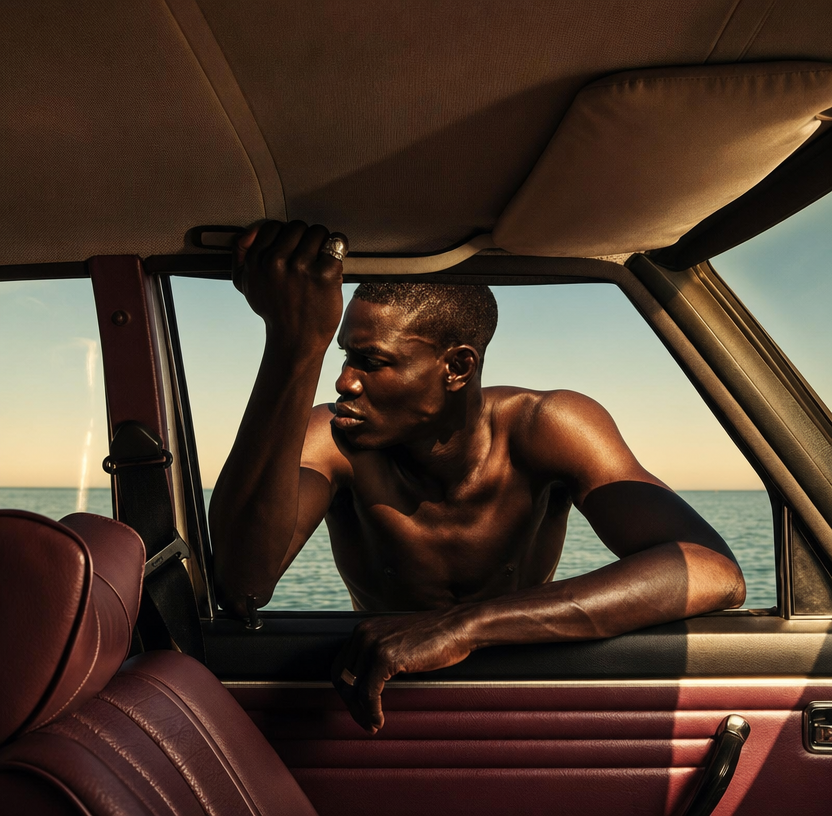
Shirtless Man, Vintage Car, Coastline Light
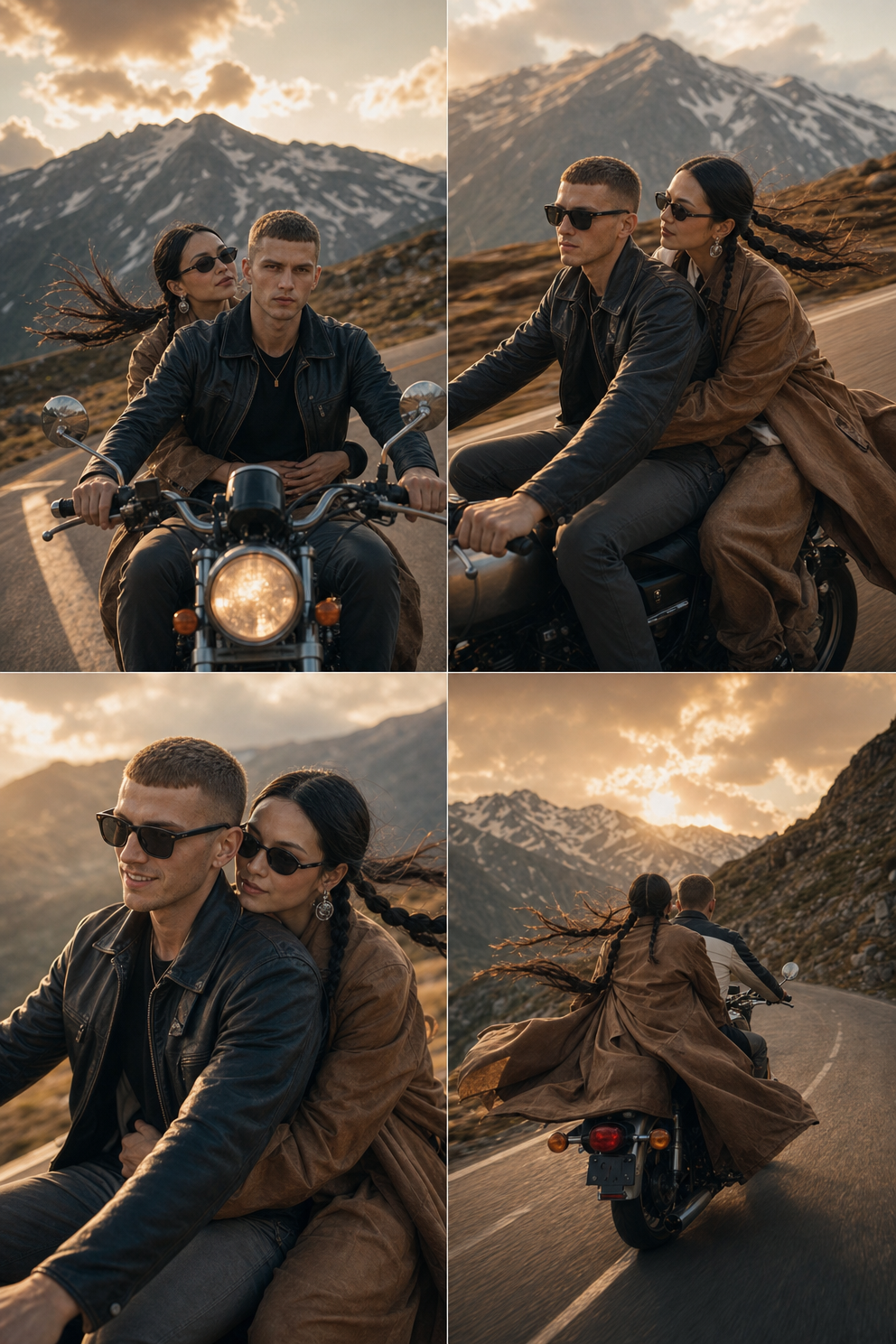
Golden-hour couple rides a classic bike
Golden-hour Matcha Sips in Luxury SUV
Young model in studio by sports car