Why this works
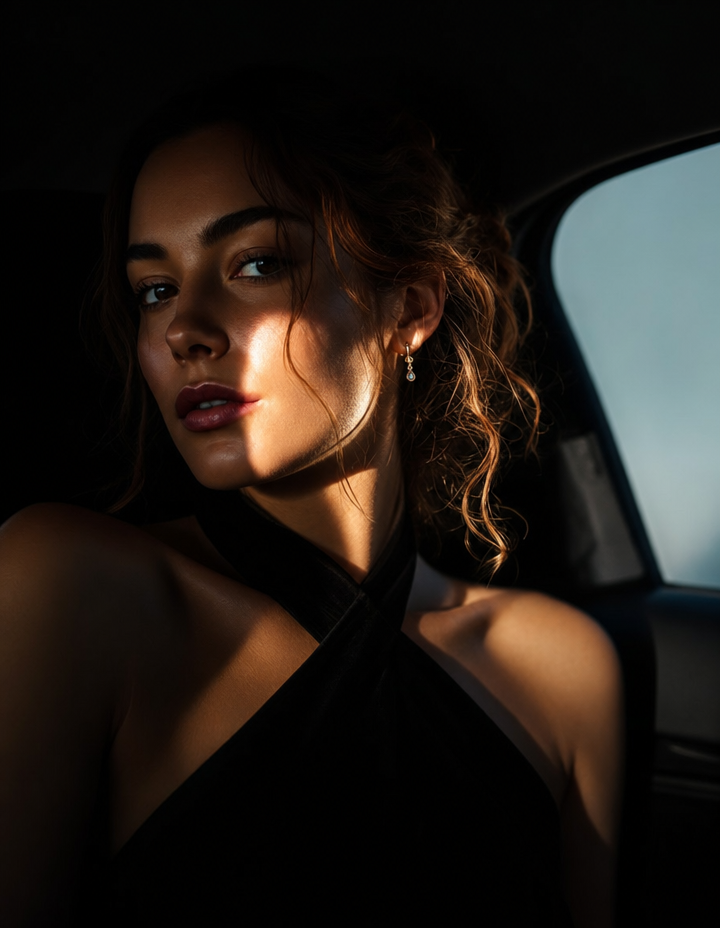
The phrase “close-up photorealistic cinematic portrait” makes the woman’s face the compositional anchor, while “85mm lens look” and “shallow depth of field” isolate her from the car interior without losing its context. “A wider side light beam” paired with “soft rim glow along her cheek and jaw” gives the face a controlled edge highlight, and “the rest of the cabin falls into deep shadow” supplies the dramatic, mysterious separation. The dominant brown, beige, and gray tones reinforce the “cool-neutral color grading,” keeping the subdued car cabin from competing with the high-detail facial highlights.
FAQ
→How do I make the woman’s eyes and expression more central?
Replace “close-up framing” with “tight eye-level head-and-shoulders close-up” and add “sharp focus on both eyes, direct gaze into the camera.” Keep “shallow depth of field,” but change “high-detail facial highlights” to “high-detail eyes and natural catchlights” so attention moves from the cheek and jaw toward her expression.
→How do I change the mysterious mood into a warmer, more intimate portrait?
Replace “cool-neutral color grading” with “warm amber and honey color grading,” and change “deep shadow” to “soft, lifted cabin shadows.” Replace “calm, mysterious expression” with “quiet, vulnerable expression,” while keeping “soft rim glow” to preserve facial separation.
→How do I create a matching series with different car interiors and poses?
Keep the fixed visual anchors “photorealistic cinematic portrait,” “85mm lens look,” “shallow depth of field,” and “cool-neutral color grading.” Swap “seated inside a car” and “interior of a car cabin” for specific settings such as “parked vintage sedan at night,” “rain-streaked taxi interior,” or “sunlit modern electric car,” then vary the pose with phrases like “hand resting on the steering wheel,” “looking through the side window,” or “turning toward the rear seat.”
Learn the technique behind this
- Why can't AI spell, and how do I get readable text in an image? — Older diffusion models had no character-level representation of text, so they produced letterform-shaped texture instead of words.
- How should a prompt be structured, and does word order matter? — A prompt that behaves predictably names one subject first, then what it is doing, then where, then the light, then the lens or medium, then the style.
- Which aspect ratio should I use, and how does it change the image? — Aspect ratio determines what the model composes, not how it's cropped afterwards.
Related prompts
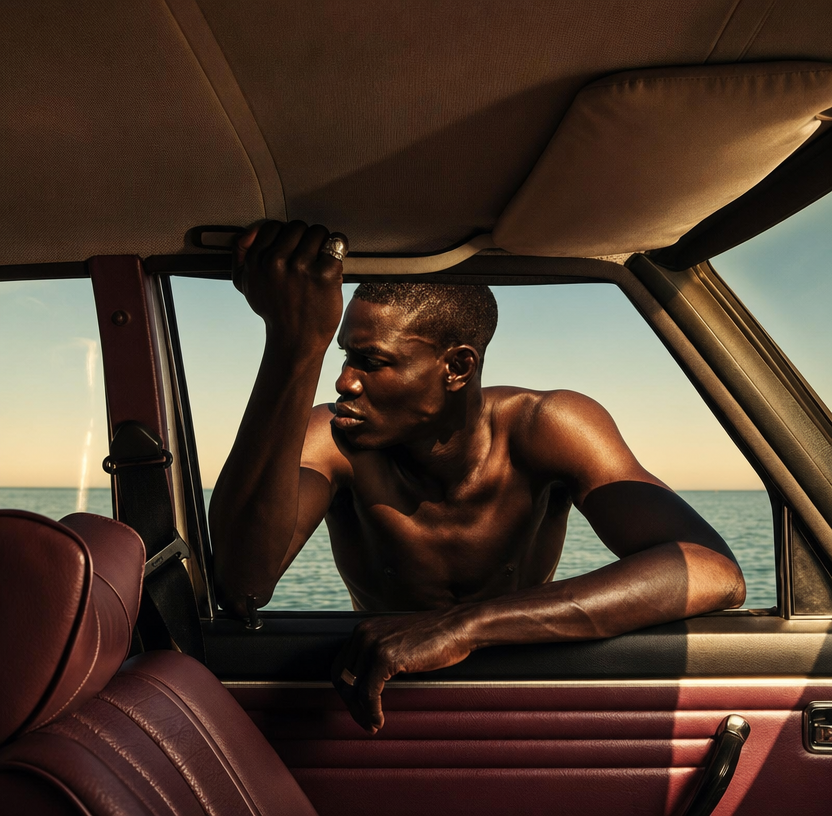
Shirtless Man, Vintage Car, Coastline Light
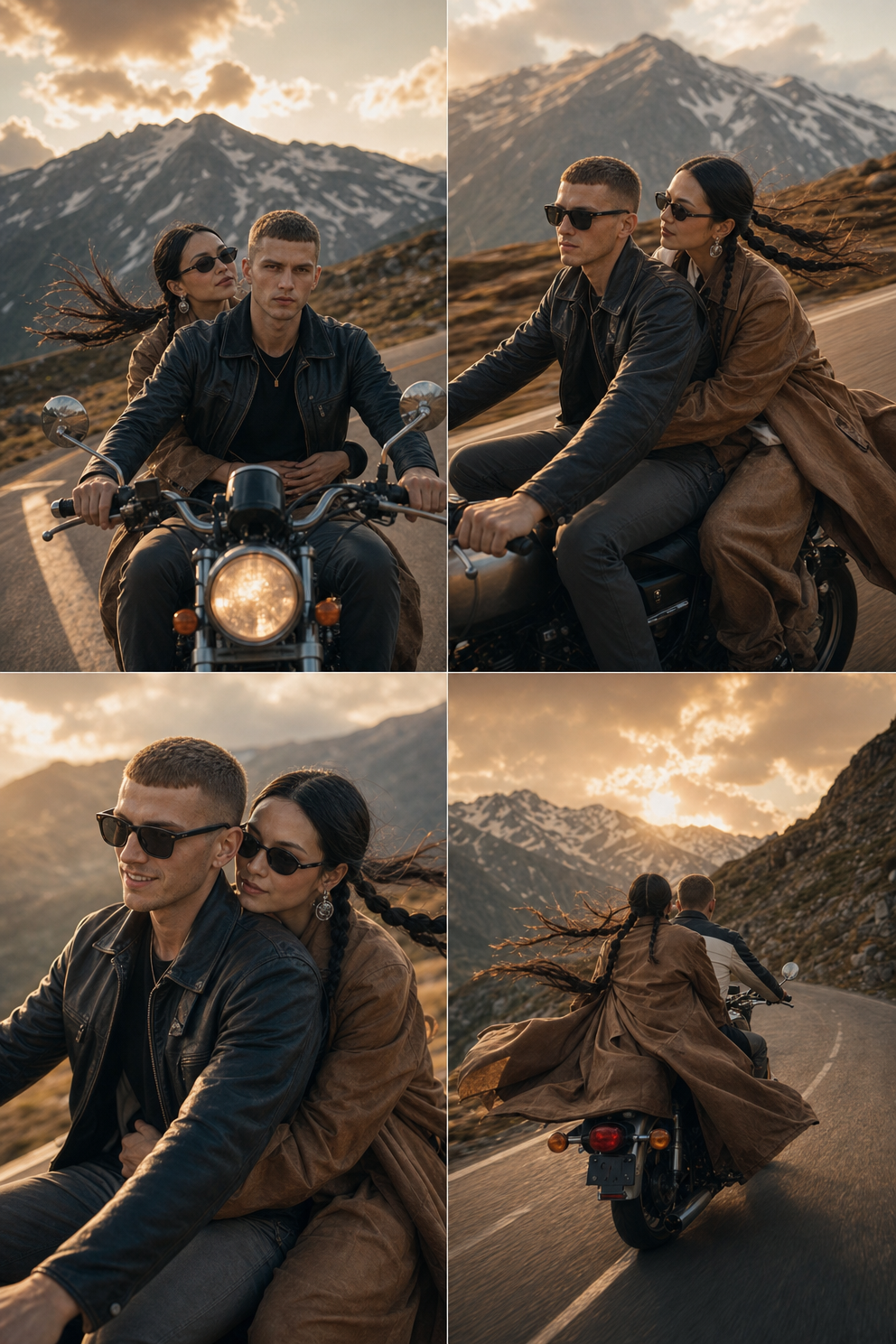
Golden-hour couple rides a classic bike
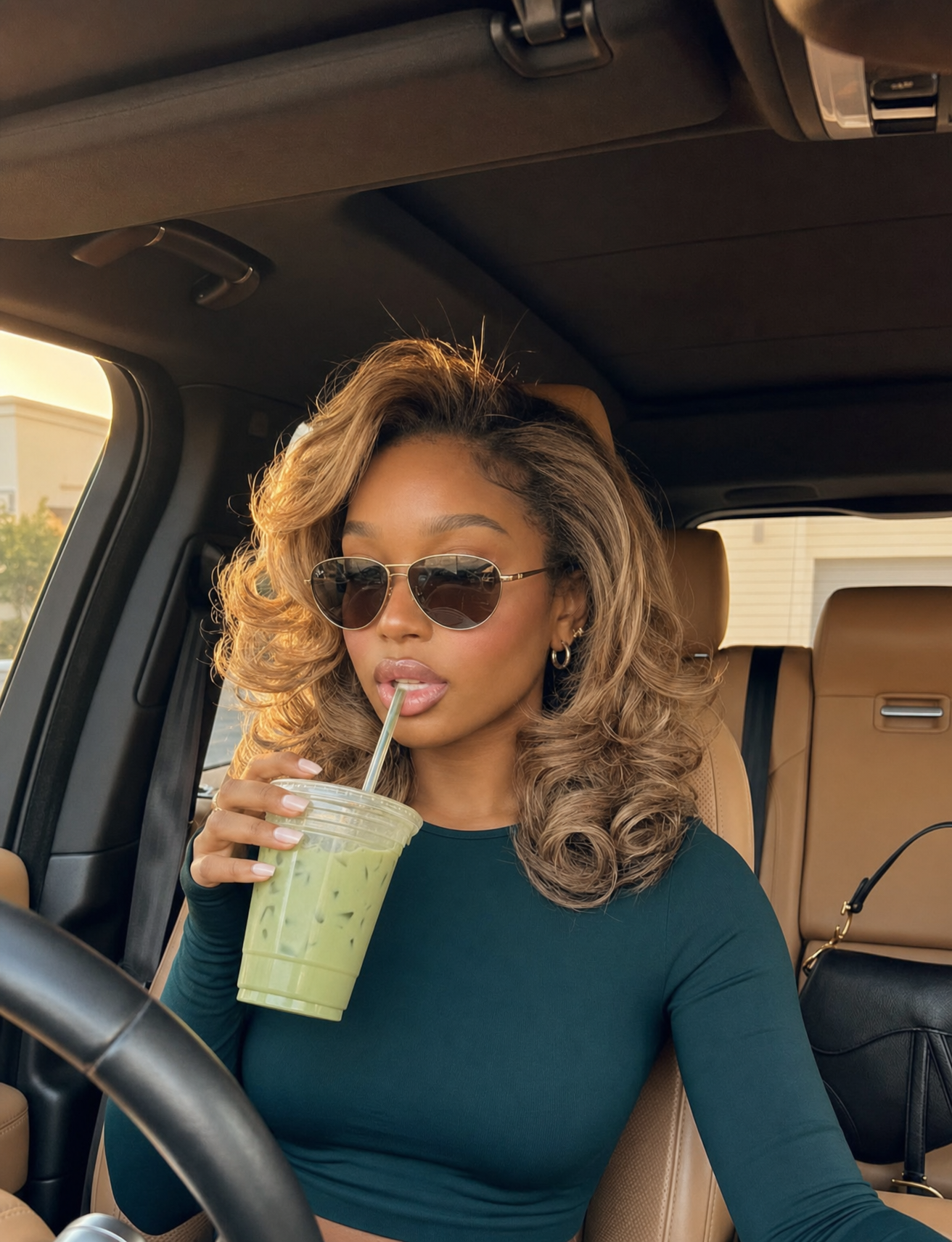
Golden-hour Matcha Sips in Luxury SUV
Young model in studio by sports car