Why this works
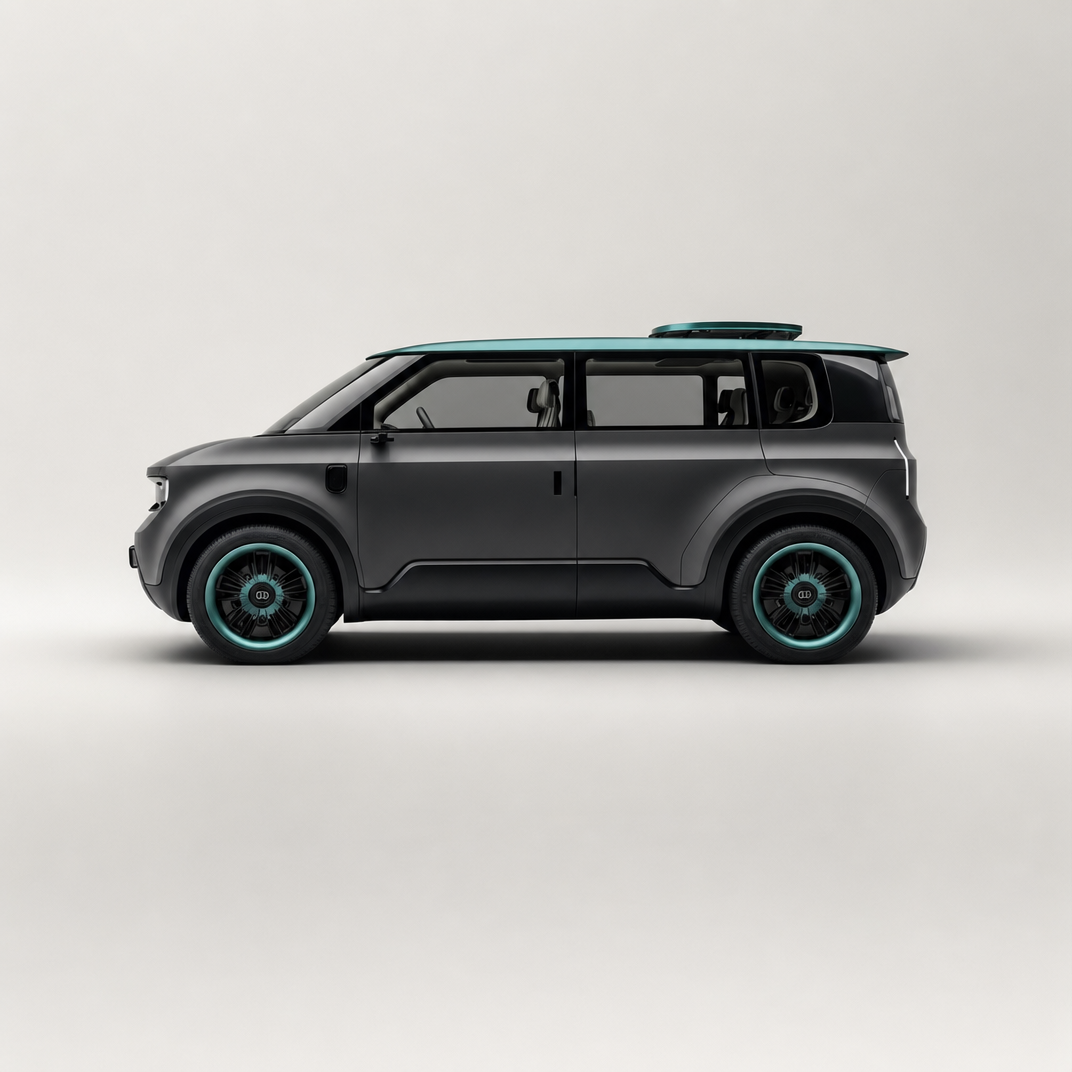
The centered, straight-on side profile gives the compact futuristic concept van a clear catalog-like silhouette, while “seamless warm light-gray background” removes distractions and preserves the product-render focus. “Matte dark gray body,” “black lower trim,” and “teal accent wheels and a matching teal roof accent stripe” create a restrained black-and-teal hierarchy, with teal serving as the visual punctuation. “Soft slightly directional lighting with crisp reflections” balances the matte surfaces against believable highlights, and “ultra-sharp details and realistic materials” supports the photorealistic industrial finish.
FAQ
→How do I make the van feel more dramatic and less like a neutral catalog render?
Replace “seamless warm light-gray background” with “deep charcoal studio background with a subtle gradient,” and change “soft slightly directional studio lighting” to “dramatic hard side-lighting with controlled rim light.” Keep “crisp, realistic reflections” to preserve the product-render clarity while increasing contrast.
→How do I make the teal design elements more prominent?
Replace “teal accent wheels and a matching teal roof accent stripe” with “bright saturated teal wheels, illuminated teal roof accent stripe, and subtle teal light accents along the front fascia.” You can also change “subtle silver mid-panel highlights” to “high-contrast silver mid-panel highlights” so the accent colors separate more clearly from the dark body.
→How do I turn this prompt into a consistent series of related vehicles?
Keep the fixed visual language, including “photorealistic studio product render aesthetic,” “seamless warm light-gray background,” “soft slightly directional lighting with crisp reflections,” and “side profile product framing.” Replace only “compact futuristic concept van” with variants such as “compact futuristic delivery van,” “sporty electric city coupe,” or “small autonomous shuttle,” while preserving “matte dark gray body,” “black lower trim,” and the teal accent treatment for continuity.
Learn the technique behind this
- Why can't AI spell, and how do I get readable text in an image? — Older diffusion models had no character-level representation of text, so they produced letterform-shaped texture instead of words.
- How should a prompt be structured, and does word order matter? — A prompt that behaves predictably names one subject first, then what it is doing, then where, then the light, then the lens or medium, then the style.
- Do negative prompts work, and what should go in one? — Negative prompts work on models that support a separate negative conditioning channel — mainly Stable Diffusion and FLUX-family models.
Related prompts
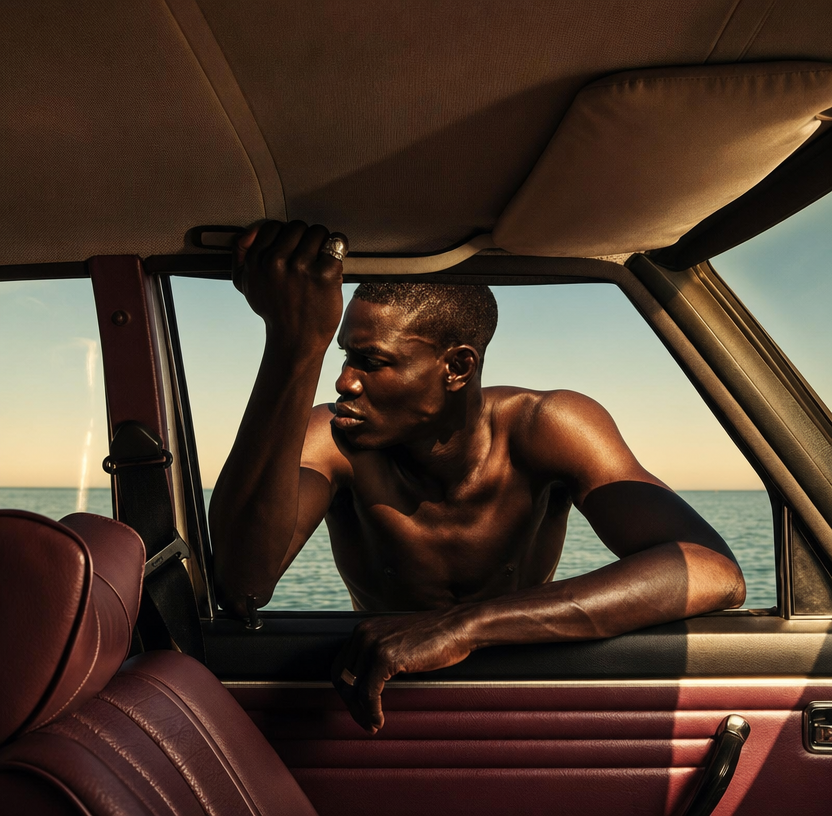
Shirtless Man, Vintage Car, Coastline Light
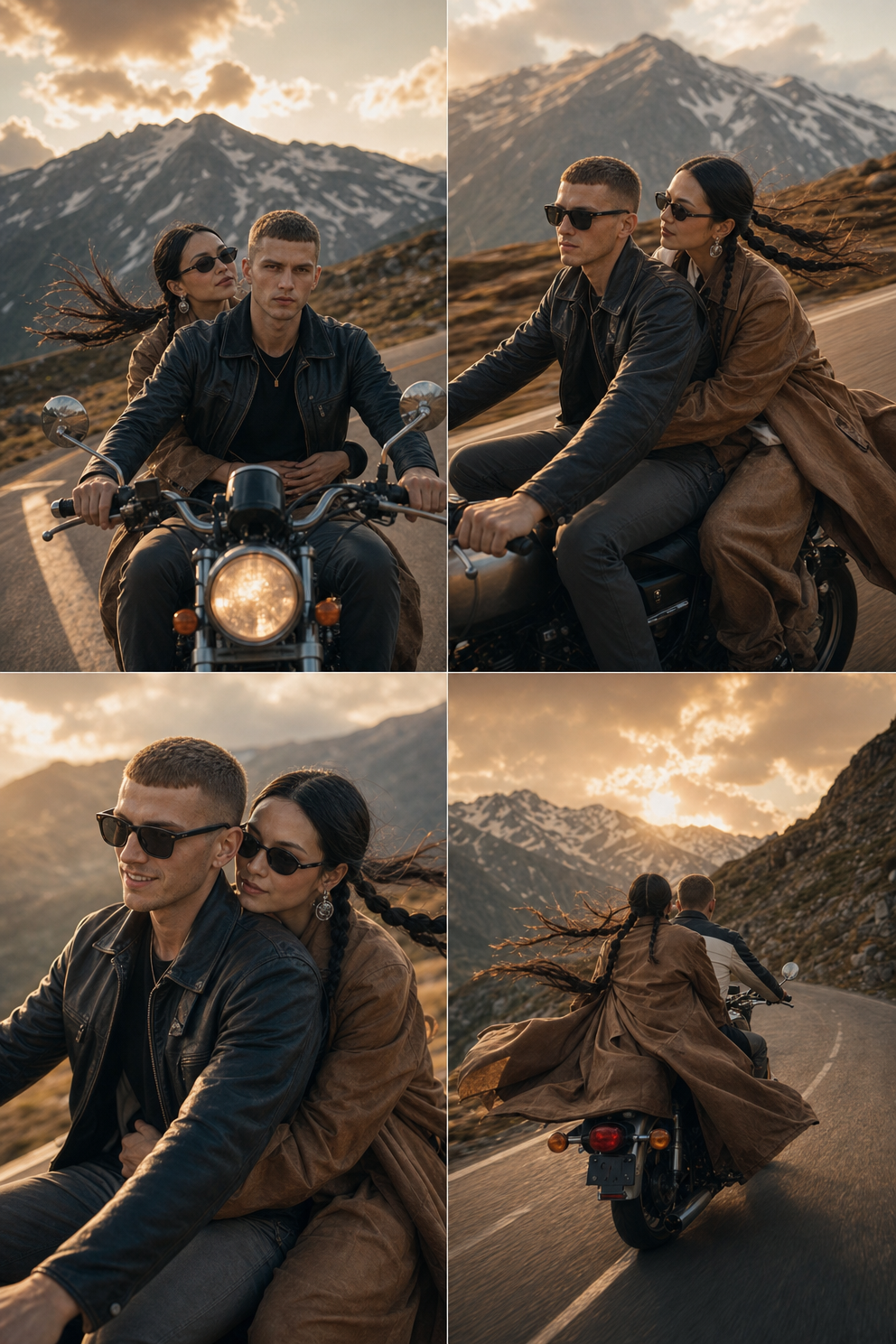
Golden-hour couple rides a classic bike
Golden-hour Matcha Sips in Luxury SUV
Young model in studio by sports car