Why this works
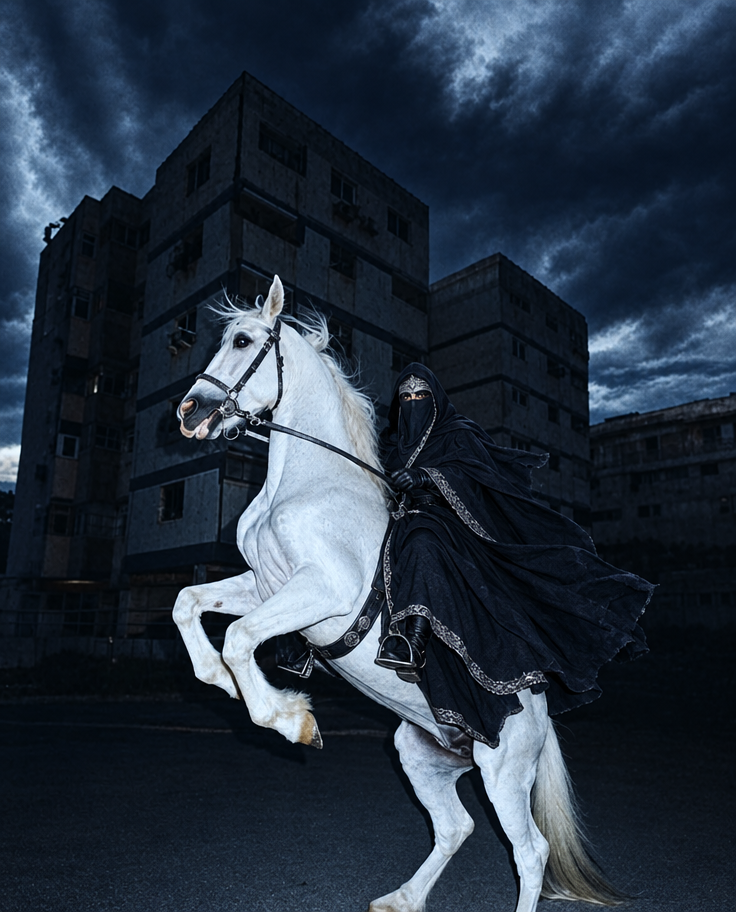
The phrase “masked rider mounted on a rearing white horse” creates a strong full-body vertical silhouette, while “dramatic nighttime street-photography framing” keeps the figure readable against the apartment buildings. “Flash-lit subject” supplies the hard separation and crisp visibility, and “high contrast” reinforces the dramatic, mysterious mood rather than letting the stormy setting swallow the rider. The requested “cold blue and deep storm greys,” combined with the horse’s white coat and “silver-trimmed mask,” produces a restrained gray-blue-white harmony with realistic texture anchored by “detailed on the horse’s mane and the city apartment buildings behind.”
FAQ
→How do I make the masked rider more central and visually dominant?
Replace “Dramatic nighttime street-photography framing” with “centered low-angle full-body composition with the rider and horse filling most of the frame,” and add “apartment buildings receding into soft background blur.” Keep “flash-lit subject” so the rider remains the brightest focal point.
→How do I make the scene feel more threatening and ominous?
Replace “stormy sky with streaked clouds” with “black thunderclouds with jagged lightning and rain streaks,” and change “cold blue and deep storm greys” to “near-black charcoal, desaturated steel blue, and flashes of icy white.” Add “heavy shadows obscuring the rider’s hood and mask” while retaining “high contrast.”
→How do I build a variation series without losing the core visual identity?
Keep the fixed phrases “masked rider,” “rearing white horse,” “silver-trimmed mask,” “flash-lit subject,” and “cold blue and deep storm greys.” For each variation, change only “urban background with apartment buildings” to settings such as “rain-soaked Victorian alley,” “rooftop overlooking a flooded city,” or “abandoned subway entrance,” then vary “stormy streaked clouds” to “driving rain,” “rolling fog,” or “falling snow.”
Learn the technique behind this
- Why can't AI spell, and how do I get readable text in an image? — Older diffusion models had no character-level representation of text, so they produced letterform-shaped texture instead of words.
- How should a prompt be structured, and does word order matter? — A prompt that behaves predictably names one subject first, then what it is doing, then where, then the light, then the lens or medium, then the style.
- Do negative prompts work, and what should go in one? — Negative prompts work on models that support a separate negative conditioning channel — mainly Stable Diffusion and FLUX-family models.
Related prompts
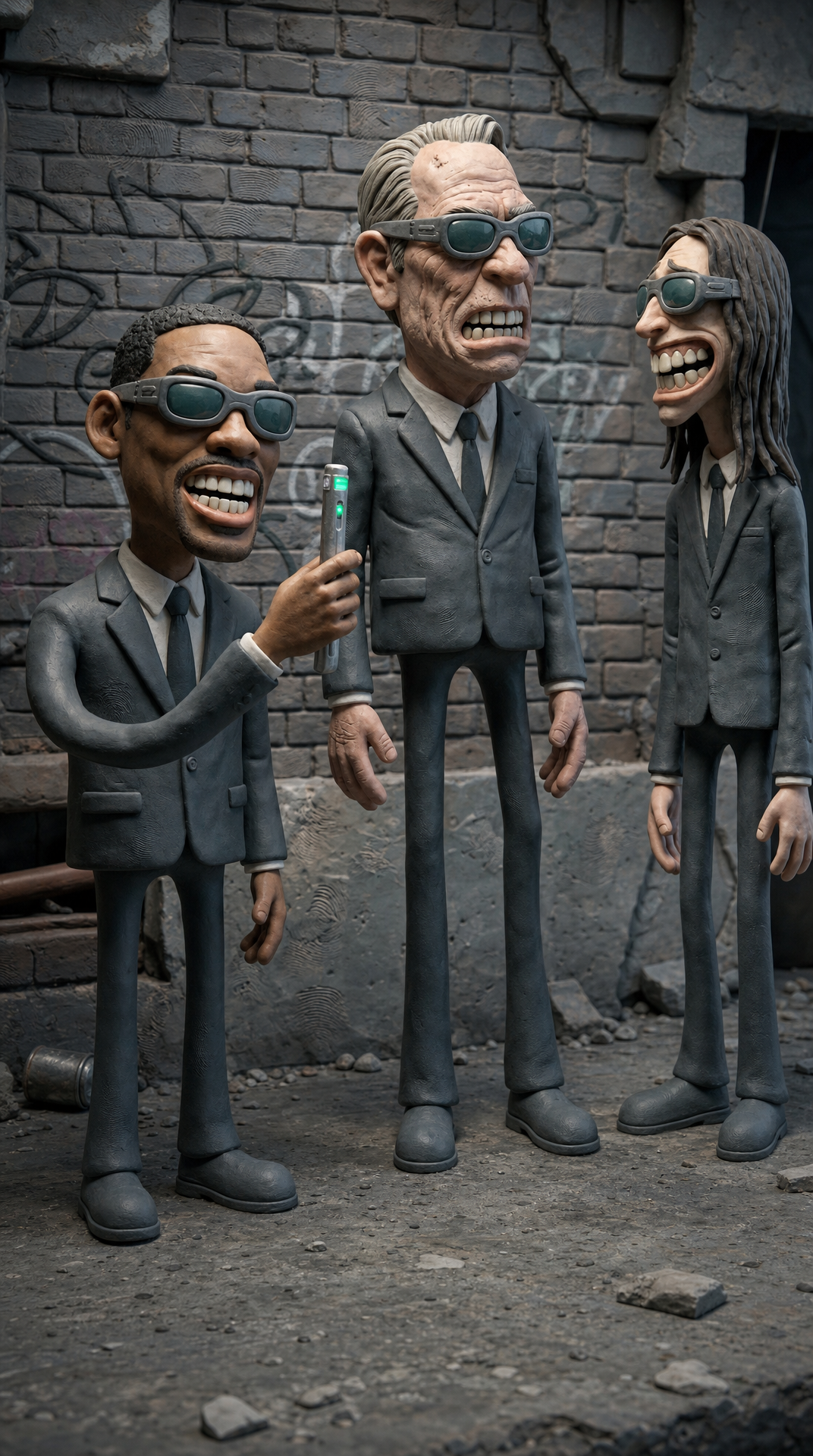
Grotesque Claymation Gangsters in Gritty Alley
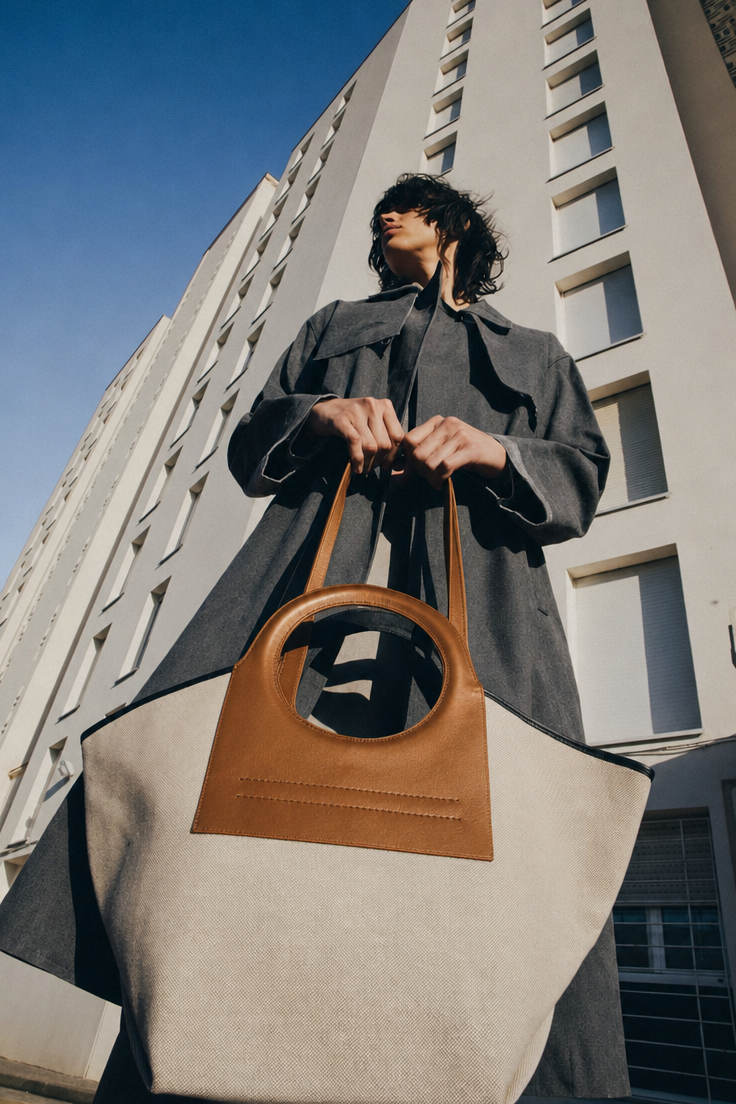
Charcoal coat with tan-handled tote
Woman in Teal Jacket Capturing Twilight Reflection
Red Gummy Bear Monster Attacks