Why this works
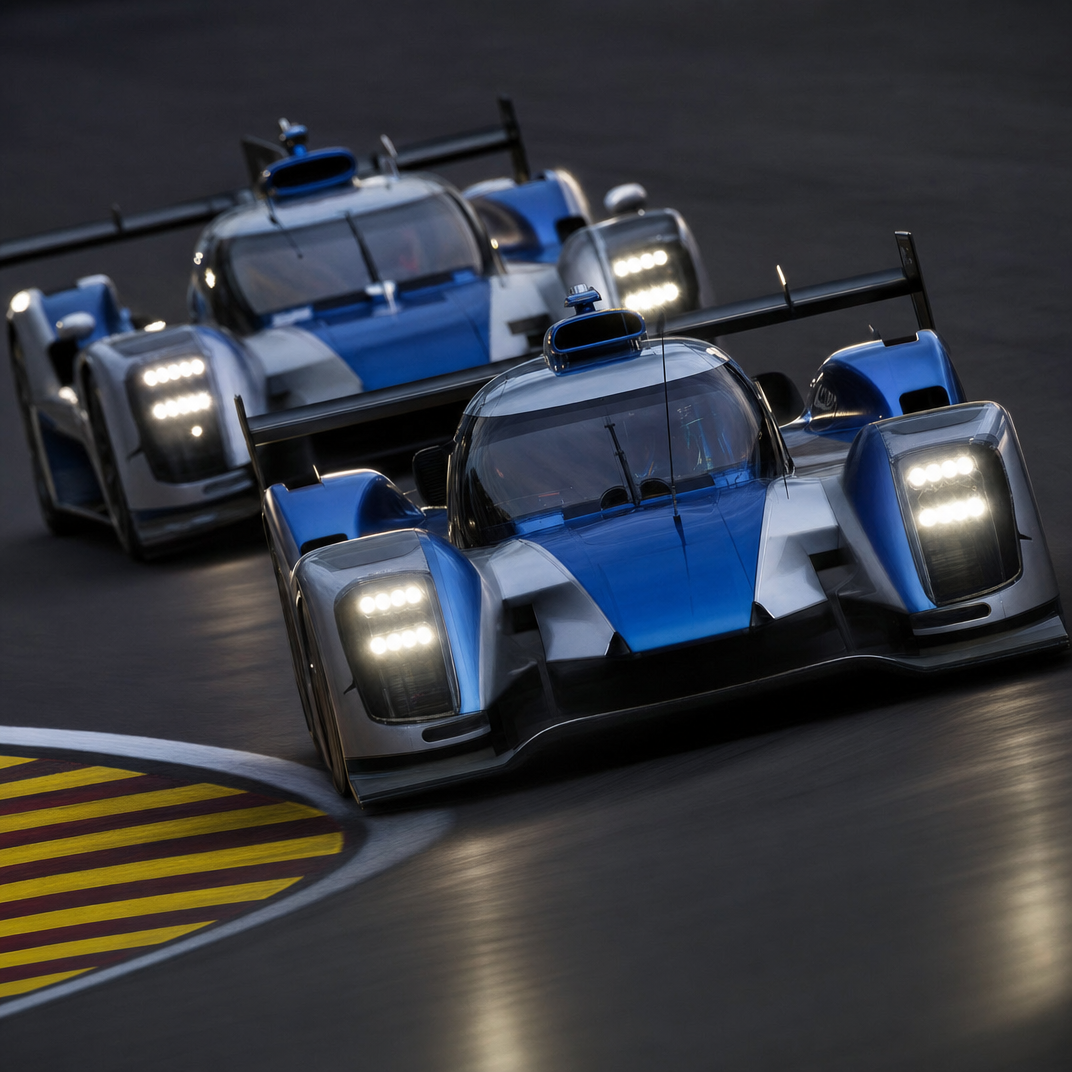
The phrase “two modern prototype race cars battling side by side” makes the duel the central subject, while “low-angle telephoto shot” compresses the corner and gives the cars a forceful, close-up presence. “Slightly more pronounced motion blur streaking from the front wheels while keeping the car contours relatively sharp” separates speed cues from vehicle readability. The “dark asphalt,” “dramatic track lighting,” and “bright white headlights” establish the black, gray, and white palette, with “crisp, high-contrast reflections on their glossy bodywork” supplying the strongest visual detail.
FAQ
→How do I make one prototype race car more prominent than the other?
Replace “two modern prototype race cars battling side by side” with “one leading prototype race car dominating the foreground, a second car smaller and slightly blurred in pursuit.” Keep “low-angle telephoto shot,” but add “front three-quarter view of the leading car” to direct attention toward its nose and cockpit.
→How do I turn this into a calmer, more cinematic night-race image?
Replace “intense, fast-paced endurance racing atmosphere” with “quiet, suspenseful cinematic endurance racing atmosphere,” and change “slightly more pronounced motion blur streaking from the front wheels” to “minimal wheel motion blur with controlled sharpness.” Replace “dramatic track lighting” with “soft pools of cool blue track lighting and restrained headlight glow.”
→How do I build a series of variations while keeping the same racing identity?
Keep “photorealistic motorsport photography,” “two modern prototype race cars,” and “blue and silver livery,” then swap only the setting phrase “dark asphalt corner ... at night” for variants such as “rain-soaked street circuit at dusk,” “sunlit high-speed desert circuit,” or “foggy mountain racetrack at dawn.” Match each change with a lighting replacement, such as “wet-surface reflections,” “hard golden sunlight,” or “diffused fog lighting,” while retaining “sharp car contours” for visual consistency.
Learn the technique behind this
- Why can't AI spell, and how do I get readable text in an image? — Older diffusion models had no character-level representation of text, so they produced letterform-shaped texture instead of words.
- Why does the model ignore parts of my prompt? — Ignored instructions are almost always conflicts, counts, or spatial relationships — three things current models handle badly — rather than the model failing to read you.
- Do negative prompts work, and what should go in one? — Negative prompts work on models that support a separate negative conditioning channel — mainly Stable Diffusion and FLUX-family models.
Related prompts
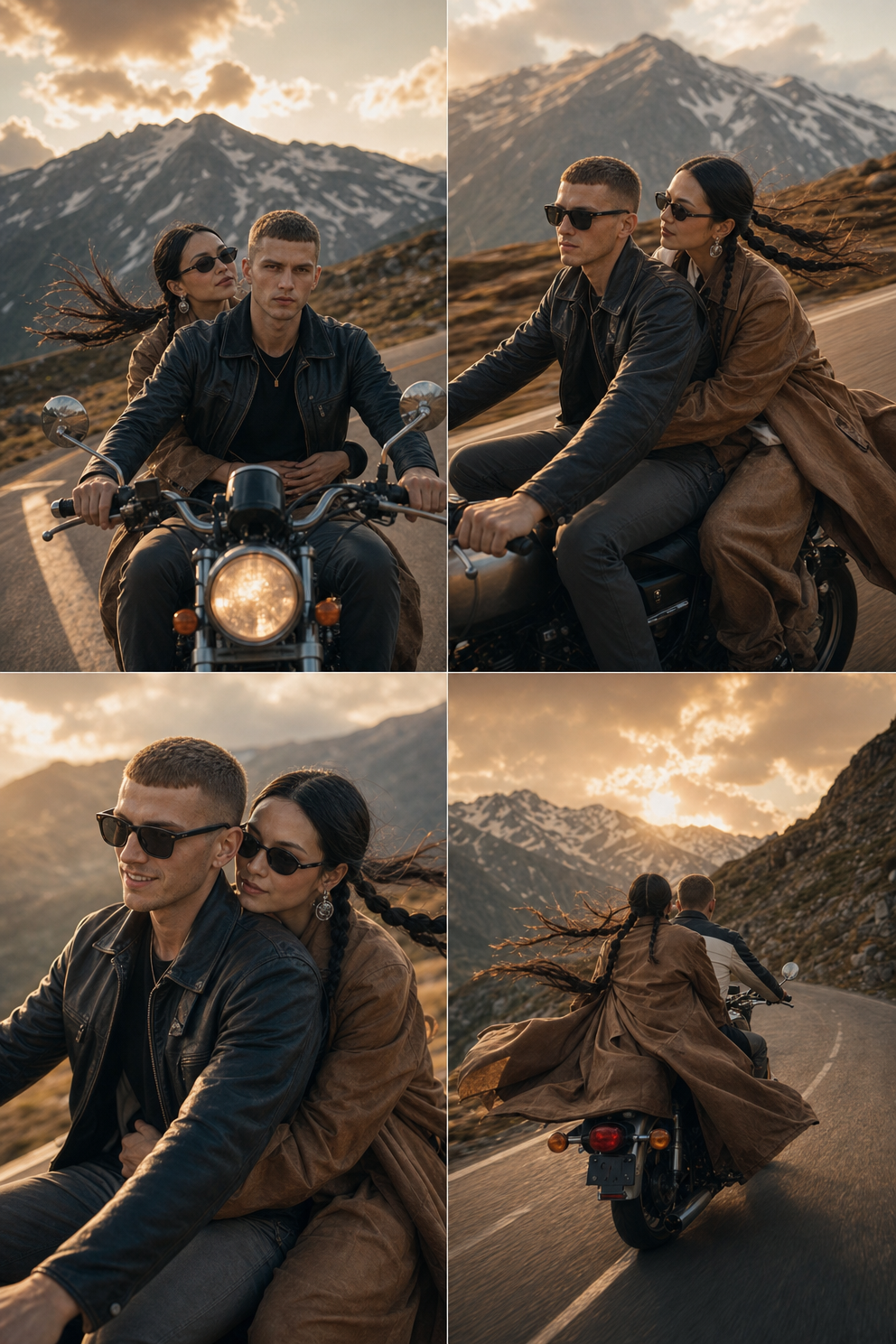
Golden-hour couple rides a classic bike
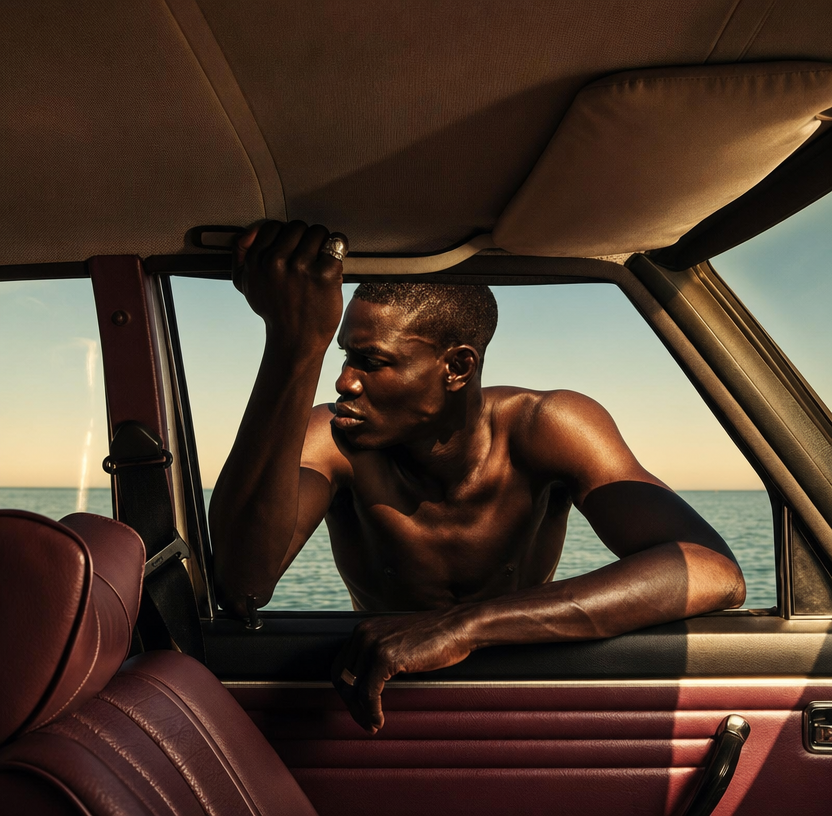
Shirtless Man, Vintage Car, Coastline Light
Glossy black Porsche with small rear spoiler
Top-Down Yellow Porsche GT2 RS