Why this works
The close framing is anchored by “portrait-closeup,” “sharp focus on the driver,” and the “85mm lens look,” keeping the woman, cat-eye sunglasses, windblown bob, and cream top dominant while the shoreline falls into “bokeh highlights.” The breezy glamour comes from “windblown short bob hair tucked behind one ear,” “oversized cat-eye sunglasses with a thin gold frame,” and “luxury fashion editorial,” while “late-afternoon warm golden-hour sunlight” adds warmth to the otherwise black, cream, chrome, and muted beige-gray image. “Deep teal-and-sand color palette” and “bright aquamarine water” establish the intended coastal contrast, although the generated image’s beige, brown, white, and gray dominance makes the result feel more restrained and editorial than vividly turquoise.
FAQ
→How do I make the aquamarine water and coastal setting more prominent?
Replace “portrait-closeup” with “medium-wide environmental portrait” and change “sharp focus on the driver with shoreline bokeh” to “sharp focus shared between the driver and the bright aquamarine coastline.” Replace “shallow depth of field” with “moderate depth of field, detailed water and distant shore,” and add “the convertible occupying the lower third, expansive water filling the background.”
→How do I make the portrait feel moodier and less sunny?
Replace “late-afternoon warm golden-hour sunlight” with “overcast blue-hour light with controlled directional highlights,” and change “breezy glamorous atmosphere” to “moody nocturnal coastal fashion atmosphere.” Replace “deep teal-and-sand color palette” with “deep navy, charcoal, and muted silver palette,” while keeping “high-contrast silhouettes” to preserve the graphic editorial structure.
→How do I build a coordinated series of variations from this prompt?
Keep the fixed identity and styling phrases, especially “woman driving a sleek black convertible,” “windblown short bob hair tucked behind one ear,” and “oversized cat-eye sunglasses with a thin gold frame.” Vary one controlled block per image: swap “bright aquamarine water” for “rocky Mediterranean cliffs,” “white-sand beach,” or “foggy harbor,” and replace “late-afternoon warm golden-hour sunlight” with “crisp morning sunlight,” “pink sunset light,” or “cool overcast daylight.” Preserve “luxury fashion editorial,” “85mm lens look,” and “sharp focus on the driver” so the set retains a consistent visual identity.
Learn the technique behind this
- Why can't AI spell, and how do I get readable text in an image? — Older diffusion models had no character-level representation of text, so they produced letterform-shaped texture instead of words.
- How should a prompt be structured, and does word order matter? — A prompt that behaves predictably names one subject first, then what it is doing, then where, then the light, then the lens or medium, then the style.
- Which camera and lighting terms actually change an AI image? — Focal length, aperture, light direction and time of day change the image reliably because they correlate with real photographic patterns in the training data.
Related prompts
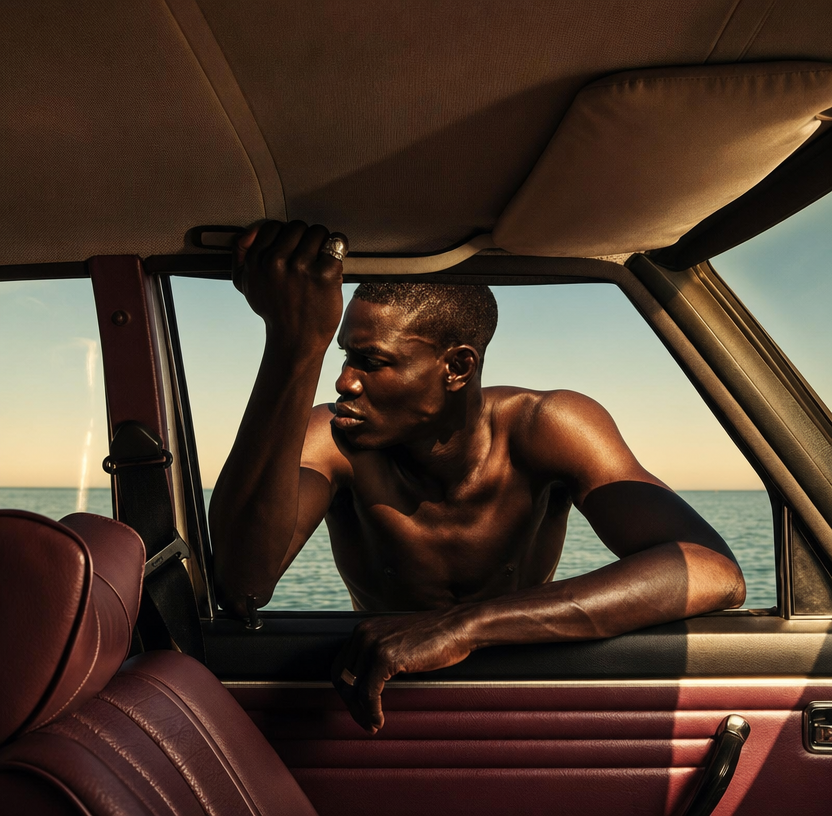
Shirtless Man, Vintage Car, Coastline Light
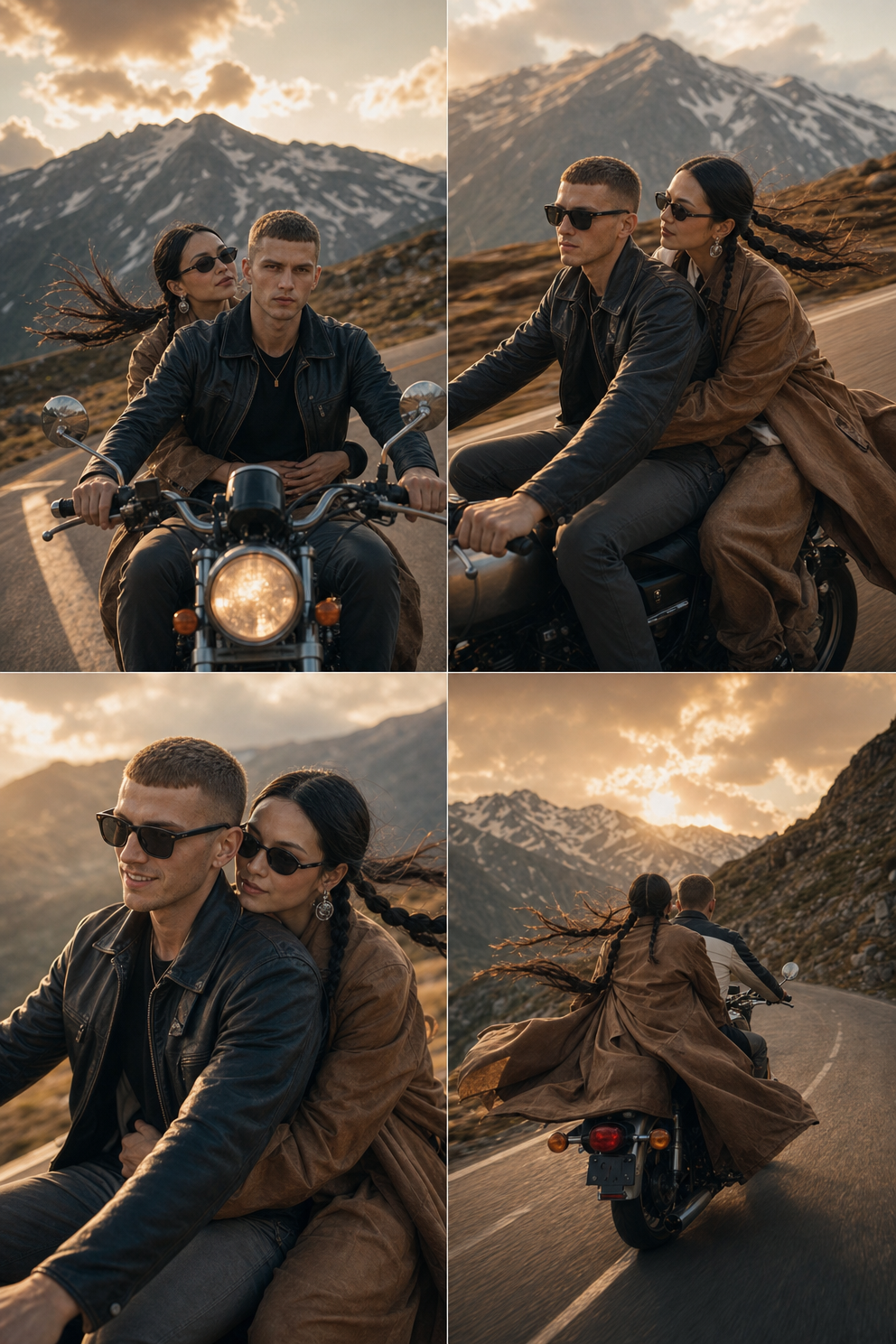
Golden-hour couple rides a classic bike
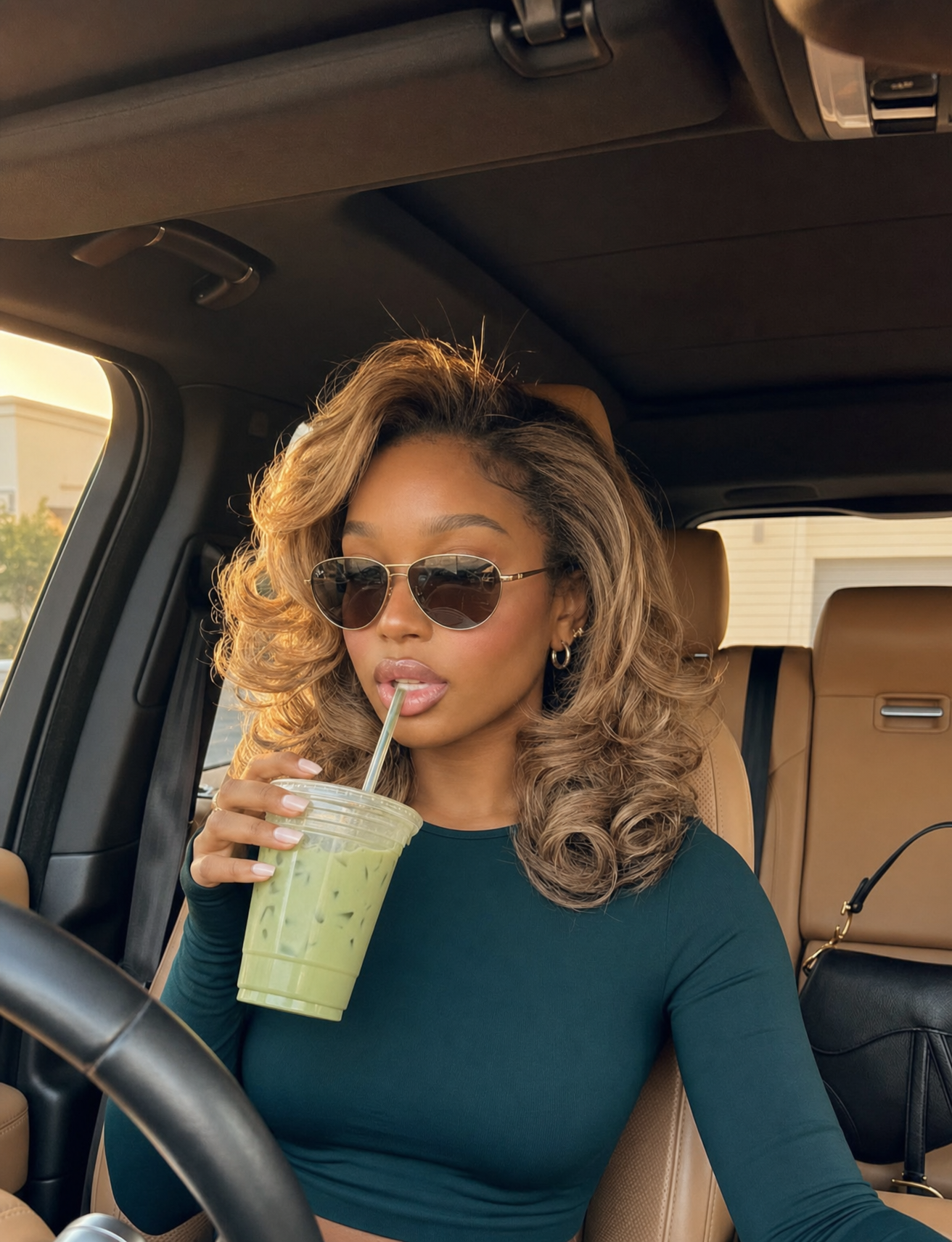
Golden-hour Matcha Sips in Luxury SUV
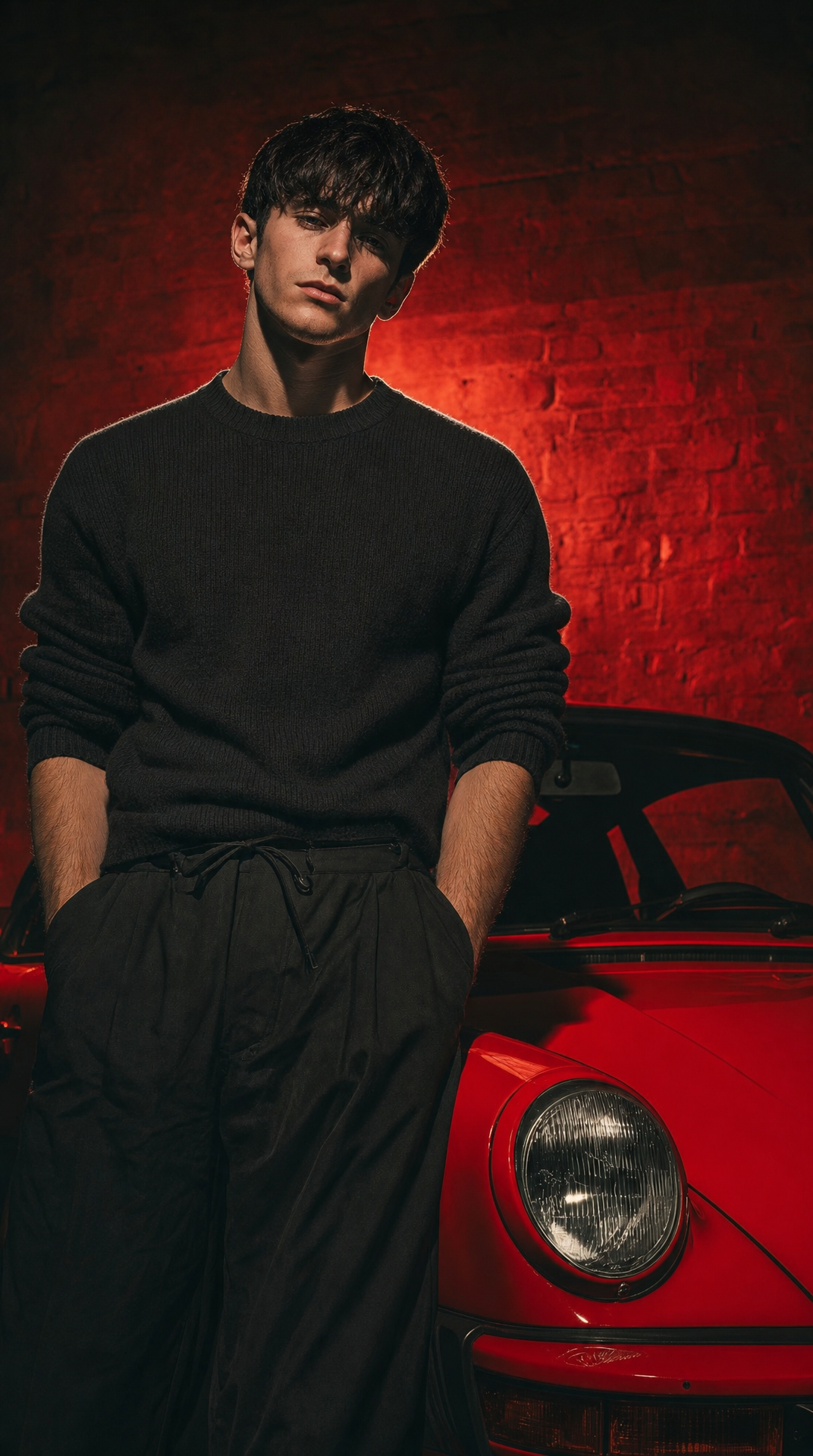
Young model in studio by sports car