Why this works
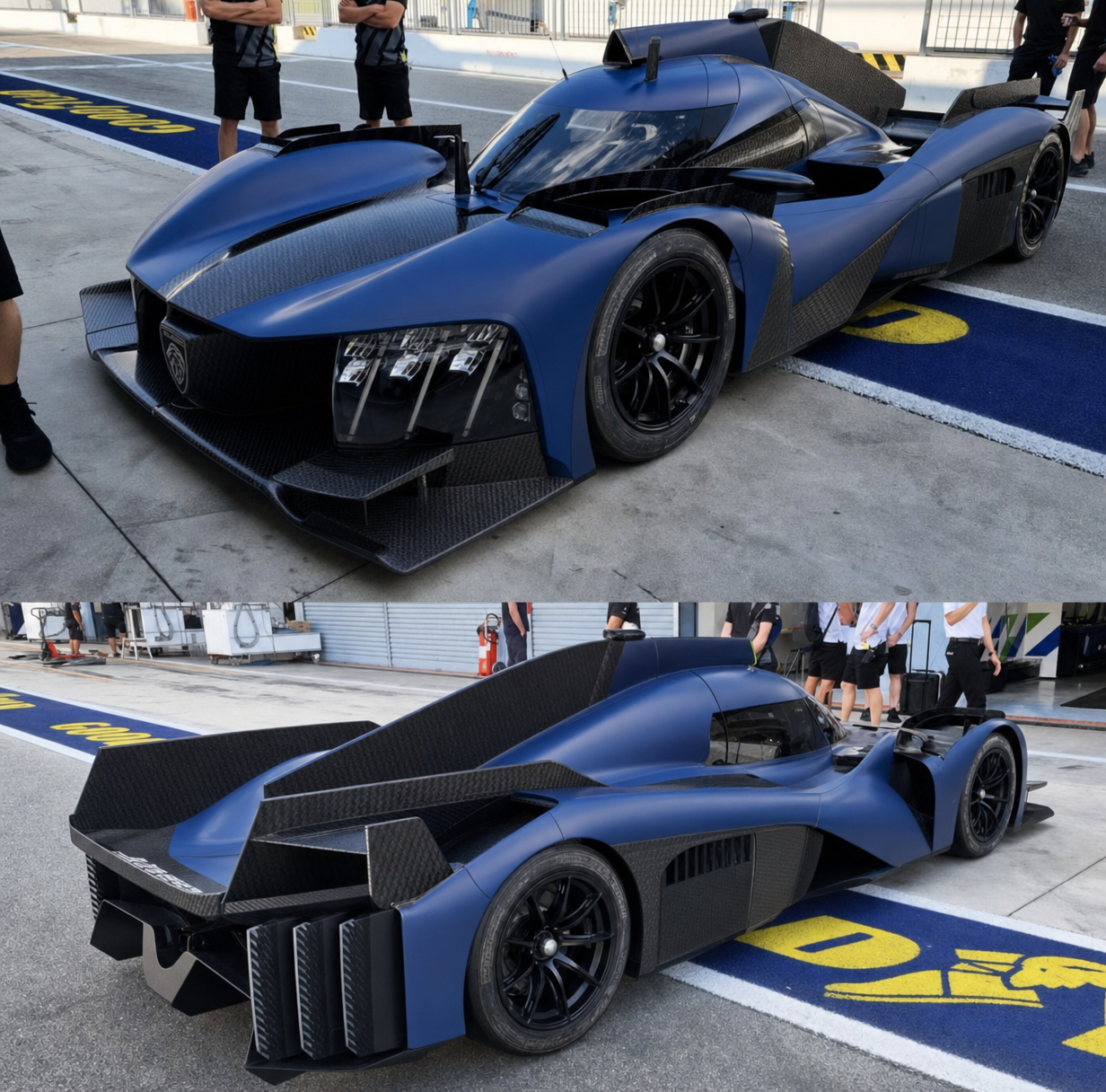
The “side profile and three-quarter angle” gives the wide-shot composition enough room to show the low-slung silhouette, wide fenders, front splitter, and large rear diffuser together. “Matte deep blue and carbon-fiber black with subtle silver accents” builds a restrained black-and-gray palette while distinguishing painted panels from exposed technical surfaces; the phrase “daylight with sharp reflections” keeps carbon weave, slick tires, and industrial pit-lane details legible rather than atmospheric or soft. “Photorealistic motorsport photography,” “ultra-detailed,” and “technical/aggressive” anchor the image in documentary race photography instead of a stylized concept-car rendering.
FAQ
→How do I make the car feel more dominant and dramatic in the frame?
Replace “wide-shot” with “low-angle medium-wide shot, car filling most of the frame,” and change “side profile and three-quarter angle” to “front three-quarter view from ground level.” Keep “aggressive aerodynamic front splitter” and “large rear diffuser,” since those phrases make the nose and underbody read as performance features.
→How do I shift the image from a technical daylight mood to a darker, more cinematic race atmosphere?
Replace “daylight with sharp reflections” with “overcast blue-hour lighting, hard overhead pit-lane fluorescents, and controlled highlights,” and add “deep shadows under the car.” Retain “matte deep blue and carbon-fiber black,” because those colors will absorb the cooler light and produce a more subdued, tense tone.
→How do I create a coordinated series of variations from this race-car prompt?
Keep “modern endurance race car,” “matte deep blue and carbon-fiber black with subtle silver accents,” and “photorealistic motorsport photography” unchanged across every prompt. Vary only the camera and setting phrases, such as “rear three-quarter angle in the garage,” “head-on view on the pit straight,” or “tracking shot during a night race,” while preserving “ultra-detailed” and “realistic industrial details” for visual continuity.
Learn the technique behind this
- Why can't AI spell, and how do I get readable text in an image? — Older diffusion models had no character-level representation of text, so they produced letterform-shaped texture instead of words.
- Why does the model ignore parts of my prompt? — Ignored instructions are almost always conflicts, counts, or spatial relationships — three things current models handle badly — rather than the model failing to read you.
- Do negative prompts work, and what should go in one? — Negative prompts work on models that support a separate negative conditioning channel — mainly Stable Diffusion and FLUX-family models.
Related prompts
Shirtless Man, Vintage Car, Coastline Light
Golden-hour couple rides a classic bike
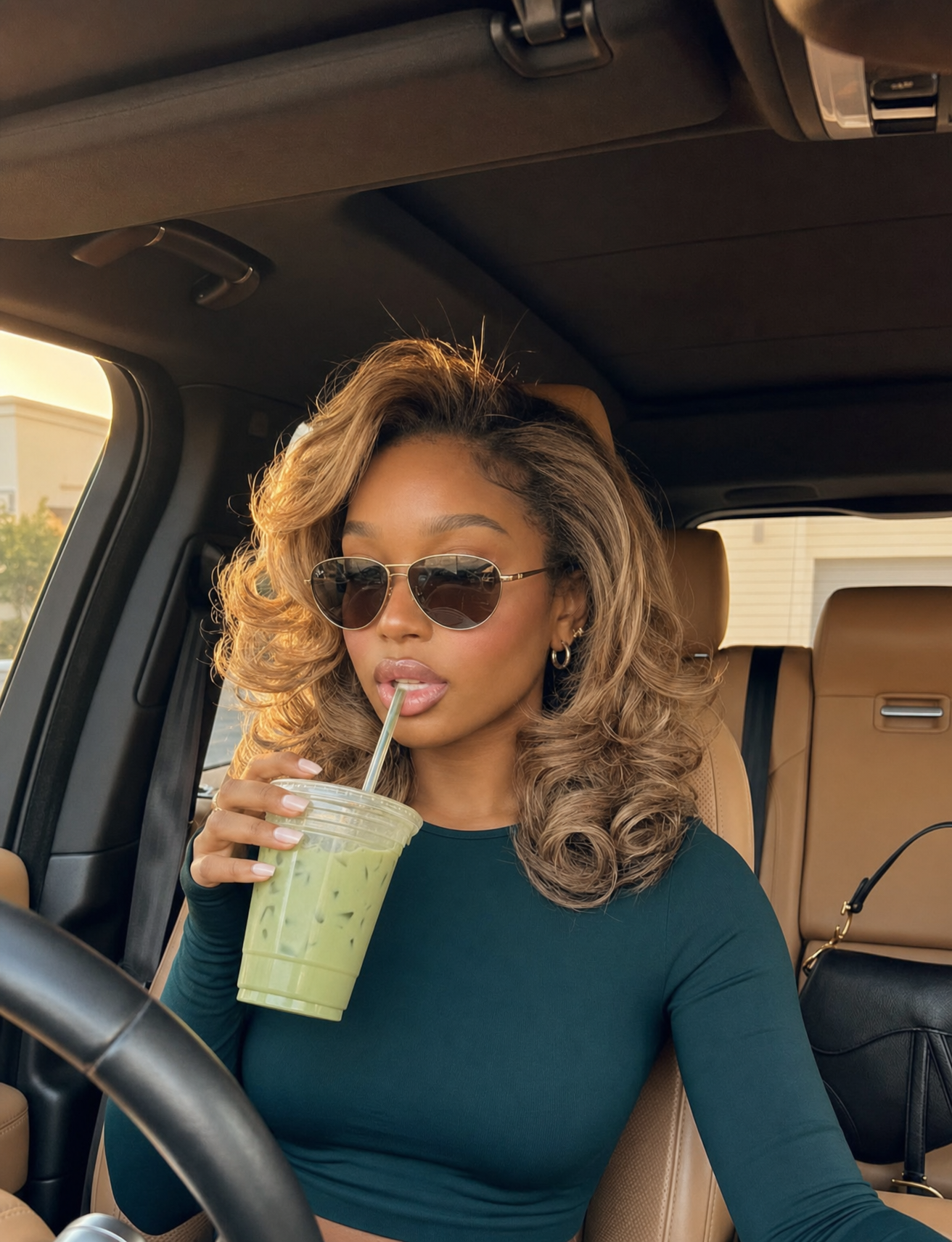
Golden-hour Matcha Sips in Luxury SUV
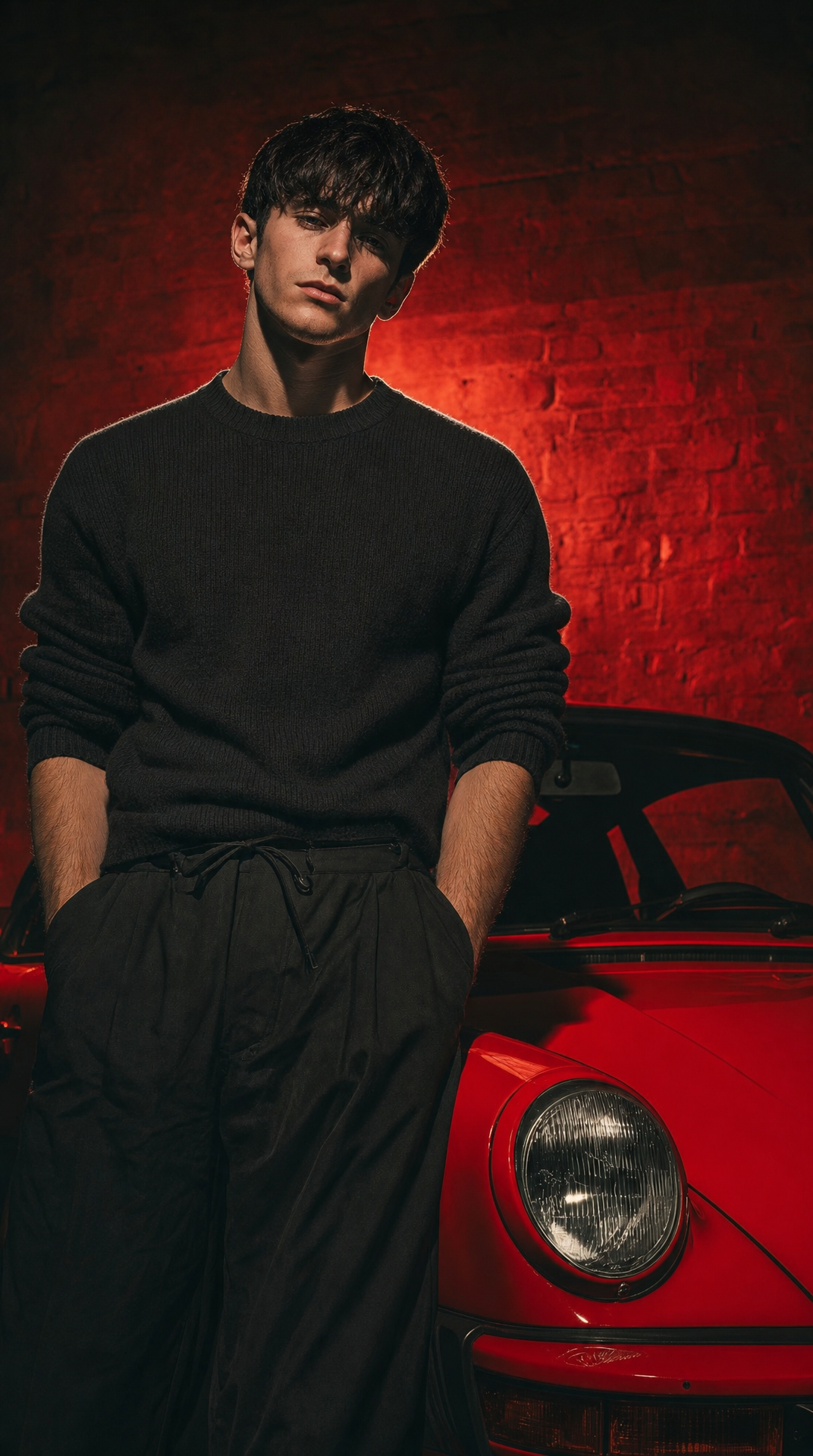
Young model in studio by sports car