Why this works
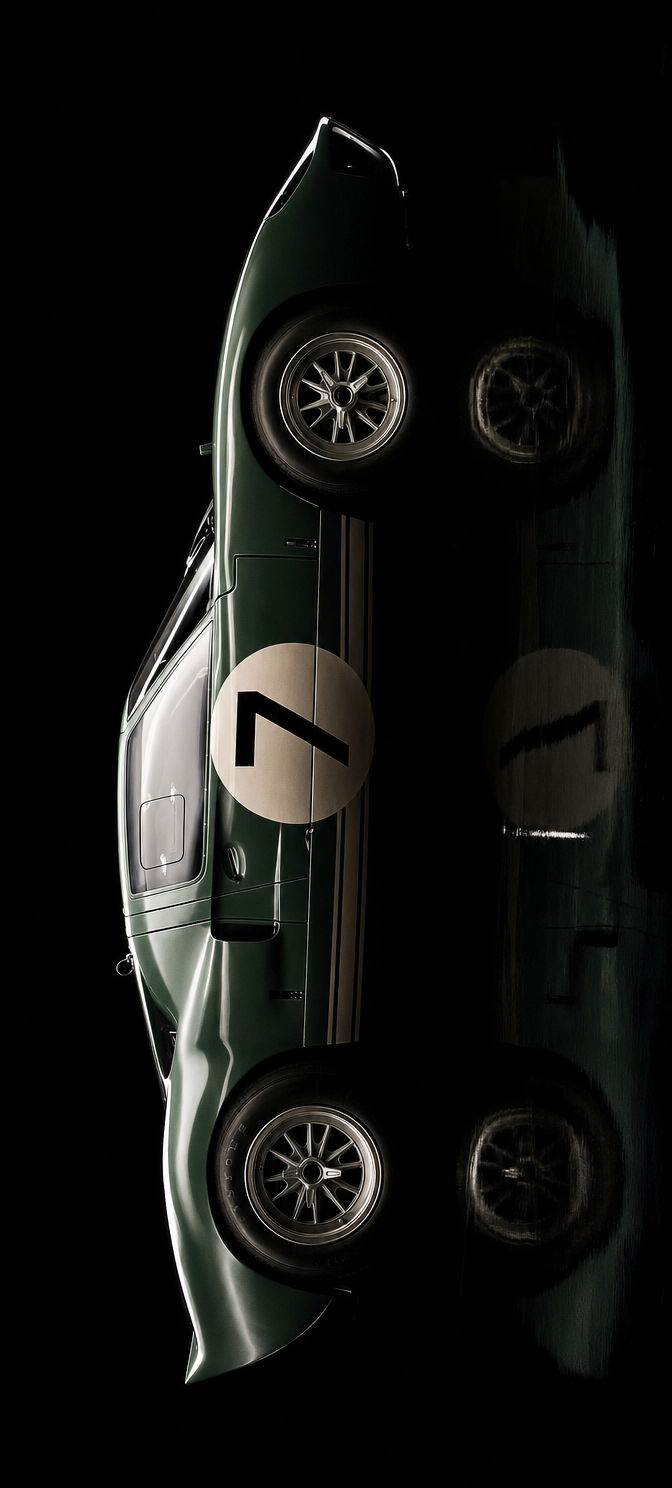
The centered studio side-profile makes the 1966 Ford GT40 read as a clean, iconic silhouette, while the “pure black background” and “glossy black reflective floor” isolate the car and add controlled vertical reflection. “Dramatic rim lighting” and “high-contrast museum-quality studio presentation” define the sleek, dramatic mood; “metallic dark green,” “silver multi-spoke wheels,” and “crisp automotive paint reflections” create the dominant green-and-gray color harmony. The “large circle containing the number 7,” “sharp panel lines,” and “realistic tire detail” keep the image anchored in period racing identity rather than letting the dark presentation obscure its construction.
FAQ
→How do I make the GT40 feel more aggressive and race-ready?
Replace “high-contrast museum-quality studio presentation” with “raw endurance-racing pit-lane presentation,” and change “glossy black reflective floor” to “dark, slightly wet asphalt with scattered tire marks.” Keep “dramatic rim lighting,” but add “hard red accent light from camera left” to push the mood toward competition rather than museum display.
→How do I make the number 7 and racing identity more prominent?
Change “the door featuring a large circle containing the number 7” to “an oversized white roundel dominating the door, with a bold black number 7,” and replace “simplified racing stripe pattern” with “high-contrast period racing stripes running over the hood, roof, and rear deck.” Add “three-quarter front emphasis” after the side-profile framing if you want the roundel and nose together to carry more visual weight.
→How do I create a matching series of GT40 variations from this prompt?
Keep the fixed phrases “studio side-profile framing,” “pure black background,” “glossy black reflective floor,” and “large circle containing the number 7,” then swap only “metallic dark green” for colors such as “deep burgundy,” “satin ivory,” or “midnight blue.” Replace “silver multi-spoke wheels” with a consistent wheel option such as “gold center-lock wheels” across every version, while changing the stripe phrase to a new controlled pattern for each car.
Learn the technique behind this
- Why can't AI spell, and how do I get readable text in an image? — Older diffusion models had no character-level representation of text, so they produced letterform-shaped texture instead of words.
- How should a prompt be structured, and does word order matter? — A prompt that behaves predictably names one subject first, then what it is doing, then where, then the light, then the lens or medium, then the style.
- Do negative prompts work, and what should go in one? — Negative prompts work on models that support a separate negative conditioning channel — mainly Stable Diffusion and FLUX-family models.
Related prompts
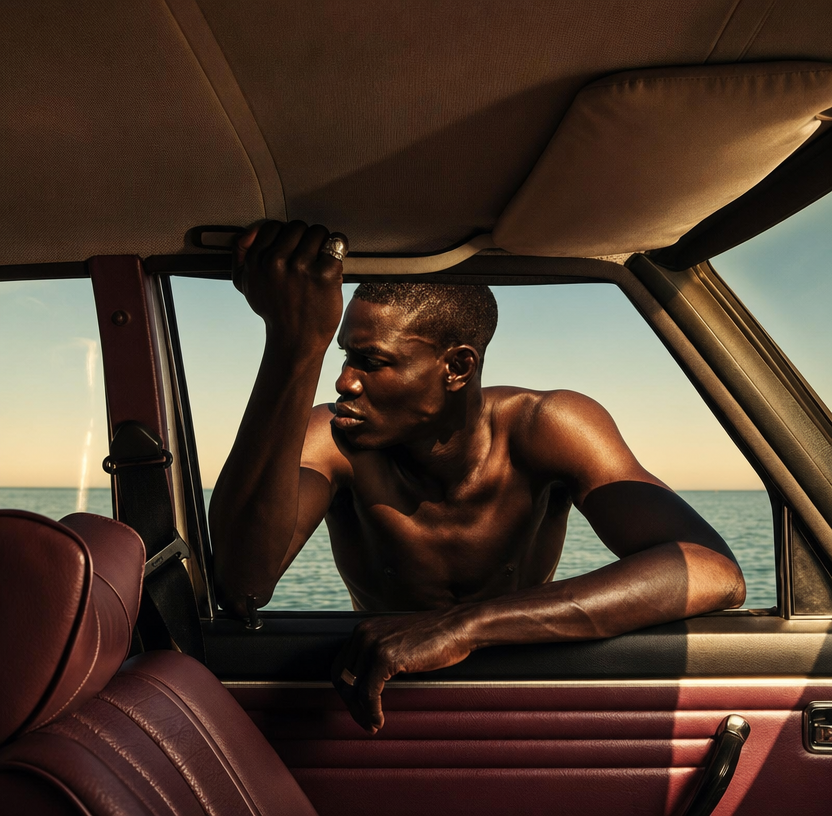
Shirtless Man, Vintage Car, Coastline Light
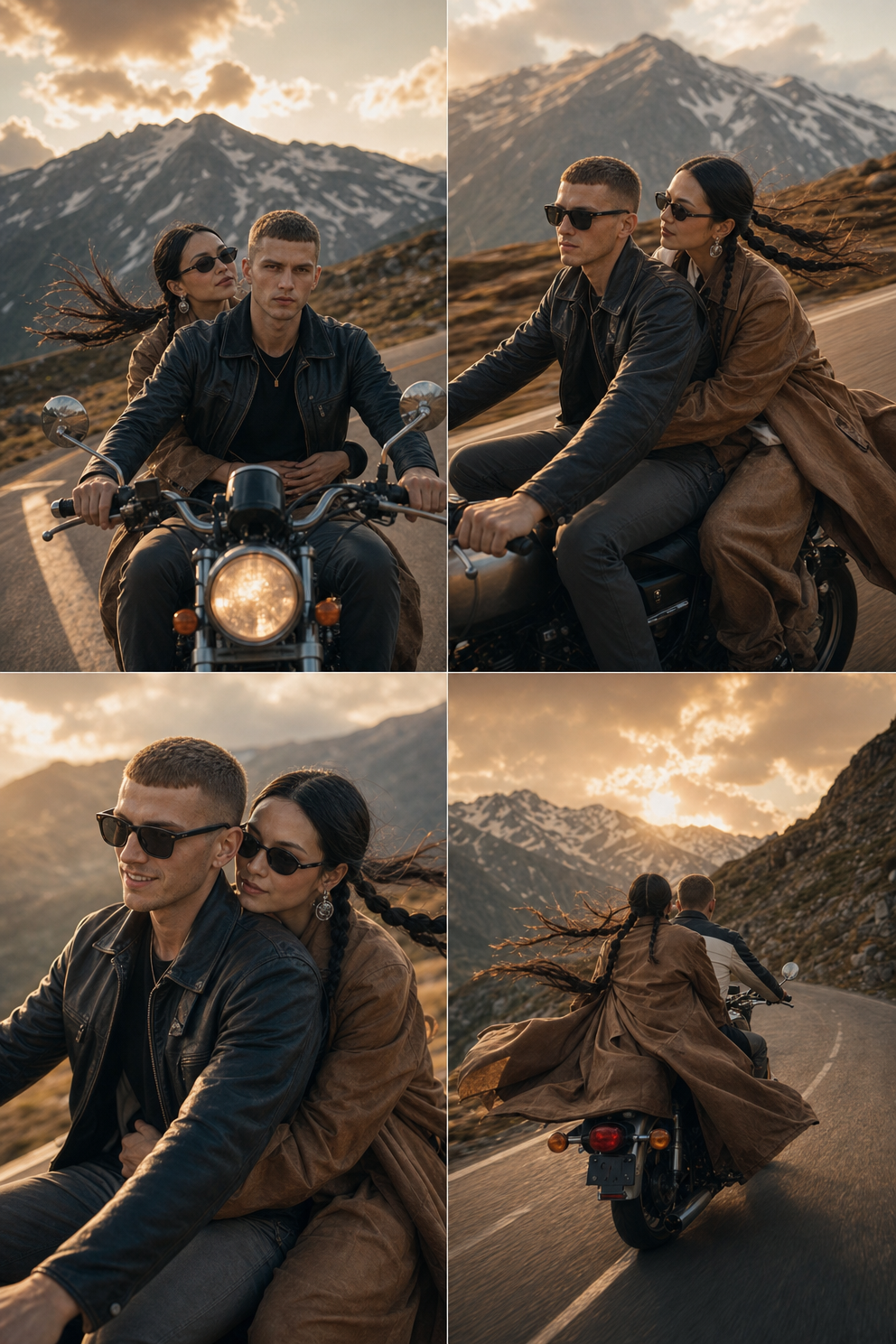
Golden-hour couple rides a classic bike

Golden-hour Matcha Sips in Luxury SUV
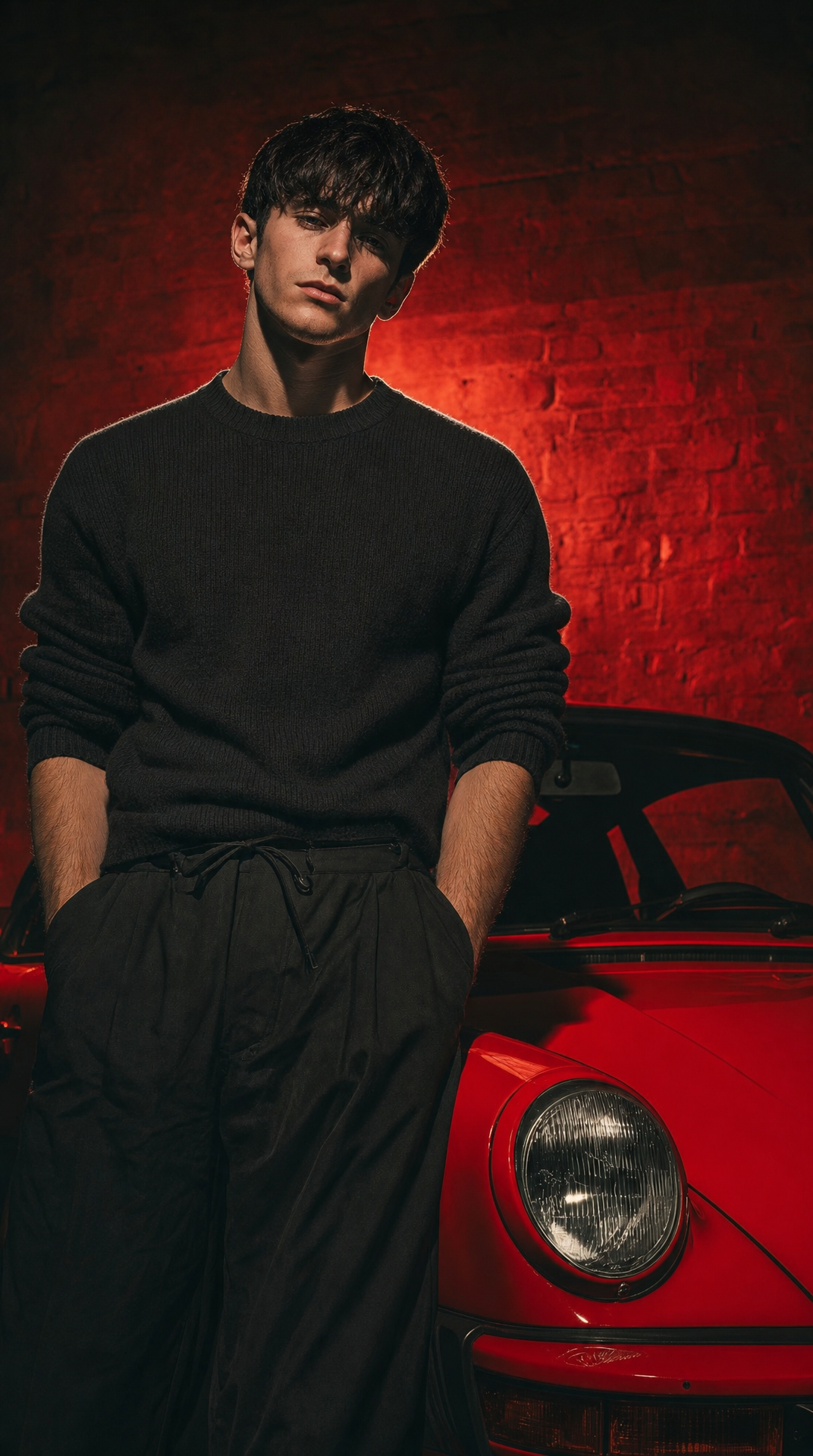
Young model in studio by sports car