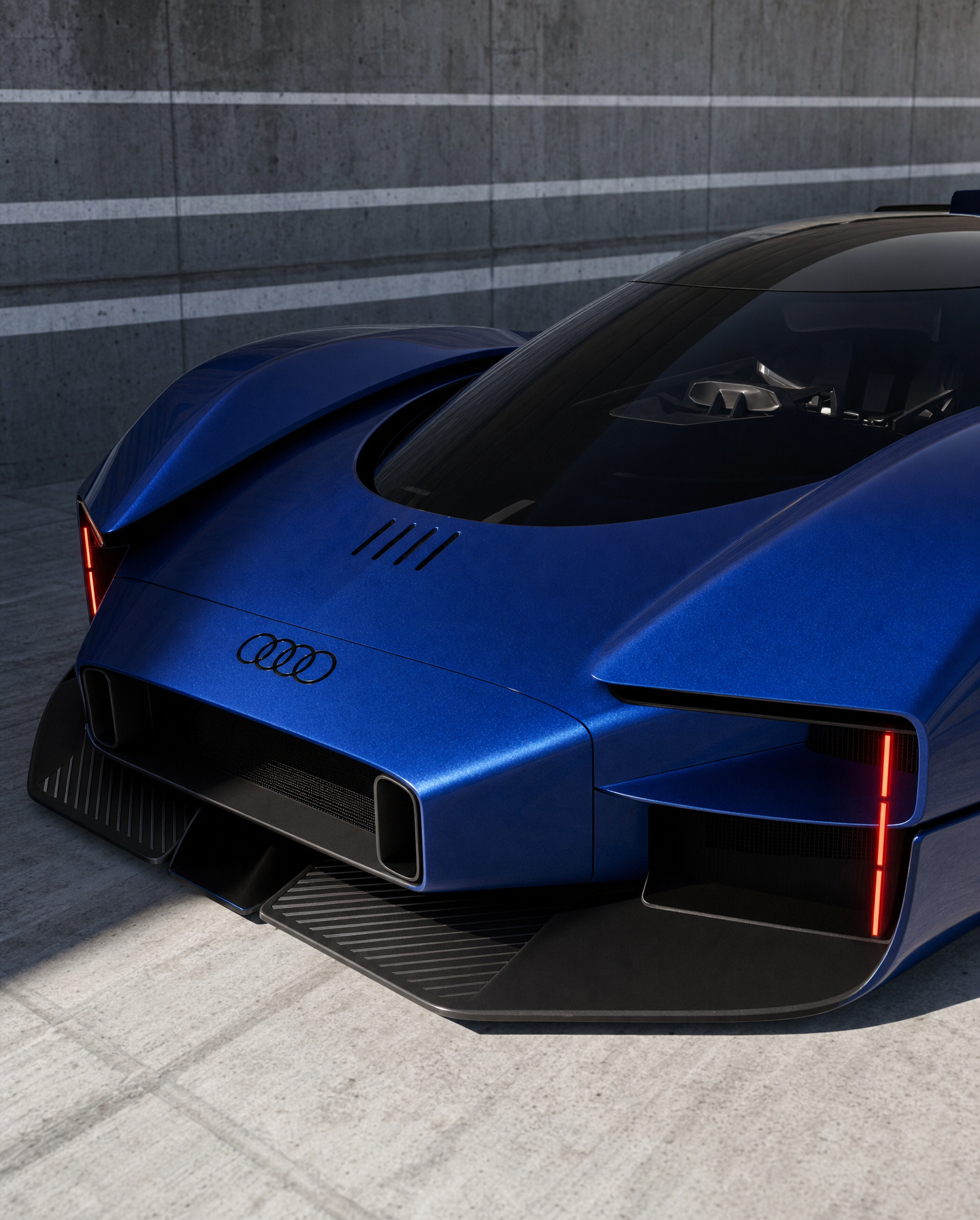
Why this works
The “dramatic front three-quarter angle” makes the Audi GT’s low nose, “large rear wing,” and “aggressive front splitter” read clearly in a wide-shot composition, while “sharp, angular lines emphasized” directs attention along the car’s aerodynamic geometry. “High-contrast studio lighting” and “glossy paint highlights” separate the red body from the dominant black and gray livery, and “clean minimalist showroom background” keeps the frame controlled rather than visually crowded. “Glossy floor producing crisp reflections,” “ultra-detailed,” and “crisp focus” supply the polished motorsport-editorial finish and reinforce the aggressive, sleek mood.
FAQ
→How do I change this prompt for a darker, more menacing mood?
Replace “red Audi GT race car” with “deep crimson Audi GT race car,” change “high-contrast studio lighting” to “hard, directional rim lighting with deep shadows,” and replace “clean minimalist showroom background” with “dark charcoal studio bay.” Keep “glossy floor producing crisp reflections” if you still want the silhouette and wing reflected beneath the car.
→How do I make the front splitter and headlights more prominent?
Replace “dramatic front three-quarter angle” with “low, close front three-quarter angle focused on the front splitter and headlights,” and change “wide-shot composition” to “tight three-quarter crop.” Add “headlights and splitter occupying the visual center” after “aggressive front splitter,” while retaining “crisp focus” for sharp mechanical detail.
→How do I turn this into a consistent series of race-car images?
Keep the fixed phrases “clean minimalist showroom,” “glossy floor producing crisp reflections,” “high-contrast studio lighting,” “wide-shot,” and “photorealistic motorsport studio photography” in every prompt. Vary only the subject line, such as replacing “red Audi GT race car” with “blue Porsche GT race car,” and swap the angle phrase for controlled options like “rear three-quarter angle” or “side profile,” while preserving “dark charcoal-black livery paneling and subtle metallic pinstripes” as the recurring design language.
Learn the technique behind this
- Why can't AI spell, and how do I get readable text in an image? — Older diffusion models had no character-level representation of text, so they produced letterform-shaped texture instead of words.
- How should a prompt be structured, and does word order matter? — A prompt that behaves predictably names one subject first, then what it is doing, then where, then the light, then the lens or medium, then the style.
- Why does the model ignore parts of my prompt? — Ignored instructions are almost always conflicts, counts, or spatial relationships — three things current models handle badly — rather than the model failing to read you.
Related prompts
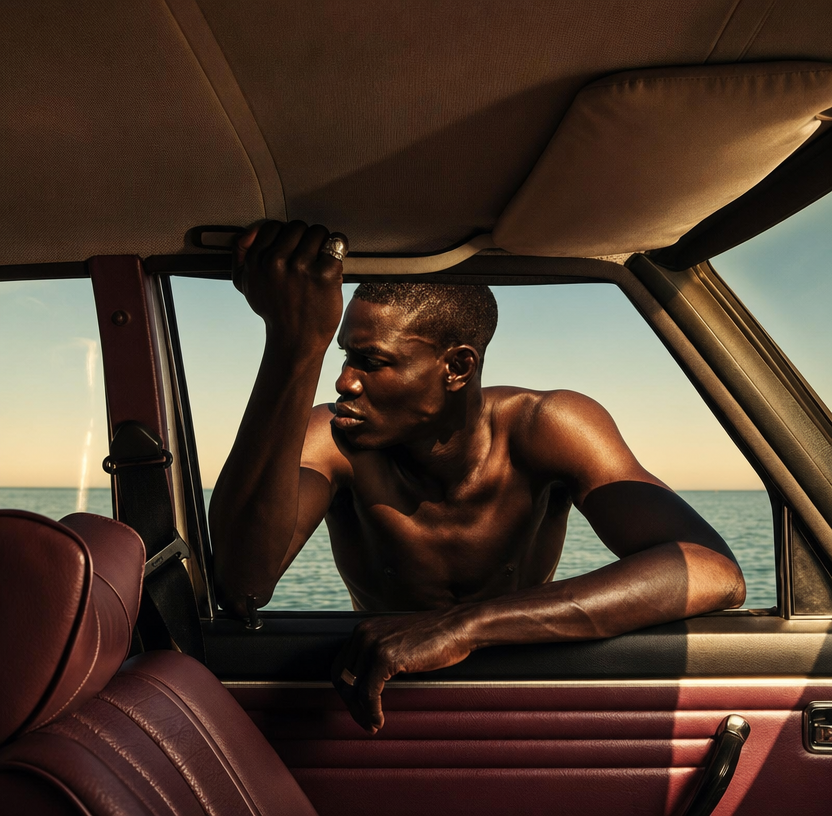
Shirtless Man, Vintage Car, Coastline Light
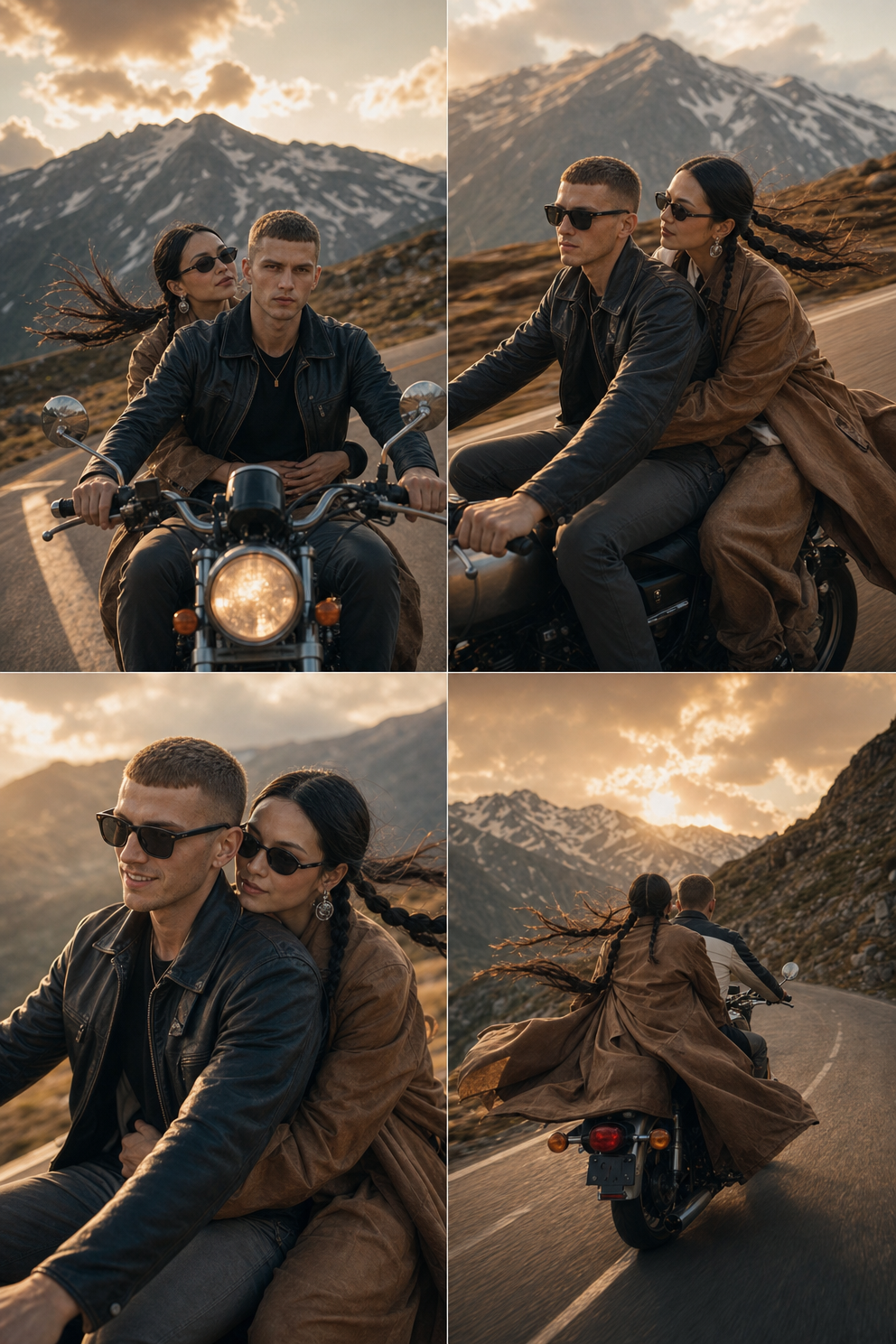
Golden-hour couple rides a classic bike
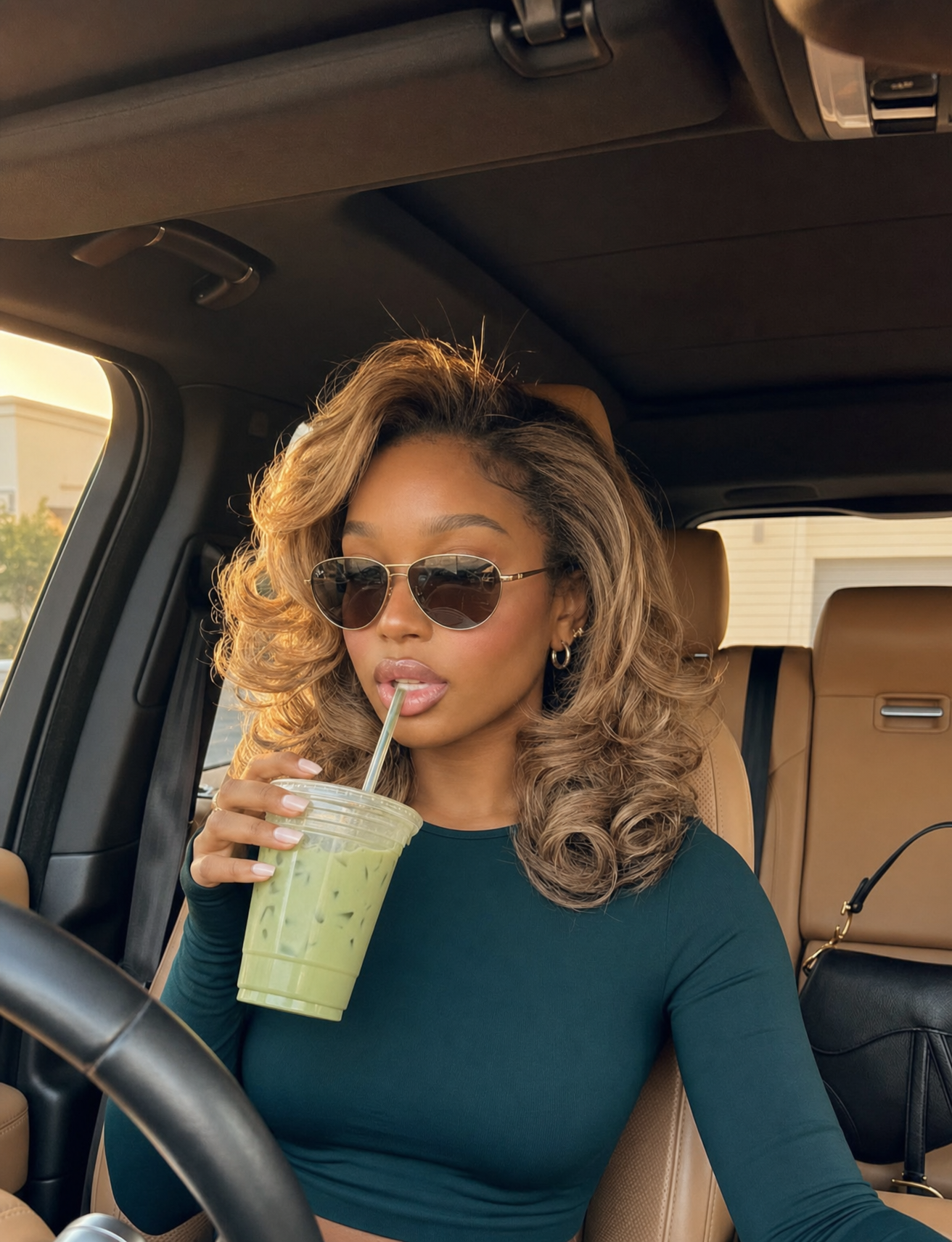
Golden-hour Matcha Sips in Luxury SUV
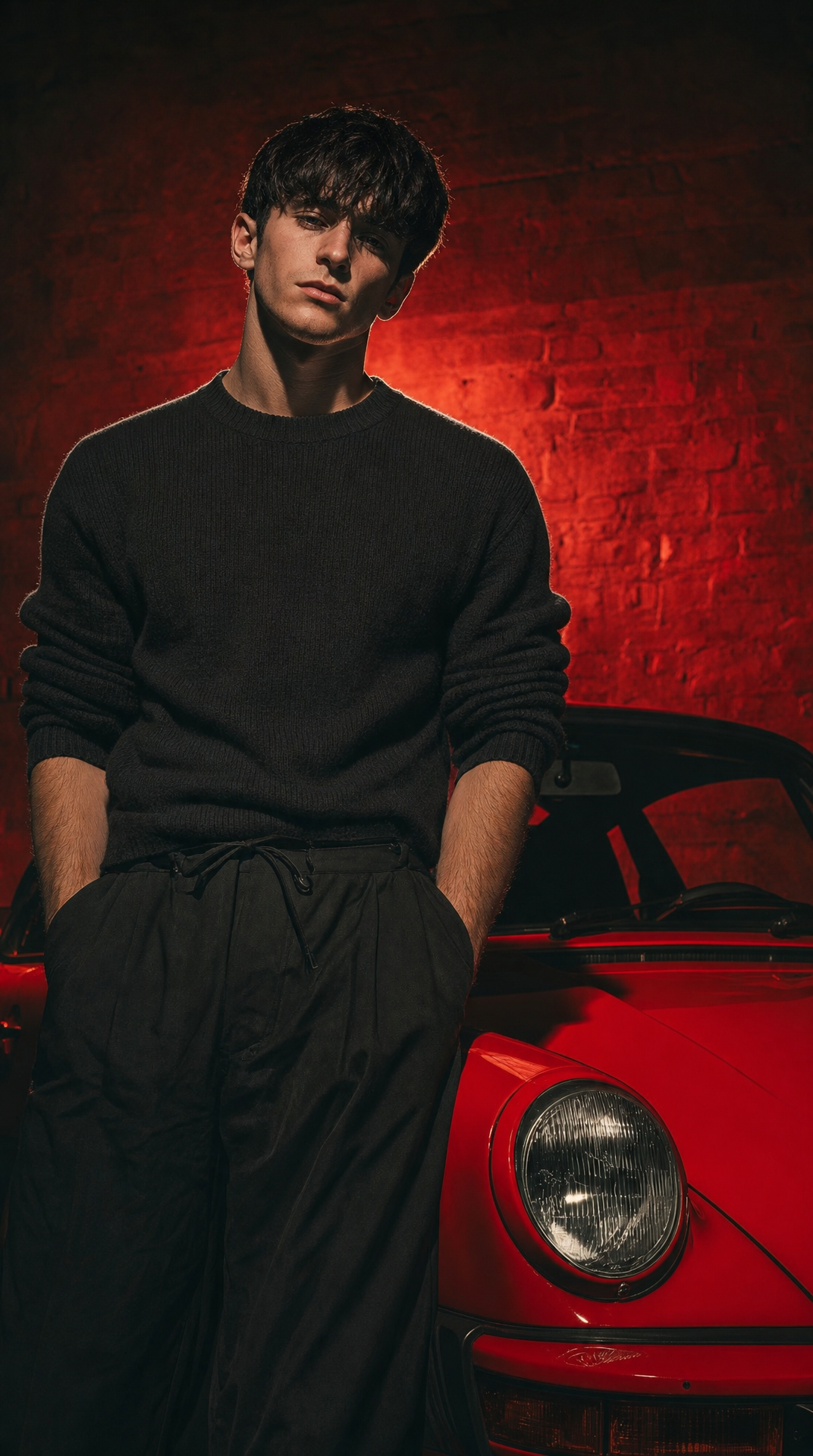
Young model in studio by sports car