Why this works
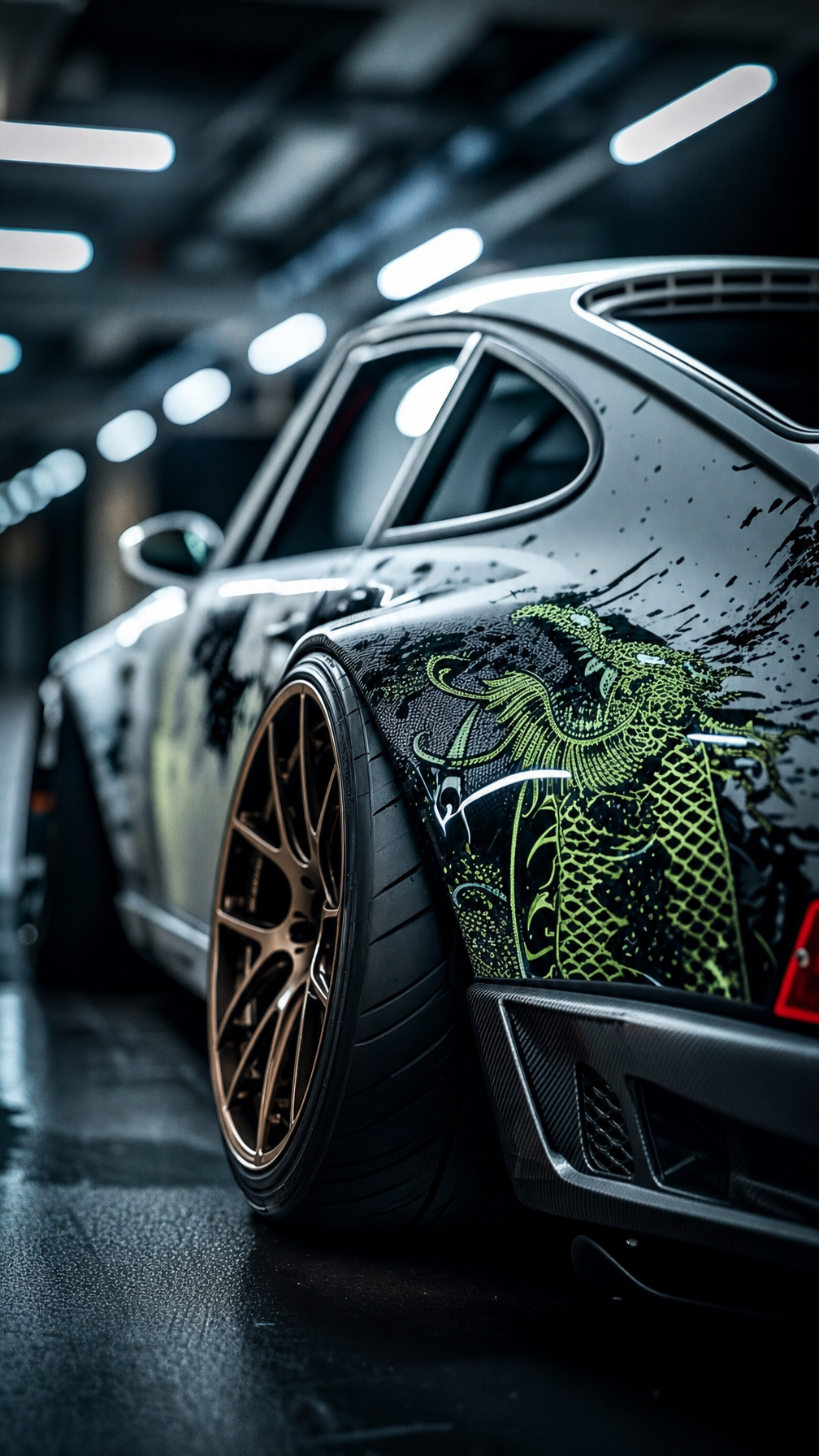
The phrase “low-angle close-up” gives the widebody silver sports car an imposing, aggressive presence, while “portrait-full-body” preserves enough of the car’s silhouette to read the stance and proportions. “Matte charcoal-and-neon-green graphic,” “bronze multi-spoke deep-dish rims,” and “silver paint” create a controlled gray, green, bronze, and white palette, with the prompt’s reported gray, teal, green, and white dominance reinforcing that contrast. “Dim indoor garage,” “soft overhead strip lighting,” “glossy reflections,” and “crisp highlights on the fenders” establish the sleek cinematic mood; “shallow depth of field” keeps the background subdued while directing attention to the front bodywork and wheel details.
FAQ
→How do I make the car’s front end more central and visually dominant?
Replace “a low-angle close-up” with “an extreme low-angle front three-quarter close-up focused on the grille, headlights, and front fenders,” and change “portrait-full-body” to “front-biased composition with the nose filling the lower two-thirds of the frame.” Keep “crisp highlights on the fenders” to preserve the sharp bodywork emphasis.
→How do I turn the sleek garage scene into a darker, more menacing image?
Replace “soft overhead strip lighting” with “hard directional overhead lighting with deep side shadows,” and change “dim indoor garage” to “black industrial garage with wet concrete and sparse practical lights.” Replace “glossy reflections” with “controlled specular reflections and high-contrast highlights” so the silver paint stays readable without softening the aggressive tone.
→How do I create a coordinated series of variations from this prompt?
Keep the fixed phrases “custom widebody silver sports car,” “photorealistic cinematic automotive photography,” and “low-angle close-up,” then swap only the graphic, wheel, and garage variables. For example, replace “matte charcoal-and-neon-green graphic” with “satin navy-and-electric-blue graphic,” “bronze multi-spoke deep-dish rims” with “gunmetal five-spoke forged rims,” and “dim indoor garage” with “rainy underground parking structure,” while retaining “shallow depth of field” and “soft overhead strip lighting” for visual consistency.
Learn the technique behind this
- Why can't AI spell, and how do I get readable text in an image? — Older diffusion models had no character-level representation of text, so they produced letterform-shaped texture instead of words.
- How should a prompt be structured, and does word order matter? — A prompt that behaves predictably names one subject first, then what it is doing, then where, then the light, then the lens or medium, then the style.
- Do negative prompts work, and what should go in one? — Negative prompts work on models that support a separate negative conditioning channel — mainly Stable Diffusion and FLUX-family models.
Related prompts
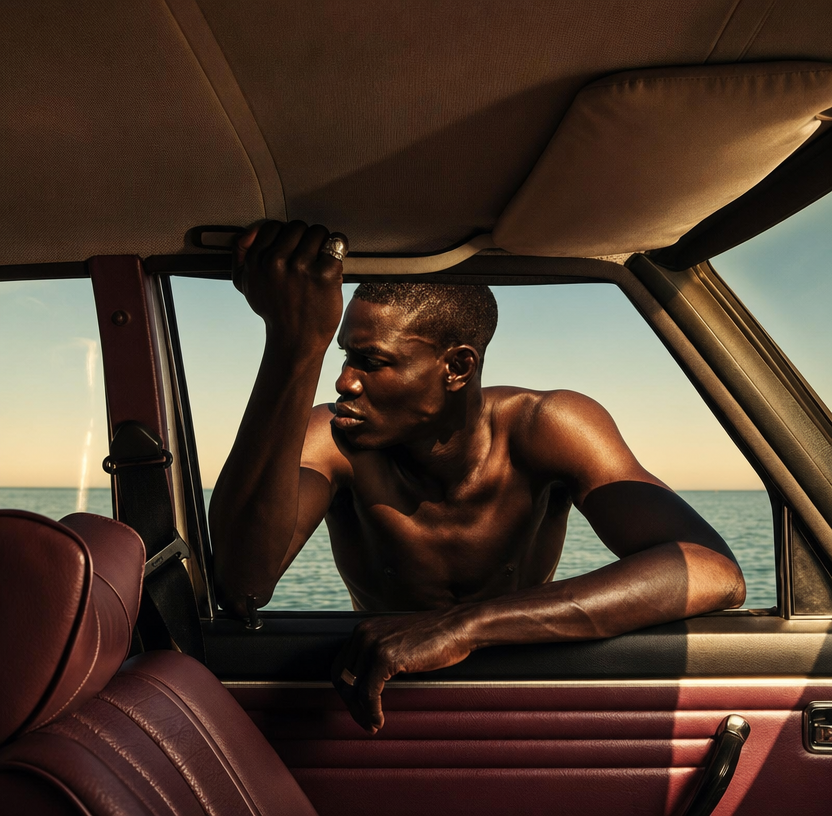
Shirtless Man, Vintage Car, Coastline Light
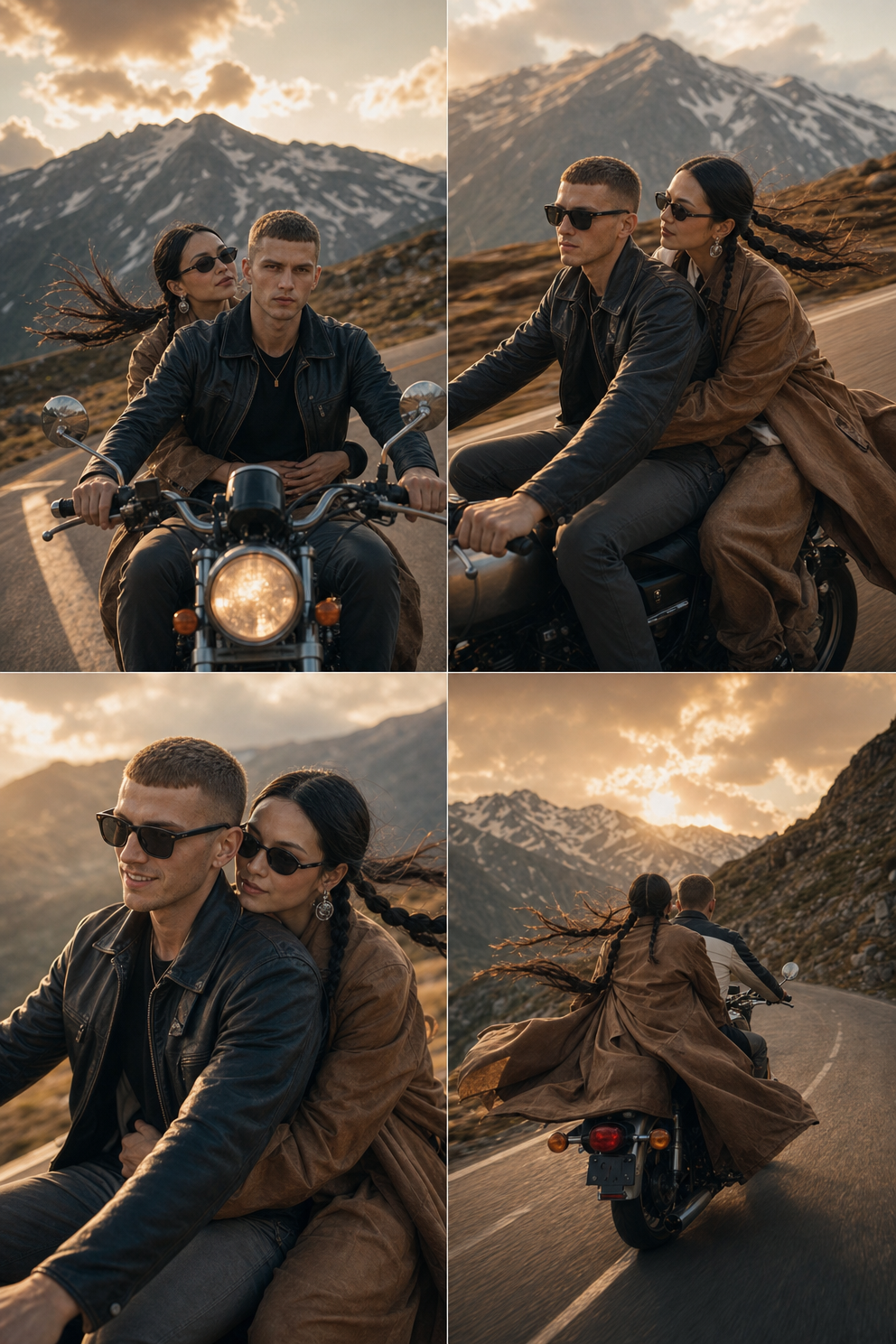
Golden-hour couple rides a classic bike

Golden-hour Matcha Sips in Luxury SUV
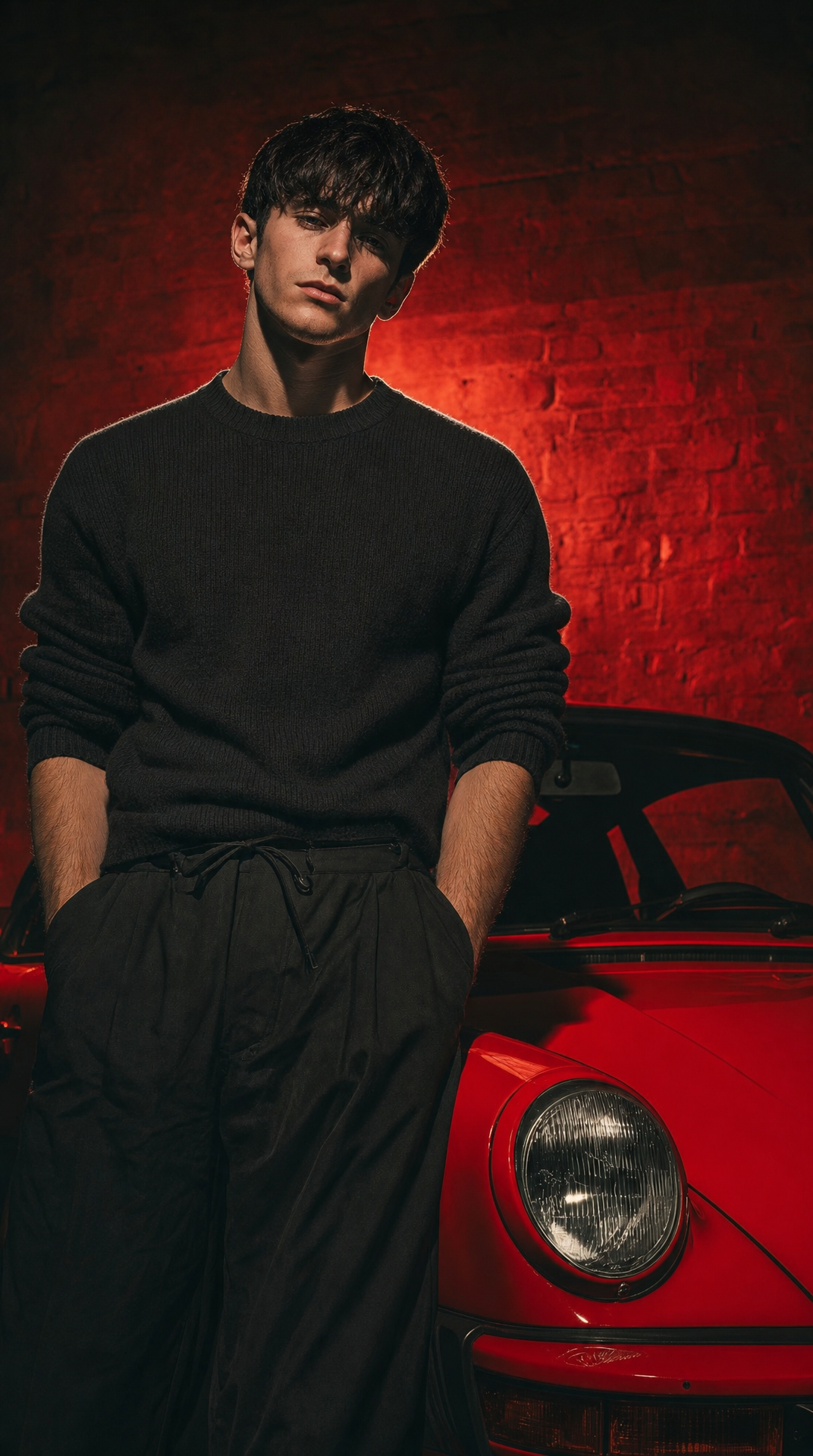
Young model in studio by sports car