Why this works
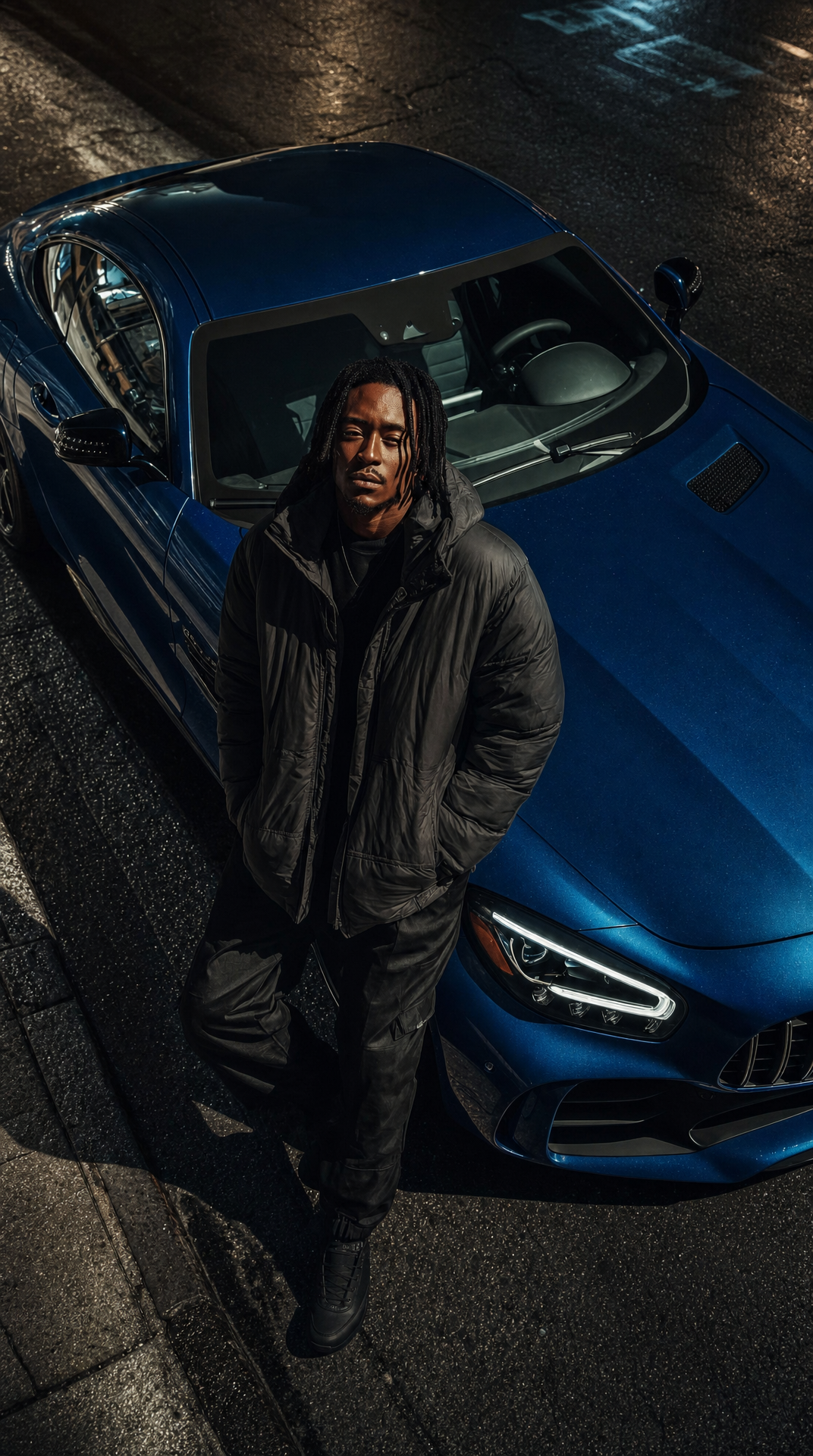
“Overhead top-down composition” makes the wide shot read as a designed campaign layout, keeping the model and the coupe’s “blue hood and front quarter” legible against the pavement. “Dark wet urban pavement with subtle reflections” supplies the black-and-gray base seen in the image, while “moody cinematic lighting, deep shadows, and crisp specular highlights” gives the glossy car paint and outfit their controlled contrast. The premium tone comes from the combined phrases “high-end luxury automotive editorial campaign,” “premium fashion campaign styling,” and “clean premium retouching,” which keep the scene polished rather than documentary.
FAQ
→How do I make the male model more prominent than the car?
Replace “A stylish male model stands next to a glossy blue luxury sports coupe” with “a sharply styled male model as the dominant foreground subject, with a glossy blue luxury sports coupe receding behind him,” and change “wide-shot” to “medium-wide fashion portrait.” Keep “blue hood and front quarter clearly visible” if the car still needs a recognizable role.
→How do I make the image feel brighter and less brooding?
Replace “dark wet urban pavement,” “moody cinematic lighting,” and “deep shadows” with “sunlit pale concrete pavement,” “bright late-afternoon directional lighting,” and “soft open shadows.” Retain “crisp specular highlights” for the blue paint, but change “black, gray” toward “silver, warm white, and cobalt blue” to shift the palette.
→How do I create a matching series with different cars and locations?
Keep the fixed structure “overhead top-down composition,” “high-end automotive editorial campaign,” “premium fashion campaign styling,” and “clean premium retouching.” Swap “glossy blue luxury sports coupe” for another consistent vehicle description, such as “matte graphite electric grand tourer,” and replace “dark wet urban pavement” with a defined setting such as “sun-bleached coastal parking deck” or “geometric concrete rooftop at dusk,” while preserving “male model” and the same lighting phrase for continuity.
Learn the technique behind this
- Why can't AI spell, and how do I get readable text in an image? — Older diffusion models had no character-level representation of text, so they produced letterform-shaped texture instead of words.
- How should a prompt be structured, and does word order matter? — A prompt that behaves predictably names one subject first, then what it is doing, then where, then the light, then the lens or medium, then the style.
- Do negative prompts work, and what should go in one? — Negative prompts work on models that support a separate negative conditioning channel — mainly Stable Diffusion and FLUX-family models.
Related prompts
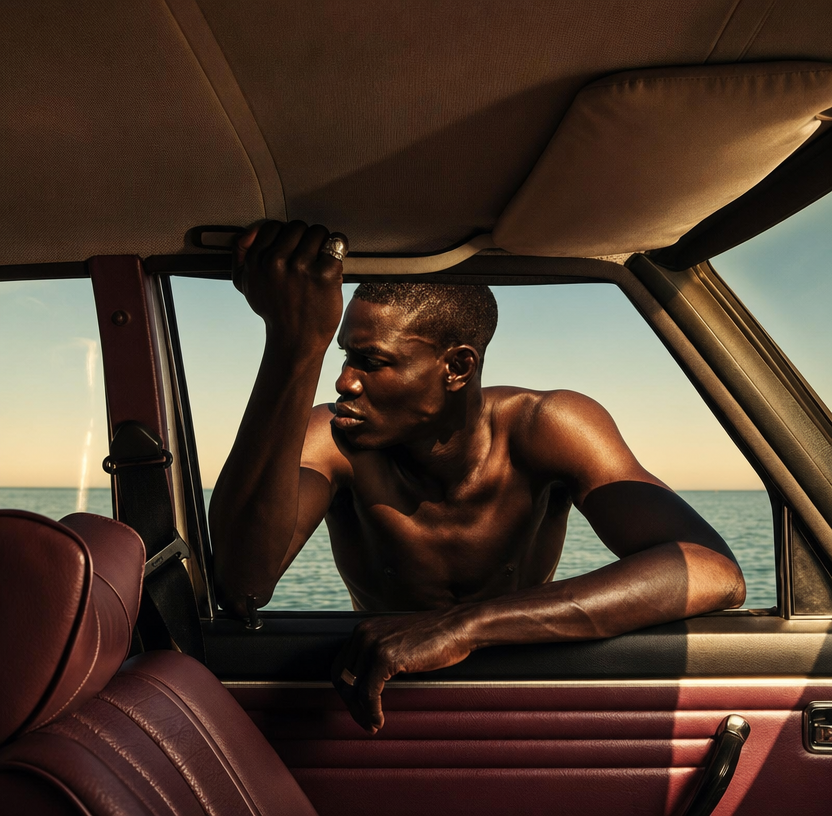
Shirtless Man, Vintage Car, Coastline Light
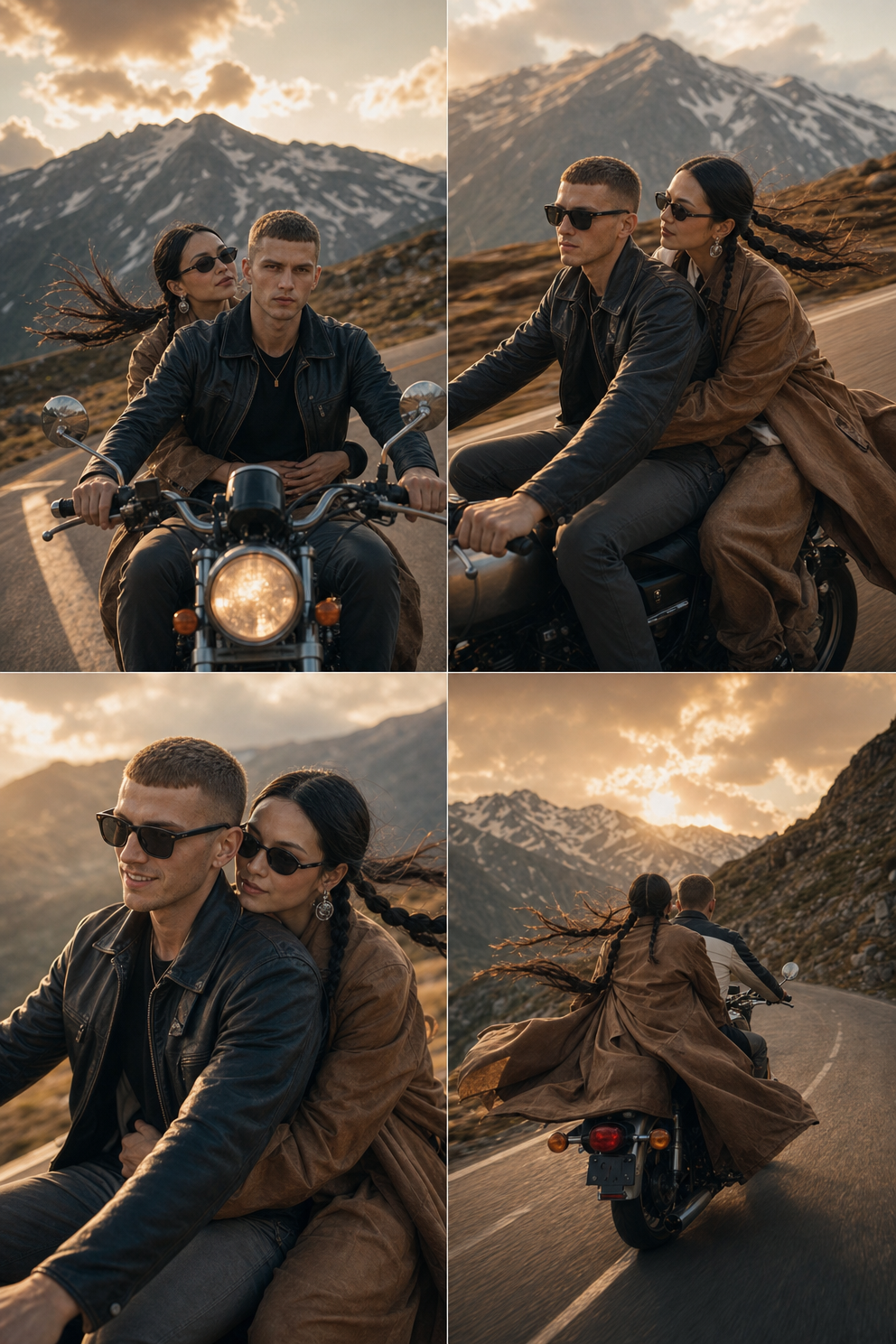
Golden-hour couple rides a classic bike
Golden-hour Matcha Sips in Luxury SUV
Young model in studio by sports car