Why this works
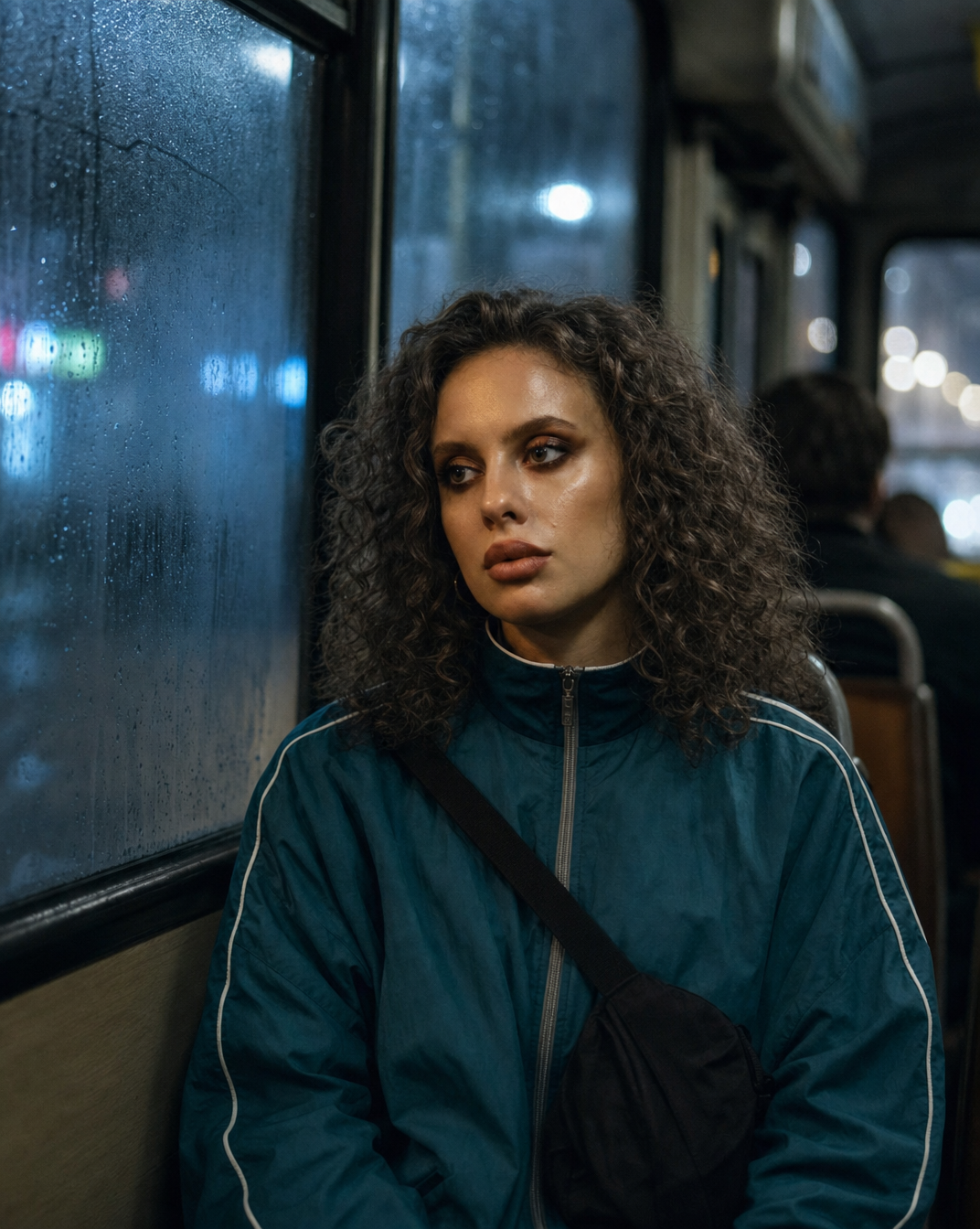
“Cinematic candid portrait” and “portrait-closeup” keep the woman’s quiet expression and realistic skin texture dominant, while “shallow depth of field” pushes the rain-speckled window and exterior lights into soft bokeh. The phrase “cold blue streetlight tones reflect through the glass” supplies the cool, reflective mood, with the deep teal windbreaker adding a controlled color accent against the image’s dominant black and gray bus interior. “Authentic bus interior,” “urban documentary style,” and “35mm photo look” anchor the scene in an observational, photographic realism rather than a polished studio portrait.
FAQ
→How do I change this prompt for a warmer, more hopeful mood?
Replace “cold blue streetlight tones” with “warm amber streetlight reflections,” and replace “moody low-light photography” and “quiet, reflective facial expression” with “soft golden-hour warmth” and “a subtle, hopeful half-smile.” Keep “rain-speckled window” and “soft bokeh” to preserve the nighttime bus setting while shifting the emotional temperature.
→How do I make the woman’s windbreaker more central and visually prominent?
Replace “portrait-closeup” with “medium portrait from the waist up,” and add “the deep teal vintage windbreaker with white piping fills the lower half of the frame, sharply rendered.” Change “shallow depth of field” to “moderately shallow depth of field, keeping her face and jacket crisp while the window remains softly blurred” so the clothing reads as a major design element.
→How do I build a series of variations from this bus portrait?
Keep “dark-brown curly-haired woman,” “deep teal vintage windbreaker with white piping,” and “35mm photo look” fixed, then swap the setting phrase “seated beside a rain-speckled window” for variations such as “standing near the rear exit beneath fluorescent lights,” “holding a transit pole as the bus turns through downtown,” or “seen in the rearview mirror from the driver’s area.” For consistent mood, retain “urban documentary style” and vary only “cold blue streetlight tones” with “green fluorescent interior light” or “warm sodium-vapor reflections.”
Learn the technique behind this
- Why can't AI spell, and how do I get readable text in an image? — Older diffusion models had no character-level representation of text, so they produced letterform-shaped texture instead of words.
- How should a prompt be structured, and does word order matter? — A prompt that behaves predictably names one subject first, then what it is doing, then where, then the light, then the lens or medium, then the style.
- Why does AI get hands and faces wrong, and how do I fix it? — Hands fail because they're small in frame, extremely variable in pose, and self-occluding — the model has less usable signal per pixel than for any other body part.
Related prompts
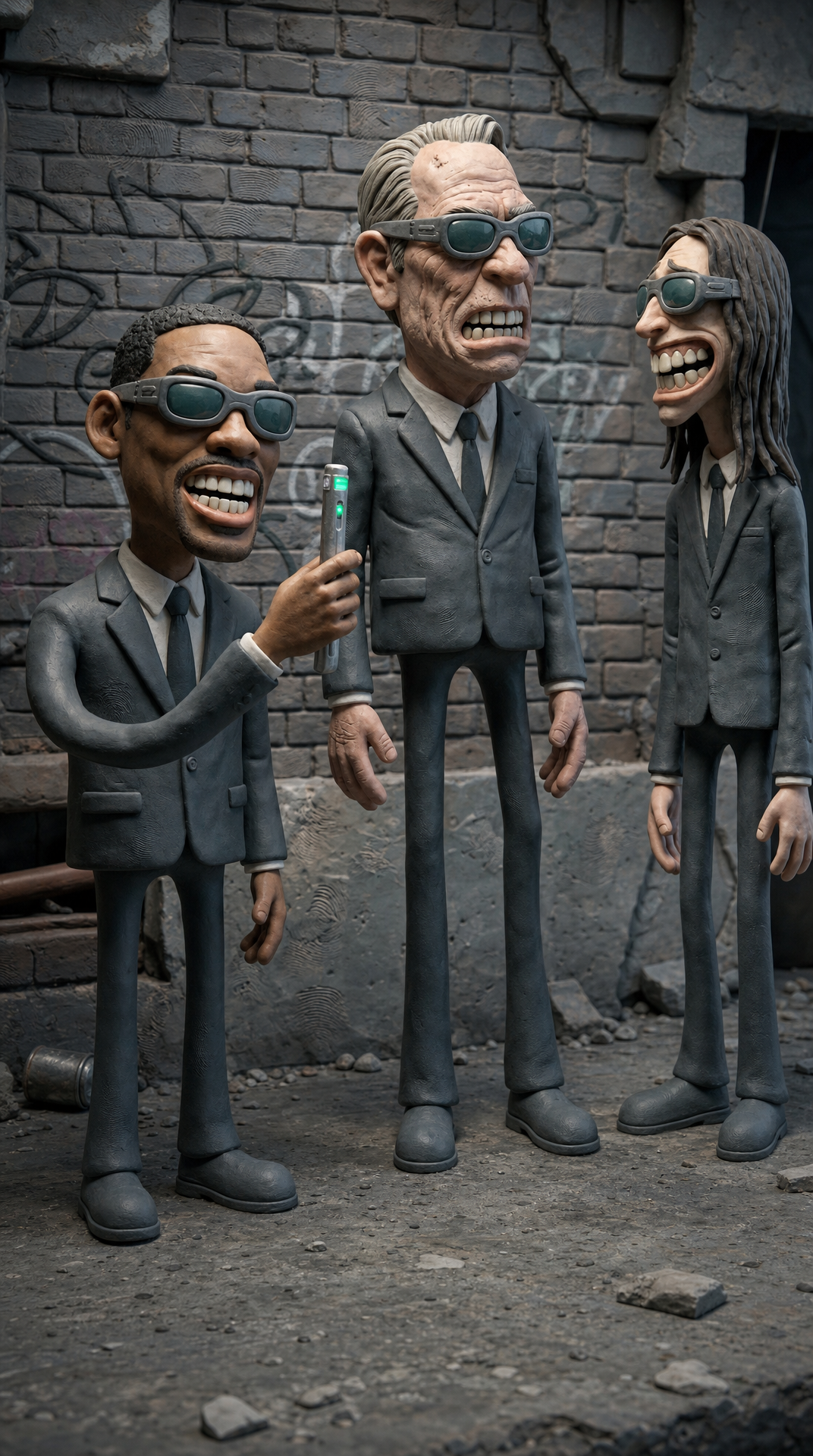
Grotesque Claymation Gangsters in Gritty Alley
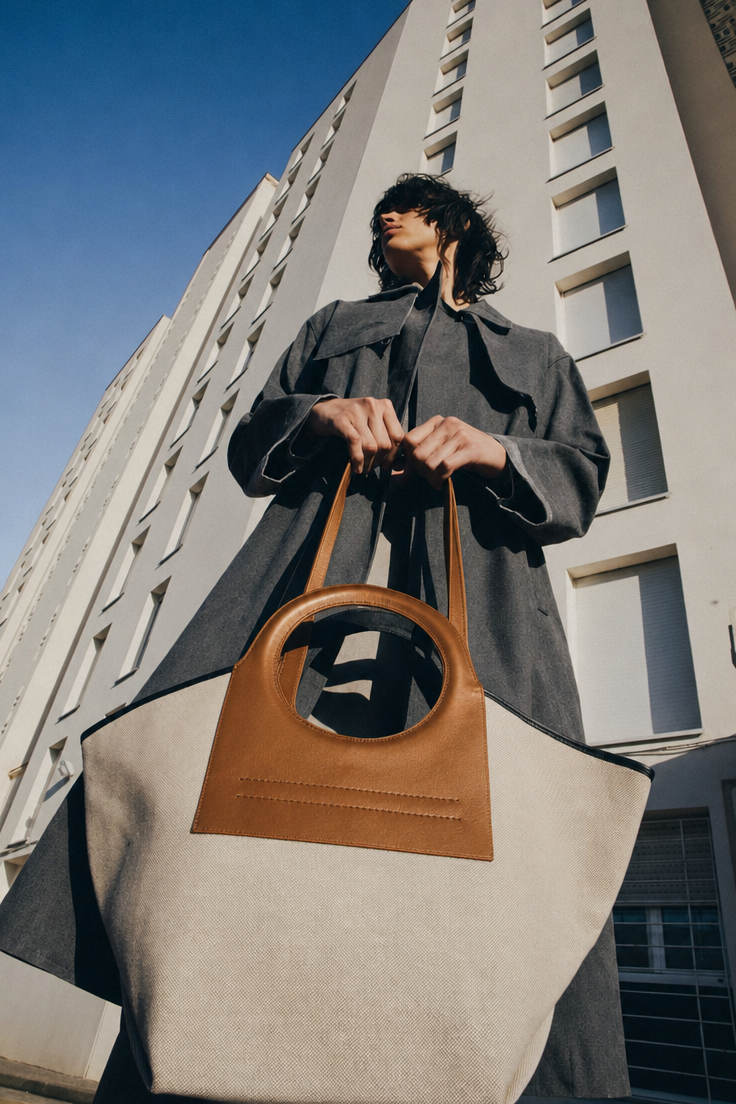
Charcoal coat with tan-handled tote
Woman in Teal Jacket Capturing Twilight Reflection
Red Gummy Bear Monster Attacks