Why this works
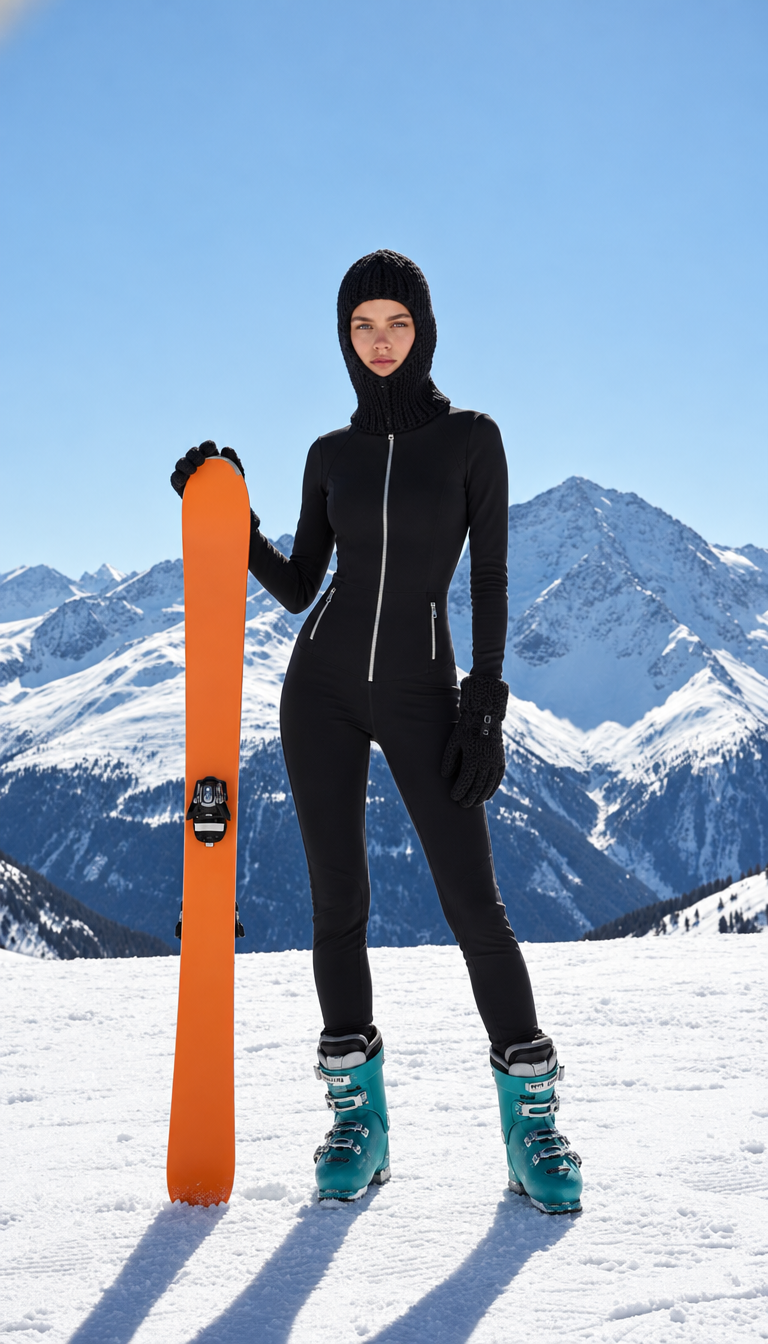
The phrase “full-body shot, clean high-end advertising composition” gives the model and her fitted black ski suit a controlled portrait presence, while the “matte orange snowboard across her body” supplies a strong diagonal accent against the dominant black-and-white snow palette. “Clear sunny daylight” and “crisp natural light” produce the bright, high-contrast luxury-sports mood, with “soft atmospheric haze” separating the distant gray peaks from the foreground. “Shallow depth of field that keeps the model tack-sharp while the background gently falls off” makes the subject the visual anchor without losing the scale of the alpine setting.
FAQ
→How do I make the snowboard more central and visually prominent?
Replace “She holds a matte orange snowboard across her body” with “She holds a large matte orange snowboard vertically beside her, occupying the center of the frame with the board’s graphics clearly visible.” Change “full-body shot” to “full-body portrait with centered product emphasis” so the board reads as a featured design element rather than a cross-body accent.
→How do I turn the bright luxury campaign into a darker, more dramatic winter image?
Replace “Bright, crisp feel with clear sunny daylight” and “crisp natural light” with “overcast blue-hour light with deep directional shadows and subtle rim light.” Keep “fitted black ski suit” but change “soft atmospheric haze” to “cold storm haze and windblown snow” for a more severe, cinematic tone.
→How do I create a matching series with different colorways while preserving this composition?
Keep “snowy alpine slope,” “full-body shot,” “model tack-sharp,” and “clean high-end advertising composition” unchanged. Replace “fitted black ski suit with silver zipper detailing” and “teal ski boots” with a repeatable color specification such as “fitted ivory ski suit with brushed-gold zipper detailing and cobalt ski boots,” then swap “matte orange snowboard” for “matte cobalt snowboard” to create a coordinated variant.
Learn the technique behind this
- Why can't AI spell, and how do I get readable text in an image? — Older diffusion models had no character-level representation of text, so they produced letterform-shaped texture instead of words.
- Why does the model ignore parts of my prompt? — Ignored instructions are almost always conflicts, counts, or spatial relationships — three things current models handle badly — rather than the model failing to read you.
- Why does AI get hands and faces wrong, and how do I fix it? — Hands fail because they're small in frame, extremely variable in pose, and self-occluding — the model has less usable signal per pixel than for any other body part.
Related prompts

Teal fashion editorial in monster-filled lift
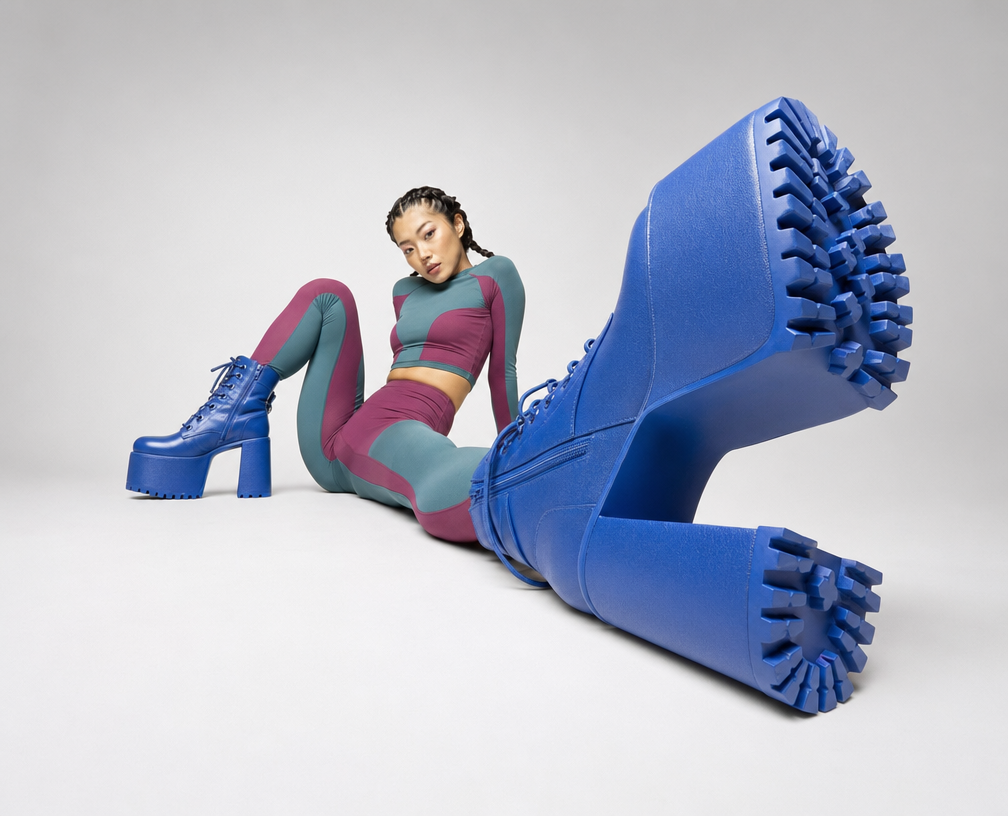
Cobalt Boots in Sleek Studio Edit

Silhouette Influencer by Sunlit Window
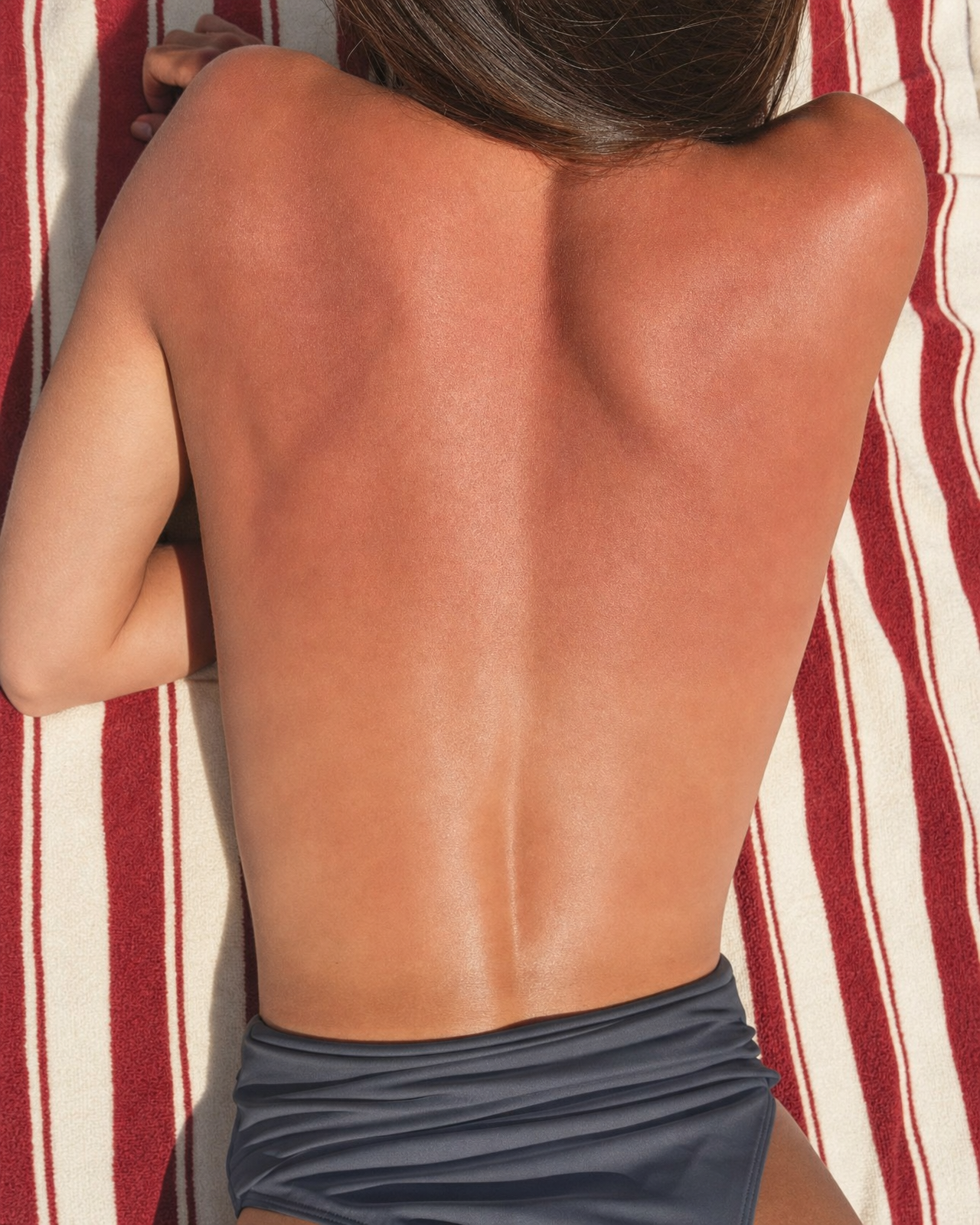
Sunlit editorial on striped beach towel