
Why this works
The phrase “in silhouette in side profile” makes the facial outline the subject, while “portrait-closeup” keeps that contour dominant in the frame. “Cooler amber-gold glow” on the hair against “warm urban interior light” creates the gold, gray, and black palette and gives the rim light a distinct halo; “slightly thicker soft haze around the edges” supplies the dreamy softness. “Shallow depth of field” and “background softly falls away” isolate the profile, while “cinematic contrast” and “subtle filmic grain” add the restrained editorial finish.
FAQ
→How do I make the influencer’s face and clothing more prominent instead of keeping her mostly in silhouette?
Replace “in silhouette in side profile” with “partially illuminated three-quarter portrait with visible facial features and tailored clothing,” and change “warm backlit illumination from the window” to “soft key light from camera left with gentle window backlight.” Keep “cinematic contrast” for definition, but reduce “slightly thicker soft haze around the edges” to “subtle atmospheric haze.”
→How do I turn this dreamy, moody portrait into a brighter luxury-fashion image?
Replace “dramatic dreamy atmosphere” with “bright, polished luxury editorial mood,” and change “cooler amber-gold glow” to “clean champagne-gold rim light.” Swap “gray, black” visual emphasis for “ivory, champagne, and warm beige,” while replacing “cinematic contrast” with “soft high-key contrast” and “subtle filmic grain” with “crisp, low-grain finish.”
→How do I create a series of variations while preserving the same editorial look?
Keep the fixed core phrases “cinematic editorial photo,” “side profile,” “shallow depth of field,” and “subtle filmic grain,” then vary one controlled phrase at a time: replace “towering sunlit store window” with “rain-streaked boutique window,” “modern glass atrium,” or “neon-lit department store,” and replace “amber-gold” with “cool silver,” “rose-gold,” or “deep copper.”
Learn the technique behind this
- Why can't AI spell, and how do I get readable text in an image? — Older diffusion models had no character-level representation of text, so they produced letterform-shaped texture instead of words.
- How should a prompt be structured, and does word order matter? — A prompt that behaves predictably names one subject first, then what it is doing, then where, then the light, then the lens or medium, then the style.
- Do negative prompts work, and what should go in one? — Negative prompts work on models that support a separate negative conditioning channel — mainly Stable Diffusion and FLUX-family models.
Related prompts
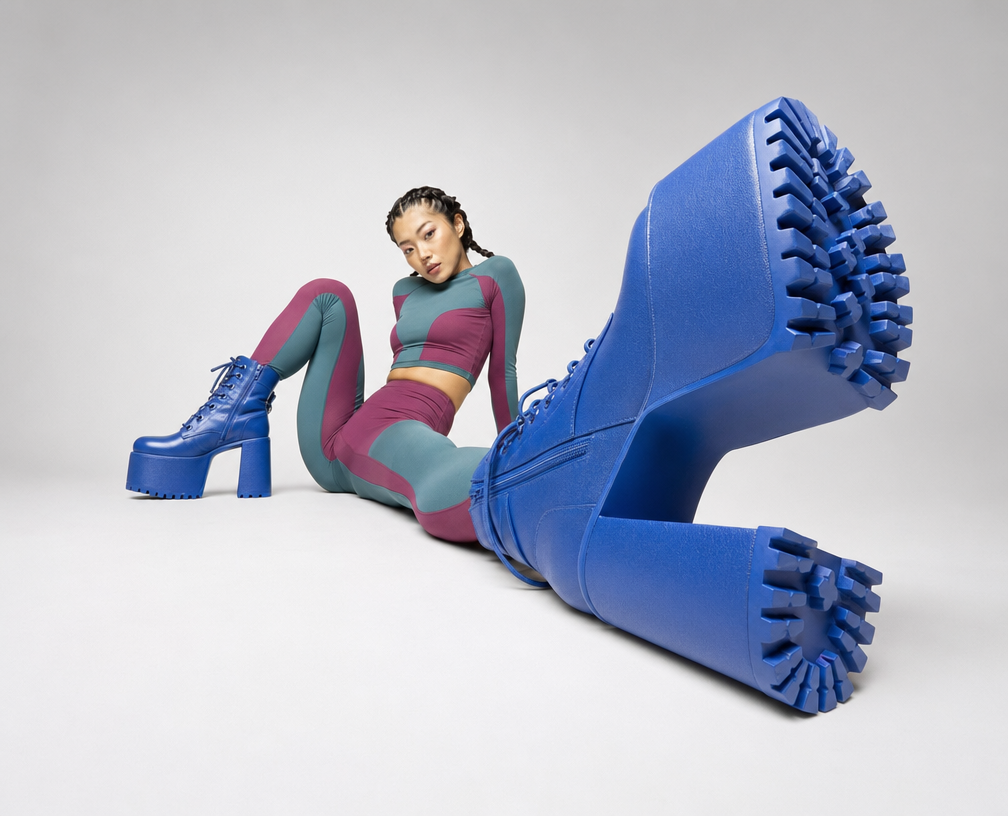
Cobalt Boots in Sleek Studio Edit

Teal fashion editorial in monster-filled lift

Sunlit editorial on striped beach towel
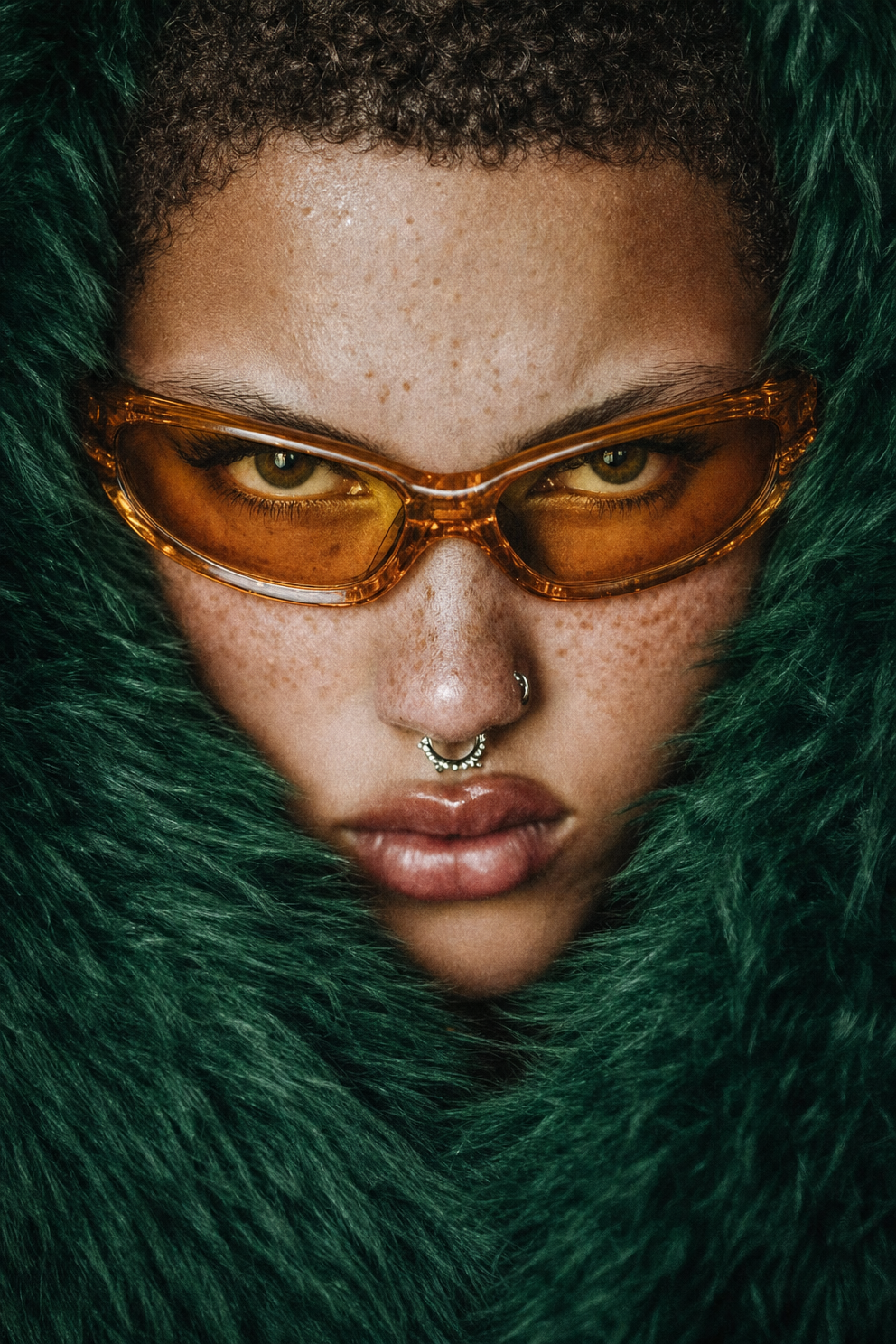
Emerald Fur Framed Fierce Fashion Portrait