Why this works
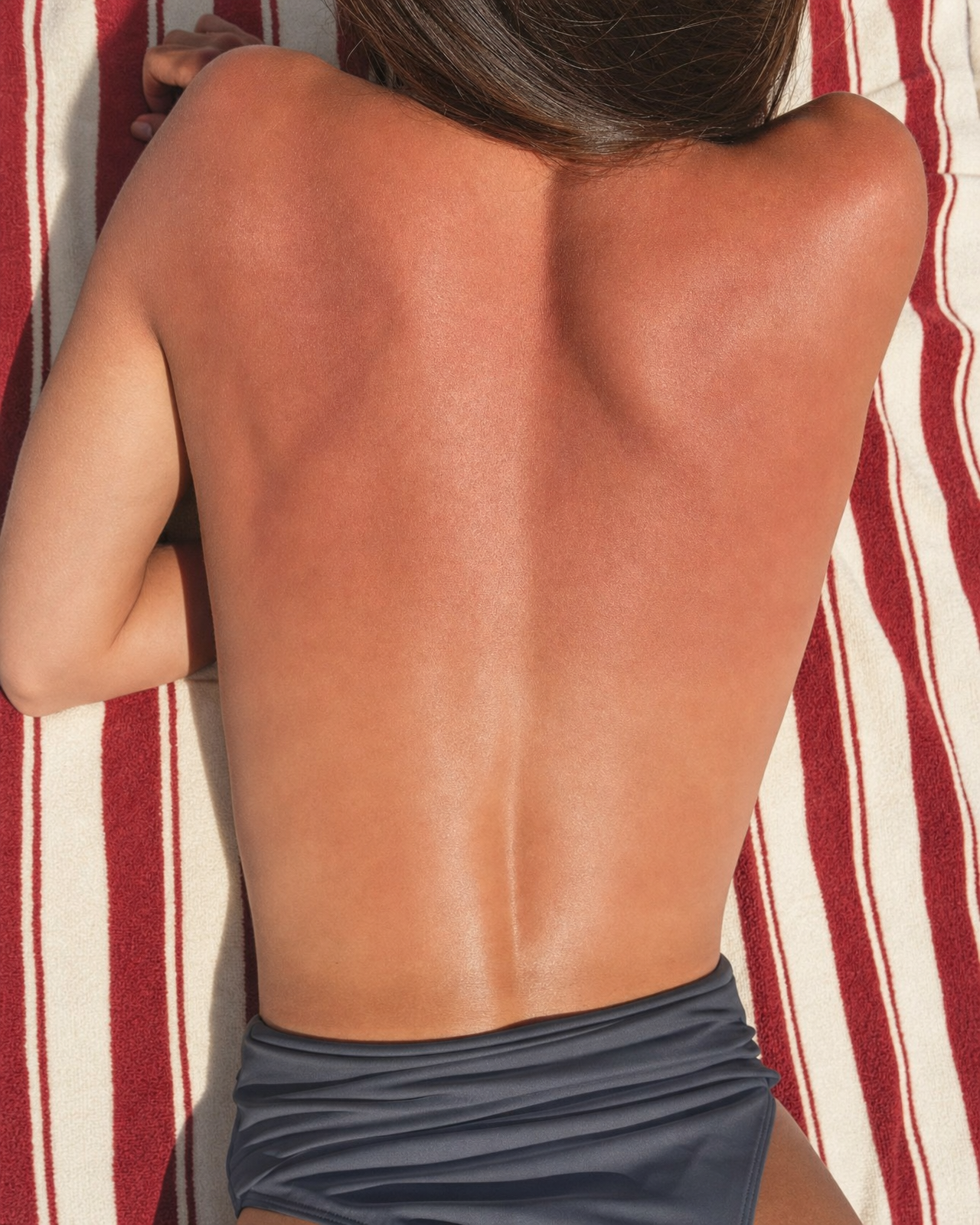
The “magazine-style overhead composition, close editorial crop” makes the towel’s red-and-cream stripes read as a graphic field around the subject, while the portrait-closeup framing keeps attention on the shoulders and back. “Overhead bright sunlight” combined with “high contrast” and “crisp skin detail” produces the bold, tactile look, and “saturated colors” strengthens the harmony between the beige towel, red stripes, warm skin, and charcoal-gray bikini bottom. The “minimal beach background; towel fills most of the scene” supplies the luxurious restraint by removing competing scenery rather than relying on the palette alone.
FAQ
→How do I make the tan line more central and visually prominent?
Replace “pronounced warm tan line across her shoulders and upper back” with “strong, sharply defined tan line as the primary focal point, spanning the shoulders and upper back,” and change “portrait-closeup” to “tight crop centered on the upper back and shoulders.” Keep “crisp skin detail” to preserve the edge between tanned and untanned skin.
→How do I shift this from a bold midday editorial to a softer, quieter mood?
Replace “overhead bright sunlight” with “soft late-afternoon diffused sunlight,” “high contrast” with “gentle low-contrast grading,” and “saturated colors” with “muted sun-faded colors.” Change “luxurious sunlit mood” to “quiet, relaxed coastal mood” while retaining the overhead composition.
→How do I build a matching series with different beach settings?
Keep “photorealistic editorial fashion photography,” “magazine-style overhead composition,” and “high-contrast color grading” unchanged, then replace “minimal beach background; towel fills most of the scene” with specific surfaces such as “striped cabana mat beside a turquoise pool,” “weathered wooden beach lounger,” or “pale sand scattered with seashells.” Match each variation with a new dominant accent color, such as turquoise, honey brown, or ivory, while preserving the charcoal wrap bikini bottom for continuity.
Learn the technique behind this
- Why can't AI spell, and how do I get readable text in an image? — Older diffusion models had no character-level representation of text, so they produced letterform-shaped texture instead of words.
- Why does AI get hands and faces wrong, and how do I fix it? — Hands fail because they're small in frame, extremely variable in pose, and self-occluding — the model has less usable signal per pixel than for any other body part.
- How do I keep the same character across multiple images? — Text prompts alone won't hold a face across images — a description defines a type, not a person.
Related prompts
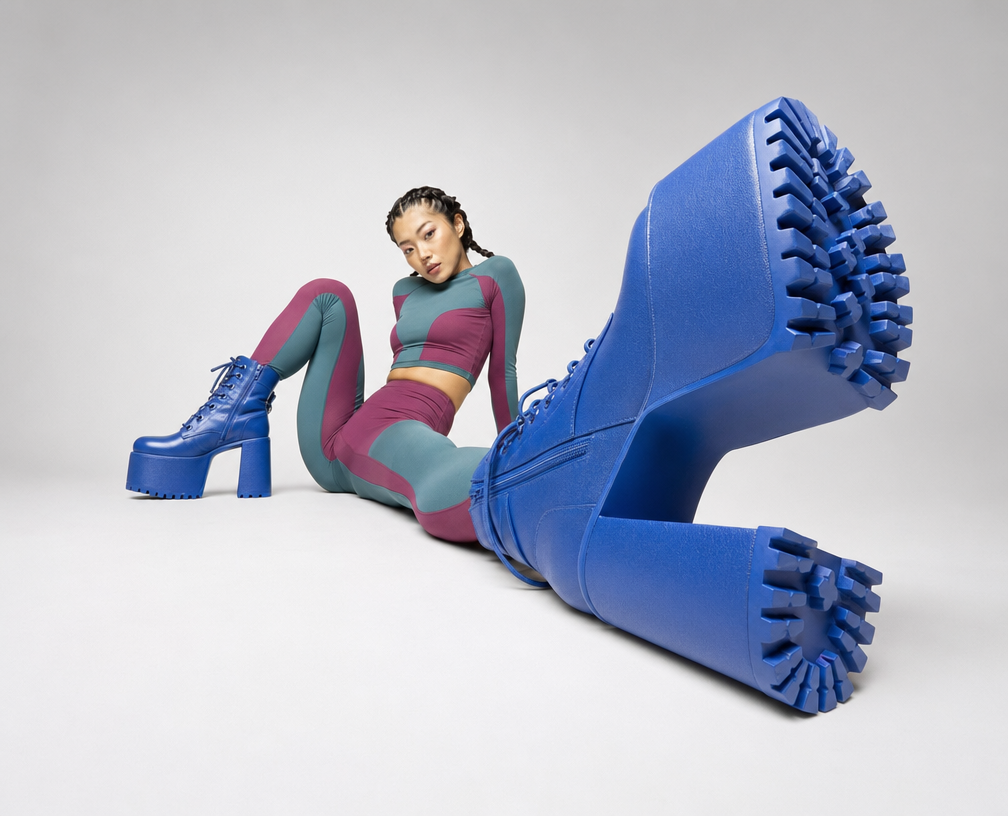
Cobalt Boots in Sleek Studio Edit
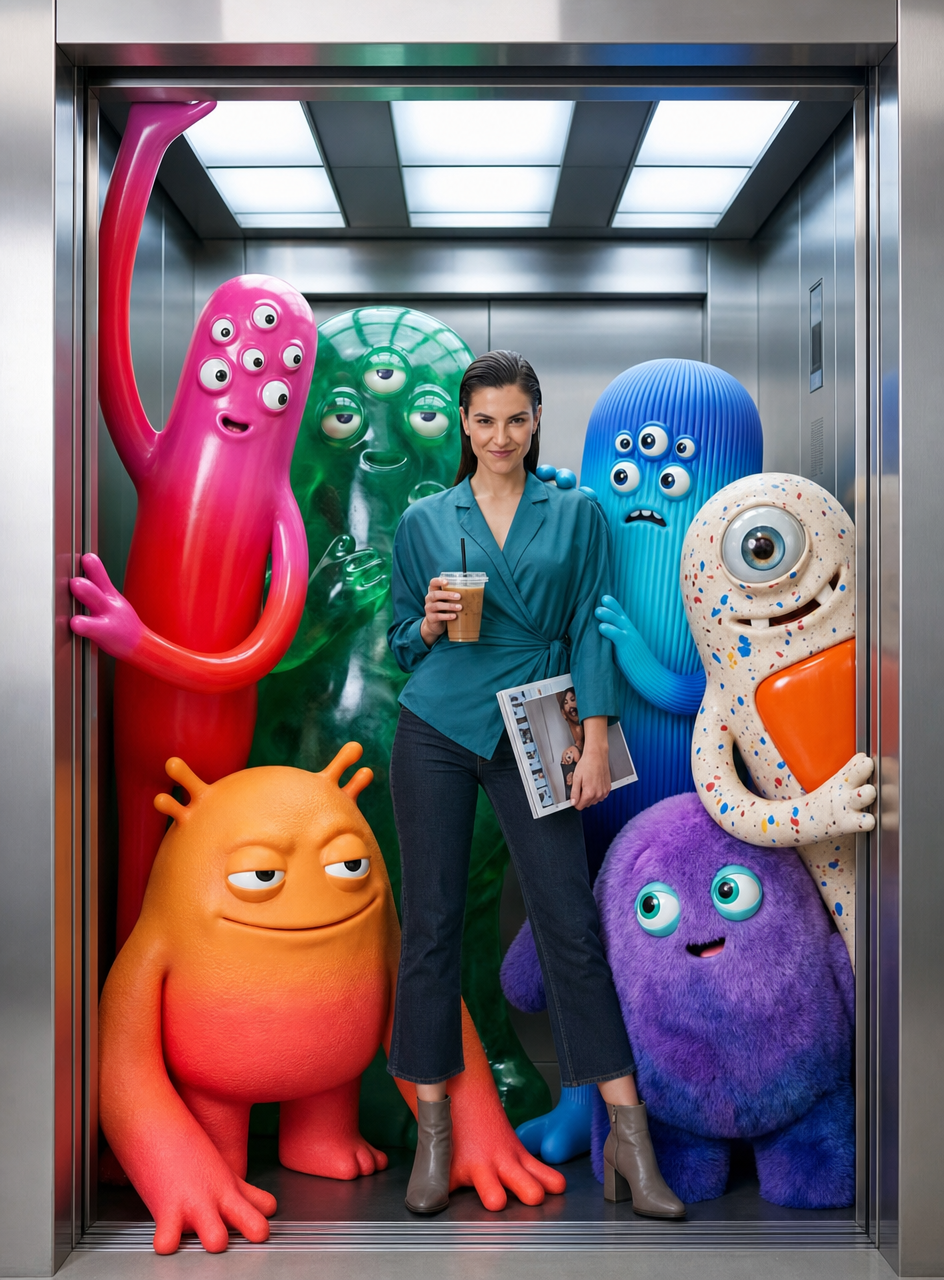
Teal fashion editorial in monster-filled lift

Silhouette Influencer by Sunlit Window
Young man with silver round sunglasses, light turtleneck