Why this works
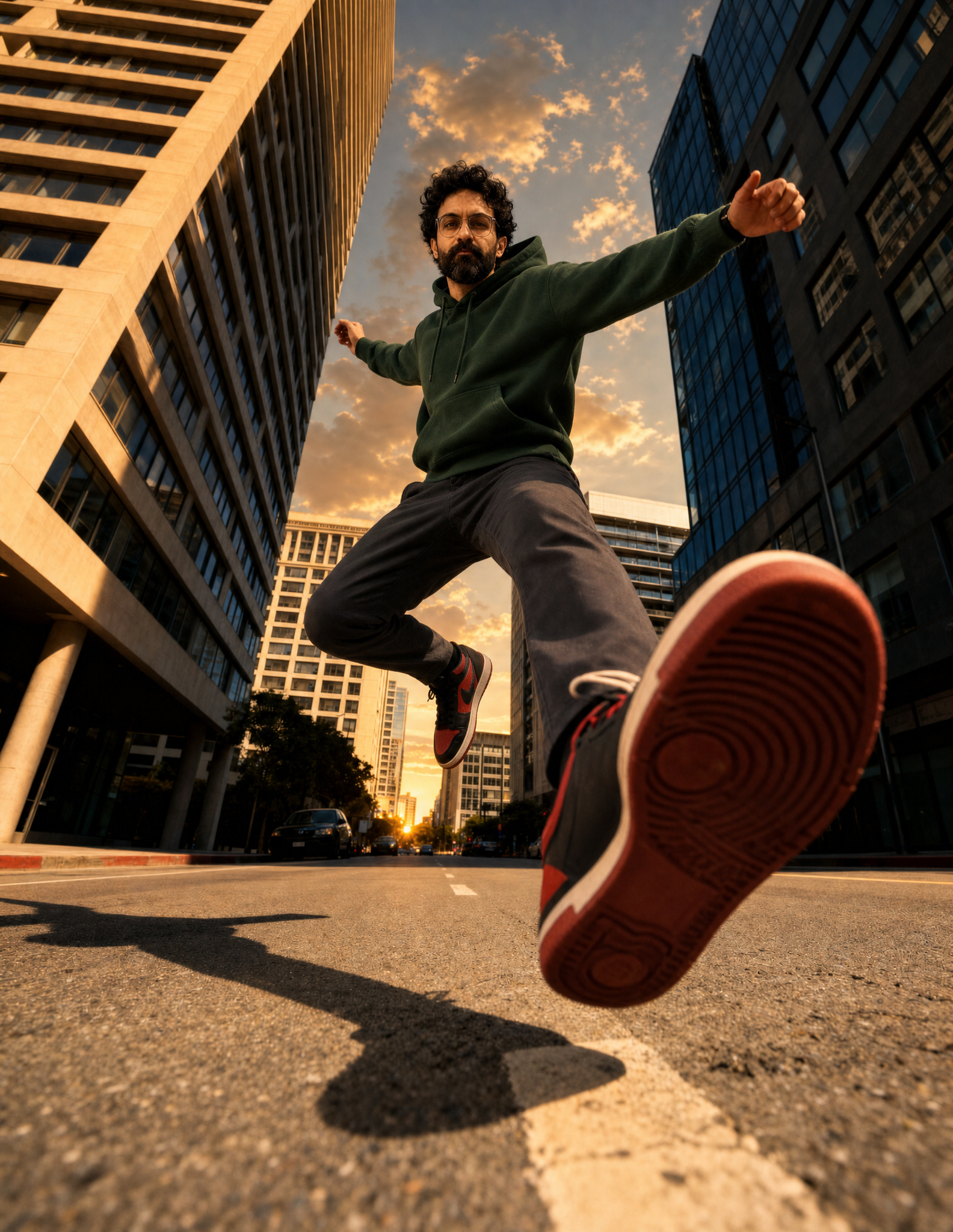
The phrase “one boot in the foreground dominating the frame” gives the candid-action composition its immediate impact, while “low-angle” and “dynamic perspective toward the lens” make the leap feel larger than life. “Strong motion blur only on background elements” separates the moving figure from the city, preserving “crisp detail on the subject” as the visual anchor. Pale golden-hour light, dark green and charcoal clothing, and beige-brown architecture create a warm urban palette with black sneaker contrast and muted blue in the sky.
FAQ
→How do I make the leap feel more dramatic and imposing?
Replace “young man sprinting and leaping toward the camera” with “young man launching high above the street toward the camera,” and change “low-angle” to “extreme low-angle from street level.” Keep “one boot in the foreground dominating the frame,” since that phrase preserves the exaggerated scale.
→How do I make the person’s face and upper body more central than the foreground sneaker?
Replace “one boot in the foreground dominating the frame” with “the face and torso centered and dominant, with both feet visible below,” and change “toward the camera” to “facing the camera at close range.” Retain “crisp detail on the subject” to keep facial features sharp against the blurred street.
→How do I turn this into a series of varied urban action shots?
Keep “photorealistic urban lifestyle photography,” “strong motion blur only on background elements,” and “crisp detail on the subject” unchanged, then replace “modern city street with tall office buildings lining both sides” with settings such as “rainy neon-lit alley,” “sunlit concrete plaza,” or “rooftop between glass towers.” Vary the action phrase with “vaulting over a barrier,” “skidding around a corner,” or “landing on a crosswalk” while keeping “low-angle action framing” consistent.
Learn the technique behind this
- Why can't AI spell, and how do I get readable text in an image? — Older diffusion models had no character-level representation of text, so they produced letterform-shaped texture instead of words.
- Do negative prompts work, and what should go in one? — Negative prompts work on models that support a separate negative conditioning channel — mainly Stable Diffusion and FLUX-family models.
- How should a prompt be structured, and does word order matter? — A prompt that behaves predictably names one subject first, then what it is doing, then where, then the light, then the lens or medium, then the style.
Related prompts
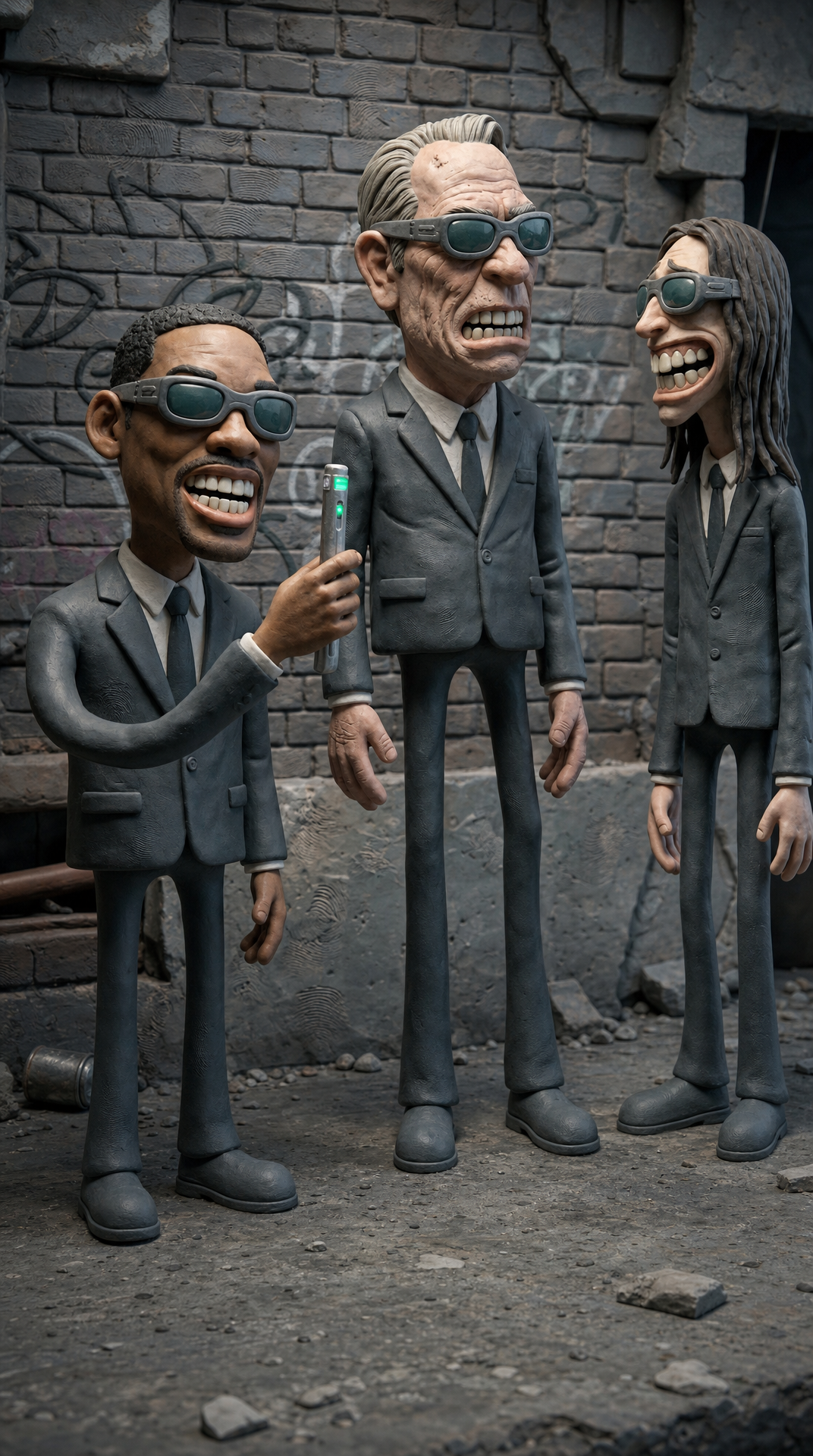
Grotesque Claymation Gangsters in Gritty Alley
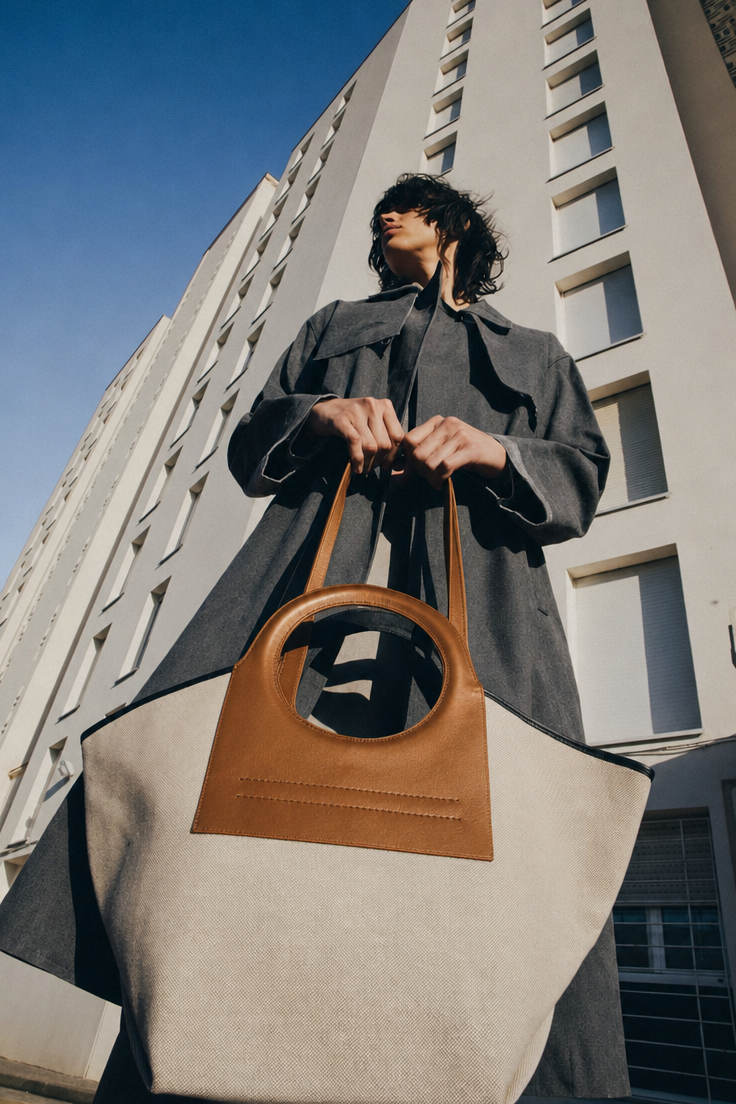
Charcoal coat with tan-handled tote
Woman in Teal Jacket Capturing Twilight Reflection
Stuffed Bear on Winter Dumpster at Dawn