Why this works
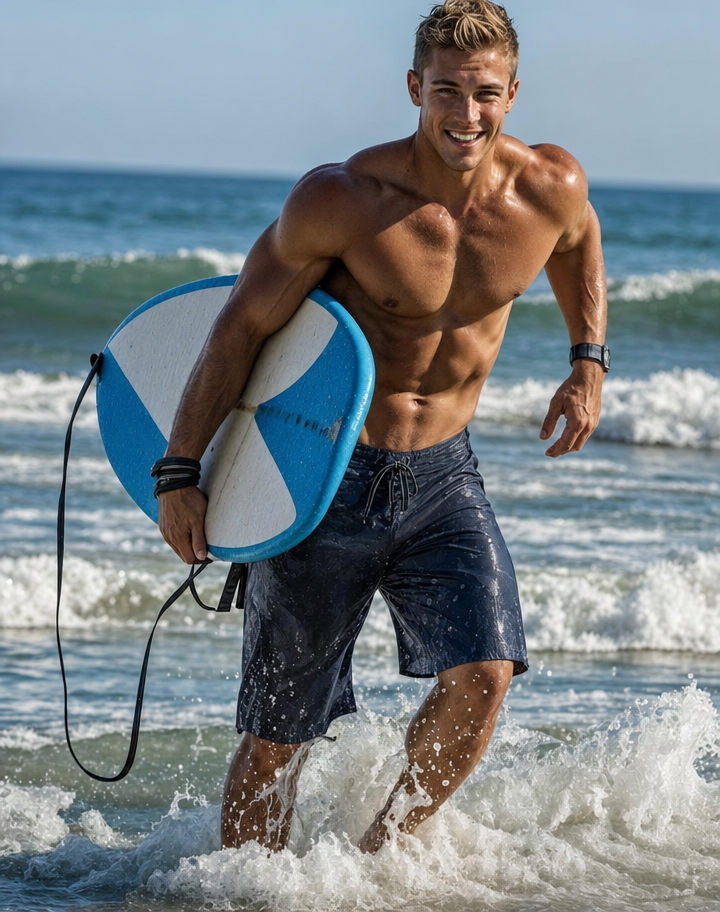
“Young athletic surfer” carrying a “blue surfboard with white accents” gives the portrait-full-body composition a clear diagonal subject and recognizable focal point, while “mid-body framing” keeps attention on his stride, board, and splashing shins. “Bright, natural daylight” and “clean blue sea horizon” establish the sunlit, confident mood, with “crisp realistic highlights on wet skin and water droplets” supplying tactile detail. The sandy shoreline and dark solid trunks introduce the image’s brown, gray, and white balance, preventing the blue board and sea from dominating the palette.
FAQ
→How do I make the surfer and surfboard more visually central?
Replace “mid-body framing” with “full-body centered composition, surfer occupying the central two-thirds of the frame,” and change “carrying a blue surfboard with white accents under one arm” to “holding a large blue surfboard with white accents prominently across the torso.” Keep “dynamic splash detail around shins” so the water still anchors the lower frame.
→How do I shift the scene from upbeat lifestyle photography to a more dramatic, cinematic mood?
Replace “bright, natural daylight” with “low golden-hour side light with long shadows,” and change “upbeat, confident expression” to “focused, determined expression.” Replace “clean blue sea horizon” with “storm-darkened horizon beneath layered clouds” while retaining “crisp realistic highlights on wet skin and water droplets” for photographic detail.
→How do I build a consistent series with different surfers or locations?
Keep the fixed phrases “photorealistic lifestyle photography,” “mid-body framing,” “crisp realistic highlights on wet skin and water droplets,” and “blue surfboard with white accents.” For variations, replace “young athletic male surfer” with a controlled subject such as “older female surfer in a red wetsuit,” and swap “sandy beach shoreline” for settings like “rocky Pacific cove” or “crowded urban beach,” while preserving “clear blue sea horizon” when you want the same visual continuity.
Learn the technique behind this
- Why can't AI spell, and how do I get readable text in an image? — Older diffusion models had no character-level representation of text, so they produced letterform-shaped texture instead of words.
- How should a prompt be structured, and does word order matter? — A prompt that behaves predictably names one subject first, then what it is doing, then where, then the light, then the lens or medium, then the style.
- Why does the model ignore parts of my prompt? — Ignored instructions are almost always conflicts, counts, or spatial relationships — three things current models handle badly — rather than the model failing to read you.
Related prompts
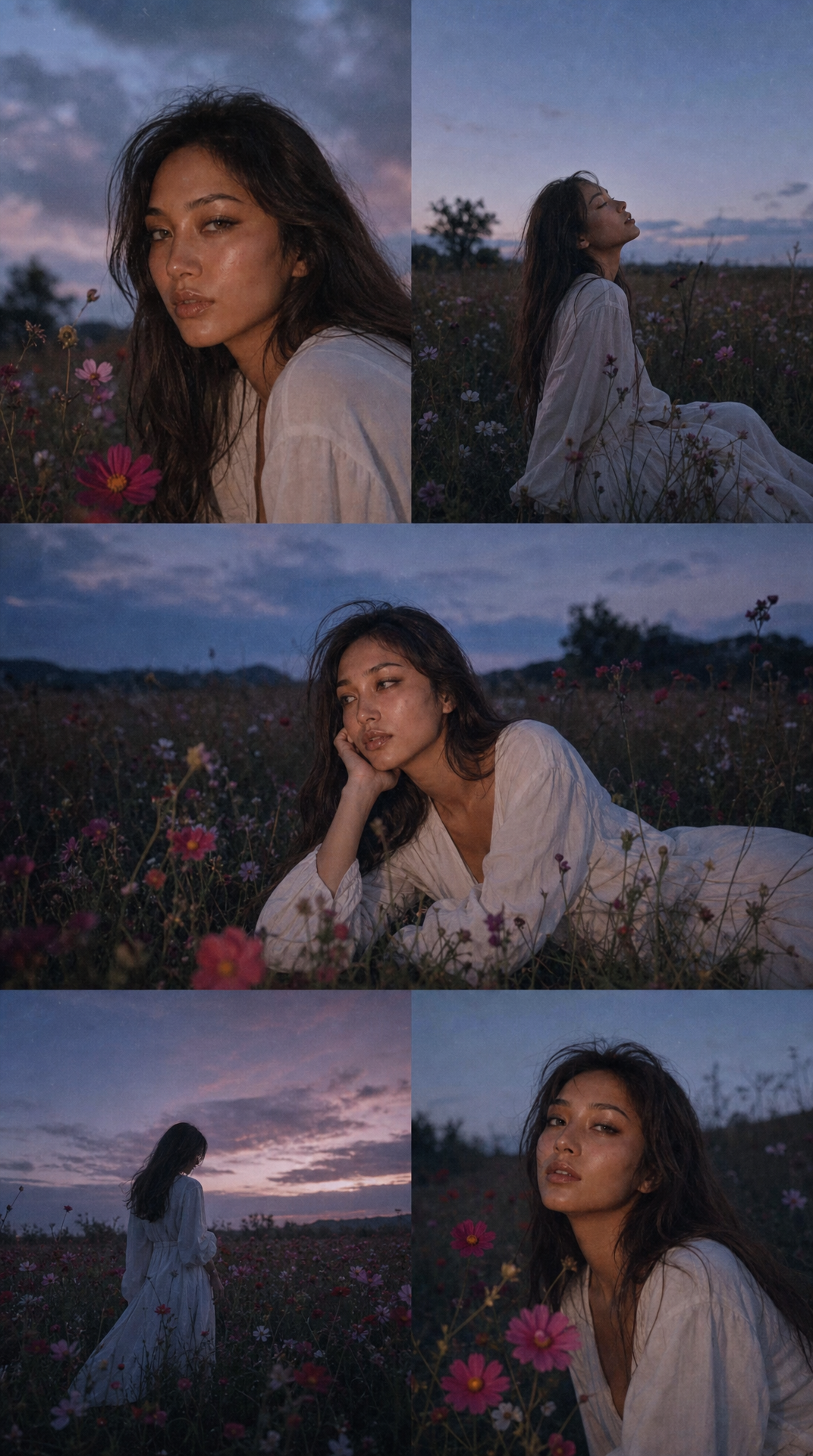
Solitary Woman in Twilight Wildflower Meadow
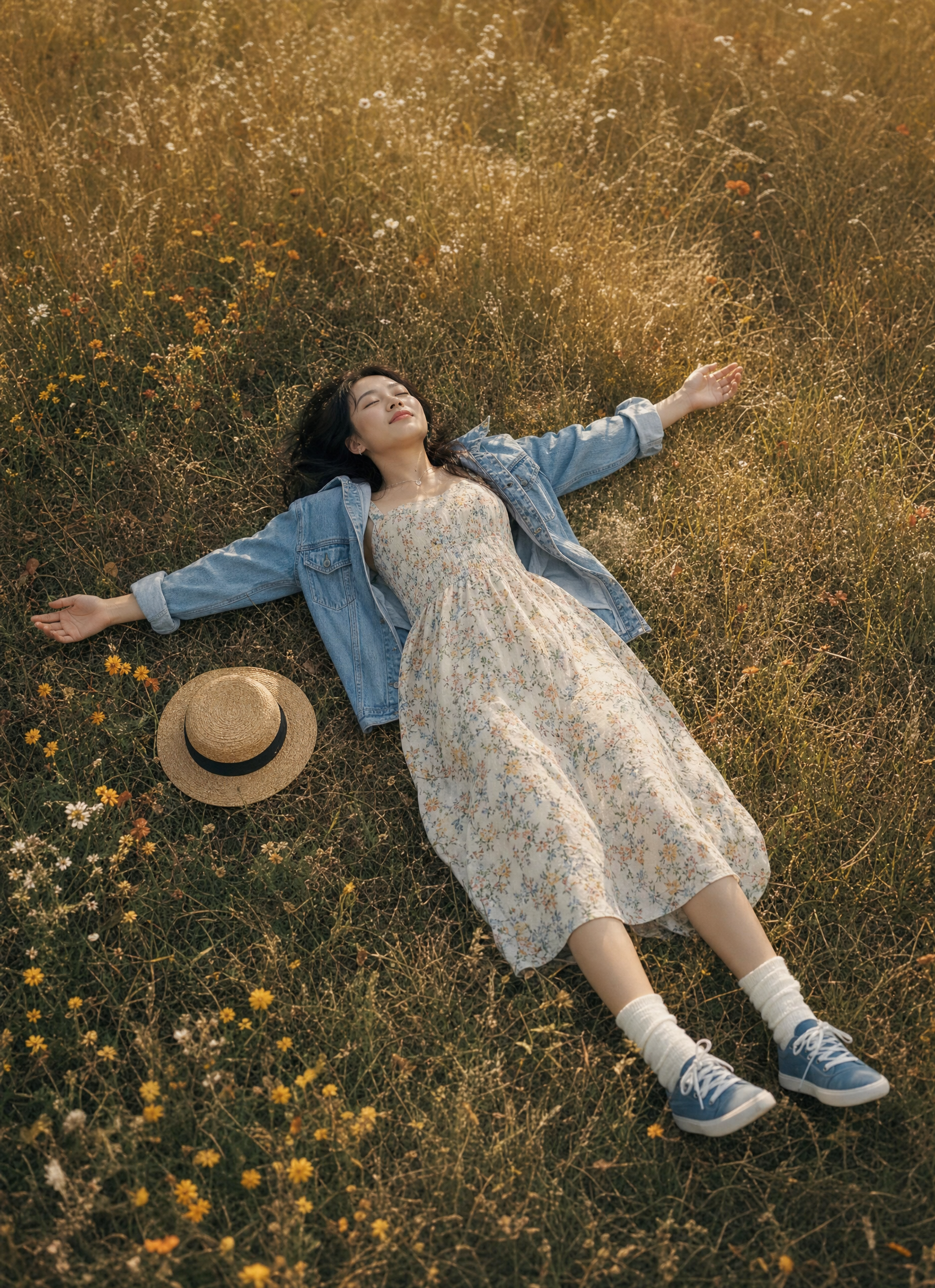
Woman Relaxing in Golden Autumn Field

Man on sand dune in blue hour

Golden-hour surf under dramatic clouds