Same prompt, generated with each model separately — click one to see how it holds up.
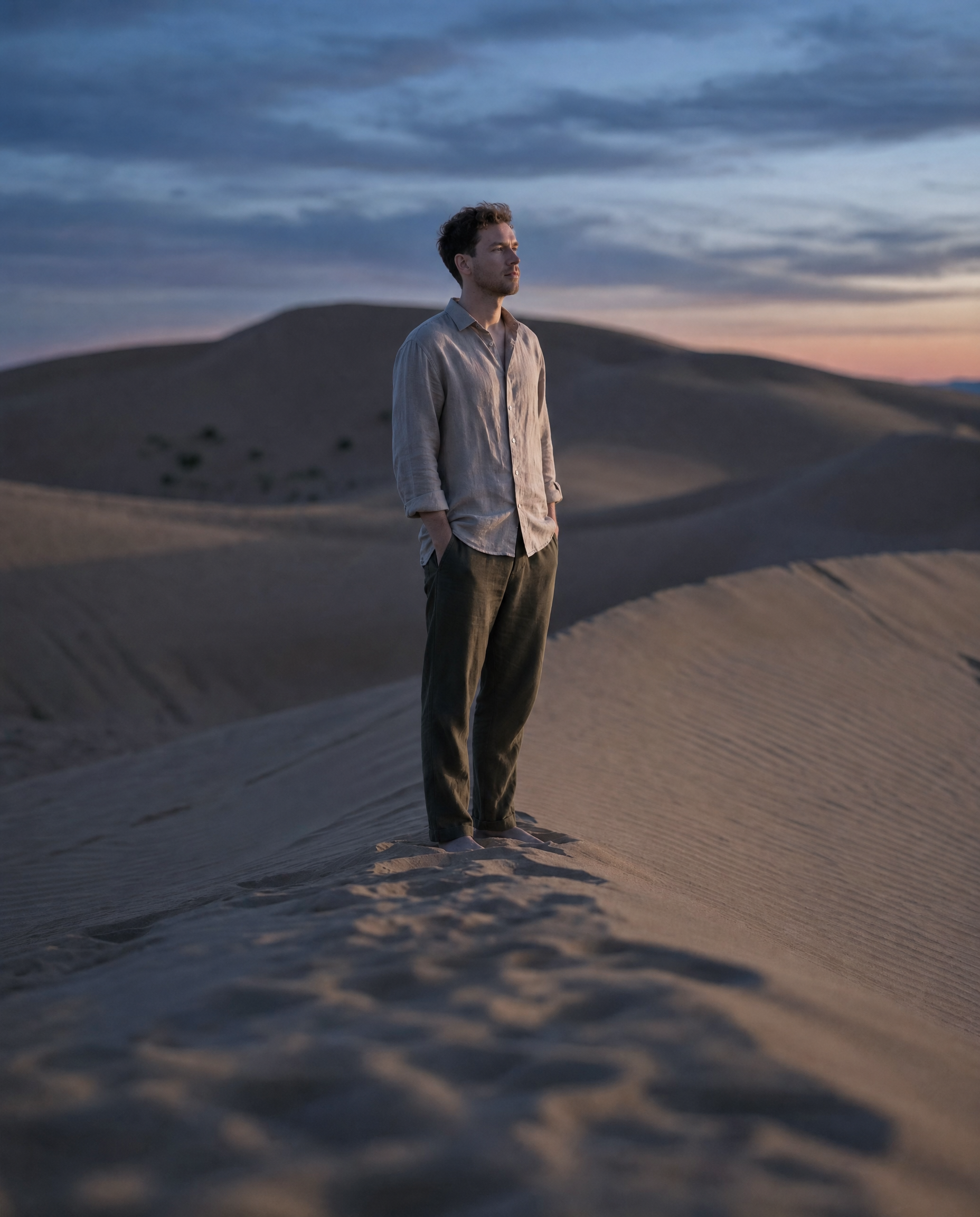
Why this works
The calm, contemplative mood comes from the specific combination of “standing calmly with hands in his pockets,” “looking toward the horizon,” and “late-day blue hour,” while “cool sky tones instead of golden light” keeps the emotion restrained rather than warm or triumphant. “85mm telephoto lens” and “compressed perspective” flatten the vast dune landscape, and “minimalist composition with ample negative space” gives the full-body figure a quiet sense of isolation. The phrase “foreground sand is gently blurred while the man remains crisp,” reinforced by “f/4,” makes him the visual anchor against the blue, tan, and gray dune palette.
FAQ
→How do I make the scene feel warmer and more hopeful?
Replace “late-day blue hour” and “cool sky tones instead of golden light” with “warm golden-hour sunlight with amber rim light,” and change “cool desaturated color palette” to “warm sunlit palette with ochre, honey, and muted coral tones.” Keep “long, soft shadows” to preserve the contemplative structure while shifting the emotional temperature.
→How do I make the man more prominent in the composition?
Replace “minimalist composition with ample negative space” with “medium full-body portrait, man occupying the central third of the frame,” and change “85mm telephoto lens” to “135mm telephoto lens, tighter compressed framing.” Retain “man remains crisp” and “foreground sand is gently blurred” so the added prominence still has clear subject-background separation.
→How do I create a series of variations without losing the visual identity?
Keep the fixed phrases “cinematic minimalist photorealism,” “cool desaturated color palette,” “85mm telephoto lens,” and “man standing calmly with hands in his pockets,” then swap only the setting and weather clauses. For example, replace “vast sand desert dune crest” with “salt flat beside a distant mountain range,” or replace “light breeze visibly patterns the sand surface” with “fine dust drifts across the ground in thin ribbons,” while preserving “late-day blue hour” and “ample negative space.”
Learn the technique behind this
- Why can't AI spell, and how do I get readable text in an image? — Older diffusion models had no character-level representation of text, so they produced letterform-shaped texture instead of words.
- Why does AI get hands and faces wrong, and how do I fix it? — Hands fail because they're small in frame, extremely variable in pose, and self-occluding — the model has less usable signal per pixel than for any other body part.
- How should a prompt be structured, and does word order matter? — A prompt that behaves predictably names one subject first, then what it is doing, then where, then the light, then the lens or medium, then the style.
Related prompts

Golden-hour surf under dramatic clouds
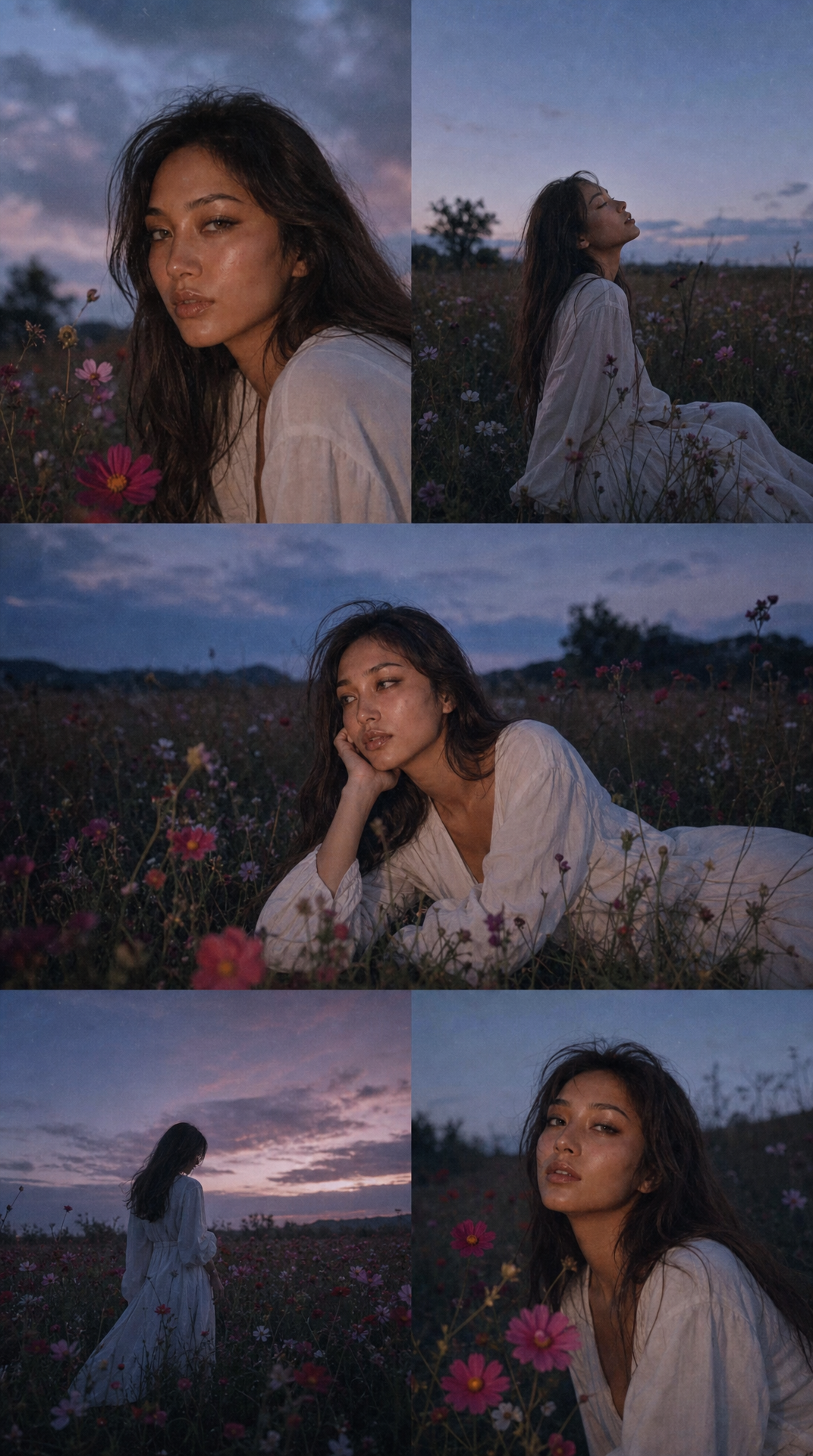
Solitary Woman in Twilight Wildflower Meadow
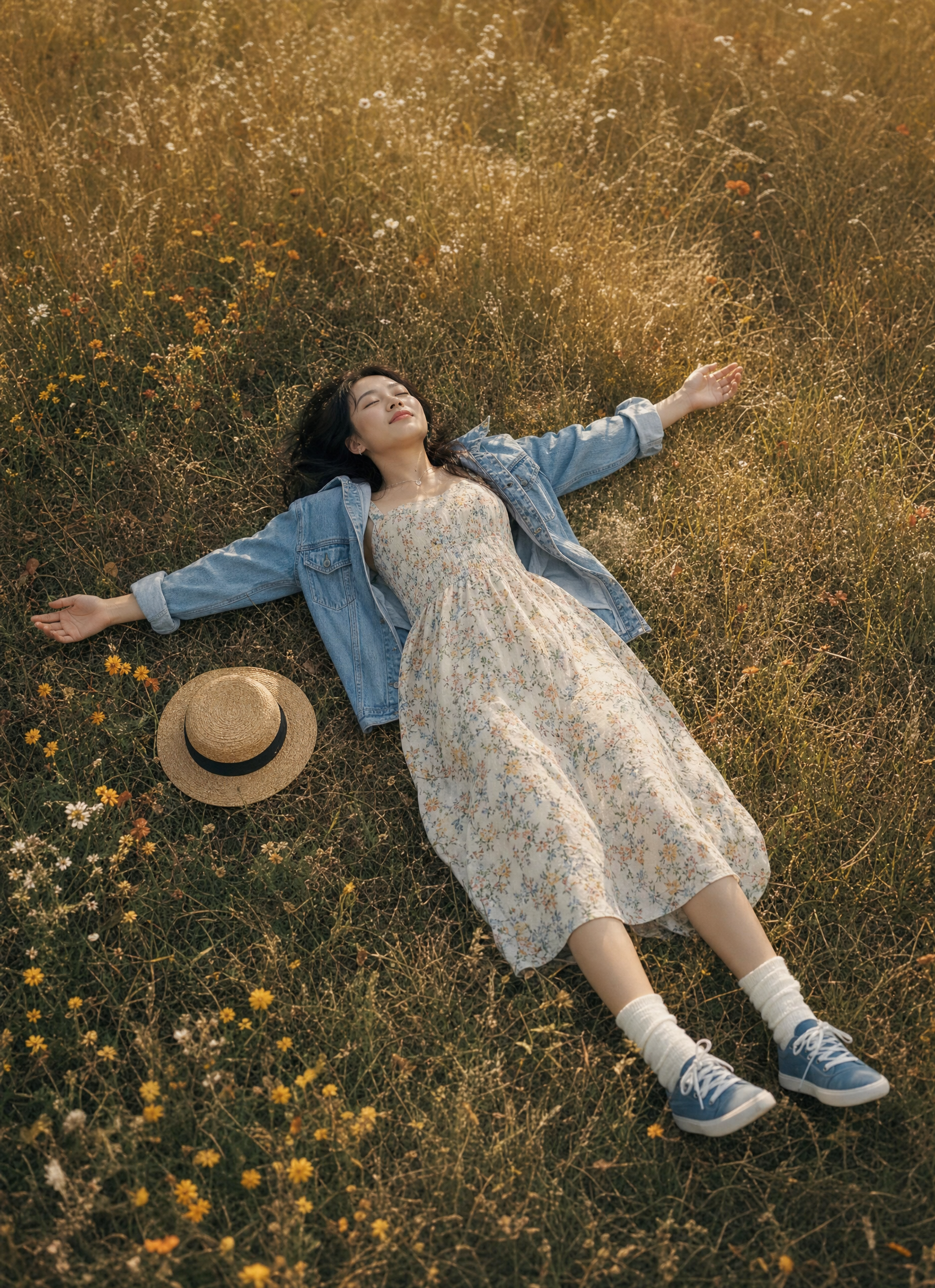
Woman Relaxing in Golden Autumn Field
Twilight stag with massive antlers