
Why this works
The “vertical cinematic landscape framing with leading lines toward the horizon” makes the crashing foreground surf and rock contours pull the eye through the wide scene toward the distant vanishing point. “Golden-hour low sun near the horizon,” “soft glow,” and “gentle radial lens flare instead of harsh starburst rays” establish a bright, serene mood without making the sun overly graphic, while “warm rim light” on the cumulus clouds adds drama. Gold highlights, gray rocks and ocean, and white foam create the dominant warm-neutral color harmony, reinforced by “natural warm color palette,” while “high dynamic range,” “crisp detail,” and “ultra-detailed surf textures” preserve definition across the dark foreground and bright sky.
FAQ
→How do I make the waves and foreground rocks more central and imposing?
Replace “wide-shot” and “leading lines toward the horizon” with “low-angle intimate foreground composition, massive foamy waves and dark rocks filling the lower two-thirds, horizon pushed high in the frame.” Keep “ultra-detailed surf and rock texture,” but add “near-camera spray frozen in sharp detail” to make the foreground carry more visual weight.
→How do I turn this bright golden-hour scene into a cooler, stormier image?
Replace “golden hour,” “low warm sun,” “natural warm color palette,” and “soft glow” with “late blue hour, cold overcast light, desaturated blue-gray palette, and subdued ambient illumination.” Change “warm rim-lit cumulus clouds” to “heavy slate storm clouds with silver-gray breaks,” while retaining “high dynamic range” so the foam remains distinct against the darker water.
→How do I build a series of matching shoreline variations from this prompt?
Keep the fixed style language, including “photorealistic landscape photography,” “vertical cinematic landscape framing,” “high dynamic range,” and “natural warm color palette,” then swap only the setting and subject clauses. For example, replace “dark textured rocks” and “foamy waves crash” with “pale sandbar with shallow tidal pools” for one variation, or “weathered wooden pier with waves beneath it” for another, while preserving “low warm sun near the horizon” and “leading lines toward the horizon.”
Learn the technique behind this
- Why can't AI spell, and how do I get readable text in an image? — Older diffusion models had no character-level representation of text, so they produced letterform-shaped texture instead of words.
- Which camera and lighting terms actually change an AI image? — Focal length, aperture, light direction and time of day change the image reliably because they correlate with real photographic patterns in the training data.
- Which aspect ratio should I use, and how does it change the image? — Aspect ratio determines what the model composes, not how it's cropped afterwards.
Related prompts
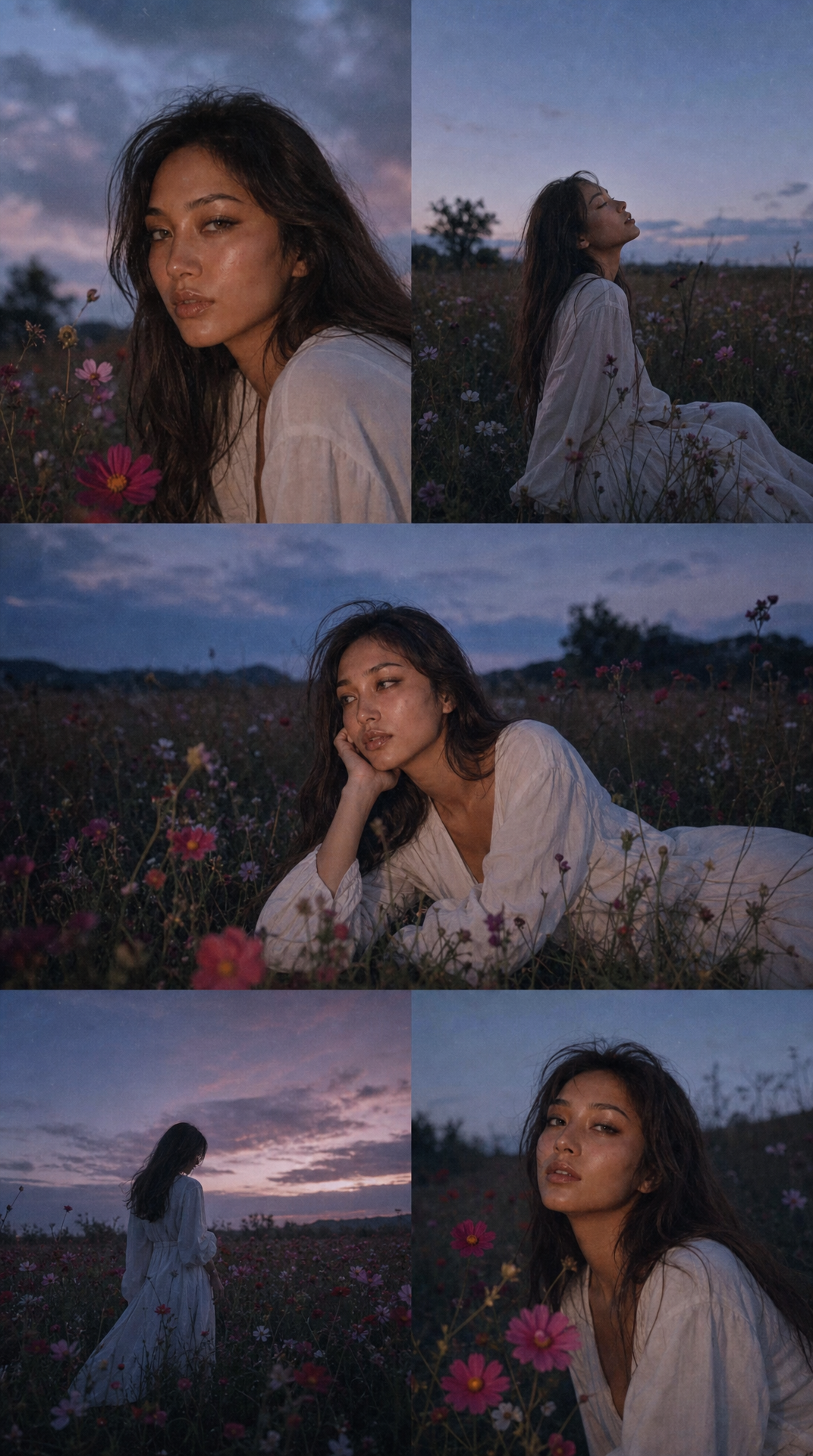
Solitary Woman in Twilight Wildflower Meadow
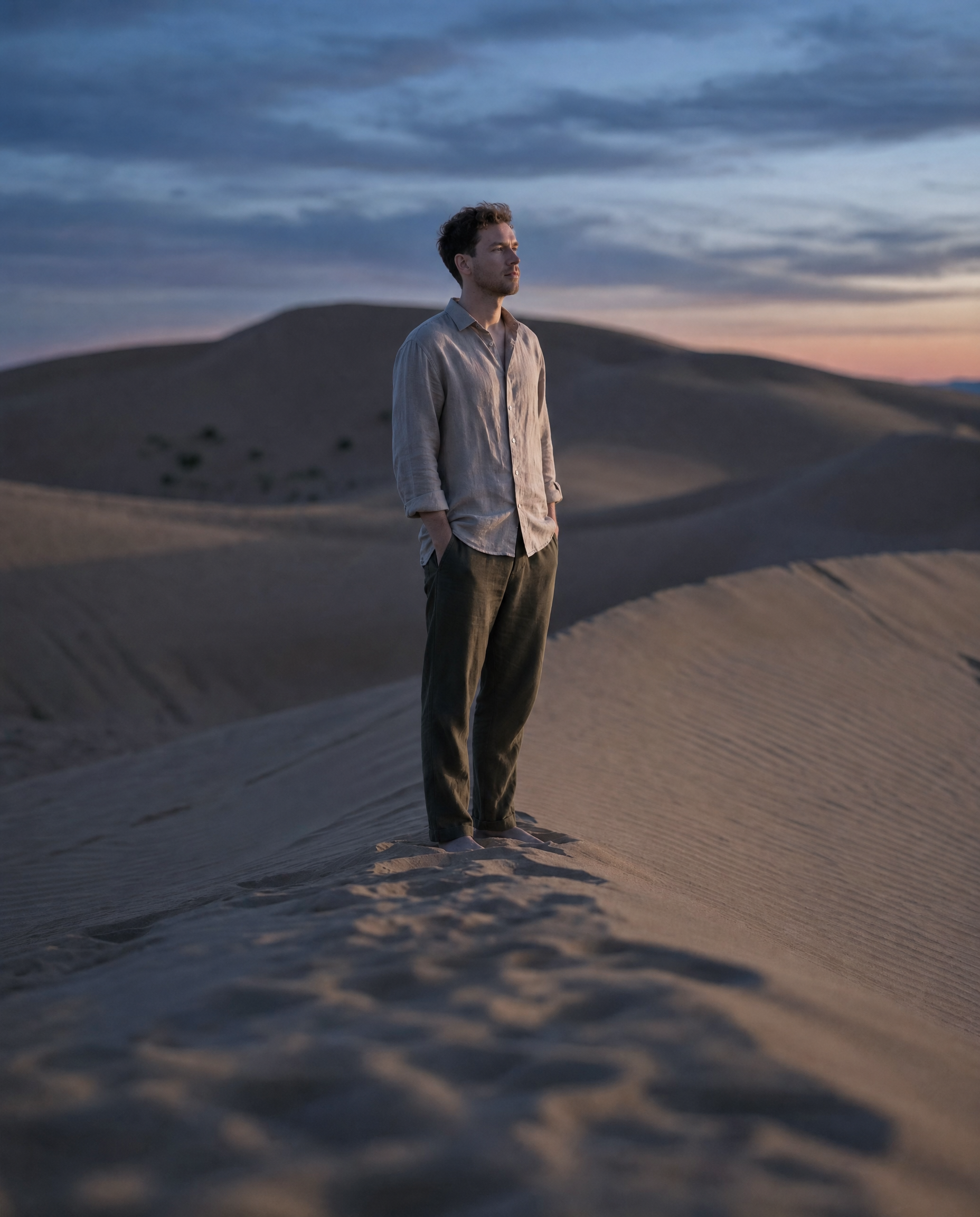
Man on sand dune in blue hour
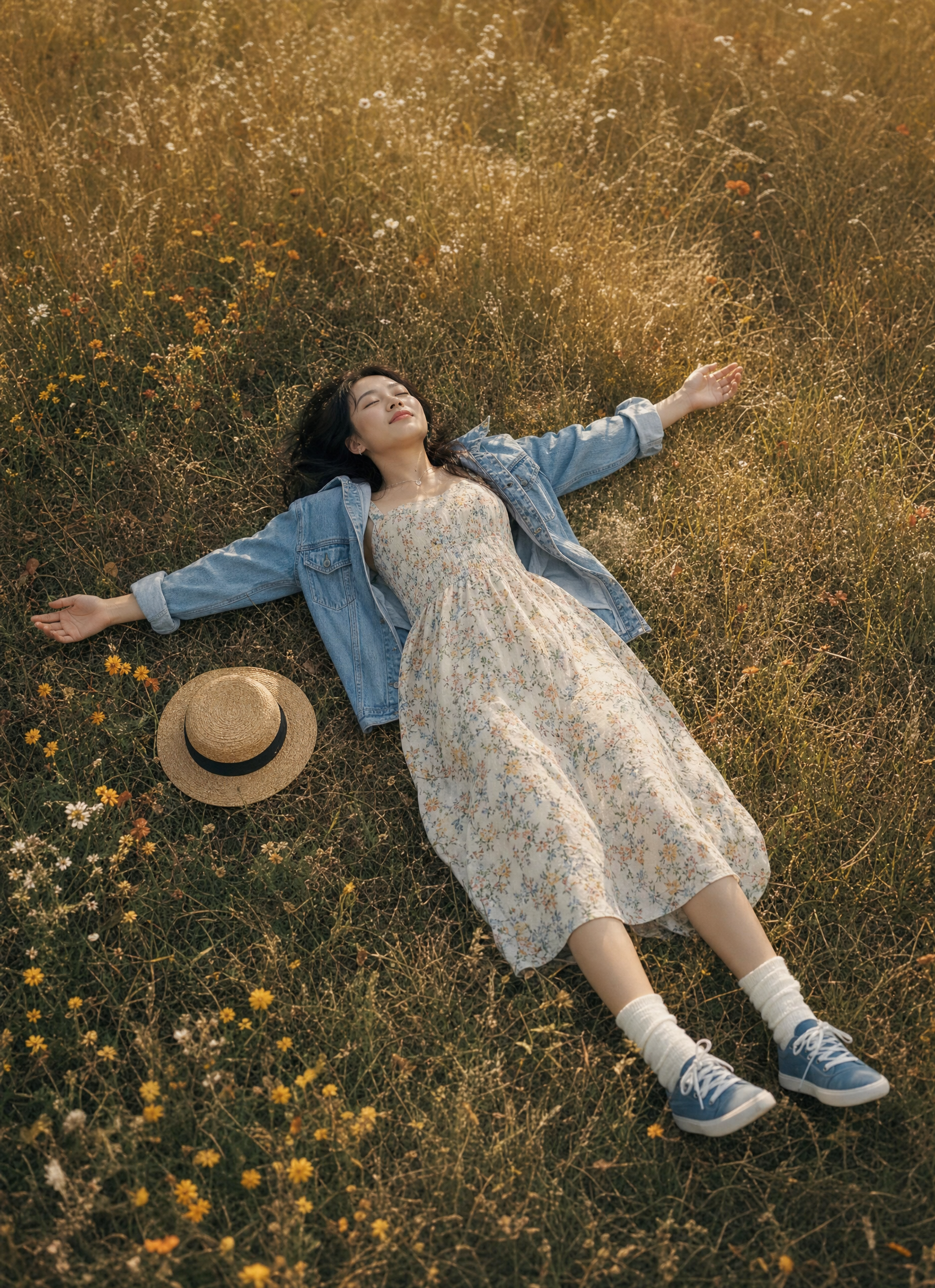
Woman Relaxing in Golden Autumn Field
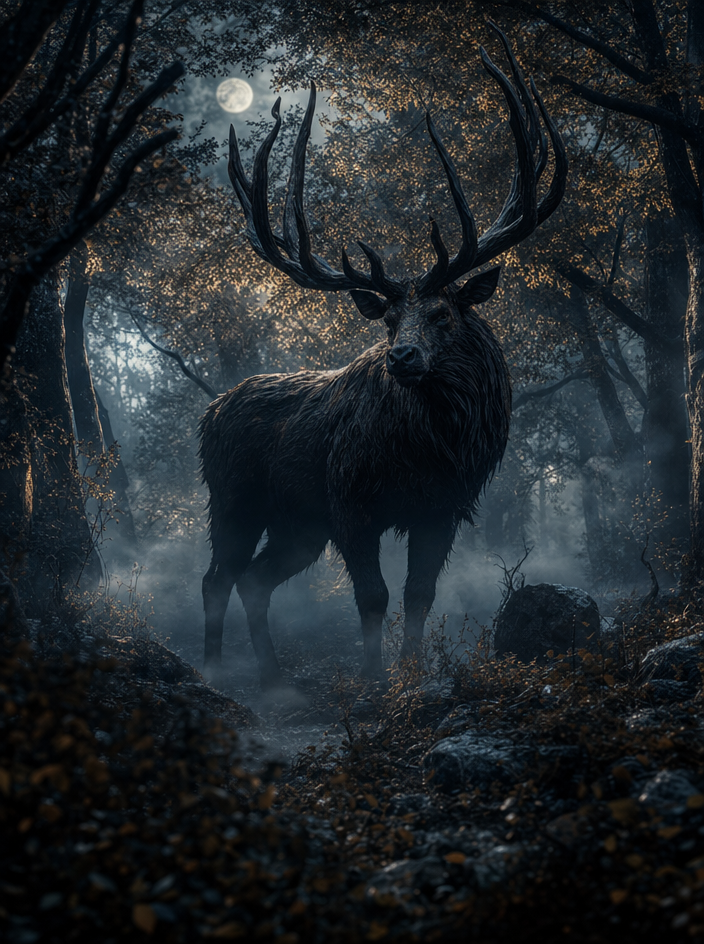
Twilight stag with massive antlers