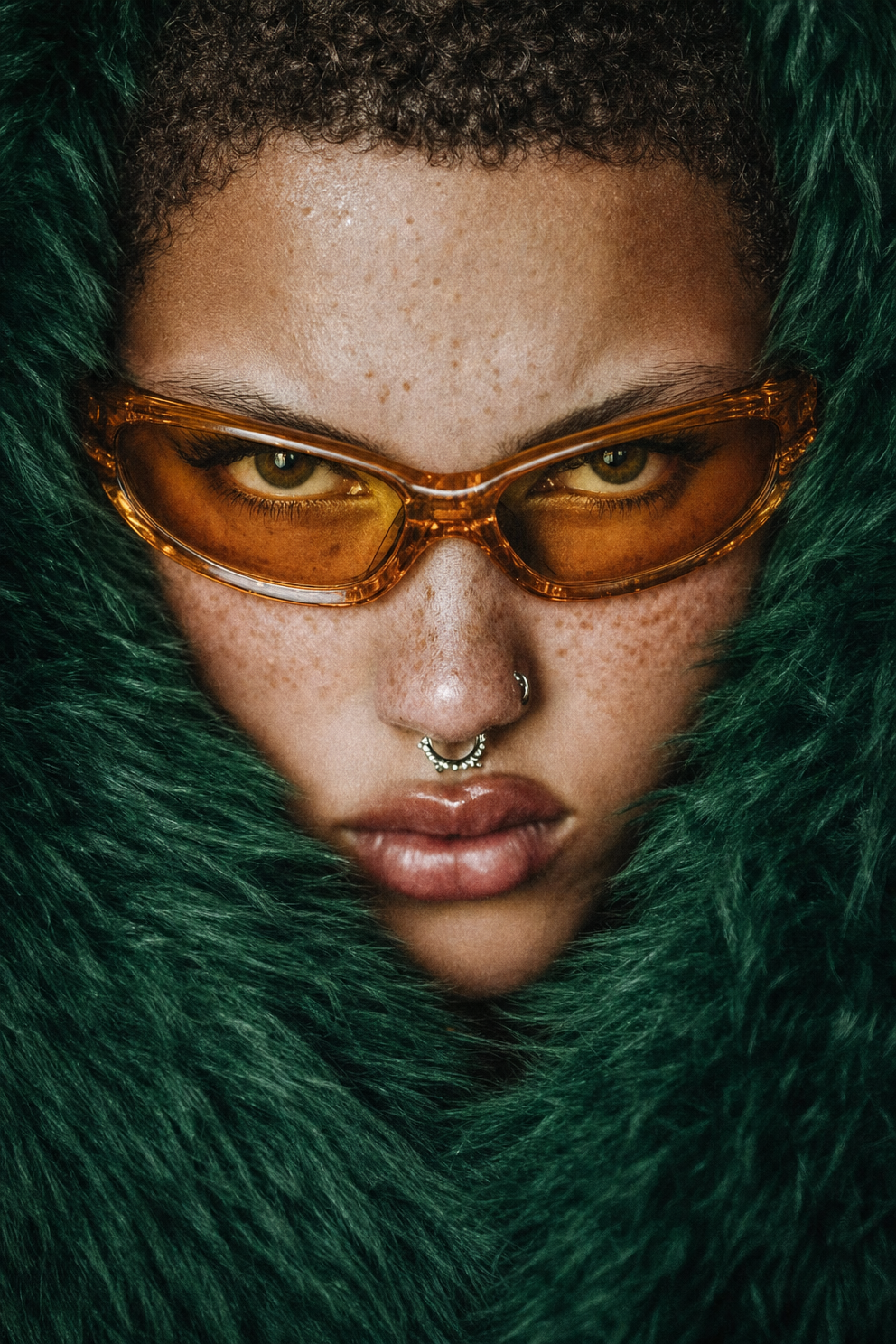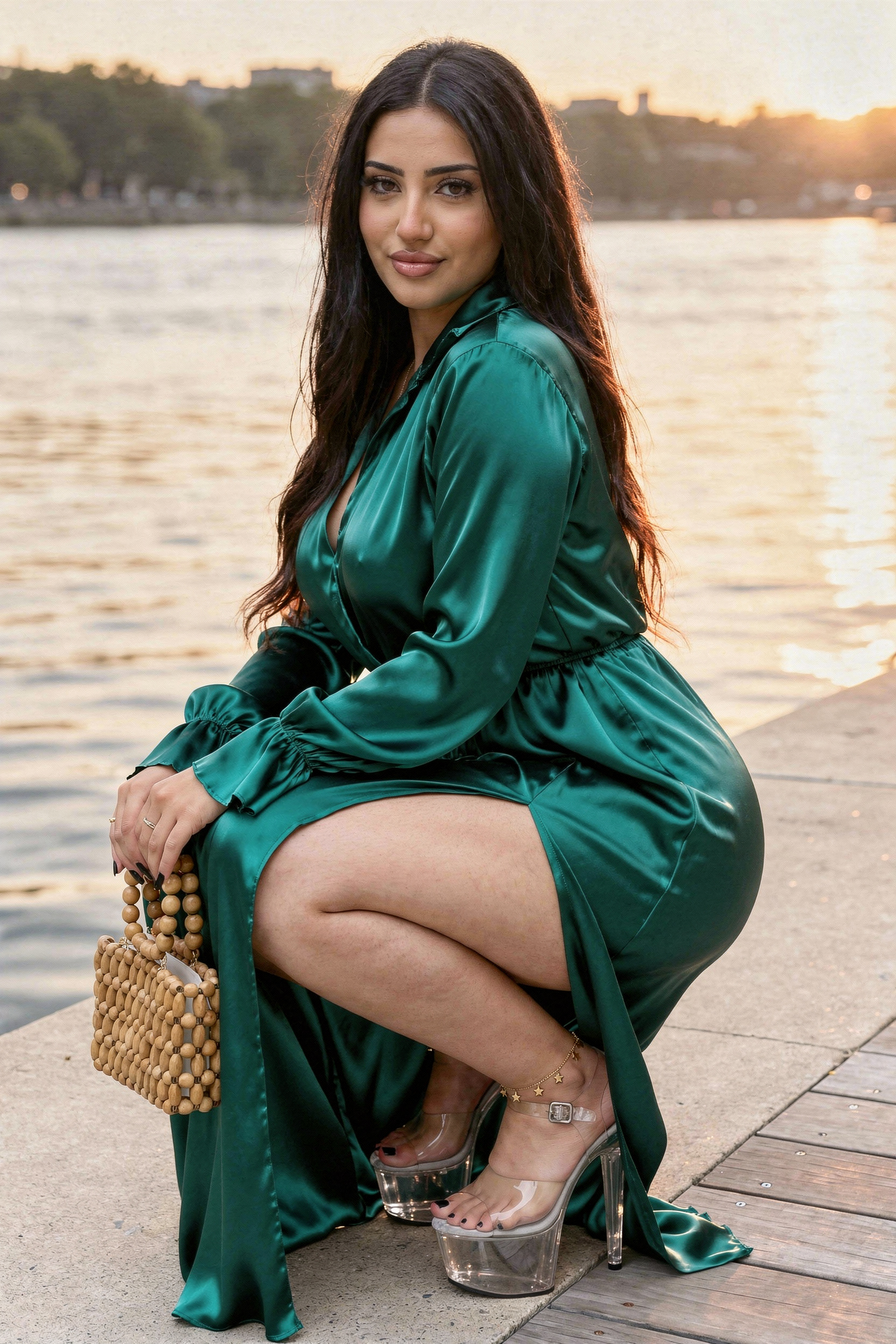
Same prompt, generated with each model separately — click one to see how it holds up.
Why this works
“Photorealistic editorial fashion photography” and “confident, elegant woman” establish the polished magazine tone, while “teal satin pleated long-sleeve dress” gives the neutral beige, brown, and white surroundings a concentrated color accent. “Portrait-full-body” keeps the dress, clear sandals, and woven handbag readable, and “sitting by a riverbank” creates a relaxed seated composition against the “bridge and mid-rise buildings” that supplies urban scale. “Soft late-afternoon golden natural light” warms the scene, while “shallow depth of field,” “gentle bokeh,” and “sharp focus on the subject’s face and dress texture” separate the model from the waterfront background without losing the fabric detail.
FAQ
→How do I make the image moodier and more cinematic?
Replace “soft late-afternoon golden natural light” with “low, dramatic sunset side-light with deep shadows and warm rim light,” and change “natural skin tones” to “subtle cinematic contrast with warm highlights and cool shadows.” Keep “photorealistic editorial fashion photography” so the stronger lighting remains fashion-oriented rather than theatrical.
→How do I make the dress and accessories more prominent than the city background?
Replace “portrait-full-body” with “three-quarter fashion portrait, framed from mid-thigh upward,” and change “sharp focus on the subject’s face and dress texture” to “sharp priority on the teal satin pleats, neckline, sandals, and woven beaded handbag.” Reduce the setting phrase “bridge and mid-rise buildings in the background” to “softly blurred urban waterfront hints” so those elements support the outfit instead of competing with it.
→How do I turn this into a consistent series with different locations?
Keep the fixed subject block “confident, elegant woman with long dark hair” and the wardrobe phrase “teal satin pleated long-sleeve dress, clear strappy block-heeled sandals, and small woven beaded handbag.” Replace “urban waterfront riverbank with a bridge and mid-rise buildings” with matched settings such as “quiet European café terrace,” “modern museum courtyard,” or “rooftop garden overlooking the city,” while retaining “soft late-afternoon golden natural light,” “shallow depth of field,” and “natural skin tones” across every variation.
Learn the technique behind this
- Why can't AI spell, and how do I get readable text in an image? — Older diffusion models had no character-level representation of text, so they produced letterform-shaped texture instead of words.
- Why does AI get hands and faces wrong, and how do I fix it? — Hands fail because they're small in frame, extremely variable in pose, and self-occluding — the model has less usable signal per pixel than for any other body part.
- Why does the model ignore parts of my prompt? — Ignored instructions are almost always conflicts, counts, or spatial relationships — three things current models handle badly — rather than the model failing to read you.
Related prompts
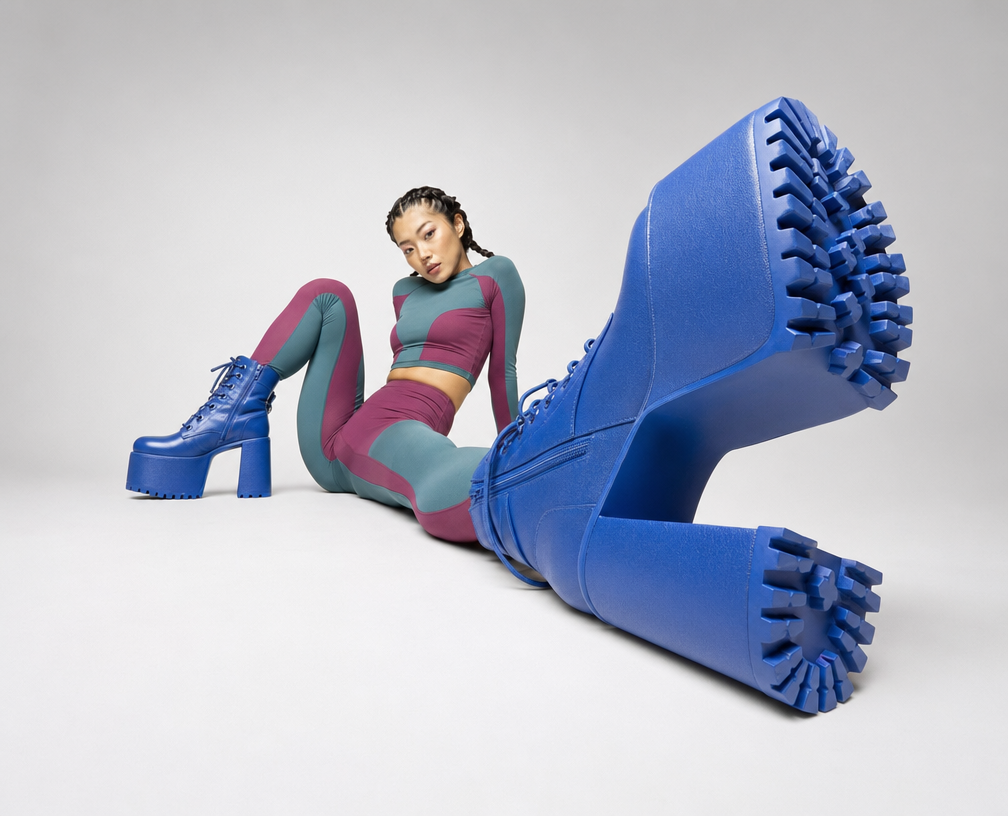
Cobalt Boots in Sleek Studio Edit
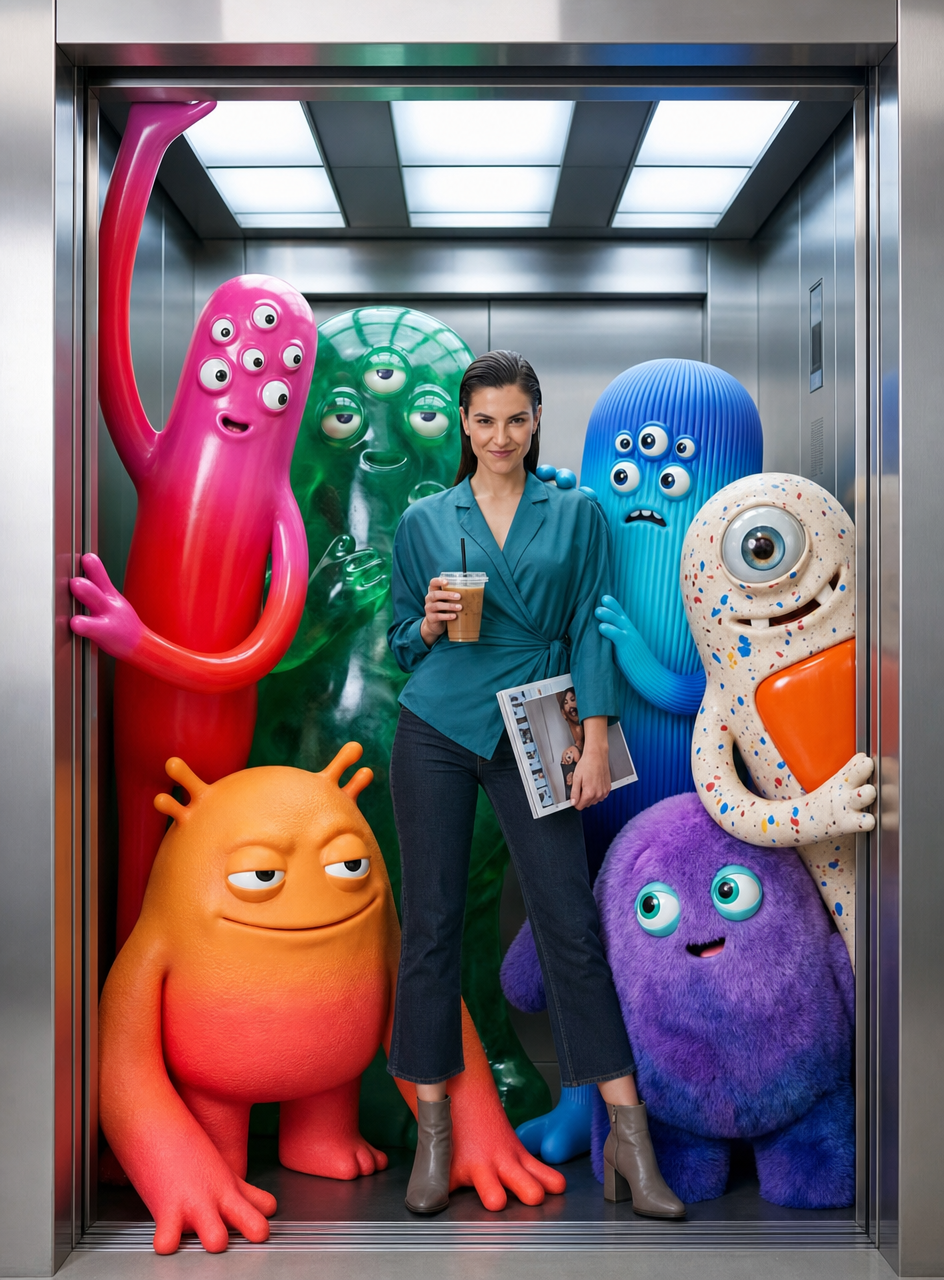
Teal fashion editorial in monster-filled lift
Sunlit editorial on striped beach towel
Silhouette Influencer by Sunlit Window