Why this works
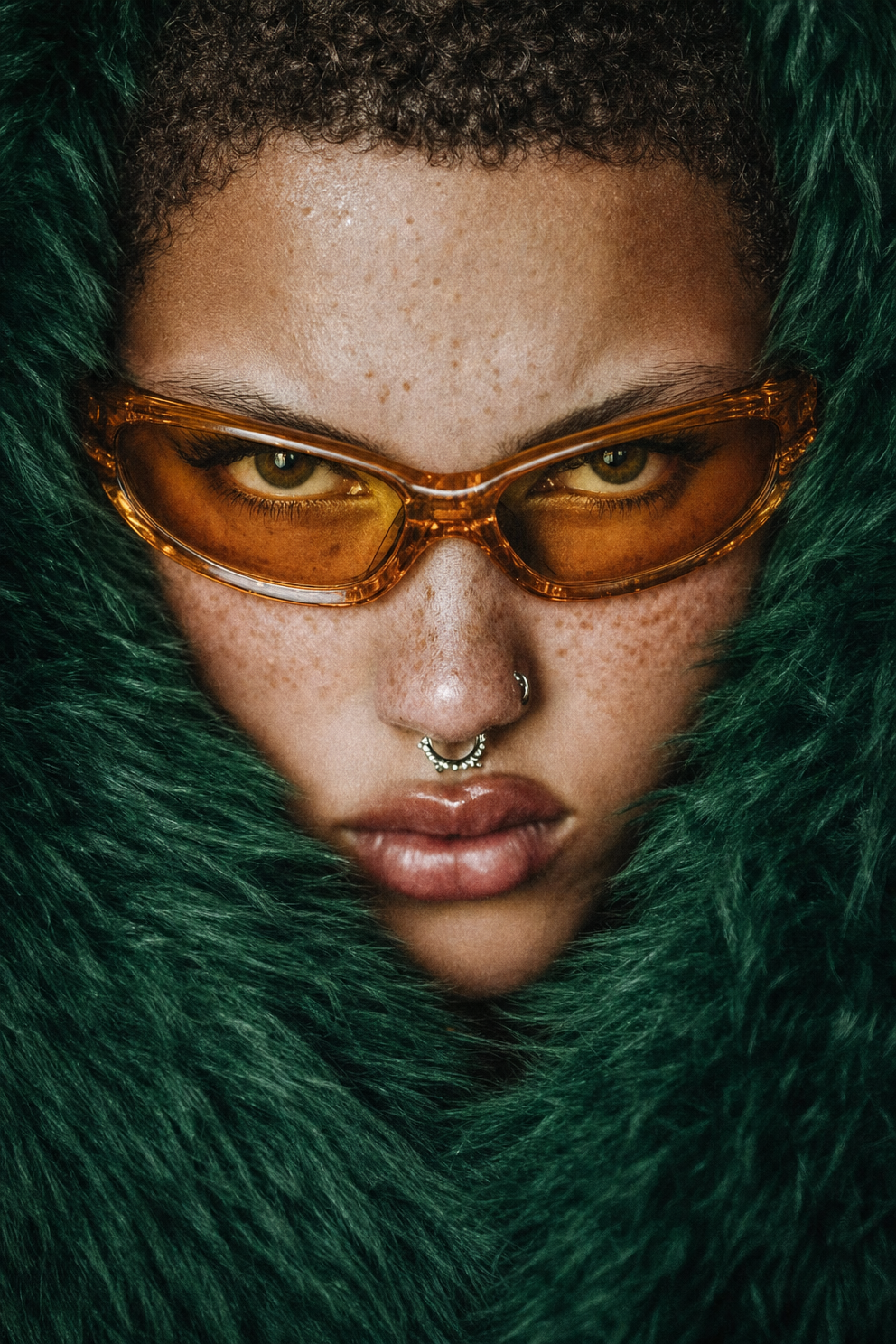
“Extreme close-up,” “only the face visible,” and “dramatic tight framing” eliminate distractions and make the full lips, facial jewelry, freckles, and reflective lenses carry the portrait. The deep emerald-green faux fur forms a dense frame around the cheeks and forehead, while the dominant black-and-brown hair and fur tones let the amber sunglasses and “reflective gold-orange lenses” provide the sharp color-pop contrast. “Fierce intense expression,” “high contrast,” and “crisp sharp skin and fur textures” establish the bold magazine-cover mood through expression, tonal separation, and tactile detail rather than background scenery.
FAQ
→How do I make the sunglasses more central and visually dominant?
Replace “translucent amber wraparound sunglasses featuring reflective gold-orange lenses” with “oversized translucent amber wraparound sunglasses dominating the composition, lenses covering most of the upper face, intense gold-orange reflections.” Keep “only the face visible” and “extreme close-up” so the larger lenses become the primary focal point.
→How do I shift this from fierce and avant-garde to softer and more approachable?
Change “Fierce intense expression” to “relaxed warm expression with a subtle closed-mouth smile,” and replace “high contrast” with “soft diffused beauty lighting with gentle shadows.” You can also replace “deep emerald-green faux fur” with “soft cream faux fur” to reduce the black, brown, and orange-heavy visual weight.
→How do I create a series of variations without losing the portrait’s identity?
Keep “extreme close-up,” “only the face visible,” “freckled skin,” the “small nose ring plus septum ring,” and “short textured curls in dark brown,” then swap one controlled feature per version. For example, replace “deep emerald-green faux fur” with “cobalt-blue velvet” for a cooler frame, or replace “reflective gold-orange lenses” with “reflective violet lenses” while preserving the same “magazine-cover style lighting” and “dramatic tight framing.”
Learn the technique behind this
- Why can't AI spell, and how do I get readable text in an image? — Older diffusion models had no character-level representation of text, so they produced letterform-shaped texture instead of words.
- How do I keep one consistent style across a whole set of images? — Style consistency is more achievable than character consistency because style lives in describable attributes.
- How should a prompt be structured, and does word order matter? — A prompt that behaves predictably names one subject first, then what it is doing, then where, then the light, then the lens or medium, then the style.
Related prompts
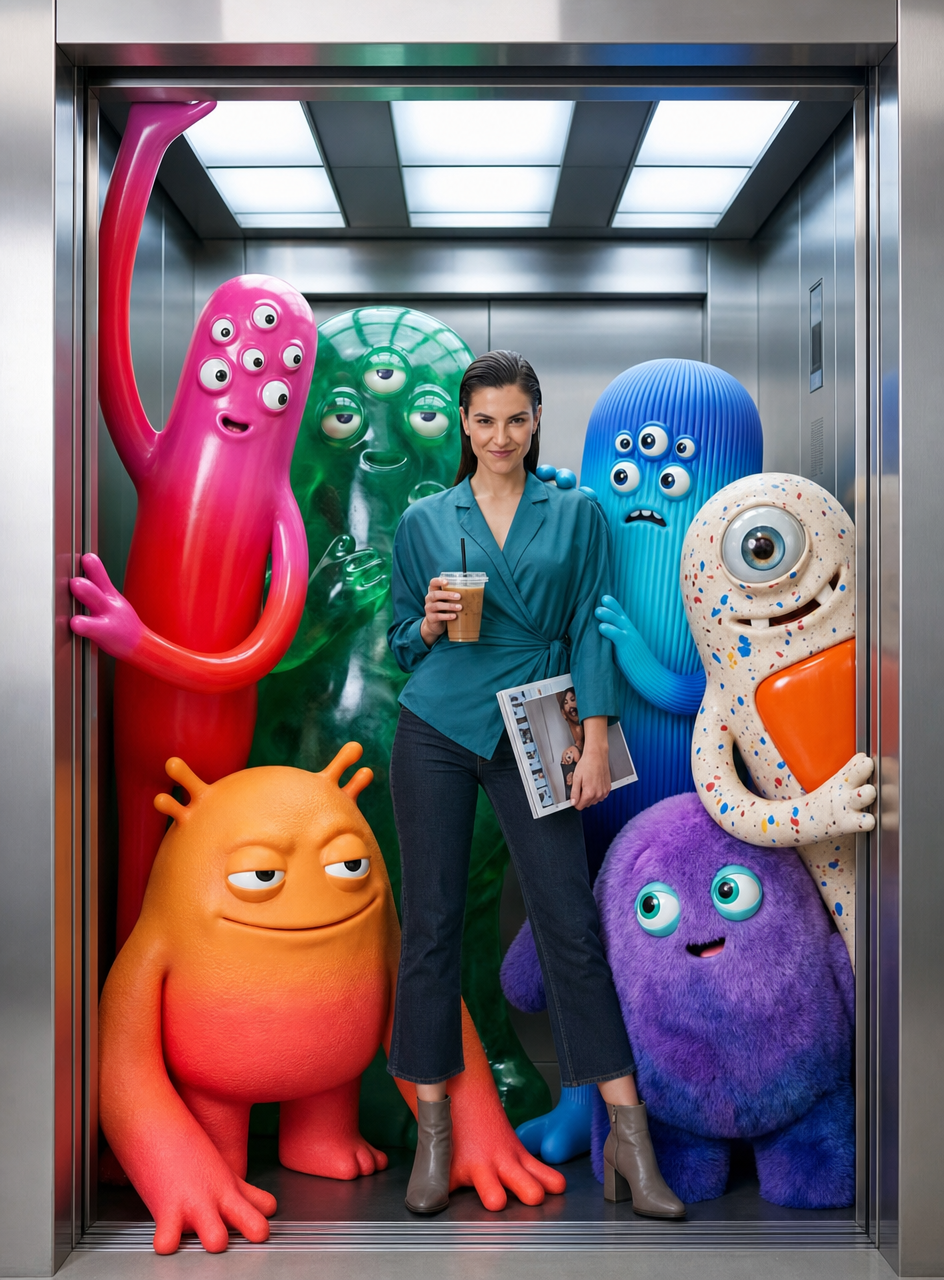
Teal fashion editorial in monster-filled lift
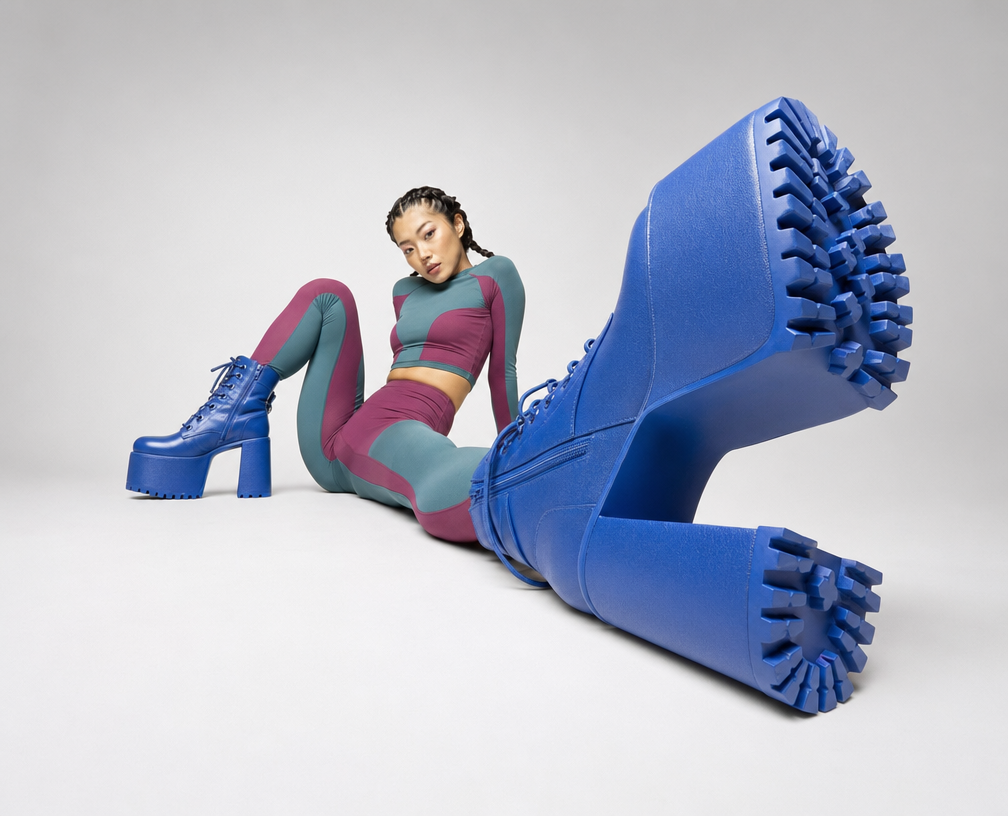
Cobalt Boots in Sleek Studio Edit
Silhouette Influencer by Sunlit Window
Sunlit editorial on striped beach towel