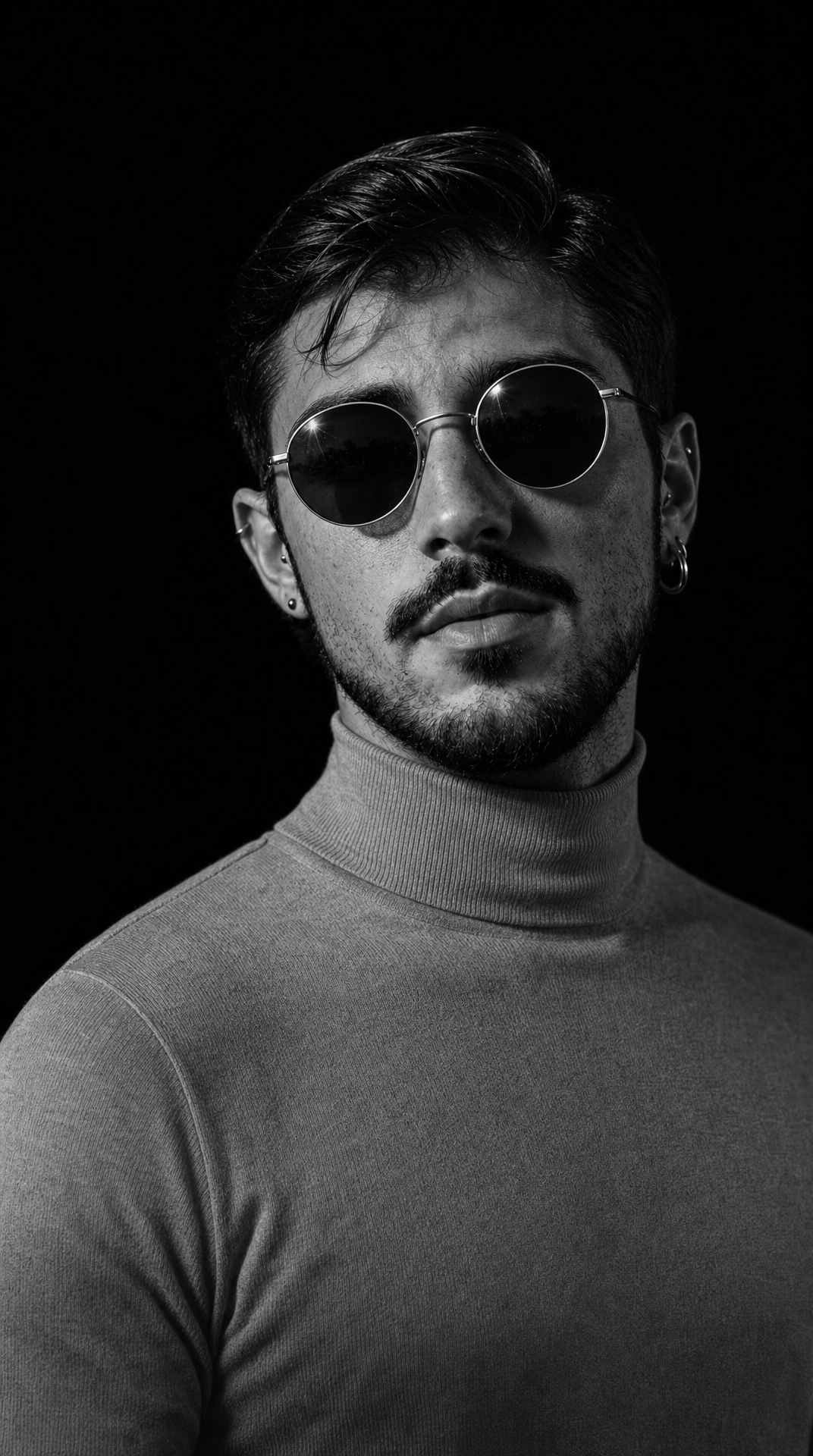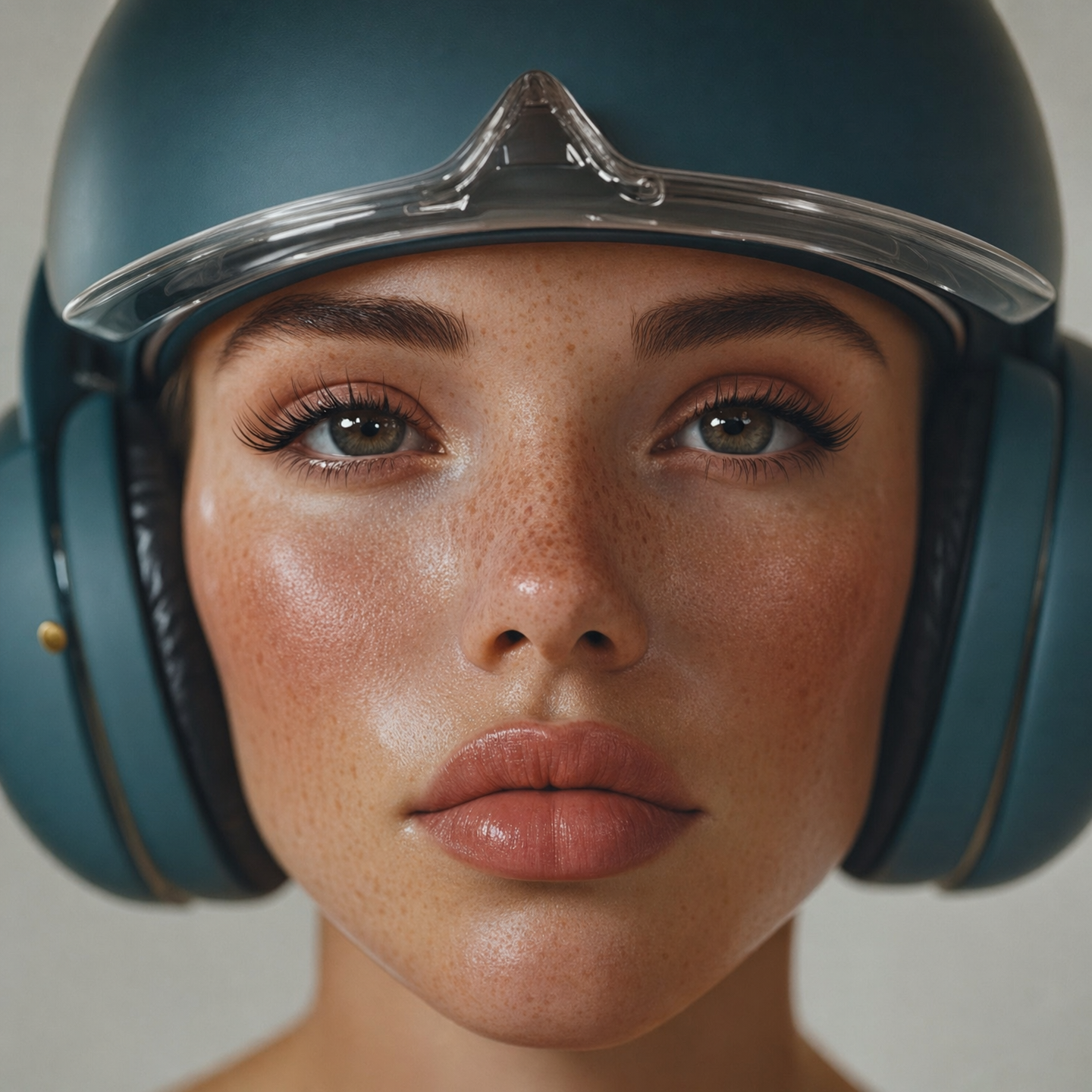
Same prompt, generated with each model separately — click one to see how it holds up.
Why this works
The phrase “tight frontal close-up” makes the woman’s face and matte deep teal helmet fill the frame, while “centered composition” gives the portrait its controlled, symmetrical feel. “Soft diffused lighting” keeps the mood glossy and intimate by smoothing transitions across the “dewy skin with subtle freckles,” and “clean studio background” prevents gray and teal surroundings from competing with the subject. The restrained palette of “deep teal,” “rosy-brown makeup,” and natural skin tones creates a sleek color harmony, reinforced by “high-detail fashion editorial photography” and “polished commercial portrait” for a precise, commercial finish.
FAQ
→How do I make the helmet more visually dominant?
Replace “tight frontal close-up portrait” with “extreme close-up portrait with the helmet occupying most of the frame,” and change “matte deep teal helmet” to “sculptural glossy cobalt-teal helmet with sharply defined ear covers.” Keep “centered composition” so the helmet remains symmetrical and unmistakably central.
→How do I shift this from glossy commercial to a moodier portrait?
Replace “soft diffused lighting” with “low-key directional side lighting with deep facial shadows,” and change “clean studio background” to “dark charcoal studio background with subtle falloff.” For a less polished tone, replace “polished commercial portrait” with “moody cinematic editorial portrait,” while retaining “ultra-realistic skin texture” to preserve the close-up detail.
→How do I build a consistent series with different helmet colors?
Keep the fixed structure, including “tight frontal close-up,” “centered composition,” “clean studio background,” and “soft diffused lighting,” then swap only “matte deep teal helmet with matching ear covers” for variants such as “matte burnt-orange helmet with matching ear covers” or “matte pearl-white helmet with matching ear covers.” Change “soft rosy-brown makeup” slightly to coordinate with each helmet, such as “muted terracotta makeup” for orange or “cool mauve makeup” for white.
Learn the technique behind this
- Why can't AI spell, and how do I get readable text in an image? — Older diffusion models had no character-level representation of text, so they produced letterform-shaped texture instead of words.
- How should a prompt be structured, and does word order matter? — A prompt that behaves predictably names one subject first, then what it is doing, then where, then the light, then the lens or medium, then the style.
- Why does AI get hands and faces wrong, and how do I fix it? — Hands fail because they're small in frame, extremely variable in pose, and self-occluding — the model has less usable signal per pixel than for any other body part.
Related prompts
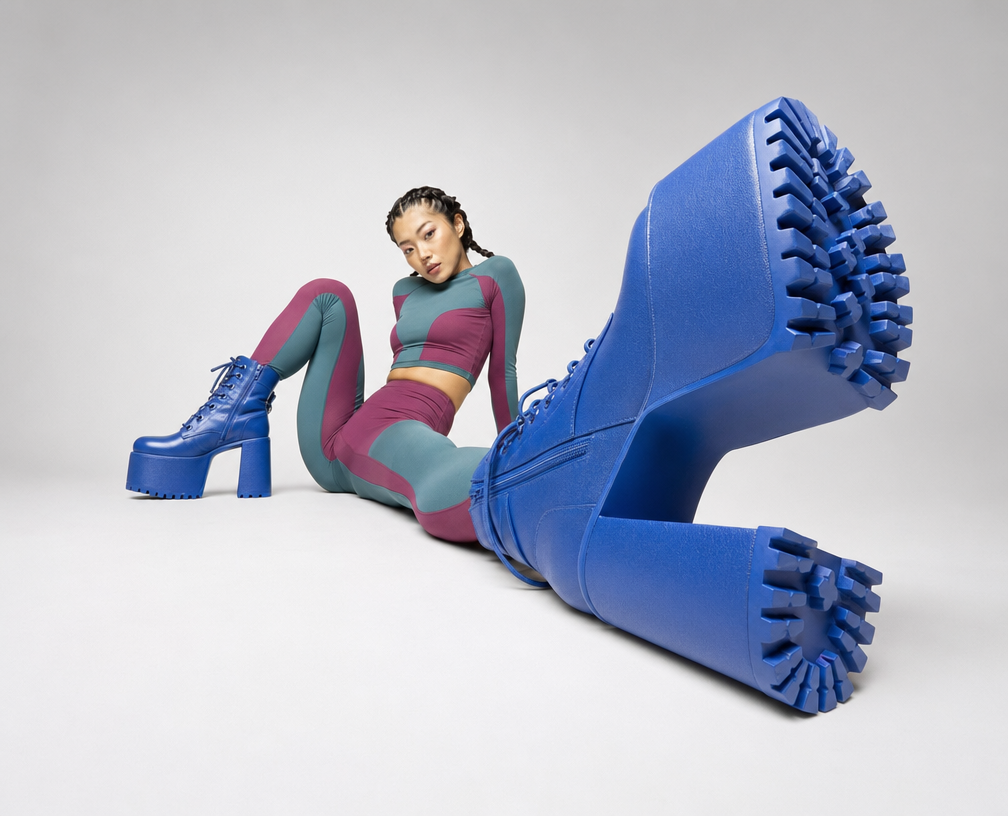
Cobalt Boots in Sleek Studio Edit
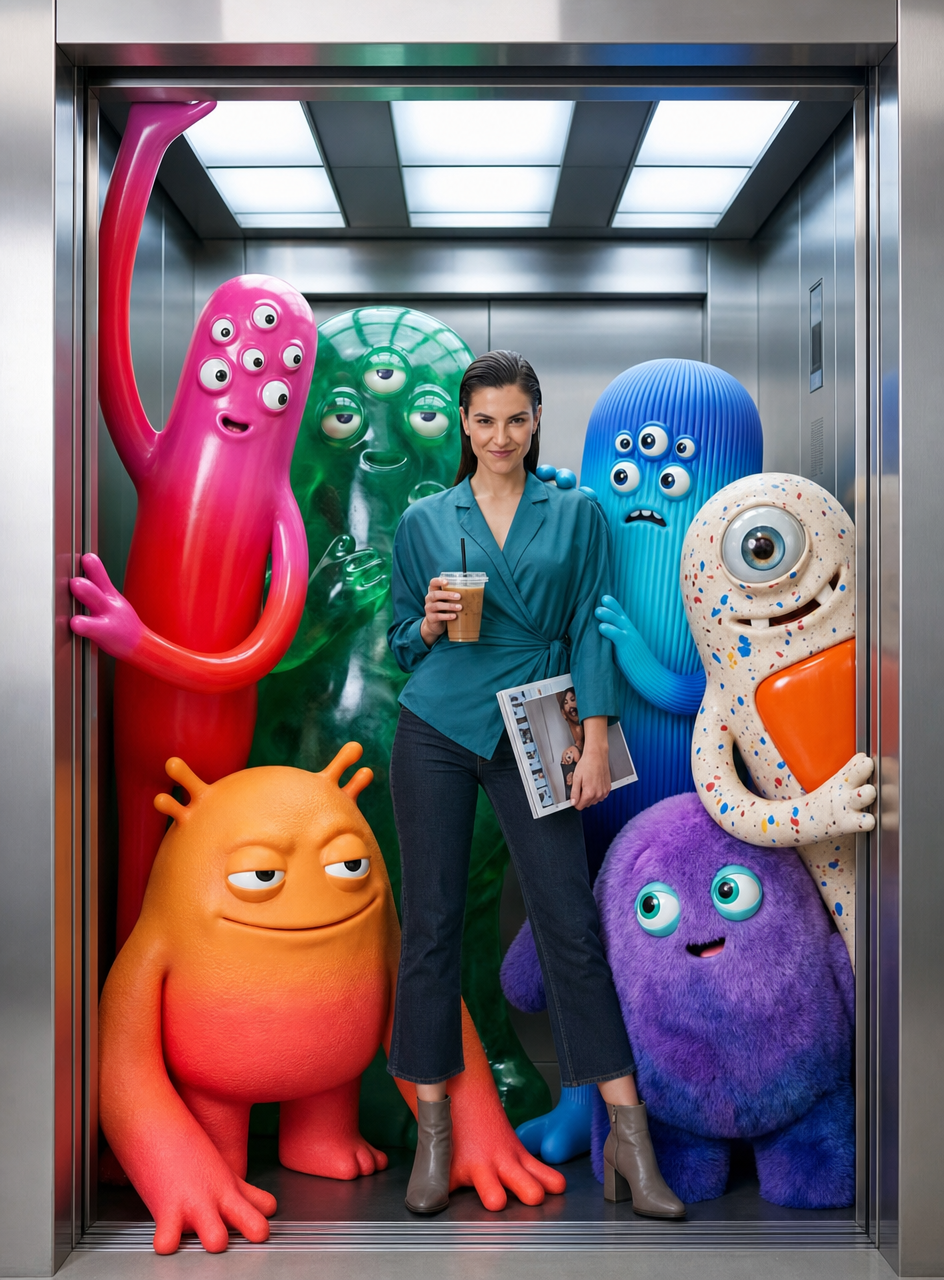
Teal fashion editorial in monster-filled lift
Sunlit editorial on striped beach towel
Silhouette Influencer by Sunlit Window