Why this works
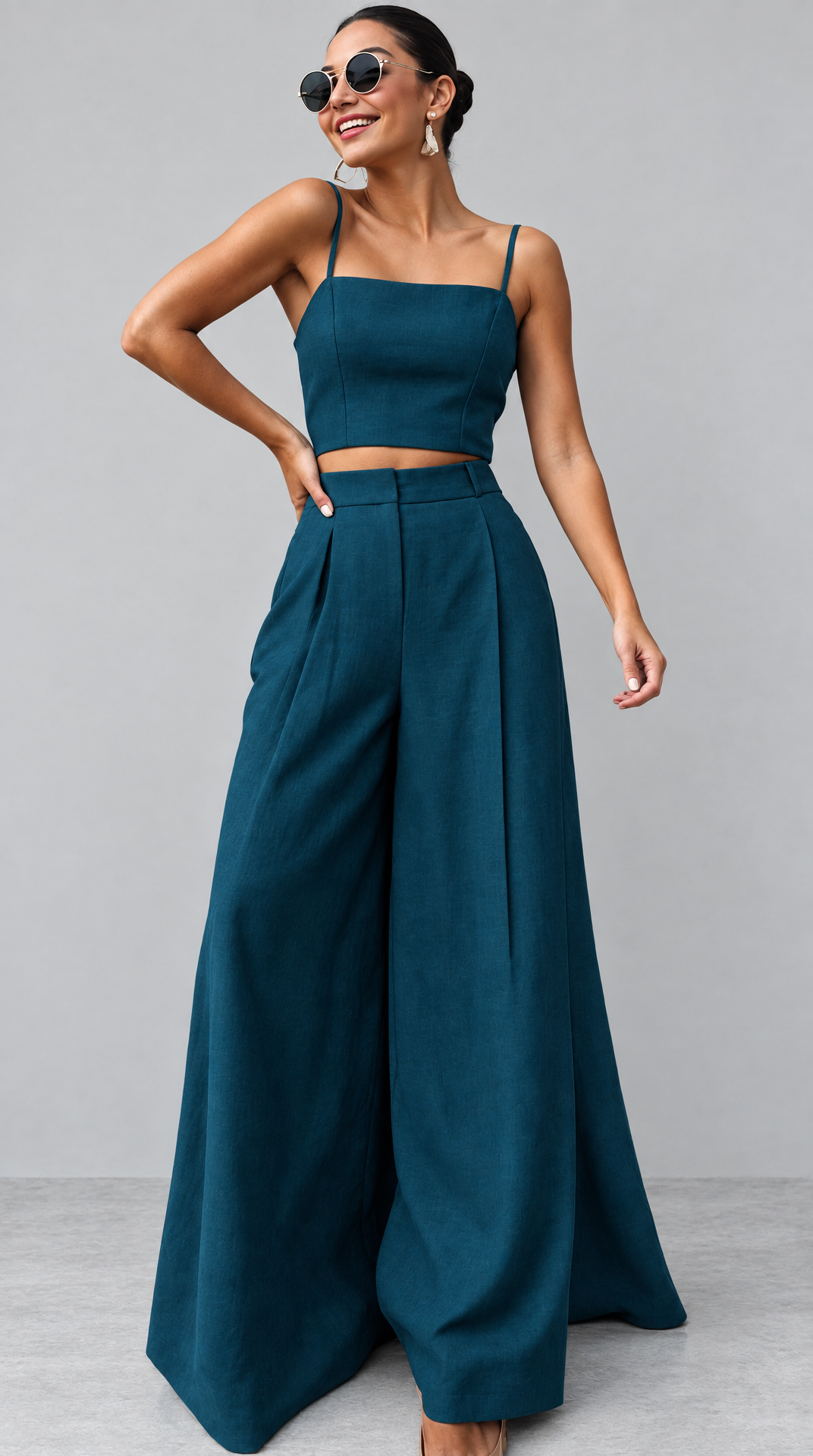
The phrase “full-body framing, centered clean composition” gives the outfit equal visual authority from camisole to wide-leg hem, while “relaxed confident pose” supplies the controlled editorial stance. “Clean, light-gray studio wall” and “minimal background with no distractions” explain the dominant gray-and-black appearance by removing competing color and detail, letting the deep teal suit act as the concentrated accent. “Soft diffused window light” paired with “gentle highlights and natural shadows” keeps the pleats, thin straps, and natural skin tones defined without breaking the modern, uncluttered mood.
FAQ
→How do I make the deep teal outfit more visually prominent?
Replace “clean, light-gray studio wall” with “warm ivory studio wall” or “dark charcoal studio wall,” and add “rich saturated deep teal fabric rendered as the dominant color.” Keep “minimal background with no distractions” so the stronger garment color does not compete with extra scenery.
→How do I make the portrait feel more dramatic instead of softly elegant?
Replace “soft diffused window light” and “gentle highlights and natural shadows” with “hard directional side light, pronounced sculptural shadows, and a narrow rim light.” Change “relaxed confident pose” to “strong angular editorial pose with one hand on the hip” to reinforce the sharper tone.
→How do I build a series of variations while preserving the same fashion identity?
Keep “deep teal cropped camisole with thin spaghetti straps and matching high-waisted pleated wide-leg trousers,” “full-body framing,” and “photorealistic fashion editorial look” unchanged. Swap only “clean, light-gray studio wall” for settings such as “brushed concrete gallery wall,” “sunlit minimalist apartment,” or “deep blue seamless studio backdrop,” and adjust the light phrase to match each location.
Learn the technique behind this
- Which aspect ratio should I use, and how does it change the image? — Aspect ratio determines what the model composes, not how it's cropped afterwards.
- Why can't AI spell, and how do I get readable text in an image? — Older diffusion models had no character-level representation of text, so they produced letterform-shaped texture instead of words.
- Why does AI get hands and faces wrong, and how do I fix it? — Hands fail because they're small in frame, extremely variable in pose, and self-occluding — the model has less usable signal per pixel than for any other body part.
Related prompts
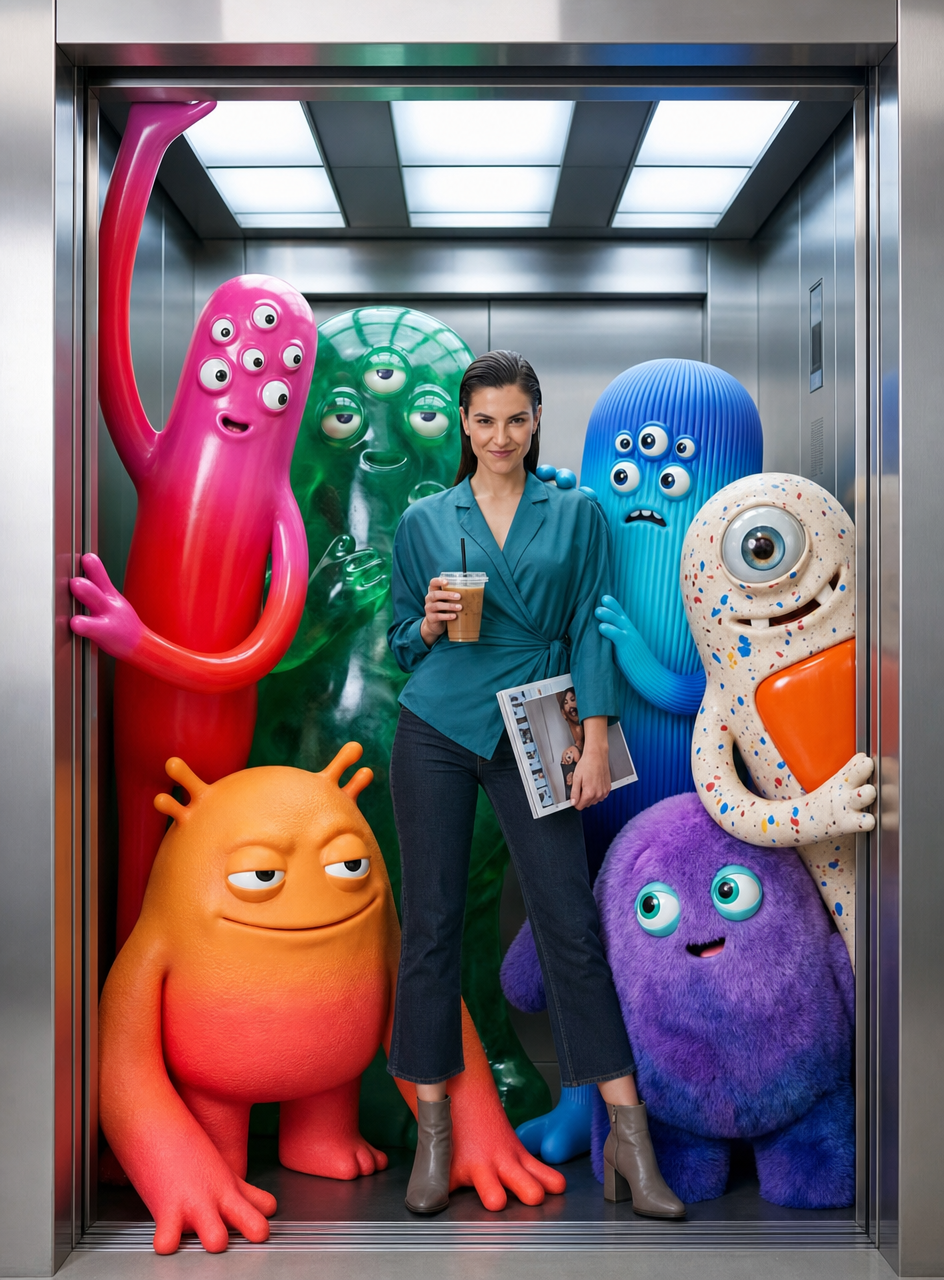
Teal fashion editorial in monster-filled lift
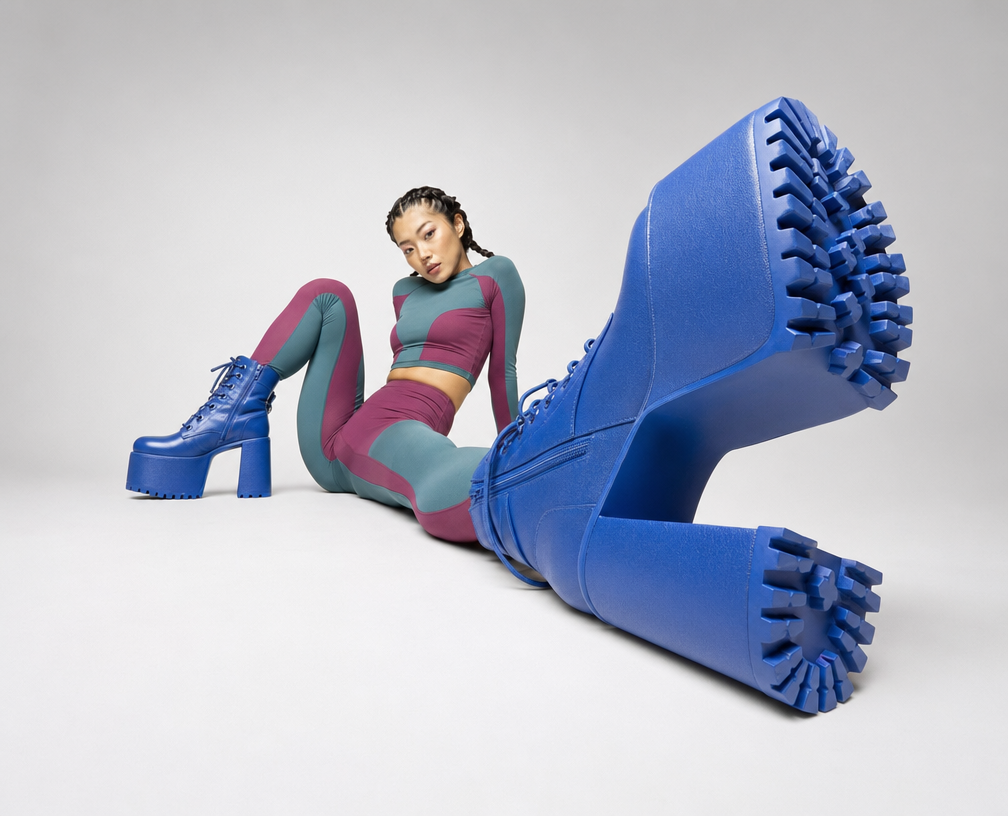
Cobalt Boots in Sleek Studio Edit
Silhouette Influencer by Sunlit Window
Sunlit editorial on striped beach towel