Why this works
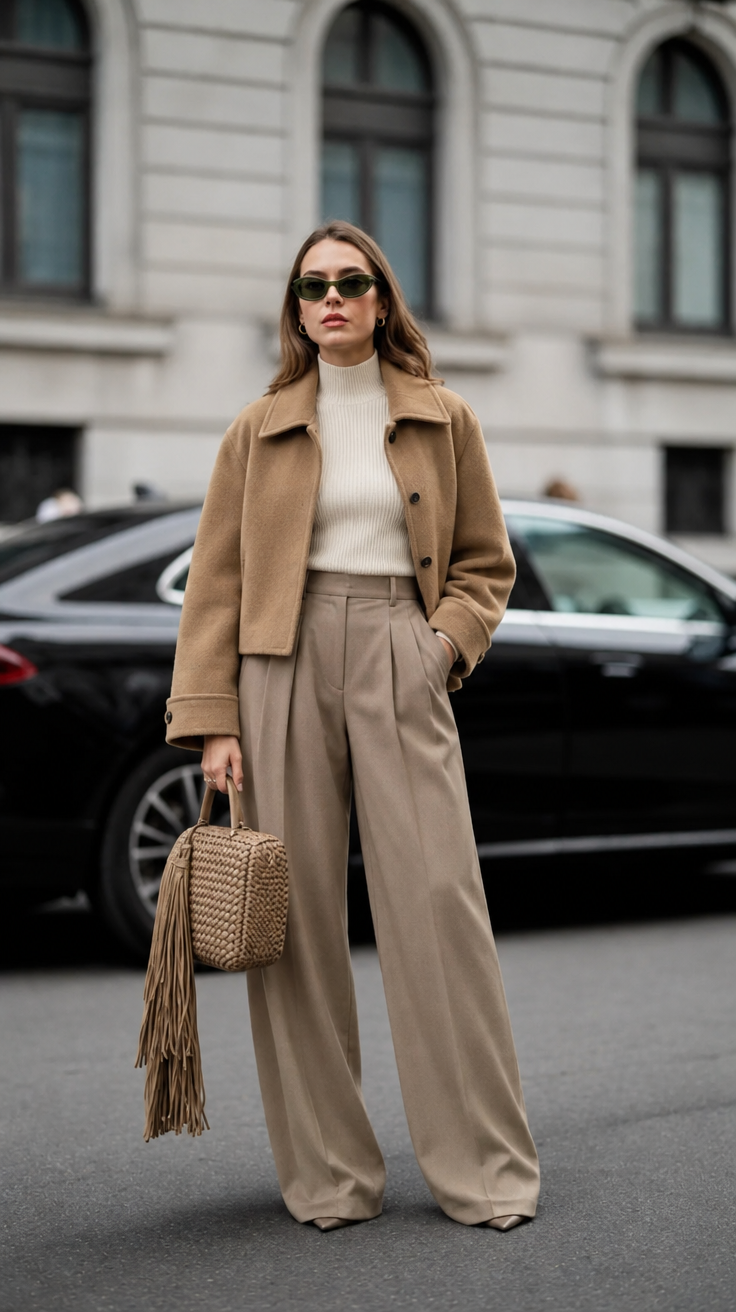
The phrase “shorter camel jacket with a structured collar” gives the full-body portrait a sharp focal point, while “pleated taupe high-waisted trousers” creates a long, tailored silhouette. “Soft overcast daylight with natural shadows” keeps the tan, gray, and black palette controlled and realistic, and “shallow depth of field” separates her from the modern architecture and dark car without losing the urban setting. “Crisp skin and fabric textures” plus “high-end fashion photography look” makes the woven handbag, ribbed mock-neck, and tailoring carry the editorial finish.
FAQ
→How do I make the outfit feel more dramatic and high-contrast?
Replace “layered neutral outfit in warm beige and camel tones” with “high-contrast black, ivory, and deep burgundy outfit,” and change “soft overcast daylight with natural shadows” to “hard directional afternoon sunlight with defined shadows.” Keep “crisp skin and fabric textures” to preserve the fashion-editorial detail.
→How do I make the jacket and face more prominent while keeping the full-body pose?
Change “full-body framing” to “full-body framing with a slightly lower camera angle and stronger emphasis on the upper torso,” and replace “shallow depth of field” with “shallow depth of field focused on her face, sunglasses, and structured collar.” Retain “confident urban pose” so the trousers and stance remain visible.
→How do I create a variation with the same styling in a different location?
Replace “city street with modern urban architecture; a dark car behind her” and “Background shows modern urban architecture with a dark-colored car behind her” with “brutalist concrete plaza with geometric stairs and a distant tram.” Keep “shorter camel jacket,” “cream ribbed mock-neck,” and “pleated taupe high-waisted trousers” unchanged for a consistent fashion series.
Learn the technique behind this
- Why can't AI spell, and how do I get readable text in an image? — Older diffusion models had no character-level representation of text, so they produced letterform-shaped texture instead of words.
- Which aspect ratio should I use, and how does it change the image? — Aspect ratio determines what the model composes, not how it's cropped afterwards.
- Why does the model ignore parts of my prompt? — Ignored instructions are almost always conflicts, counts, or spatial relationships — three things current models handle badly — rather than the model failing to read you.
Related prompts
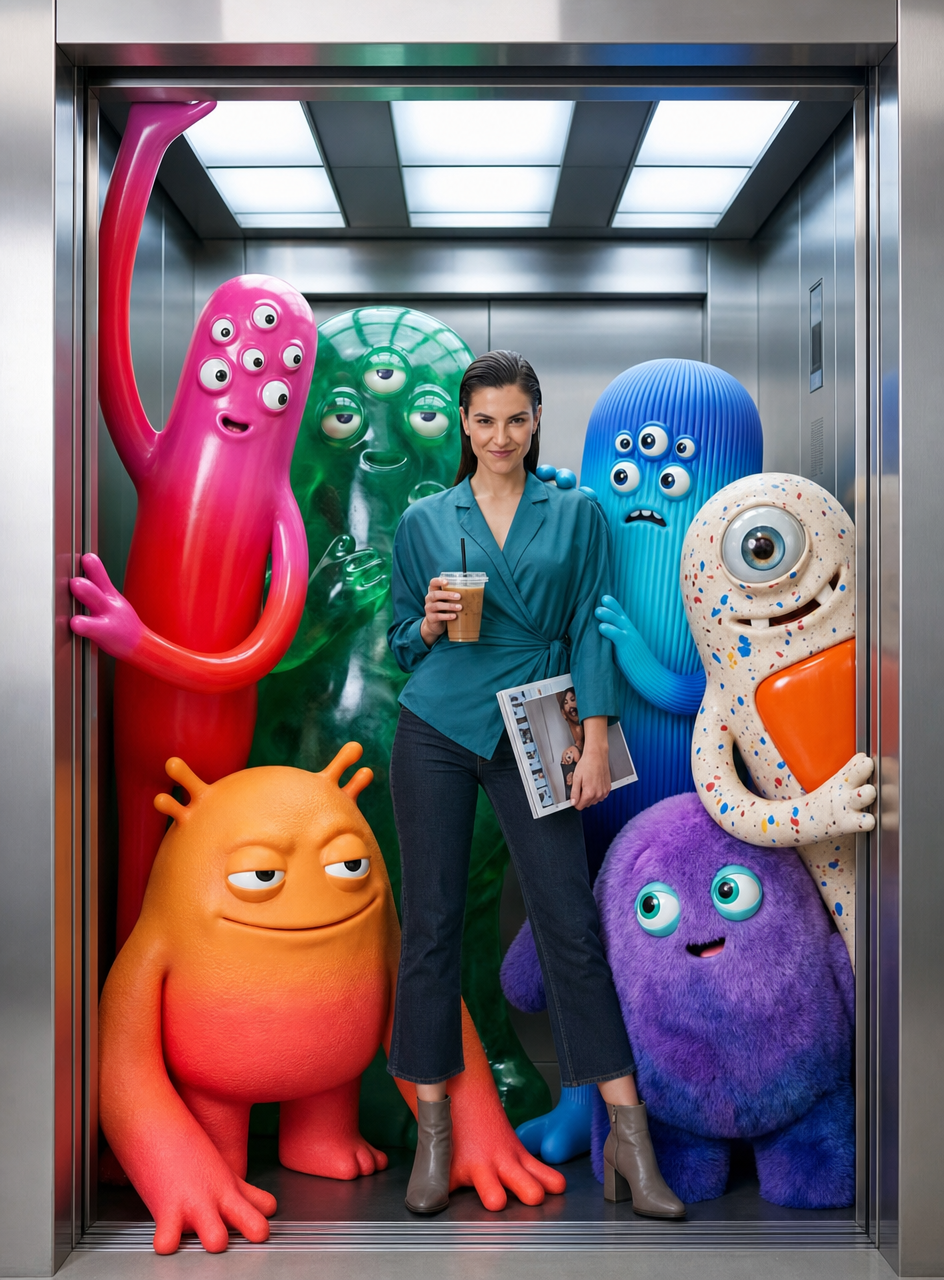
Teal fashion editorial in monster-filled lift
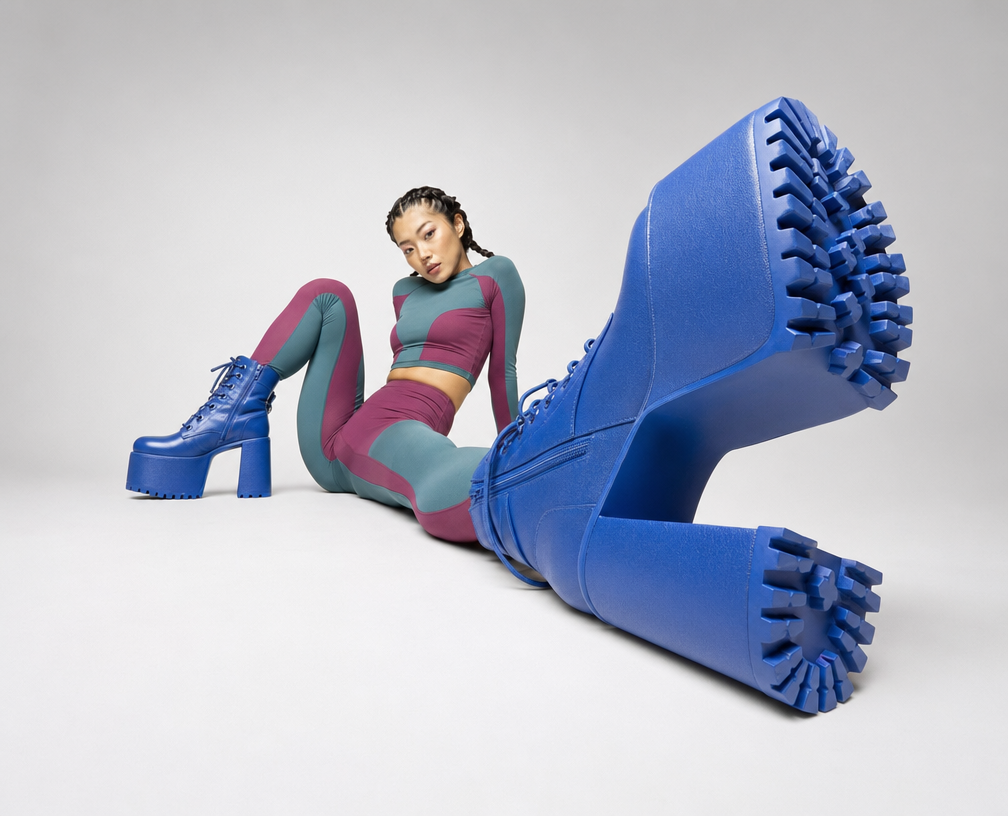
Cobalt Boots in Sleek Studio Edit
Silhouette Influencer by Sunlit Window
Sunlit editorial on striped beach towel