Why this works
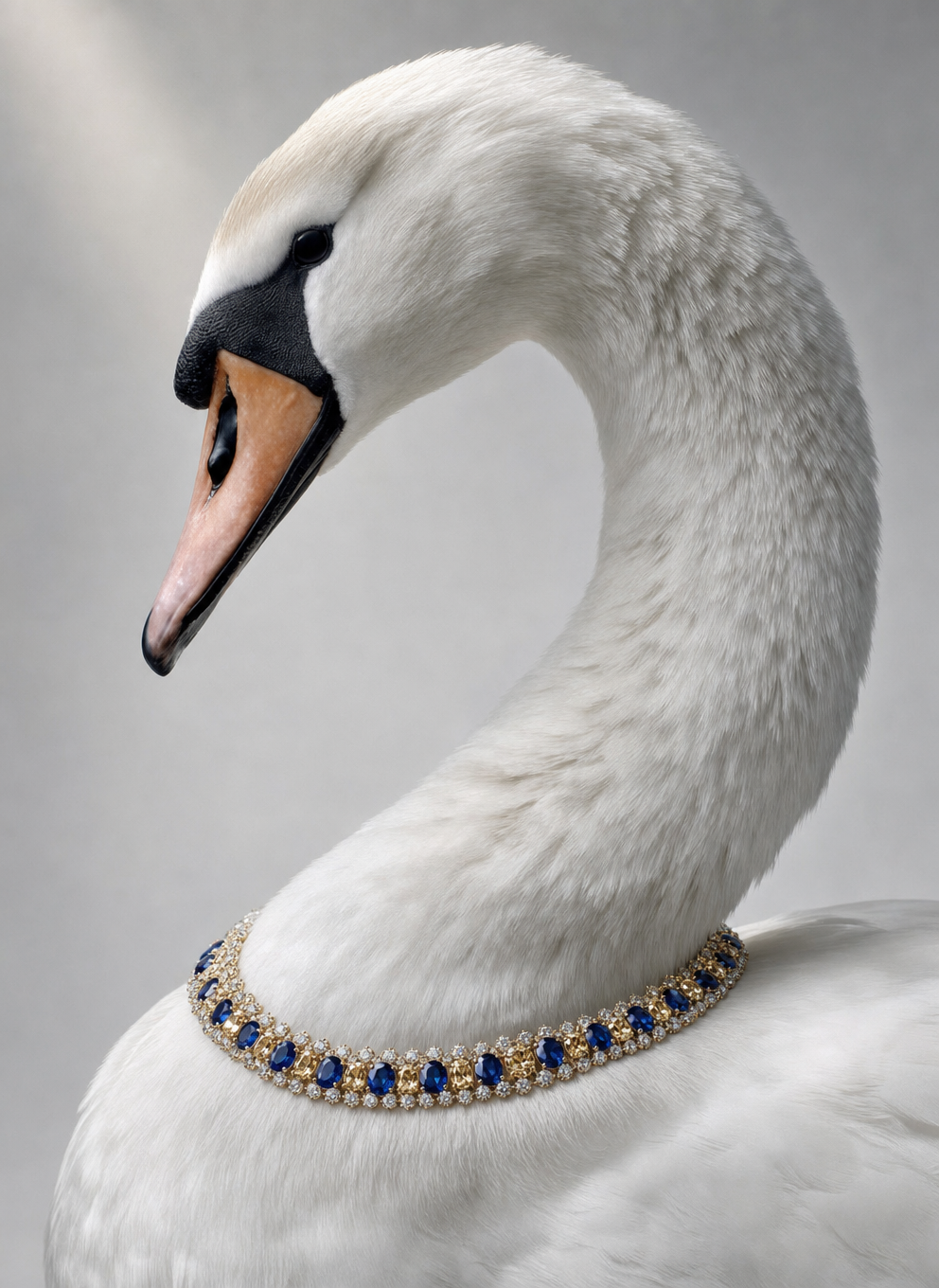
The “close-up studio portrait” and “sharp focus on the face and neck” make the swan’s curved neck and necklace the visual anchors, while the “smaller, tighter setting” keeps the sapphire-and-gold jewelry refined rather than oversized. “Soft slightly directional lighting from the upper left” gives the white feathers dimensional modeling, and the “smooth cool-gray background” supplies a restrained gray field against which the blue and gold stones stand out. “Luxury fashion editorial aesthetic” and “highly detailed feathers with crisp realistic texture” combine polished styling with tactile photographic detail.
FAQ
→How do I make the necklace more prominent without losing the swan’s elegance?
Replace “smaller, tighter setting” with “larger statement necklace with prominent sapphire and gold gemstones,” and change “sharp focus on the face and neck” to “sharp focus across the necklace, lower neck, and face.” Keep “luxury fashion editorial aesthetic” to preserve the controlled styling.
→How do I shift this from cool, refined luxury to a warmer and more dramatic mood?
Replace “soft slightly directional lighting from the upper left” with “warm dramatic spotlight from the upper left with deeper shadows,” and replace “smooth cool-gray background” with “deep charcoal-to-burgundy studio background.” Change “sapphire-and-gold” to “ruby-and-antique-gold” if you also want the jewelry palette to reinforce the warmer tone.
→How do I turn this prompt into a series of coordinated swan fashion portraits?
Keep “photorealistic,” “close-up studio portrait,” “luxury fashion editorial aesthetic,” “sharp focus on the face and neck,” and the same “smooth cool-gray background” in every image. Swap only “sapphire-and-gold gemstone necklace” for controlled variants such as “emerald-and-silver collar,” “pearl-and-platinum necklace,” or “ruby-and-gold necklace,” while retaining “white swan with an elegant curved neck” for consistent subject identity.
Learn the technique behind this
- Why can't AI spell, and how do I get readable text in an image? — Older diffusion models had no character-level representation of text, so they produced letterform-shaped texture instead of words.
- How should a prompt be structured, and does word order matter? — A prompt that behaves predictably names one subject first, then what it is doing, then where, then the light, then the lens or medium, then the style.
- Why does the model ignore parts of my prompt? — Ignored instructions are almost always conflicts, counts, or spatial relationships — three things current models handle badly — rather than the model failing to read you.
Related prompts
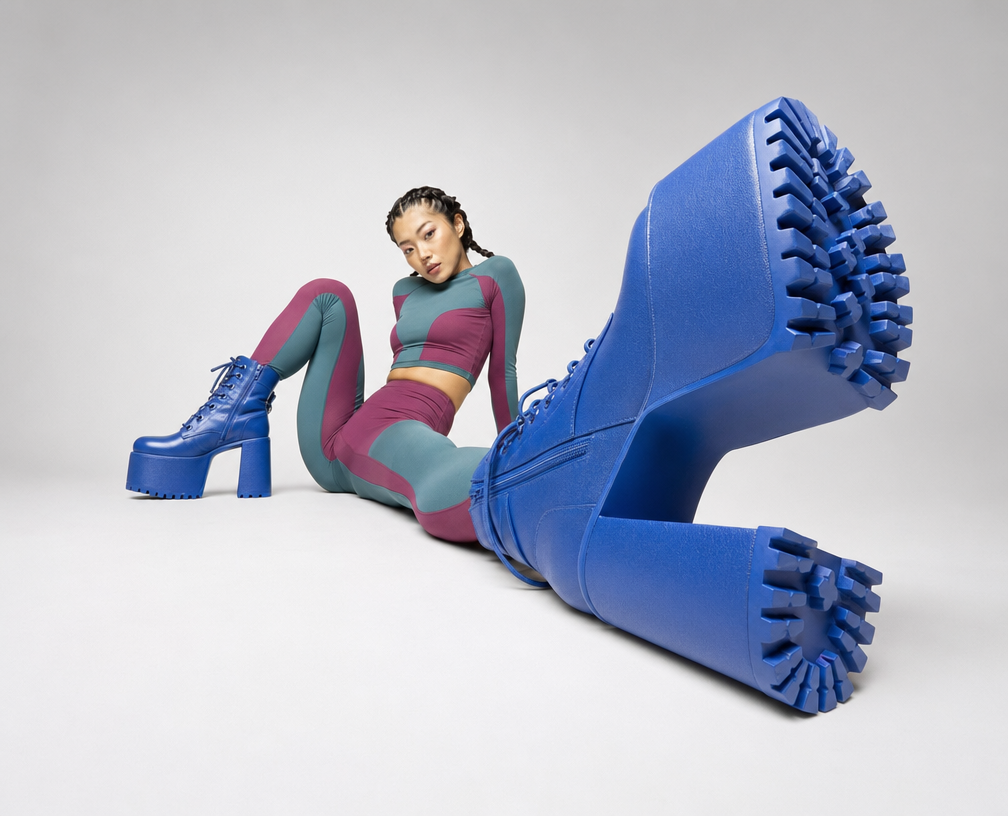
Cobalt Boots in Sleek Studio Edit
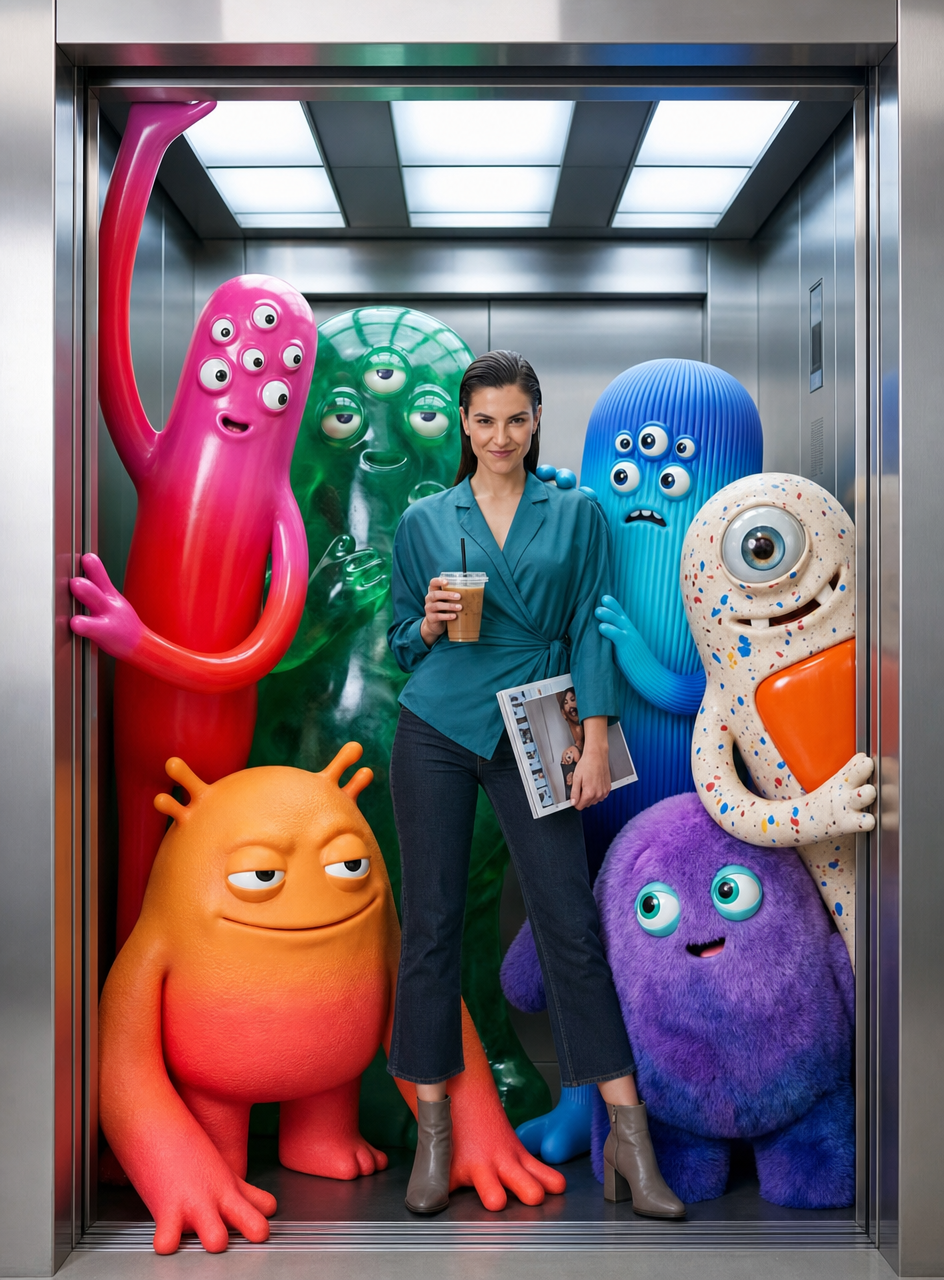
Teal fashion editorial in monster-filled lift
Sunlit editorial on striped beach towel

Silhouette Influencer by Sunlit Window