Why this works
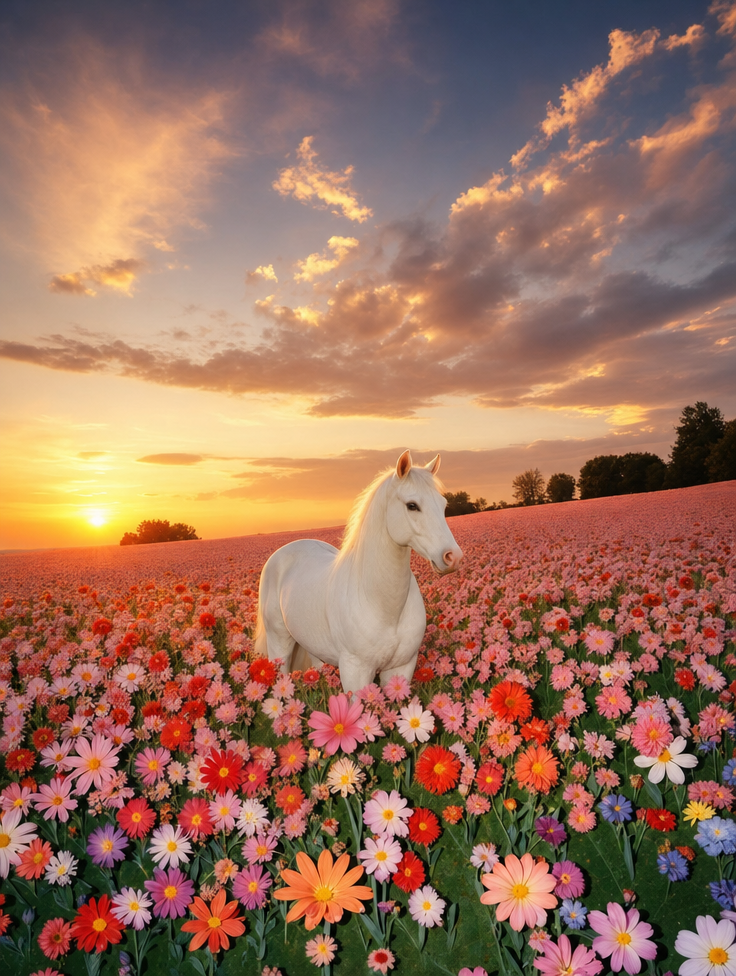
The phrase “low-angle wide shot” makes the white horse feel commanding while “wide-angle perspective with strong depth” stretches the flower-filled meadow behind it, reinforcing the image’s dramatic scale. “Golden-hour sunset light with warm highlights and softer glow” gives the white coat, yellow flowers, and orange accents a tranquil warmth, while the “teal-to-indigo gradient with lighter cloud breaks” supplies cool contrast in the sky. “Crisp petal detail,” “highly detailed natural textures,” and “photorealistic surreal landscape” keep the magical color treatment grounded in believable meadow and horse textures.
FAQ
→How do I change this prompt to make the horse more central and imposing?
Replace “white horse standing in a dense field of colorful wildflowers” with “a majestic white horse filling the central foreground, head and shoulders dominant, standing above the wildflowers,” and change “low-angle wide shot” to “dramatic low-angle medium-wide shot.” Keep “strong depth” if you still want the meadow and sky visible behind the larger subject.
→How do I make the scene moodier and less calm?
Replace “golden-hour sunset light with warm highlights and softer glow” with “stormy late-sunset light, sharp shafts of amber breaking through dark clouds,” and replace “calm, slightly magical atmosphere” with “brooding, mysterious atmosphere.” Change “teal-to-indigo gradient with lighter cloud breaks” to “deep indigo storm clouds with narrow crimson breaks” for stronger tonal tension.
→How do I build a series of variations without losing the visual identity?
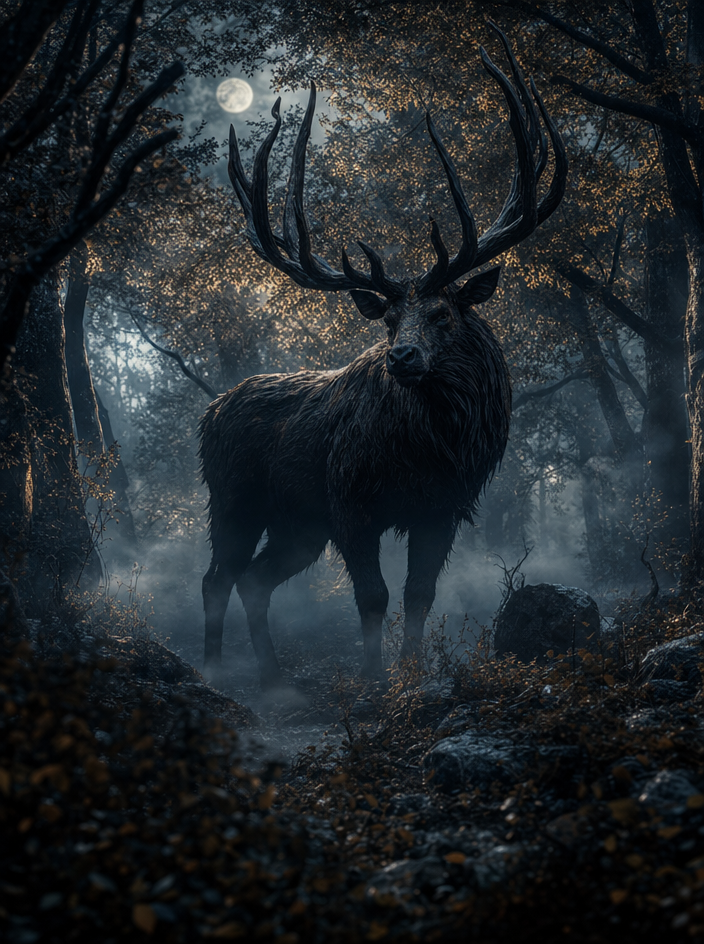
Keep the fixed anchors “photorealistic surreal landscape,” “low-angle wide shot,” “strong depth,” and “highly detailed natural textures,” then swap only the subject and meadow palette. For example, replace “white horse” with “red fox” and “vivid wildflowers” with “bluebells and silver grasses,” or use “black stag” with “golden poppies,” while retaining “golden-hour sunset” and the “teal-to-indigo” sky.
Learn the technique behind this
- Why can't AI spell, and how do I get readable text in an image? — Older diffusion models had no character-level representation of text, so they produced letterform-shaped texture instead of words.
- Which aspect ratio should I use, and how does it change the image? — Aspect ratio determines what the model composes, not how it's cropped afterwards.
- How do I keep one consistent style across a whole set of images? — Style consistency is more achievable than character consistency because style lives in describable attributes.
Related prompts
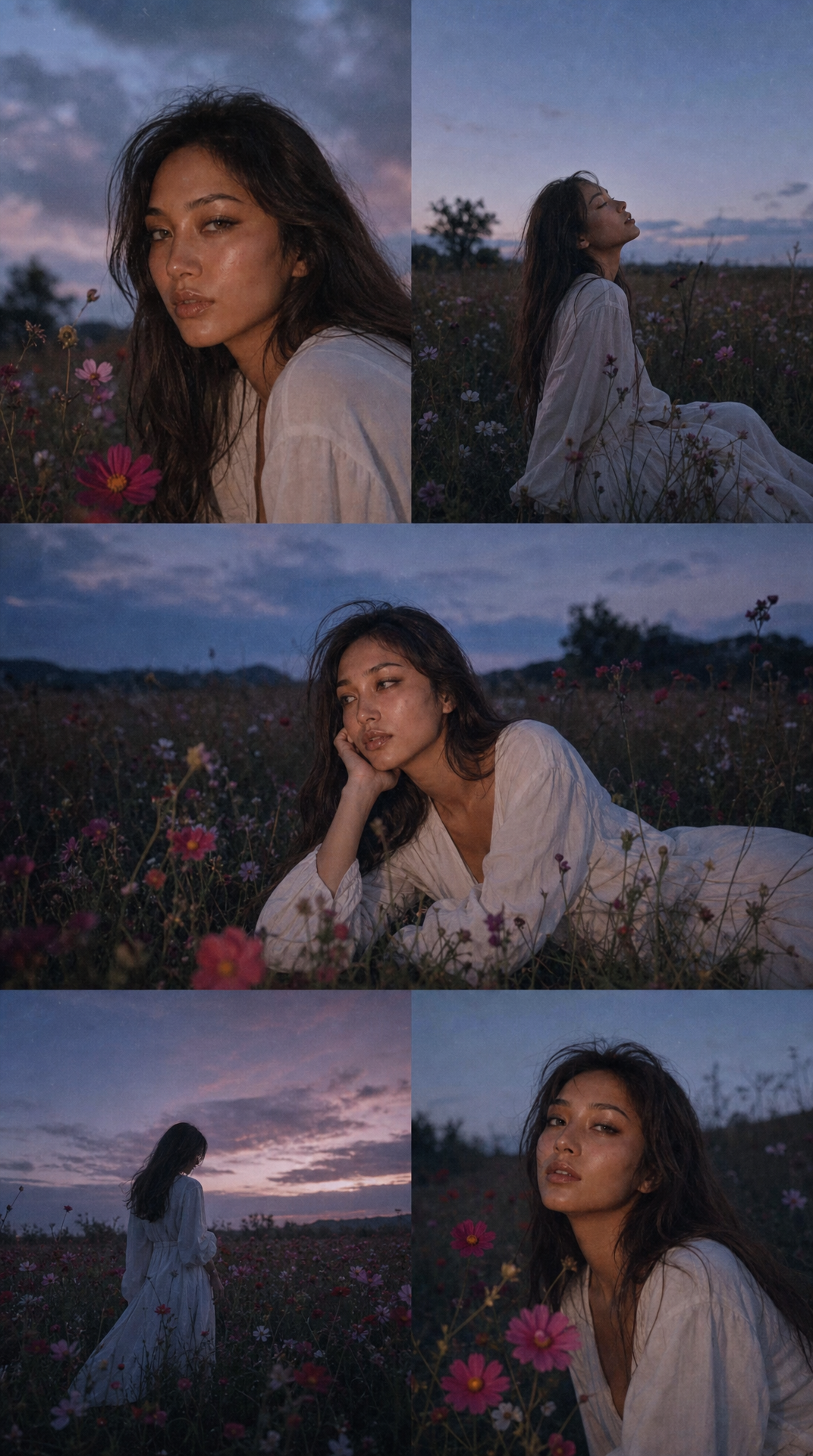
Solitary Woman in Twilight Wildflower Meadow
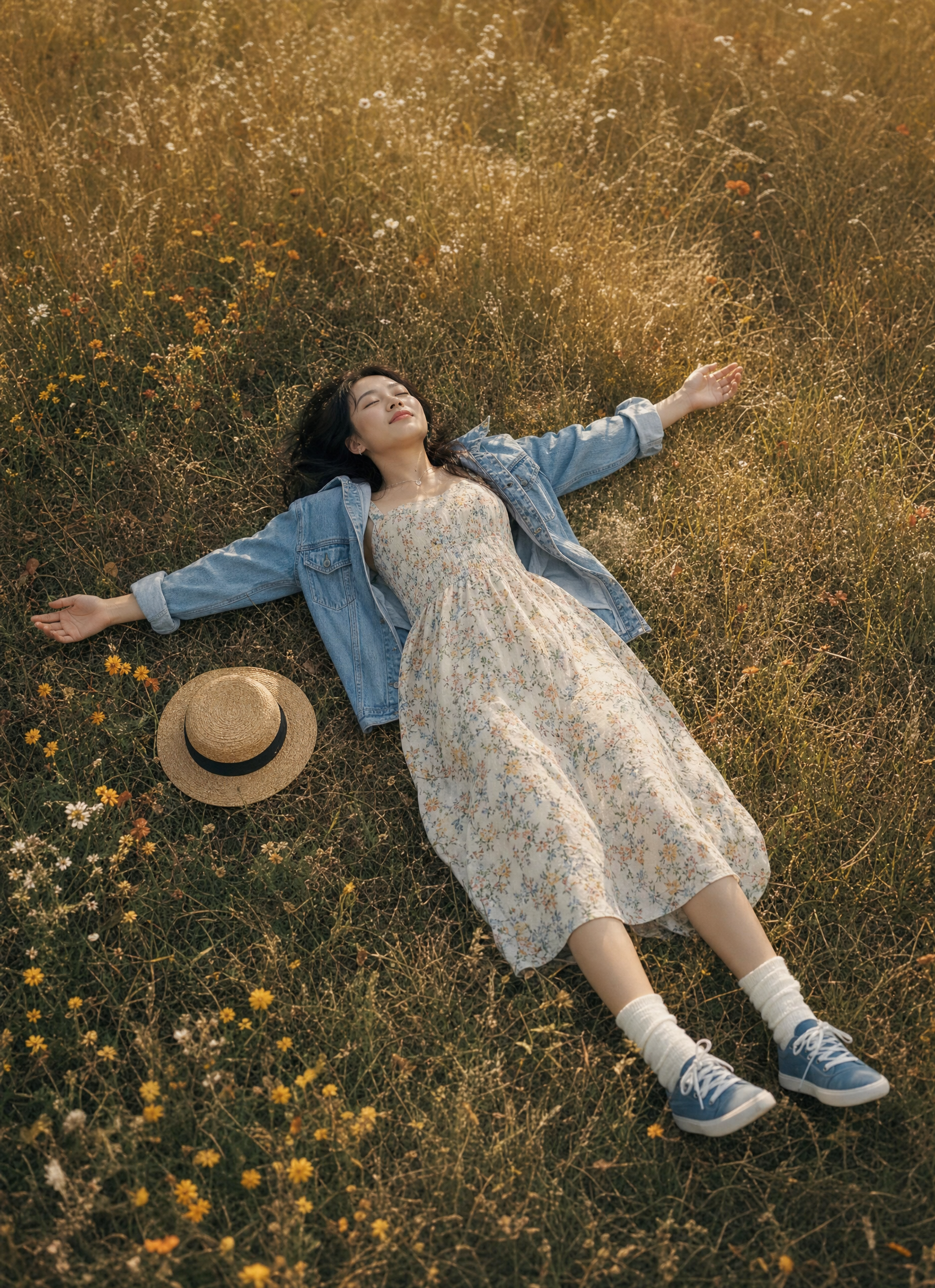
Woman Relaxing in Golden Autumn Field
Man on sand dune in blue hour
Golden-hour surf under dramatic clouds