Why this works
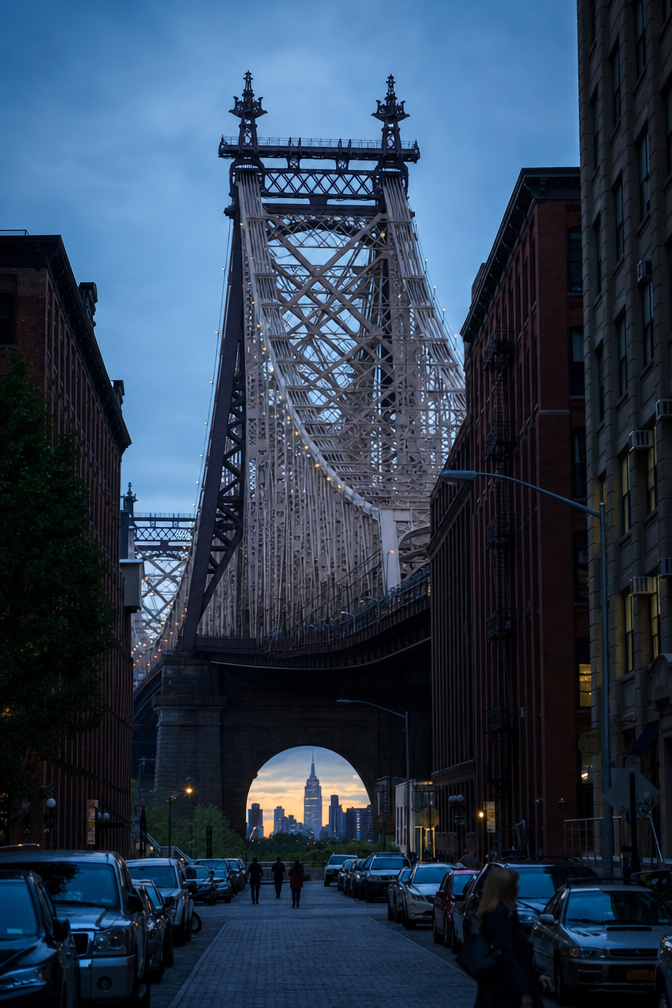
The phrase “same arch-like framing” makes the Queensboro Bridge a powerful visual frame, while “slightly wider lens for depth” pulls the eye from the foreground pedestrians and parked cars toward the Empire State Building in the distance. “Cool blue twilight ambient light transitions to a subtle warm glow near the horizon” supplies the warm-gray-brown palette visible across the steel, buildings, and street, and “atmospheric haze” softens the landmark without losing its role as a depth cue. “Tall steel suspension cables and towering bridge structure” establishes scale and gives the wide shot its dramatic vertical geometry.
FAQ
→How do I make the Empire State Building more central and prominent?
Replace “appears faintly in the far distance beyond the bridge opening, softened by atmospheric haze” with “clearly visible and centered within the bridge opening, rising above the street as the primary distant focal point.” Reduce “atmospheric haze” to “light atmospheric haze” and add “leading lines of the cables converge toward the Empire State Building.”
→How do I change the scene from moody twilight to a brighter, busier morning street?
Replace “cool blue twilight ambient lighting with subtle warm horizon glow” with “clear early-morning sunlight with crisp neutral daylight and long directional shadows.” Change “dramatic urban mood, filmic contrast” to “lively morning atmosphere, moderate contrast,” and replace “a few pedestrians” with “dense pedestrian traffic crossing the foreground.”
→How do I create a repeatable series using this composition in different cities?
Keep “same arch-like framing,” “slightly wider lens perspective for strong depth,” and “narrow city streets with mid-rise buildings lining both sides” unchanged. Swap “Queensboro Bridge” and “Empire State Building” for another bridge and landmark, such as “Tower Bridge” and “St Paul’s Cathedral,” while replacing “steel suspension cables” with the new bridge’s defining structural details.
Learn the technique behind this
- Why can't AI spell, and how do I get readable text in an image? — Older diffusion models had no character-level representation of text, so they produced letterform-shaped texture instead of words.
- How should a prompt be structured, and does word order matter? — A prompt that behaves predictably names one subject first, then what it is doing, then where, then the light, then the lens or medium, then the style.
- Which aspect ratio should I use, and how does it change the image? — Aspect ratio determines what the model composes, not how it's cropped afterwards.
Related prompts
Grotesque Claymation Gangsters in Gritty Alley
Charcoal coat with tan-handled tote
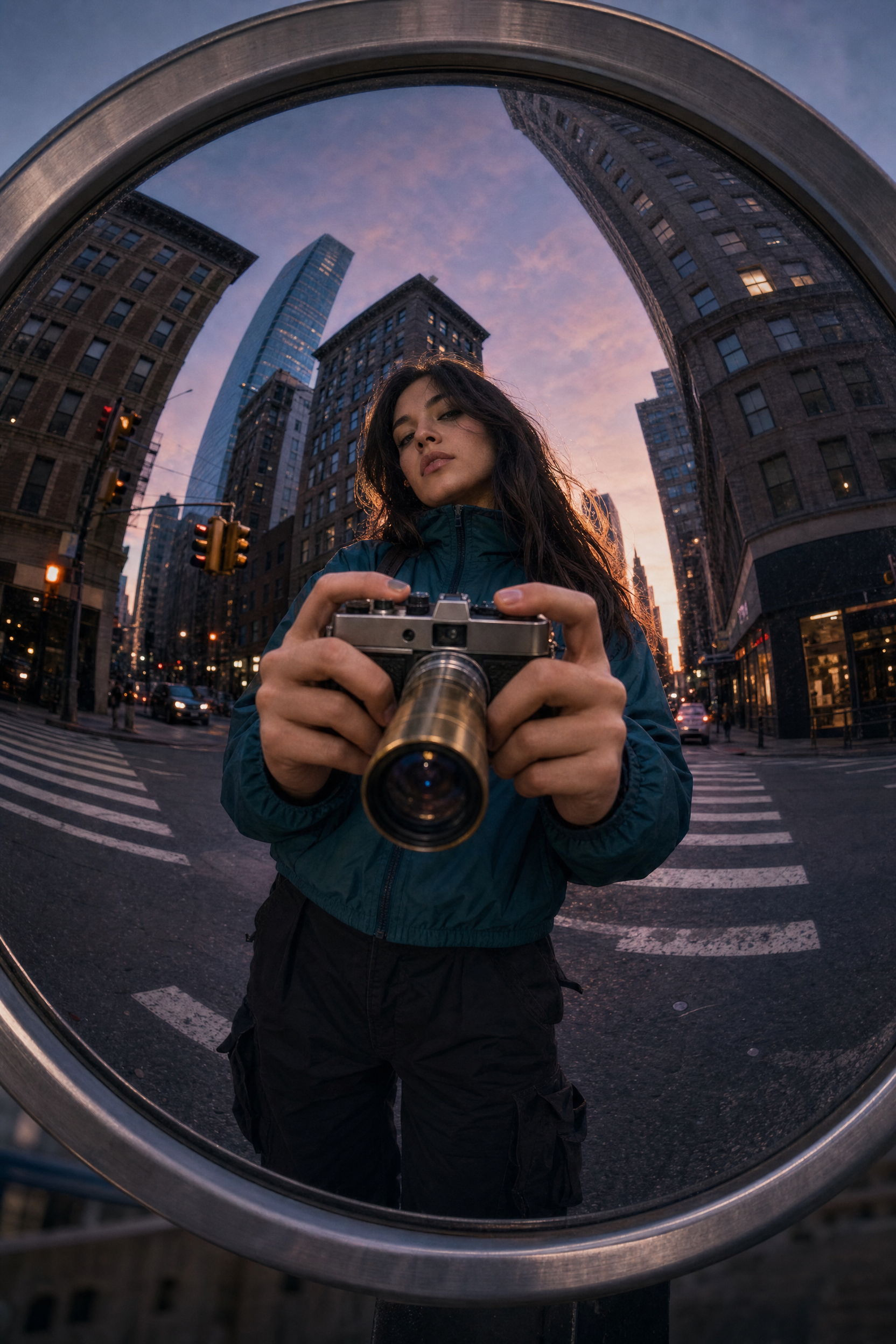
Woman in Teal Jacket Capturing Twilight Reflection
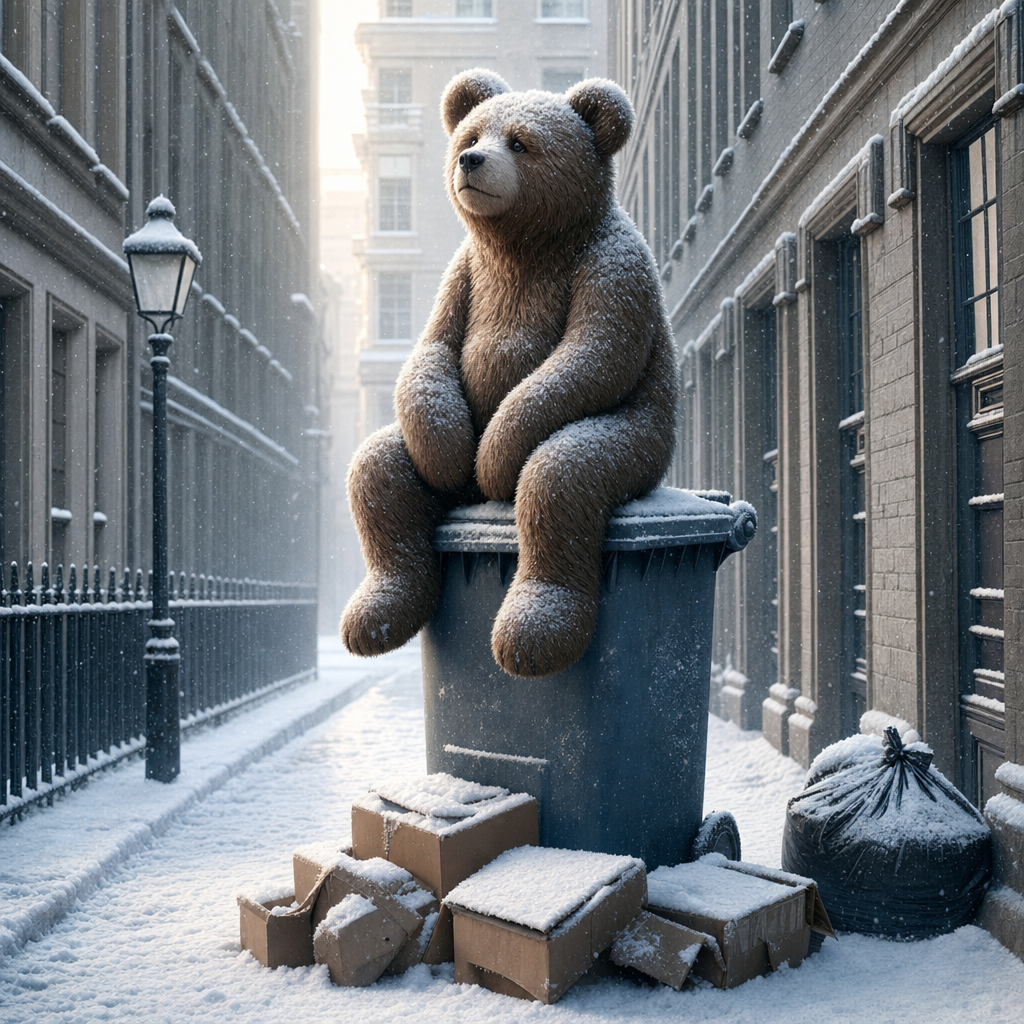
Stuffed Bear on Winter Dumpster at Dawn