Why this works
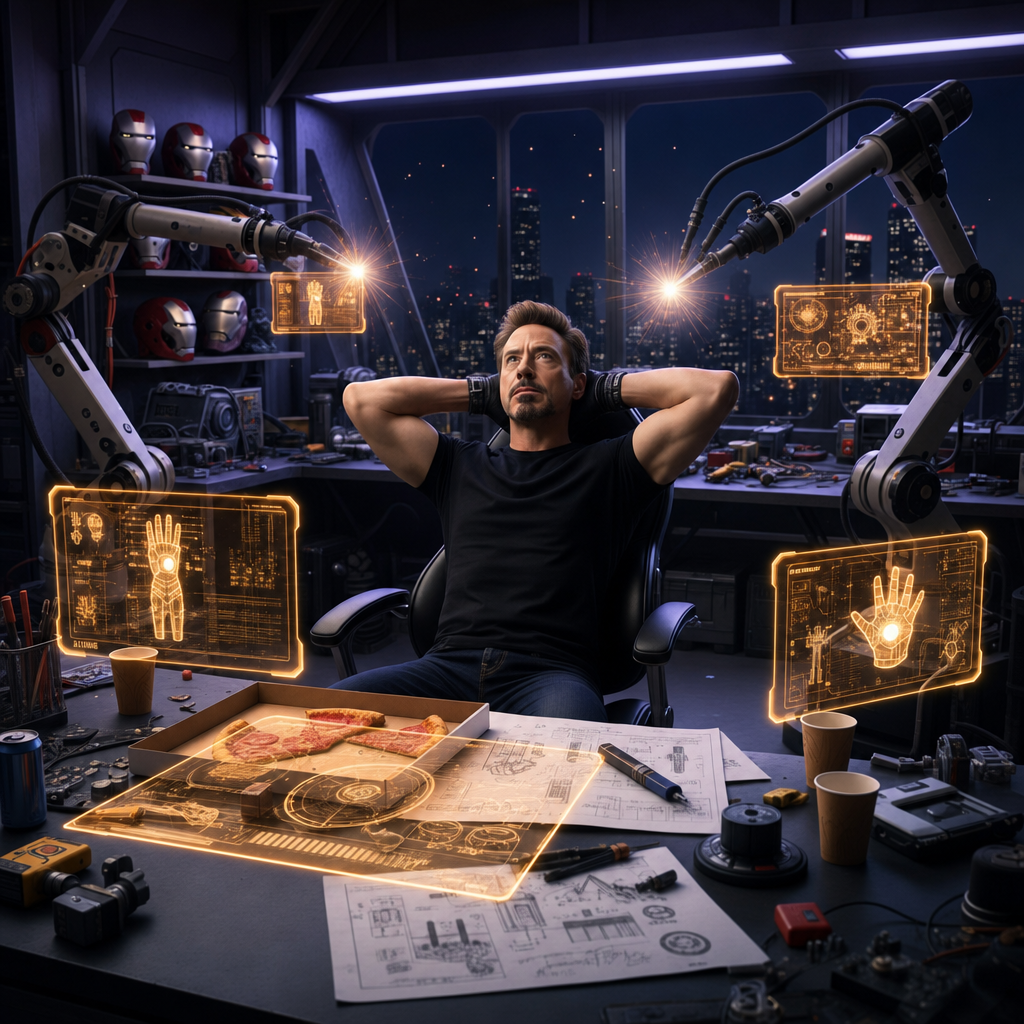
The centered framing and the engineer “reclining in an office chair, hands behind his head” make his exhausted, contemplative pose the compositional anchor, while the surrounding “robotic arms and transparent holographic interface panels” establish a dense futuristic workspace. The “warm amber-orange” interface glow and “subtle amber reflections” create the dominant orange accents against the gray workshop and blue nighttime skyline, while “cooler violet-blue edge light” separates the subject from the background. “Shallow depth of field” keeps the realistic skin detail and relaxed figure readable while softening the helmets, tools, papers, and city beyond, reinforcing the moody cinematic focus.
FAQ
→How do I make the engineer feel more isolated and emotionally exhausted?
Replace “robotic arms and transparent holographic interface panels surround him” with “distant inactive robotic arms and only one dim holographic panel beside him,” and change “moody atmosphere” to “quiet, lonely atmosphere with subdued contrast.” Keep “hands behind his head,” but add “slumped posture, unfocused eyes, and loosened work jacket” to make fatigue more explicit.
→How do I make the holographic interfaces the most prominent element?
Replace “the hologram screens are slightly more opaque with brighter specular highlights” with “large, highly opaque holographic screens dominating the foreground, with crisp specular highlights and dense amber-orange data layers.” Change “shallow depth of field” to “moderate depth of field keeping the engineer and interface text sharply readable,” while retaining “warm amber hologram glow” for the orange visual anchor.
→How do I create a series of variations without losing this composition?
Keep “centered framing,” “tired engineer,” and “hands behind his head” fixed, then swap only the setting phrase “futuristic workshop” for versions such as “orbital laboratory overlooking a planet,” “underground repair bay,” or “rain-soaked rooftop control room.” For consistent color continuity, preserve “violet-blue edges plus subtle amber reflections” and vary the skyline phrase from “nighttime city skyline” to “storm-lit megacity,” “distant orbital station,” or “industrial towers at dusk.”
Learn the technique behind this
- Why can't AI spell, and how do I get readable text in an image? — Older diffusion models had no character-level representation of text, so they produced letterform-shaped texture instead of words.
- How should a prompt be structured, and does word order matter? — A prompt that behaves predictably names one subject first, then what it is doing, then where, then the light, then the lens or medium, then the style.
- Why does AI get hands and faces wrong, and how do I fix it? — Hands fail because they're small in frame, extremely variable in pose, and self-occluding — the model has less usable signal per pixel than for any other body part.
Related prompts

DJ in neon haze at low angle
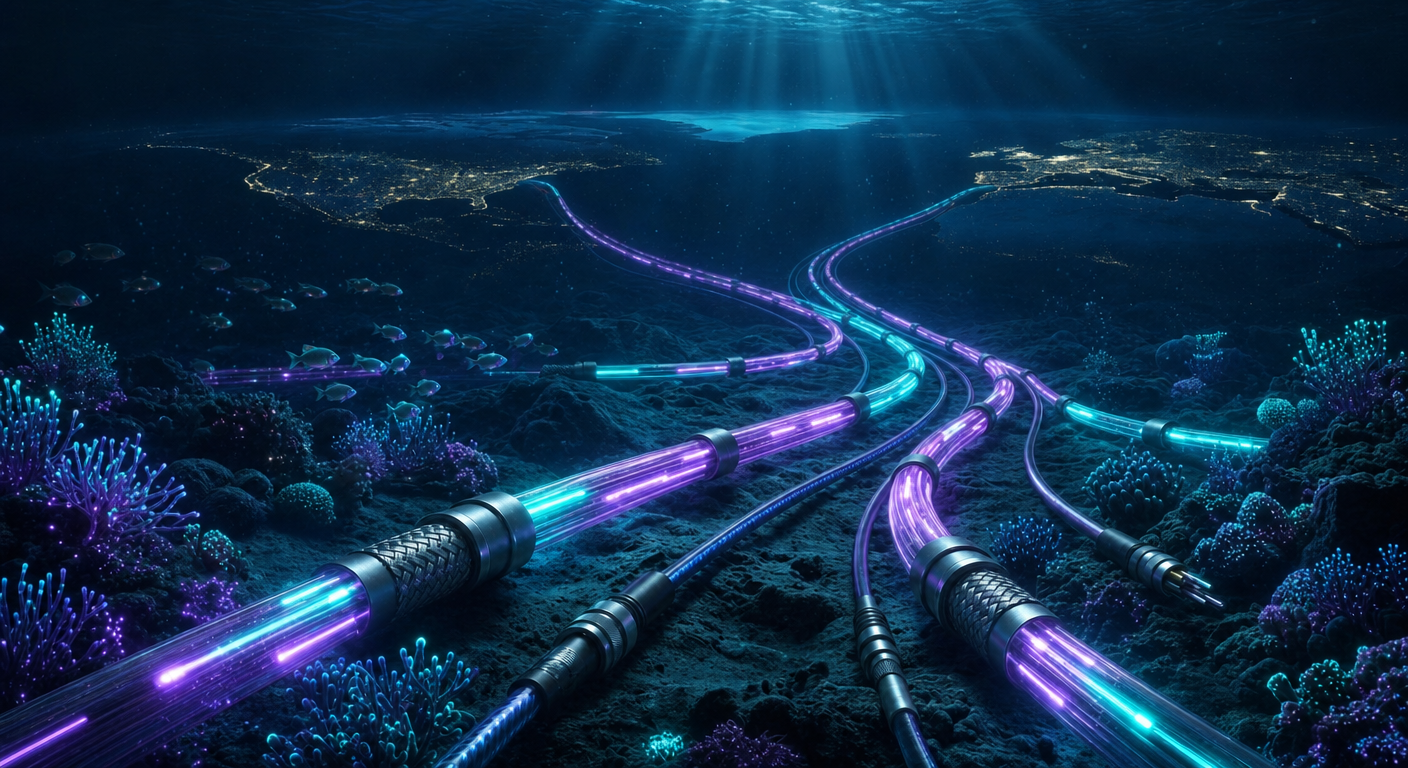
Glowing Fiber-Optic Cables With Purple Data Lines

Cyan Hologram, Sleek Robotic Hand
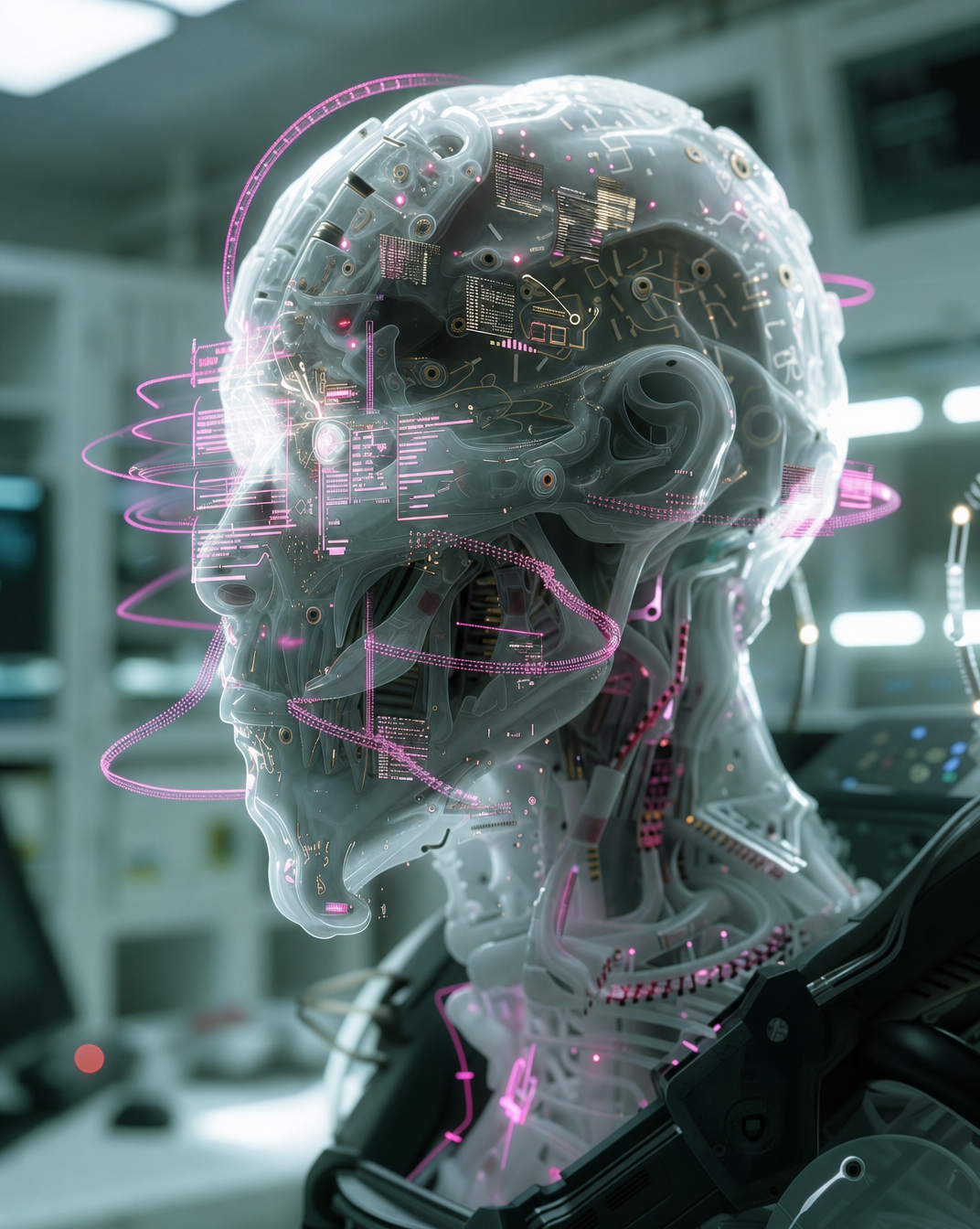
Cyborg head with magenta holograms and translucent skull