Why this works
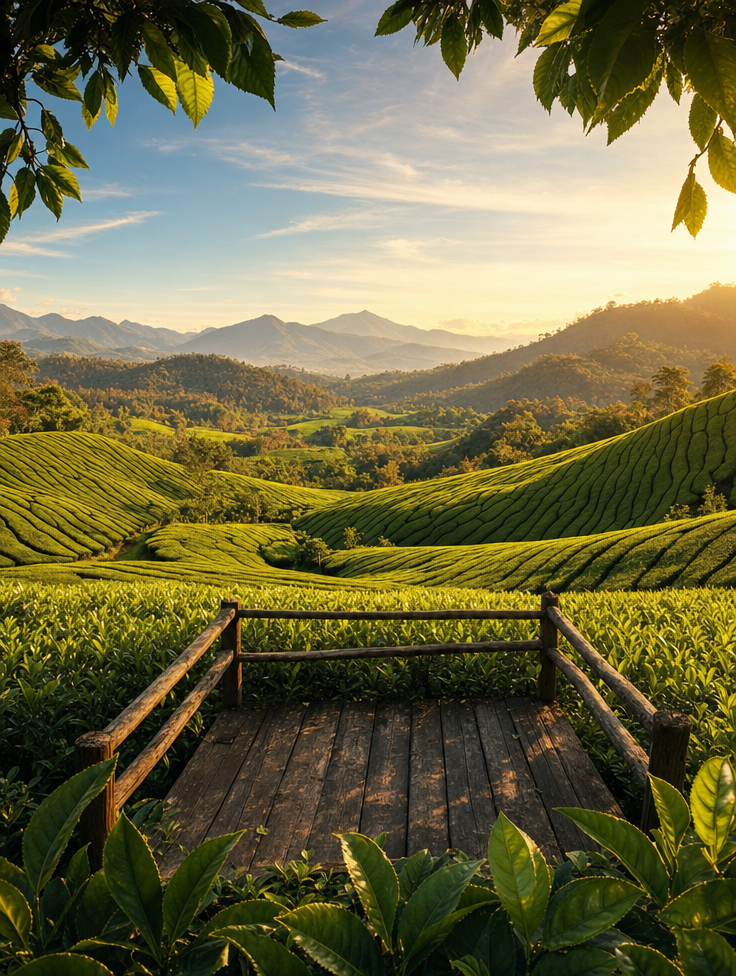
The “wide-angle panoramic view” and “cinematic panoramic composition” establish the expansive wide-shot, while “dense tea bushes framing the top and bottom edges” adds a deliberate natural border around the valley. “Soft warm late-afternoon sunlight,” “light autumn haze,” and the “clear pale blue sky” create the serene, sunlit mood through warm highlights, softened mountain distance, and cool sky contrast. The “smaller weathered wooden lookout deck in the foreground” supplies scale and a grounded viewpoint, while “rich yet natural earth tones” keeps the yellow-green tea, brown wood, beige haze, and blue sky restrained rather than overly saturated.
FAQ
→How do I make the lookout deck more central and prominent?
Replace “a smaller weathered wooden lookout deck in the foreground” with “a prominent weathered wooden lookout deck occupying the lower center foreground, with visible planks and railing.” Change “tea bushes framing the top and bottom edges” to “tea bushes framing the sides while leaving the deck unobstructed.”
→How do I change the peaceful golden-hour mood to a dramatic stormy atmosphere?
Replace “soft warm late-afternoon sunlight” with “dramatic low storm light with sharp breaks in the clouds,” “light autumn haze” with “dark rain haze over the distant mountain ranges,” and “clear pale blue sky” with “heavy charcoal storm clouds.” Replace “peaceful travel landscape” with “dramatic cinematic wilderness landscape.”
→How do I build a series of variations while keeping the same composition?
Keep “wide-angle panoramic view,” “cinematic panoramic composition,” and “dense tea bushes framing the top and bottom edges” unchanged. Swap only “rolling tea plantations” and “weathered wooden lookout deck” for controlled alternatives such as “terraced rice fields” and “a small bamboo viewing shelter,” then vary the lighting phrase with “misty dawn light,” “cool overcast midday,” or “violet-blue twilight.”
Learn the technique behind this
- Which aspect ratio should I use, and how does it change the image? — Aspect ratio determines what the model composes, not how it's cropped afterwards.
- Why can't AI spell, and how do I get readable text in an image? — Older diffusion models had no character-level representation of text, so they produced letterform-shaped texture instead of words.
- How should a prompt be structured, and does word order matter? — A prompt that behaves predictably names one subject first, then what it is doing, then where, then the light, then the lens or medium, then the style.
Related prompts
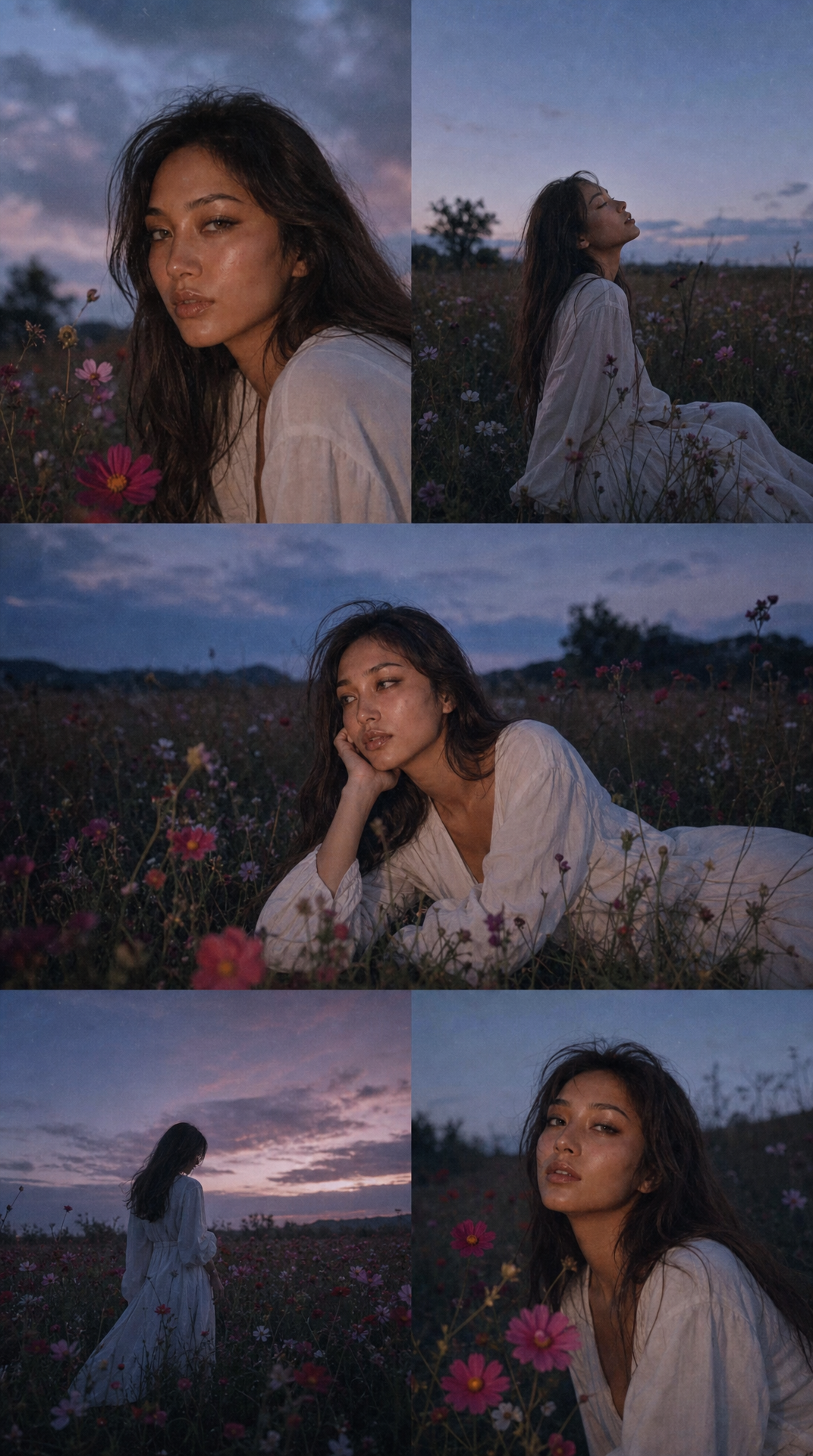
Solitary Woman in Twilight Wildflower Meadow
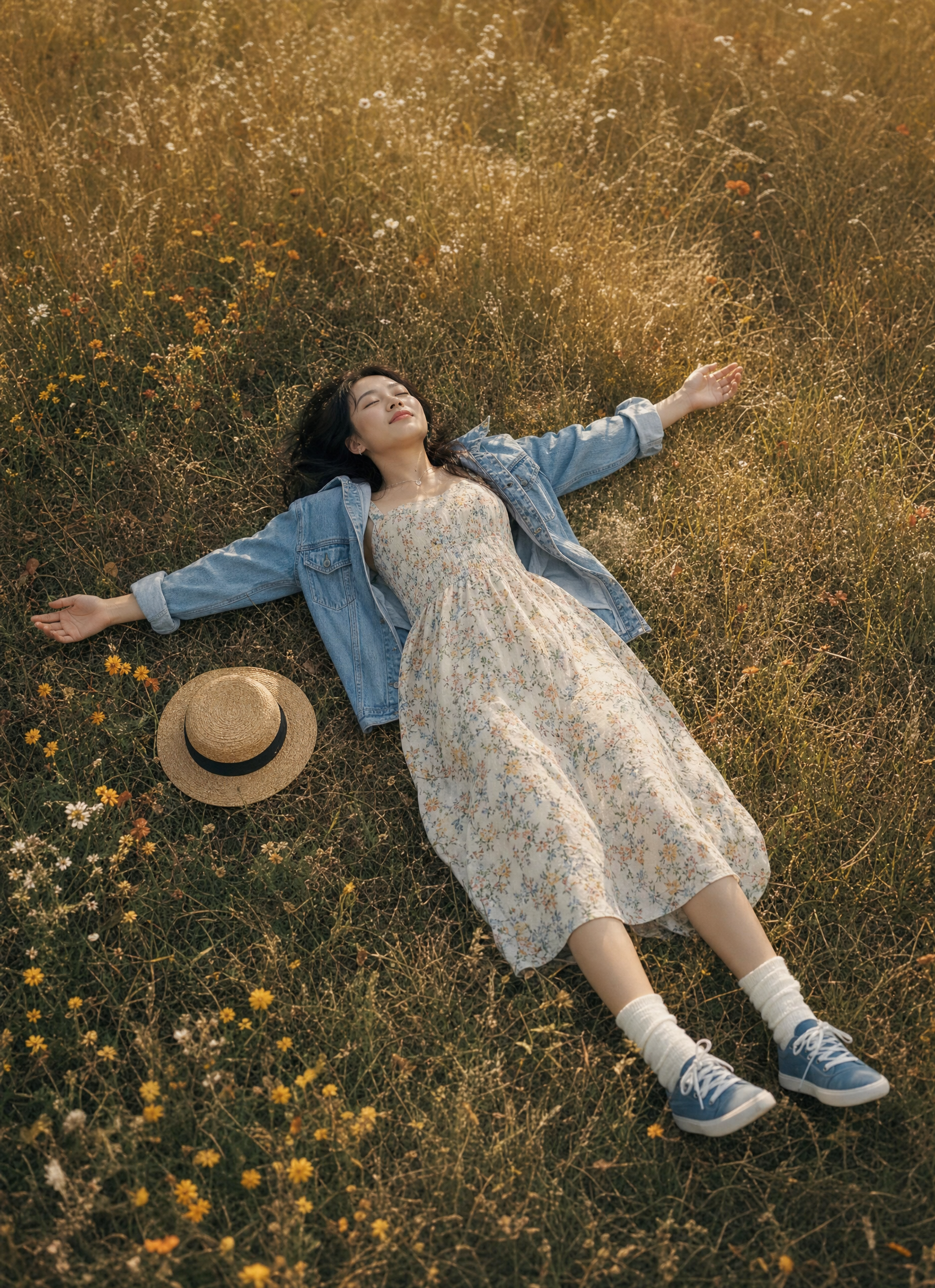
Woman Relaxing in Golden Autumn Field
Man on sand dune in blue hour
Golden-hour surf under dramatic clouds