Why this works
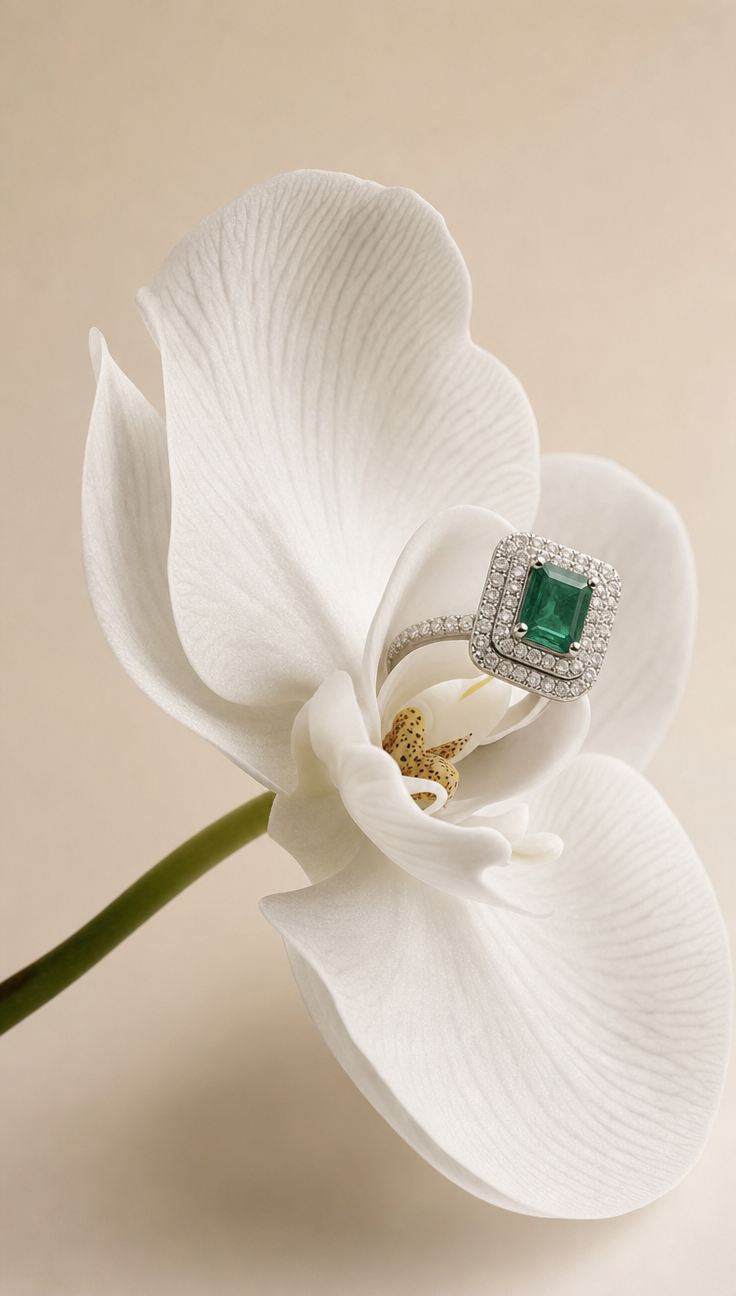
The phrase “large white orchid blossom with layered translucent petals” makes the flower the dominant macro subject, while “sharp botanical detail” preserves the petal structure and the ring’s small pavé texture. “A luxurious square-cut emerald engagement ring with a double halo and pavé band delicately balanced on the curved green stem” supplies the focal contrast: saturated green against the warm beige backdrop, with the stem creating a diagonal support for the jewelry. “Clean warm beige background,” “soft studio lighting,” and “minimalist high-end composition” keep the frame restrained and evenly elegant rather than dramatic.
FAQ
→How do I make the emerald ring more prominent than the orchid?
Replace “delicately balanced on the curved green stem” with “prominently displayed in the foreground on the stem, ring facing the camera,” and change “large white orchid blossom” to “orchid blossom softly receding into the background.” Add “shallow depth of field focused on the emerald ring” to reinforce the new focal point.
→How do I change the refined studio mood to something darker and more dramatic?
Replace “clean warm beige background” with “deep charcoal studio background” and “soft studio lighting” with “dramatic directional side-lighting with controlled shadows and a narrow rim light.” Keep “hyper-realistic” and “sharp botanical detail” so the darker treatment retains precise petal and jewelry texture.
→How do I build a coordinated series with different gemstones?
Keep “large white orchid blossom,” “curved green stem,” “warm beige background,” and “luxury jewelry editorial style” unchanged, then replace “square-cut emerald engagement ring” with variants such as “oval sapphire engagement ring,” “round ruby engagement ring,” or “pear-cut diamond engagement ring.” Match each stone with a distinct but restrained accent, such as “cool blue gemstone” or “deep red gemstone,” while preserving “double halo and pavé band” for visual continuity.
Learn the technique behind this
- Why can't AI spell, and how do I get readable text in an image? — Older diffusion models had no character-level representation of text, so they produced letterform-shaped texture instead of words.
- How should a prompt be structured, and does word order matter? — A prompt that behaves predictably names one subject first, then what it is doing, then where, then the light, then the lens or medium, then the style.
- Do negative prompts work, and what should go in one? — Negative prompts work on models that support a separate negative conditioning channel — mainly Stable Diffusion and FLUX-family models.
Related prompts

Dreamy Woman Reading by Soft Bloom
Young woman in grass with cream wrap
Serene Fashion Portrait in Blooming Garden
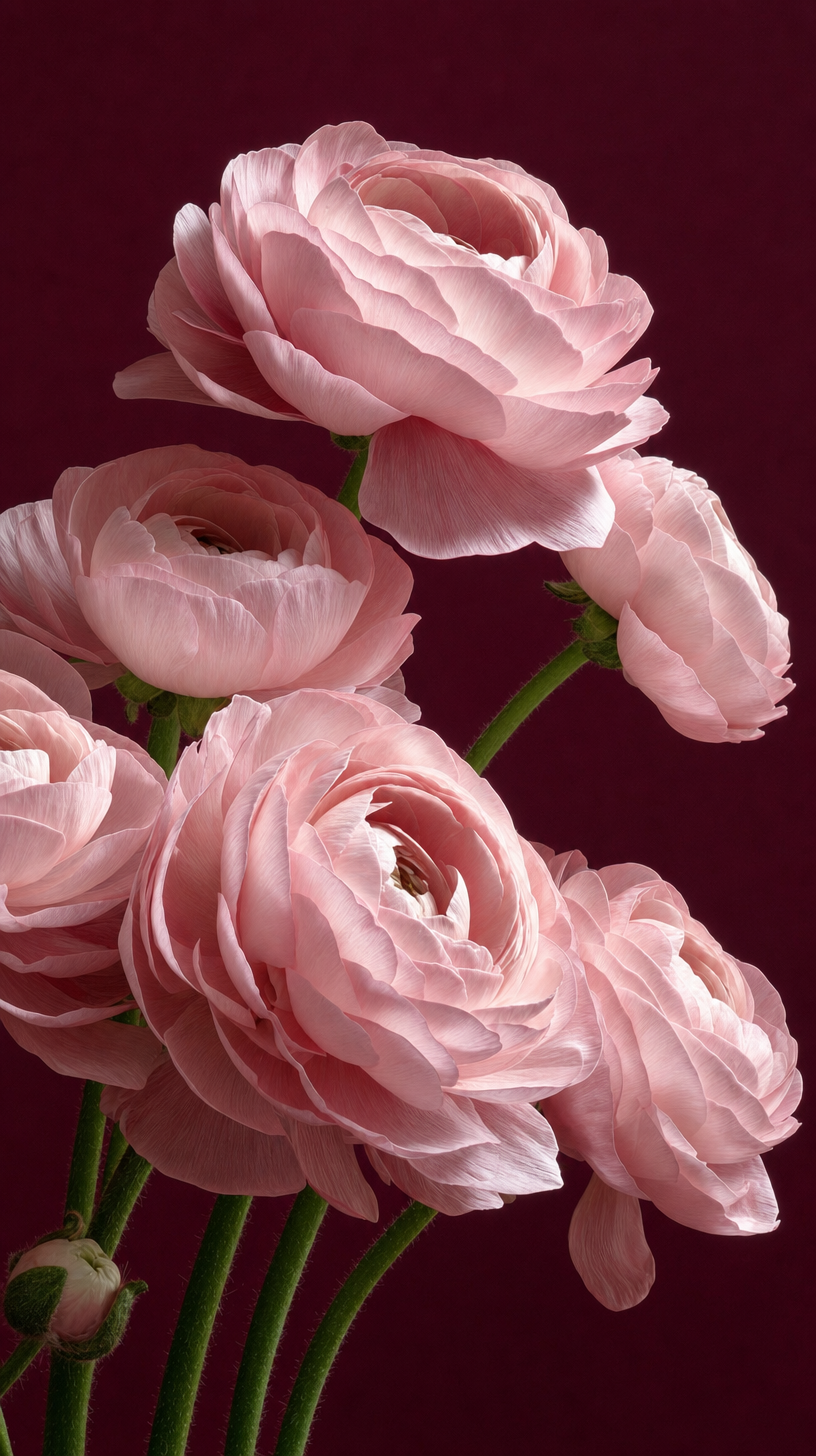
Blush-pink Ranunculus With Velvet Petals, Burgundy Background