Why this works
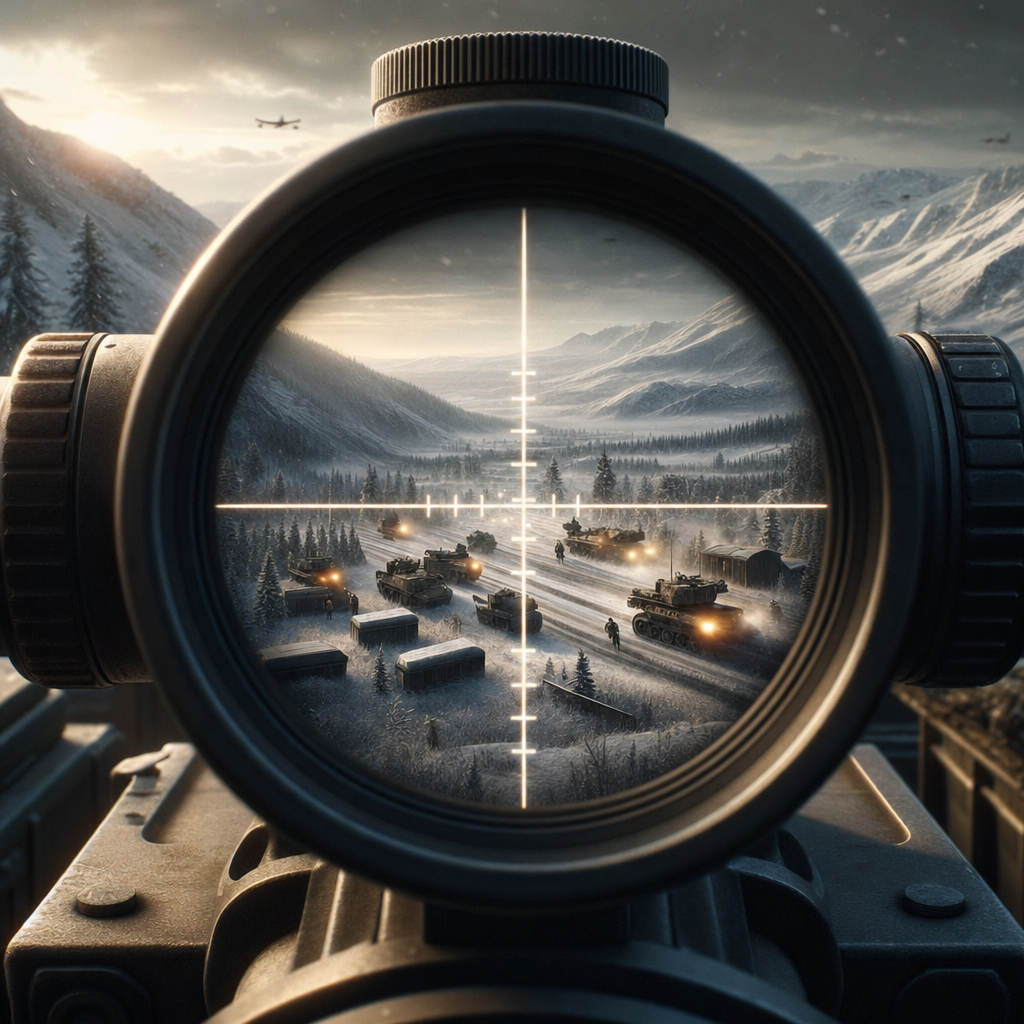
The centered composition is anchored by the “circular scope frame” and “crisp illuminated crosshairs,” turning the viewer into an observer while the “slightly bolder reticle lines” keep the reticle legible over the valley. The tense, cold mood comes from “subzero air,” “soft overcast sunrise light,” and “strong cold-blue shadows,” while “warmer and more amber” headlights provide small focal accents against the dominant black, white, and tan palette. “Shallow depth of field” separates the tracked vehicles and tanks from the “distant dark pine silhouettes,” and “high micro-contrast textures on the snow and armor” supplies the sharply rendered surface detail.
FAQ
→How do I make the tanks and armored vehicles more prominent than the scope frame?
Replace “centered composition” with “lower-center composition with the lead tank dominating the frame,” and change “shallow depth of field” to “deep depth of field with the nearest tank and road in sharp focus.” Keep “circular scope frame” and “crosshairs,” but specify “crosshairs aligned over the lead vehicle” so the subject gains priority.
→How do I turn the cold, tense scene into a warmer and more dramatic sunrise image?
Replace “soft overcast sunrise light” and “strong cold-blue shadows” with “low-angle golden sunrise light, long orange shadows, and warm atmospheric haze.” Change “warmer and more amber headlights” to “bright white headlights with amber rim glow” if you want the vehicles to remain distinct while the overall scene shifts away from blue-white coldness.
→How do I create a series of variations without losing the sniper-scope viewpoint?
Keep “first-person view through a circular sniper scope frame,” “crisp illuminated crosshairs,” and “cinematic composition” unchanged, then swap the setting phrase “frozen mountain valley” for controlled alternatives such as “foggy alpine pass,” “snow-covered forest road,” or “abandoned arctic outpost.” Vary one visual condition at a time by replacing “soft overcast sunrise light” with “blue-hour twilight,” “hard midday glare,” or “snowstorm-filtered light,” while retaining the armored vehicles and “high micro-contrast textures on the snow and armor.”
Learn the technique behind this
- Why can't AI spell, and how do I get readable text in an image? — Older diffusion models had no character-level representation of text, so they produced letterform-shaped texture instead of words.
- How should a prompt be structured, and does word order matter? — A prompt that behaves predictably names one subject first, then what it is doing, then where, then the light, then the lens or medium, then the style.
- Do negative prompts work, and what should go in one? — Negative prompts work on models that support a separate negative conditioning channel — mainly Stable Diffusion and FLUX-family models.
Related prompts
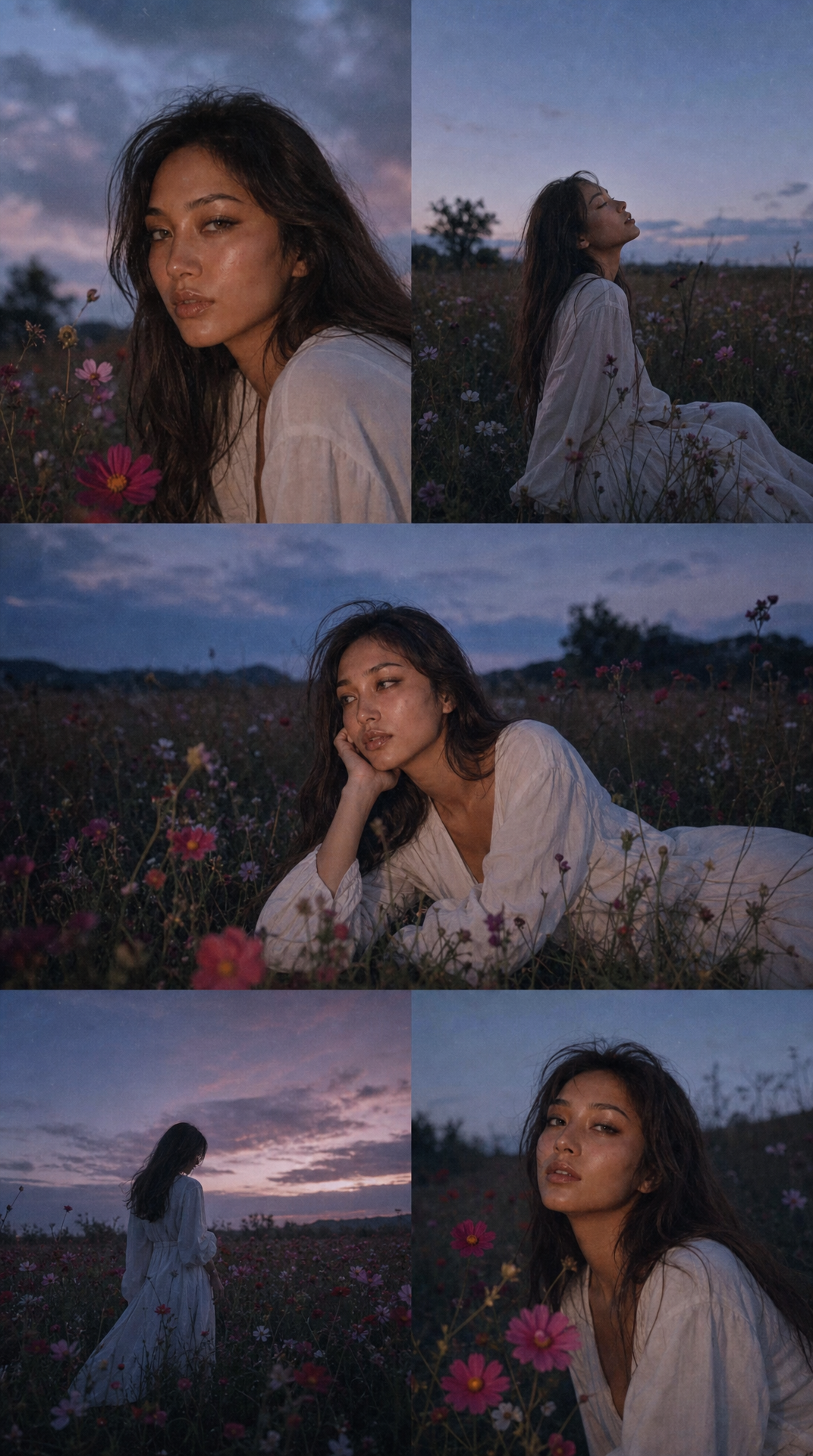
Solitary Woman in Twilight Wildflower Meadow
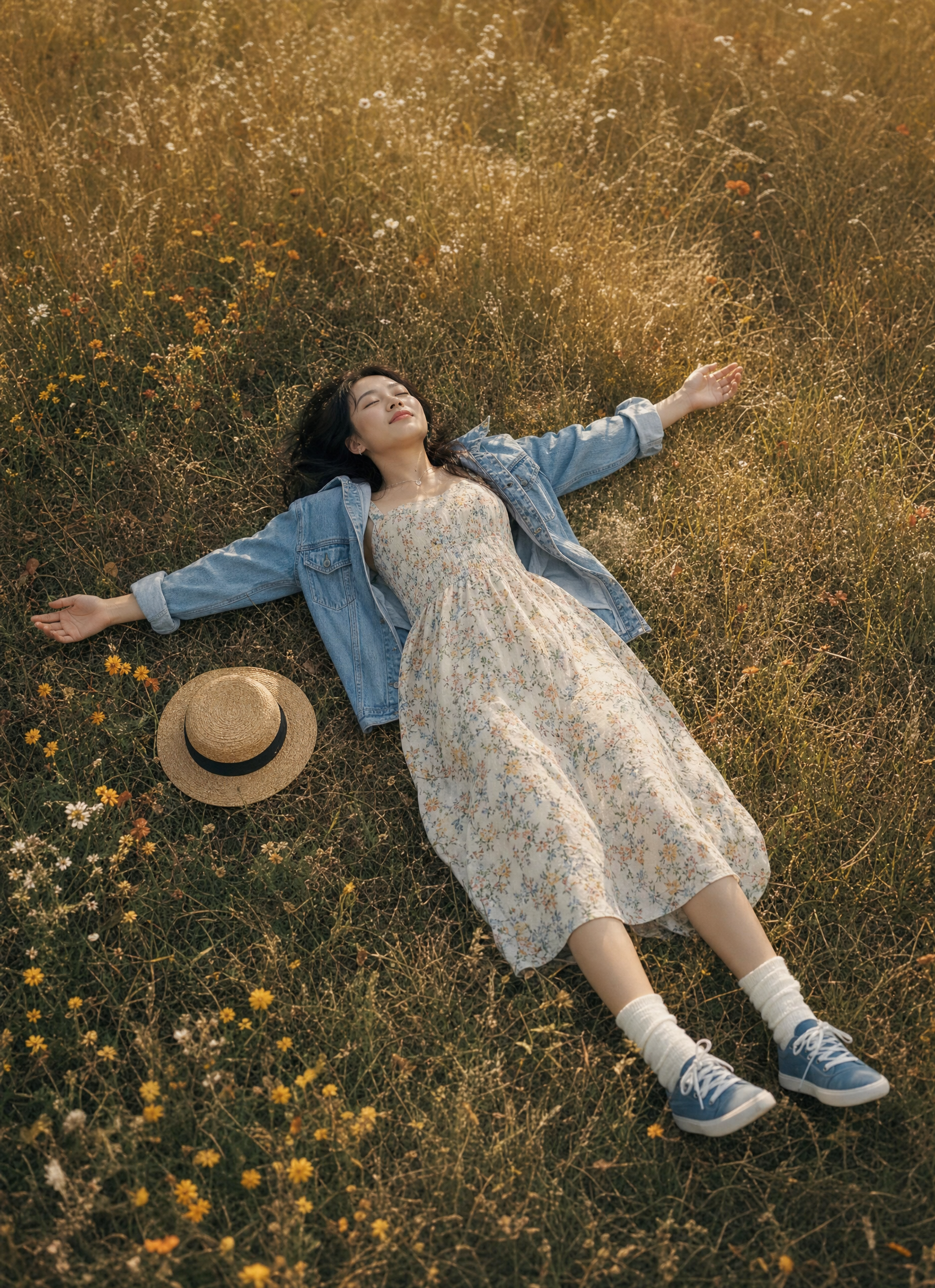
Woman Relaxing in Golden Autumn Field
Man on sand dune in blue hour

Golden-hour surf under dramatic clouds