Why this works
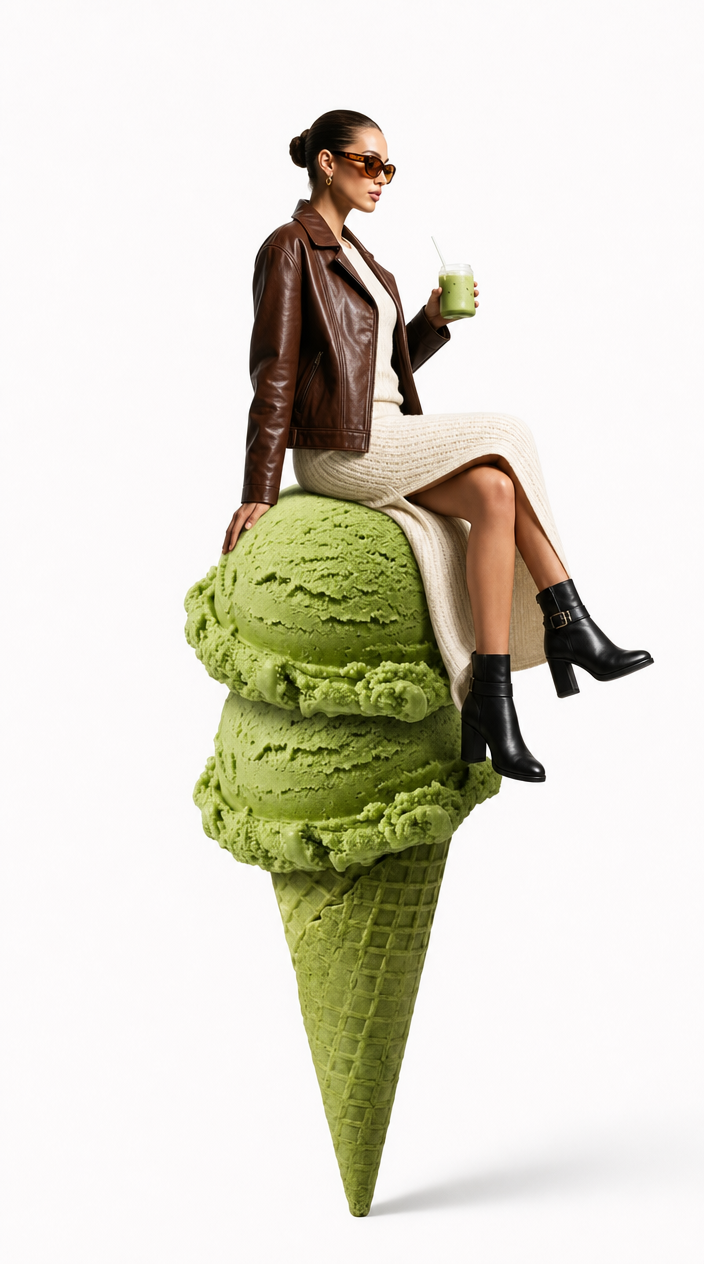
The phrase “giant oversized pistachio ice cream cone” supplies the surreal scale, while “a stylish woman sits on top” makes the model and cone read as one clear vertical portrait structure. “Clean bright white studio background” isolates the green, brown, and black palette, and “high-contrast studio lighting with crisp highlights and sharp product-like detail” gives the cone, matching drink, leather jacket, and boots a polished commercial finish. “Side-profile pose” and “editorial framing” keep the composition fashion-led rather than turning the image into a generic food scene.
FAQ
→How do I make the model more central and visually dominant?
Replace “a stylish woman sits on top of a giant oversized pistachio ice cream cone” with “a full-body fashion model dominates the center foreground, perched on the upper rim of a giant pistachio cone.” Keep “editorial framing” and add “model’s face, outfit, and silhouette as the primary focal point,” while reducing the cone’s apparent width if it overwhelms her.
→How do I shift the image from bright playful chic to a darker luxury mood?
Replace “clean bright white studio background” with “deep chocolate-brown studio background” and “high-contrast studio lighting” with “moody directional spotlighting with controlled shadows.” Change “cream knit midi dress” to “black satin midi dress” and “tinted amber” sunglasses to “smoked charcoal lenses” for a more nocturnal palette.
→How do I build a coordinated series of variations from this prompt?
Keep “Editorial fashion photograph,” “surreal commercial composite styling,” “side-profile pose,” and the portrait full-body framing unchanged, then swap the repeated pistachio elements together. For example, replace “giant oversized pistachio ice cream cone” and “small pistachio-matching drink” with “giant strawberry gelato cone” and “matching strawberry soda,” while changing “green” accents to “pink and red” and keeping the same cream dress, brown jacket, and black boots.
Learn the technique behind this
- Why can't AI spell, and how do I get readable text in an image? — Older diffusion models had no character-level representation of text, so they produced letterform-shaped texture instead of words.
- Why does AI get hands and faces wrong, and how do I fix it? — Hands fail because they're small in frame, extremely variable in pose, and self-occluding — the model has less usable signal per pixel than for any other body part.
- How do I keep the same character across multiple images? — Text prompts alone won't hold a face across images — a description defines a type, not a person.
Related prompts
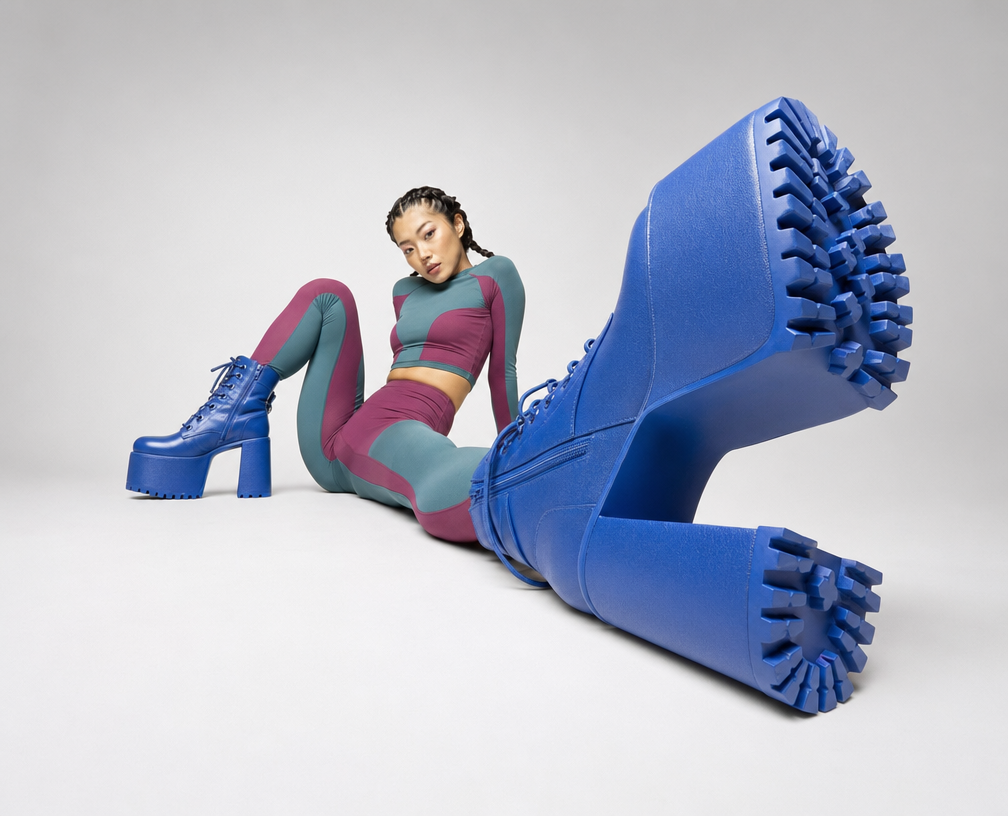
Cobalt Boots in Sleek Studio Edit
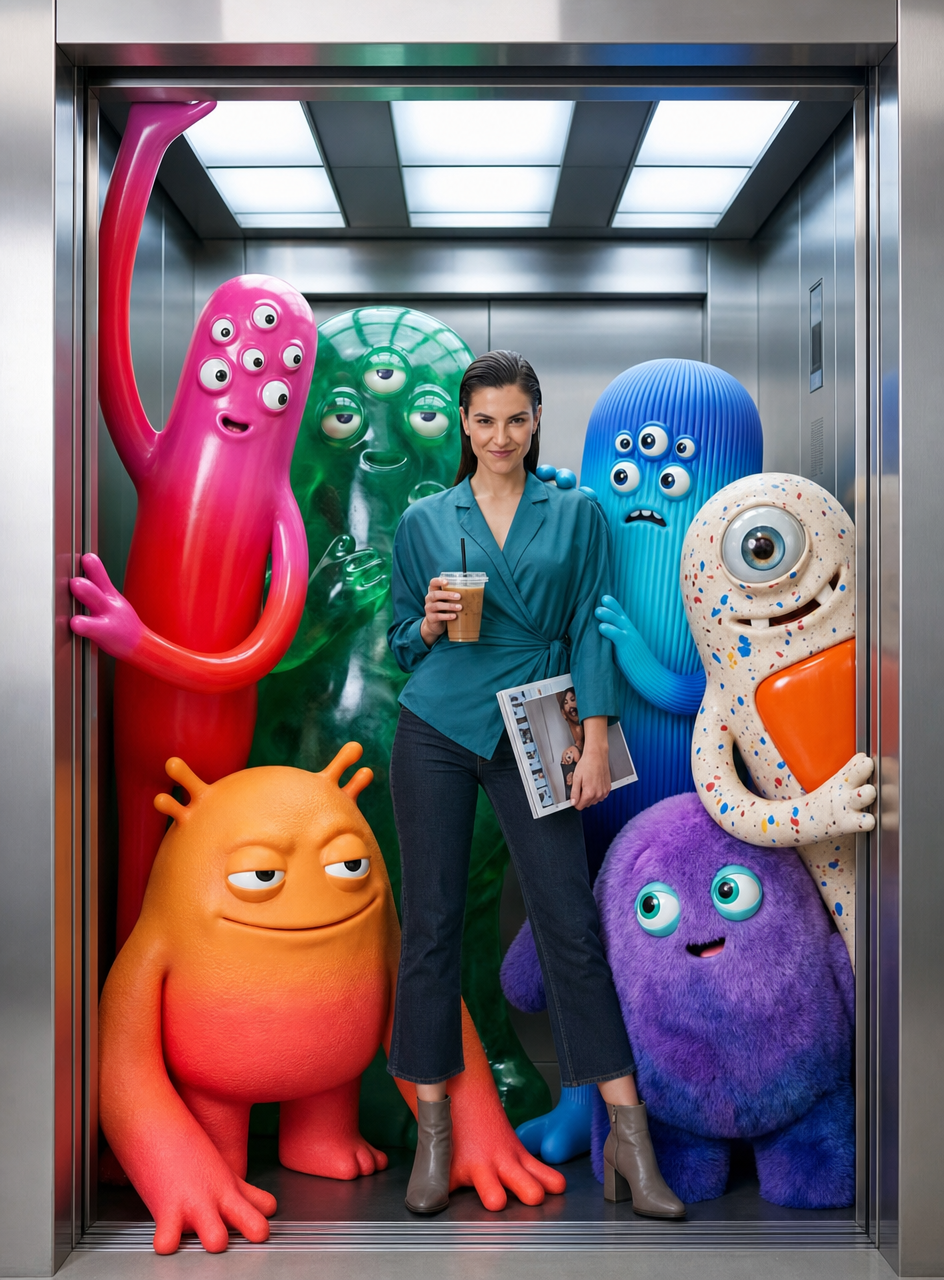
Teal fashion editorial in monster-filled lift
Sunlit editorial on striped beach towel

Silhouette Influencer by Sunlit Window