Why this works
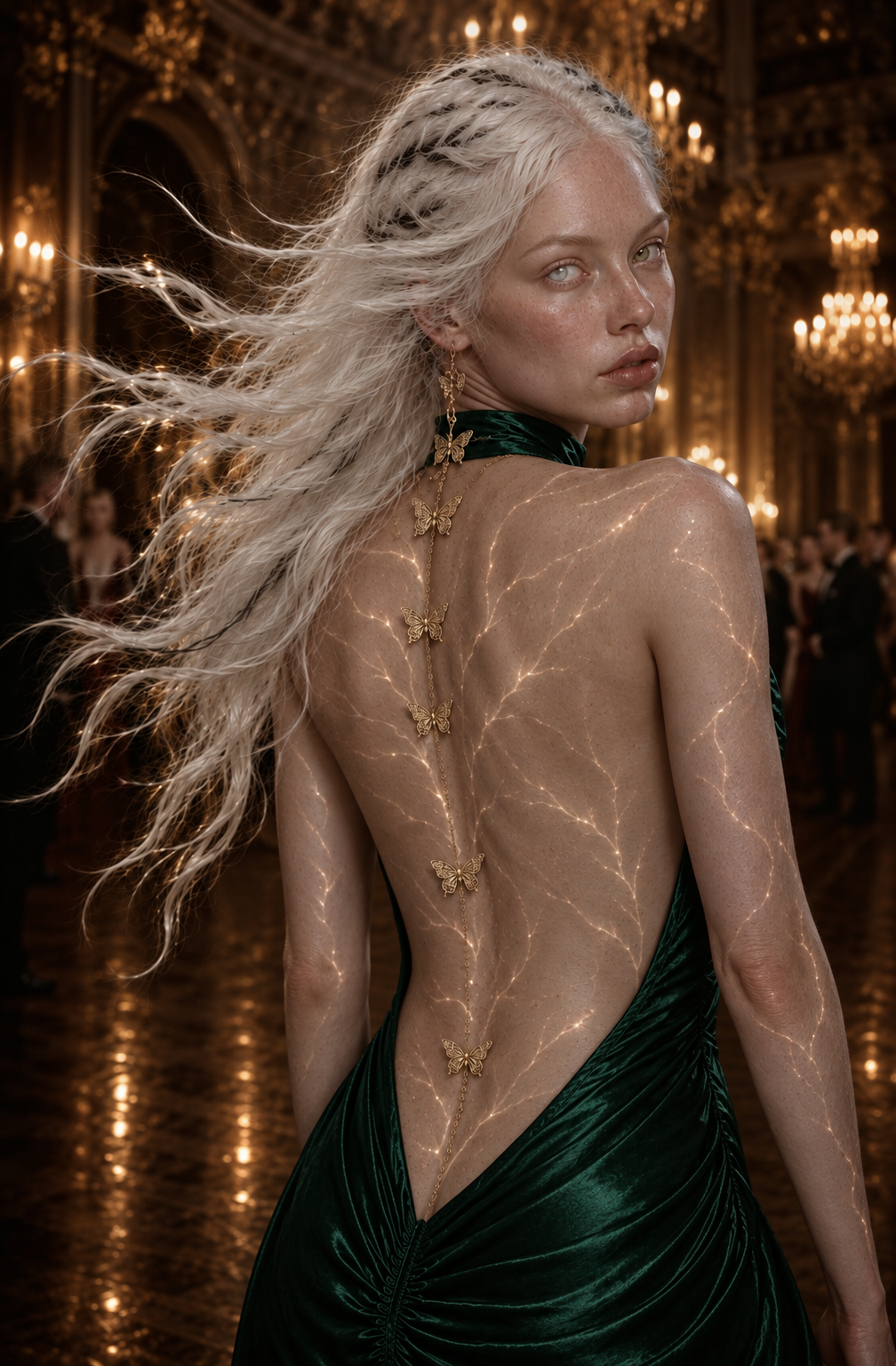
The close, tightly framed over-the-shoulder angle makes her shoulders, back, and luminous markings the visual anchor, while the backless gown keeps that skin detail exposed. “Cinematic low-key lighting,” “warm golden bokeh candle glow,” and the dominant black, beige, green, and gold palette establish a dark, regal atmosphere with the emerald satin as the main color accent. “Soft wind gently moving her hair” adds controlled motion around the otherwise composed portrait, and “highly detailed realistic skin texture” supports the photorealistic finish rather than letting the fantasy elements look painted.
FAQ
→How do I make the luminous marks more prominent than the gown?
Replace “a subtle network of faint luminous vein-like marks” with “a clearly visible network of intricate luminous veins spreading across her back and shoulders, the brightest focal detail,” and change “close portrait with her shoulders and back visible” to “tight close-up centered on her back and shoulders.” Keep “deep emerald-green” but reduce the gown’s visual competition with “matte emerald fabric with minimal sheen.”
→How do I shift this from a dark regal mood to a softer, romantic one?
Replace “dramatic, regal, luxurious dark mood” with “soft, intimate, romantic mood,” and change “cinematic low-key lighting” to “diffused candlelight with gentle rose-gold fill.” Replace “black, beige, green, and gold” in the color direction with “ivory, emerald, blush, and warm gold” to preserve the gown while reducing the severe contrast.
→How do I create a matching series with different ballroom settings and gown colors?
Keep the fixed identity and pose phrases, especially “the same pale woman with long flowing white hair” and “posed over her shoulder,” then swap “opulent candlelit ballroom” for settings such as “moonlit glass conservatory,” “frost-covered royal gallery,” or “rain-soaked palace terrace.” Change “deep emerald-green backless satin gown” to coordinated variants such as “midnight-blue velvet gown,” “ivory silk gown,” or “burgundy brocade gown,” while retaining “warm golden bokeh candle glow” only when you want the images to share the original series’ visual signature.
Learn the technique behind this
- Why can't AI spell, and how do I get readable text in an image? — Older diffusion models had no character-level representation of text, so they produced letterform-shaped texture instead of words.
- How do I keep the same character across multiple images? — Text prompts alone won't hold a face across images — a description defines a type, not a person.
- How should a prompt be structured, and does word order matter? — A prompt that behaves predictably names one subject first, then what it is doing, then where, then the light, then the lens or medium, then the style.
Related prompts

Teal fashion editorial in monster-filled lift
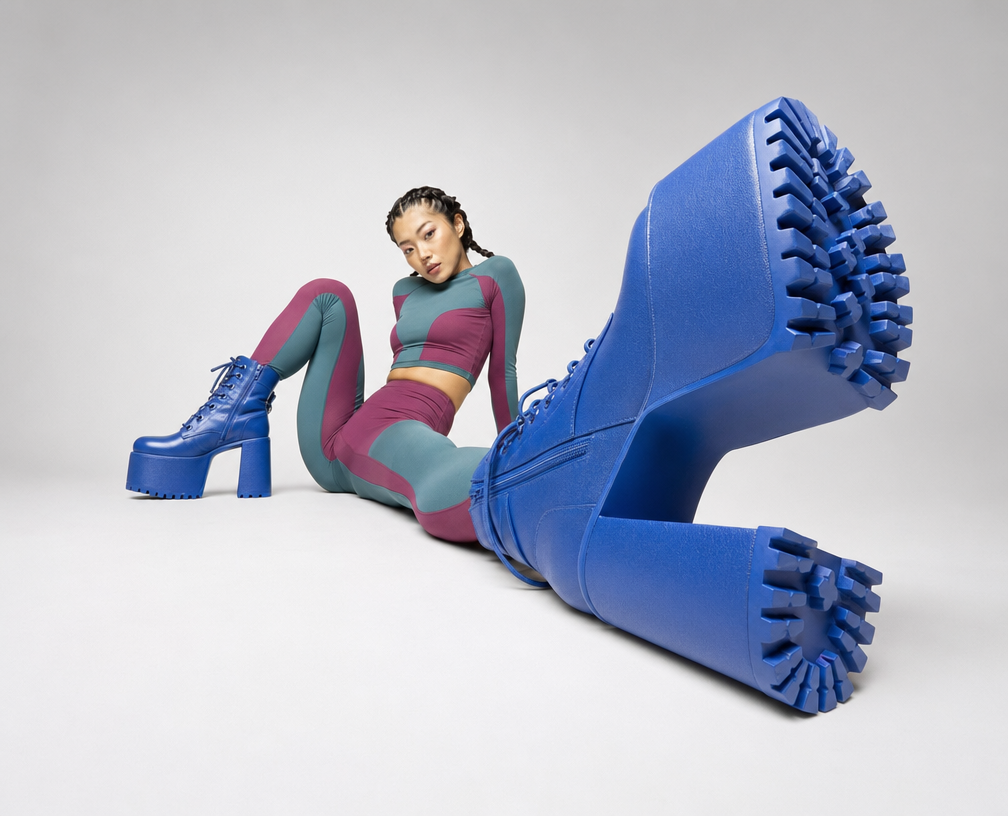
Cobalt Boots in Sleek Studio Edit
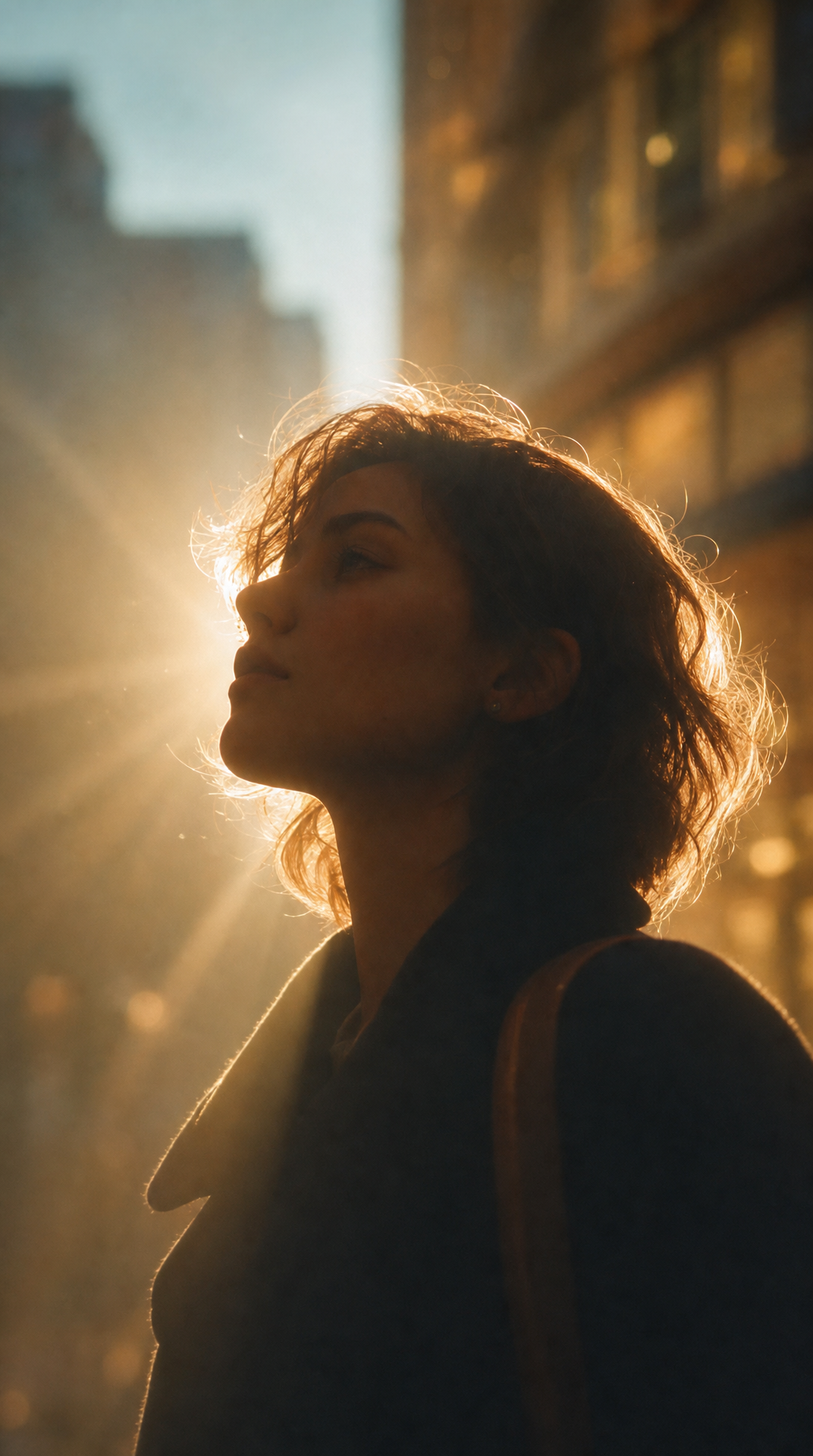
Silhouette Influencer by Sunlit Window
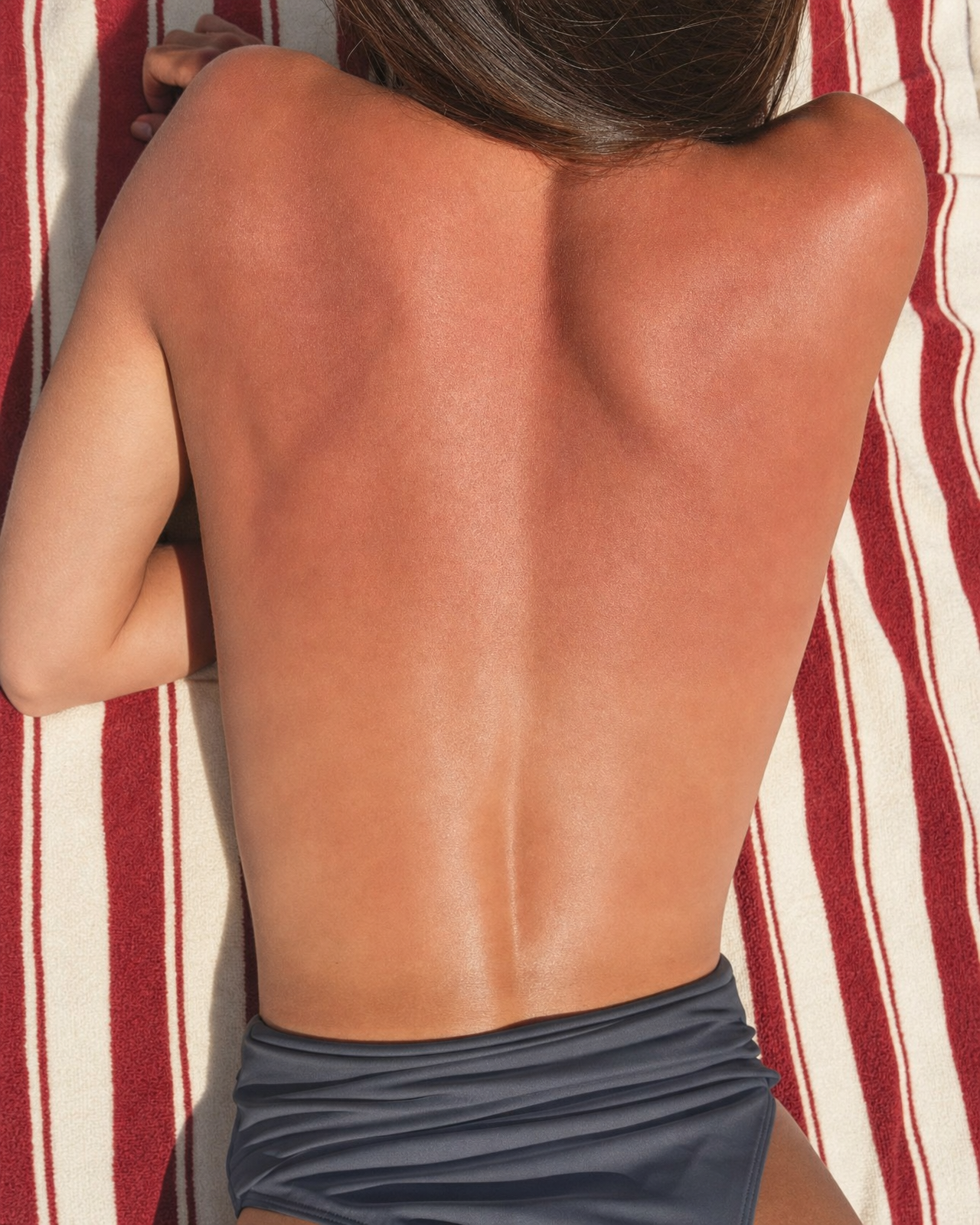
Sunlit editorial on striped beach towel