Why this works
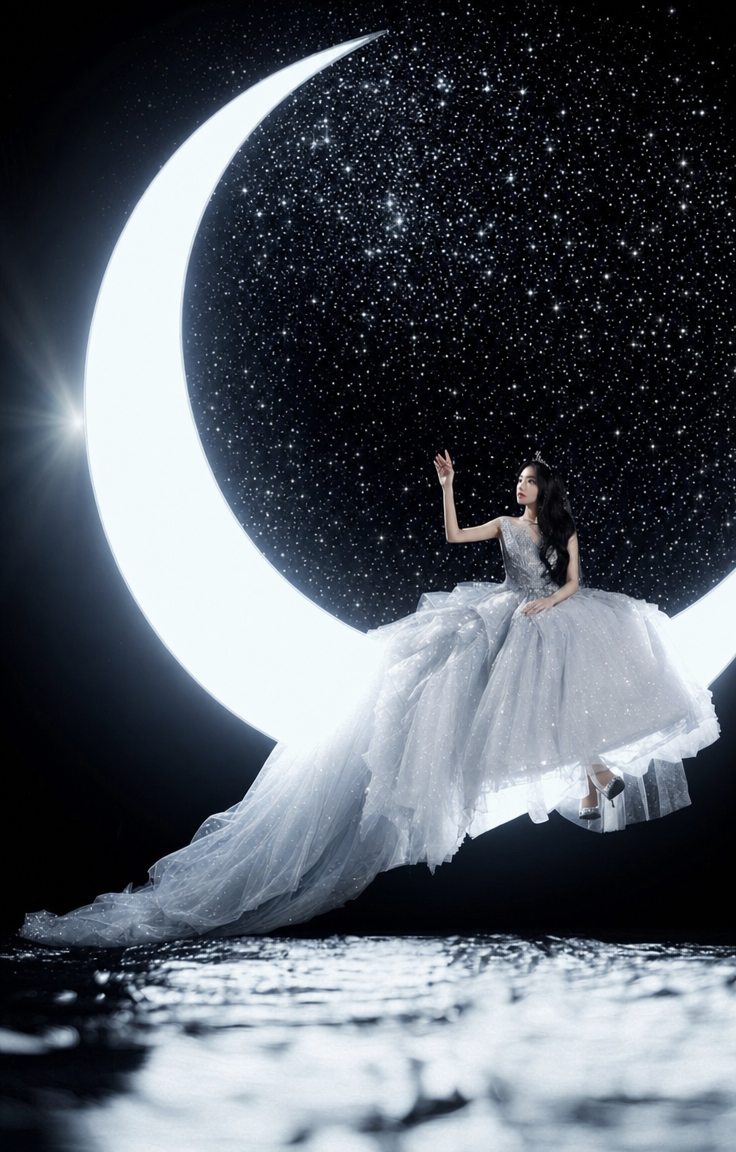
The centered high-fashion framing makes the seated woman and glowing crescent moon the immediate focal pair, while “shallow depth of field” separates them from the deep star-filled backdrop and faint nebula wisps. The dreamy celestial mood comes from “cool-white stardust,” “ethereal glow,” and the “glowing crescent moon,” with “pale-silver tulle,” “pearlescent highlights,” and the “reflective icy-silver surface” enforcing the white-and-gray palette. “Soft rim light outlines her silhouette” preserves the gown’s shape against the dark cosmos, while “ultra-detailed fabric texture” keeps the foreground tactile despite the atmospheric setting.
FAQ
→How do I make the woman more prominent than the moon and background?
Replace “elegant high-fashion framing” with “tight waist-up fashion portrait,” and change “a glamorous woman seated on a glowing crescent moon” to “a glamorous woman in the foreground, with the glowing crescent moon reduced to a soft background element.” Keep “shallow depth of field” and add “sharp focus on her face and gown, background heavily blurred.”
→How do I shift this from a cool, dreamy image to a warmer and more dramatic one?
Replace “cool-white stardust” with “floating amber-gold particles,” “pale-silver tulle gown” with “deep champagne-gold silk gown,” and “reflective icy-silver surface” with “warm bronze reflective surface.” Change “soft rim light” to “strong warm side-light with deep sculpting shadows” while retaining the cosmic backdrop.
→How do I create a series of variations without losing the visual identity?
Keep the fixed phrases “photorealistic fantasy fashion photography,” “centered high-fashion framing,” “shallow depth of field,” and “dramatic cinematic studio lighting.” For each variation, swap only the subject’s lunar seat and gown, such as “seated on a glowing crescent moon” to “standing on a floating crystal planet,” and “pale-silver tulle gown” to “translucent lavender organza gown,” while preserving “cool-white stardust” and the “deep star-filled cosmic backdrop.”
Learn the technique behind this
- Why can't AI spell, and how do I get readable text in an image? — Older diffusion models had no character-level representation of text, so they produced letterform-shaped texture instead of words.
- How should a prompt be structured, and does word order matter? — A prompt that behaves predictably names one subject first, then what it is doing, then where, then the light, then the lens or medium, then the style.
- Why does AI get hands and faces wrong, and how do I fix it? — Hands fail because they're small in frame, extremely variable in pose, and self-occluding — the model has less usable signal per pixel than for any other body part.
Related prompts
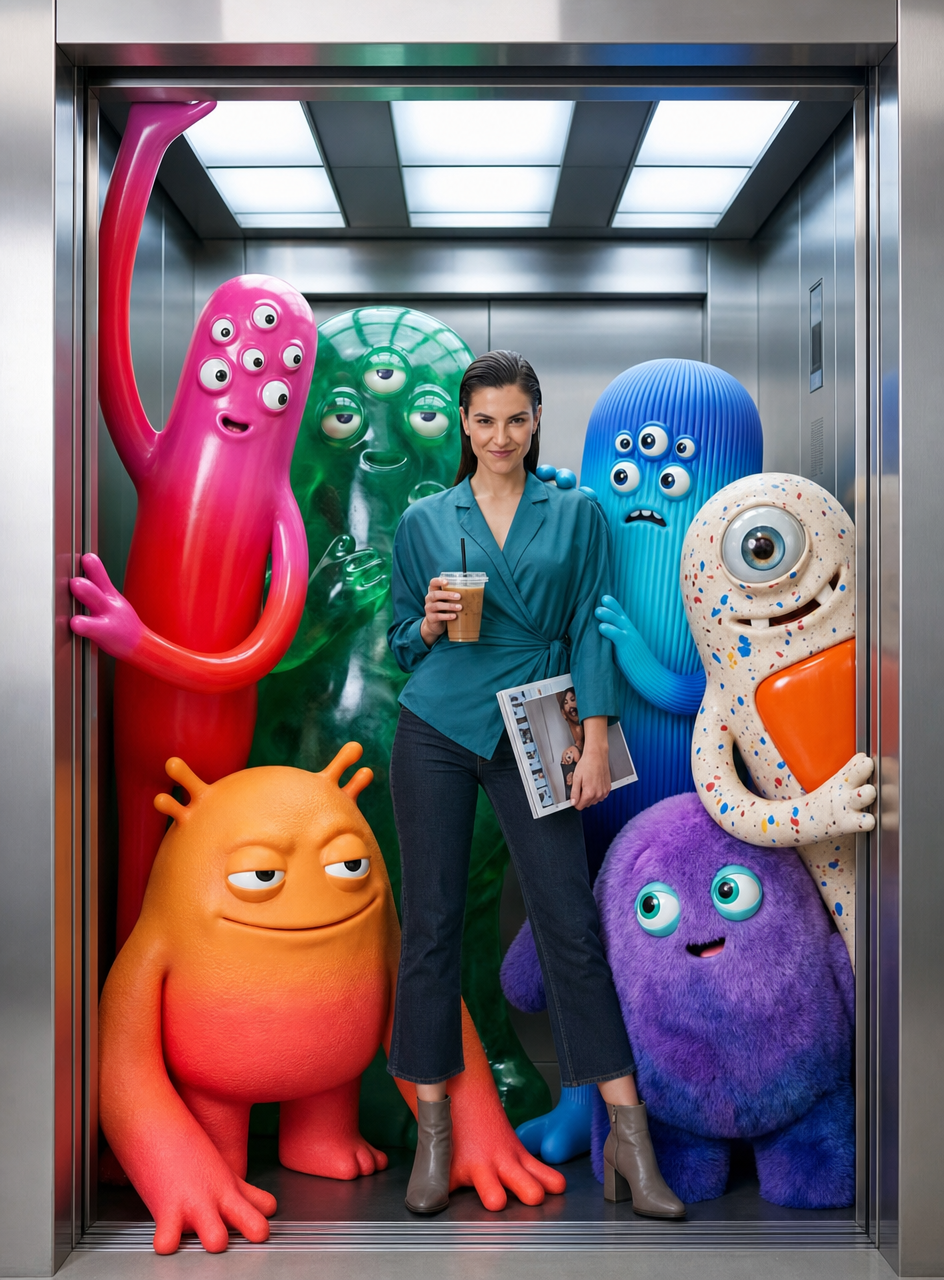
Teal fashion editorial in monster-filled lift
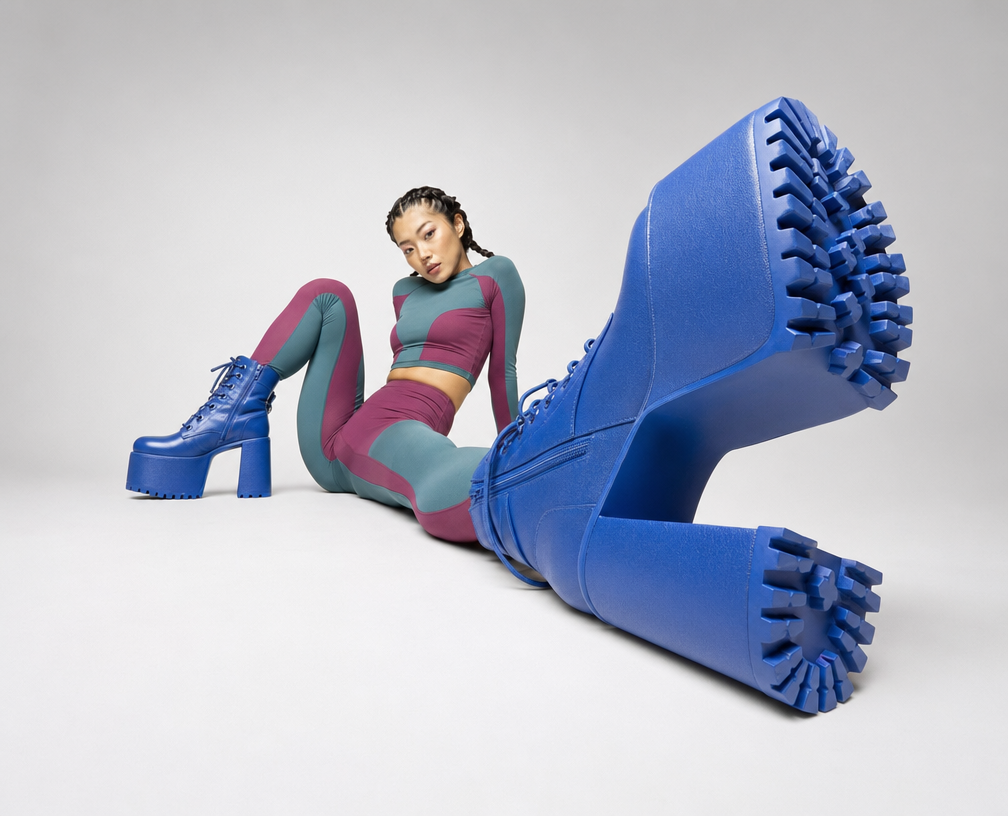
Cobalt Boots in Sleek Studio Edit
Silhouette Influencer by Sunlit Window
Sunlit editorial on striped beach towel