Same prompt, generated with each model separately — click one to see how it holds up.
Why this works
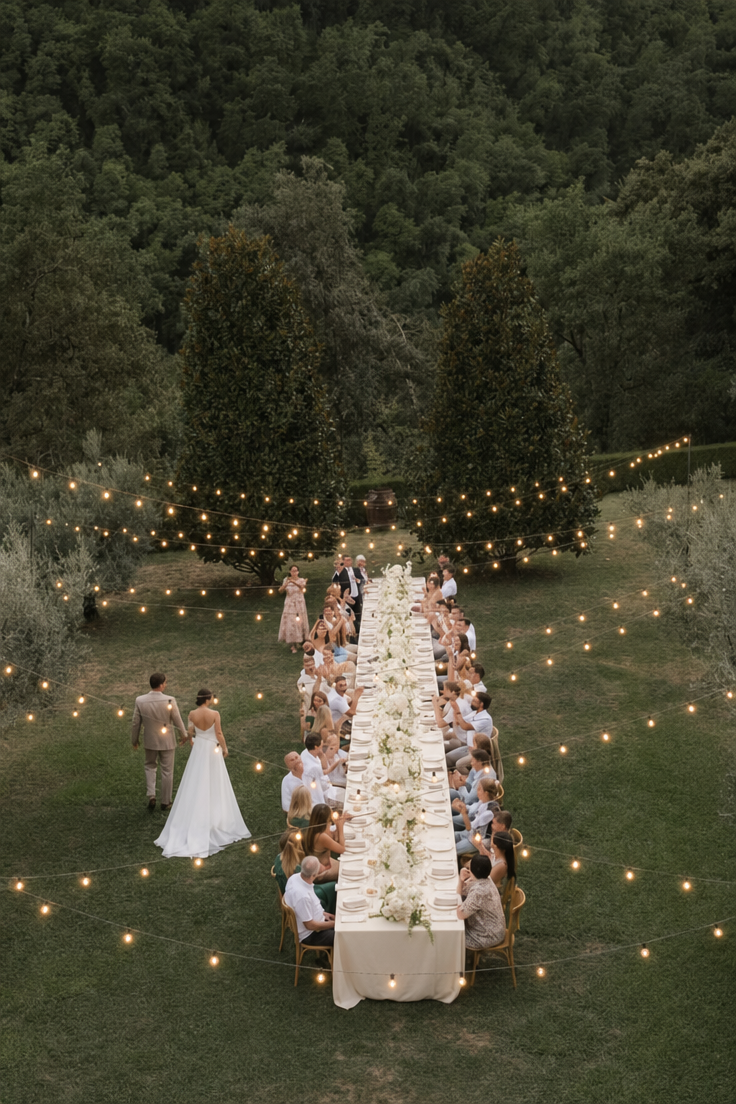
“Wide overhead” and “very long elegant banquet table” establish the sweeping event composition, while the guests seated “along both sides” create a strong linear structure across the grassy lawn. The romantic mood comes from the combination of “soft dusk glow,” “warm string lights arc across the lawn in gentle lines,” and “delicate floral centerpieces,” with the image’s beige, white, brown, and orange palette reinforcing the ivory linens, wooded setting, and amber lights. “Shallow haze for depth” separates the table and couple from the “dense forest in the background,” while “high detail” and “photorealistic event photography” keep the scene readable at a distance.
FAQ
→How do I make the bride and groom more prominent in the wide composition?
Replace “The bride and groom stand close together near the table” with “the bride and groom are the central foreground subjects, clearly visible in formal wedding attire, surrounded by a subtle open space.” Add “moderate overhead perspective with the couple near the visual center” to reduce the dominance of the long table without losing the reception context.
→How do I change the romantic dusk mood into a bright daytime wedding scene?
Replace “soft dusk glow” with “clear late-morning sunlight” and “warm string lights arc across the lawn” with “small white lanterns and soft daylight reflections on the tableware.” Keep “natural color grading,” but change the dominant lighting description to “bright, airy, sunlit greens and crisp ivory whites.”
→How do I turn this into a series of varied wedding-reception images?
Keep the fixed anchors “photorealistic event photography,” “grassy lawn,” “very long elegant banquet table,” and “dense forest in the background,” then swap one controlled phrase per version: replace “wide overhead” with “eye-level view from the head table,” “the bride and groom stand close together near the table” with “the couple’s first dance on the lawn,” or “warm string lights arc across the lawn” with “glowing paper lanterns hang above the reception.”
Learn the technique behind this
- Why can't AI spell, and how do I get readable text in an image? — Older diffusion models had no character-level representation of text, so they produced letterform-shaped texture instead of words.
- How should a prompt be structured, and does word order matter? — A prompt that behaves predictably names one subject first, then what it is doing, then where, then the light, then the lens or medium, then the style.
- Do negative prompts work, and what should go in one? — Negative prompts work on models that support a separate negative conditioning channel — mainly Stable Diffusion and FLUX-family models.
Related prompts
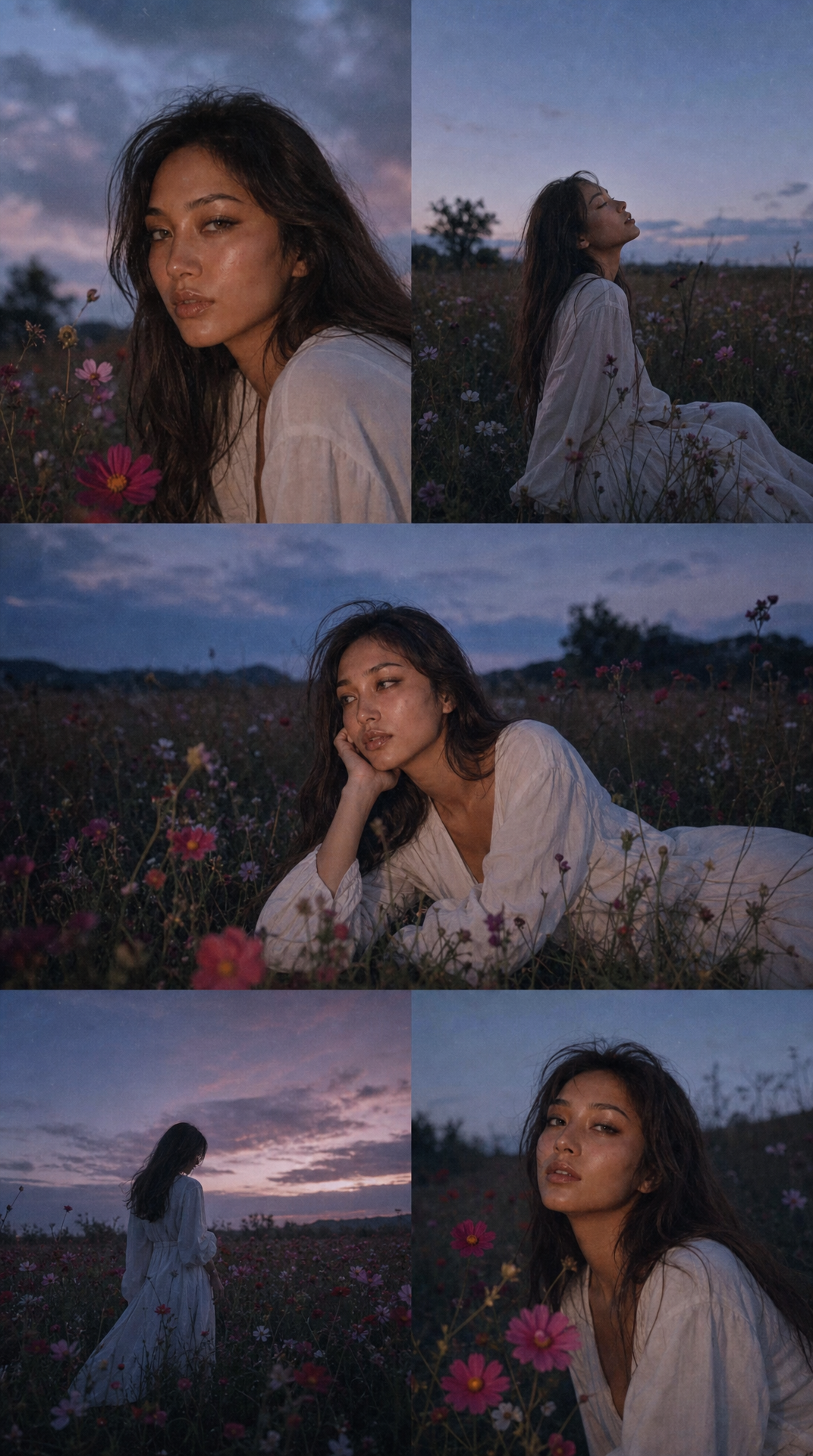
Solitary Woman in Twilight Wildflower Meadow

Golden-hour surf under dramatic clouds
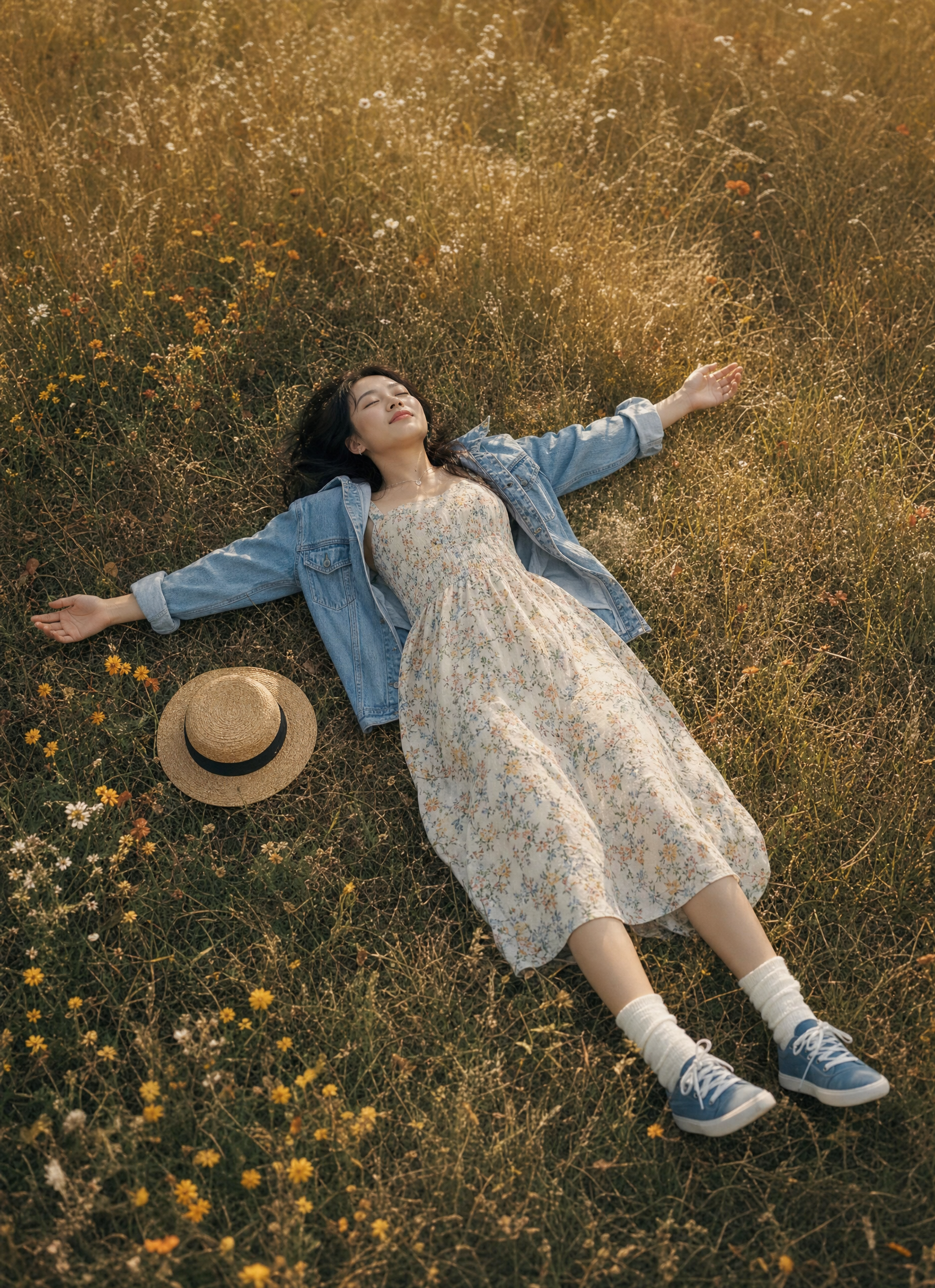
Woman Relaxing in Golden Autumn Field
Man on sand dune in blue hour