Why this works
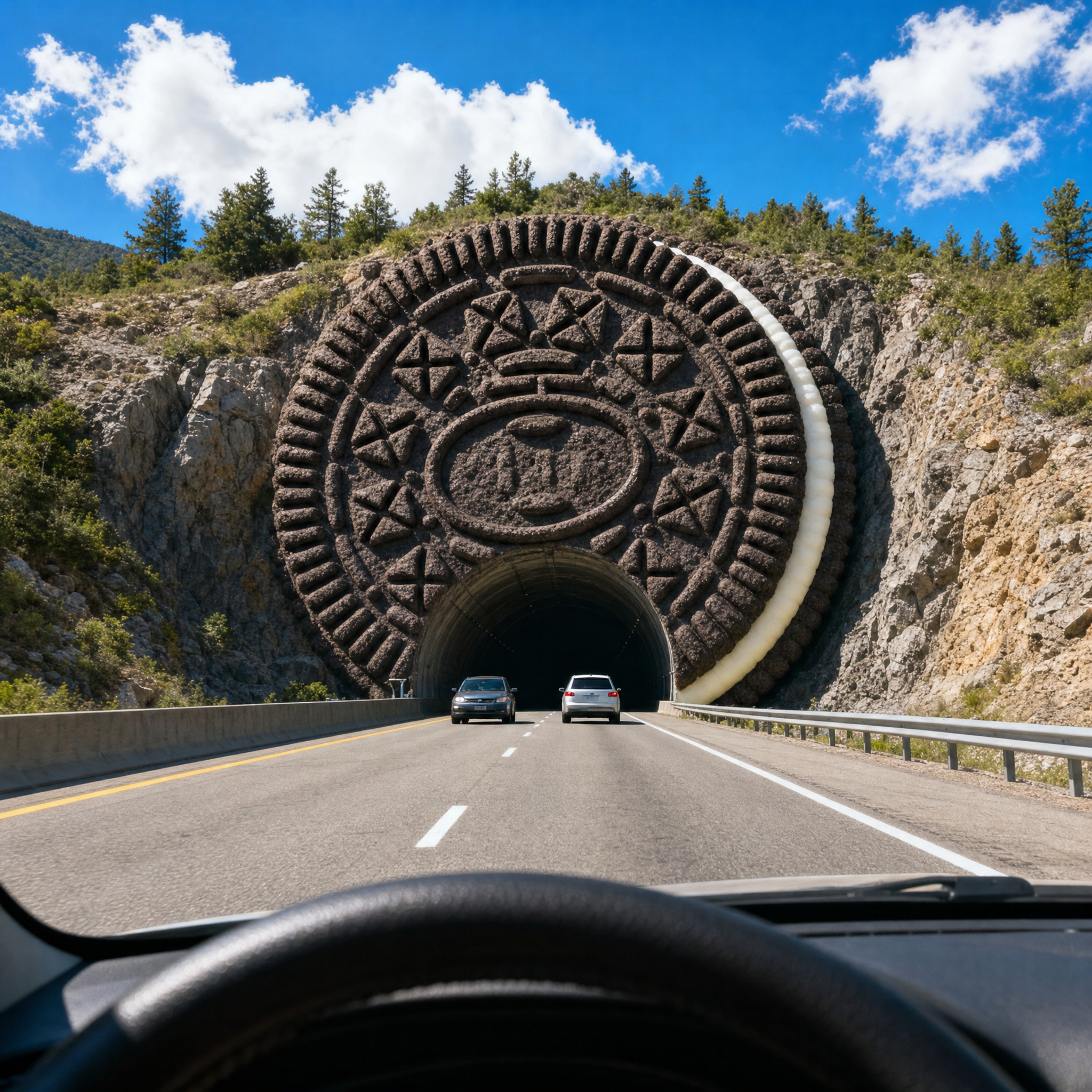
The phrase “giant Oreo cookie forming the entrance to a rocky tunnel” supplies the surreal focal point, while “embedded into the stone with convincing depth” makes the impossible object read as physically integrated rather than pasted on. “Wide-angle perspective from the front windshield” creates the broad, forward-driving composition, and “multiple cars drive toward the tunnel” adds scale against the cookie and hillside. “Bright midday sunlight,” “lush green hills,” and “vivid blue sky” establish a crisp, playful roadside mood, with the visible gray rock, green vegetation, and white cookie filling the image’s dominant color structure.
FAQ
→How do I make the Oreo tunnel feel more dramatic and imposing?
Replace “Bright midday sunlight” with “late-afternoon storm light with deep directional shadows,” and change “wide-angle perspective” to “ultra-wide low-angle perspective from the road.” Keep “embedded into the stone with convincing depth,” but add “towering above the highway” to increase the cookie’s apparent scale.
→How do I make the cookie more central and visually prominent?
Replace “multiple cars drive toward the tunnel” with “one small car approaches the tunnel in the lower foreground,” and change “viewed from inside a moving car” to “centered windshield view aimed directly at the cookie tunnel.” Add “the Oreo fills the central upper frame, with the road leading straight to it” to strengthen the composition.
→How can I create a series of variations without losing the core concept?
Keep “Photorealistic surreal composite” and “giant Oreo cookie embedded into a rocky hillside as a tunnel entrance” unchanged, then swap the setting phrase “mountain highway” for options such as “coastal cliff road,” “snow-covered alpine pass,” or “desert canyon highway.” Match each version with a new lighting phrase, such as “cool overcast morning,” “golden-hour haze,” or “hard sunset light,” while retaining “wide-angle perspective from the front windshield” for a consistent series viewpoint.
Learn the technique behind this
- Why can't AI spell, and how do I get readable text in an image? — Older diffusion models had no character-level representation of text, so they produced letterform-shaped texture instead of words.
- How should a prompt be structured, and does word order matter? — A prompt that behaves predictably names one subject first, then what it is doing, then where, then the light, then the lens or medium, then the style.
- Do negative prompts work, and what should go in one? — Negative prompts work on models that support a separate negative conditioning channel — mainly Stable Diffusion and FLUX-family models.
Related prompts
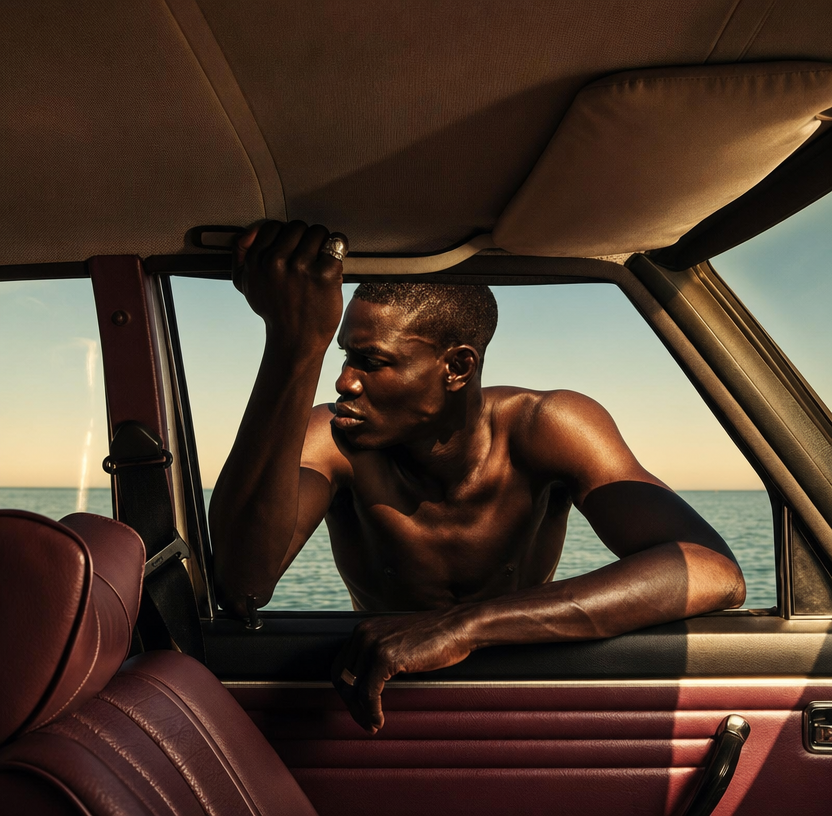
Shirtless Man, Vintage Car, Coastline Light
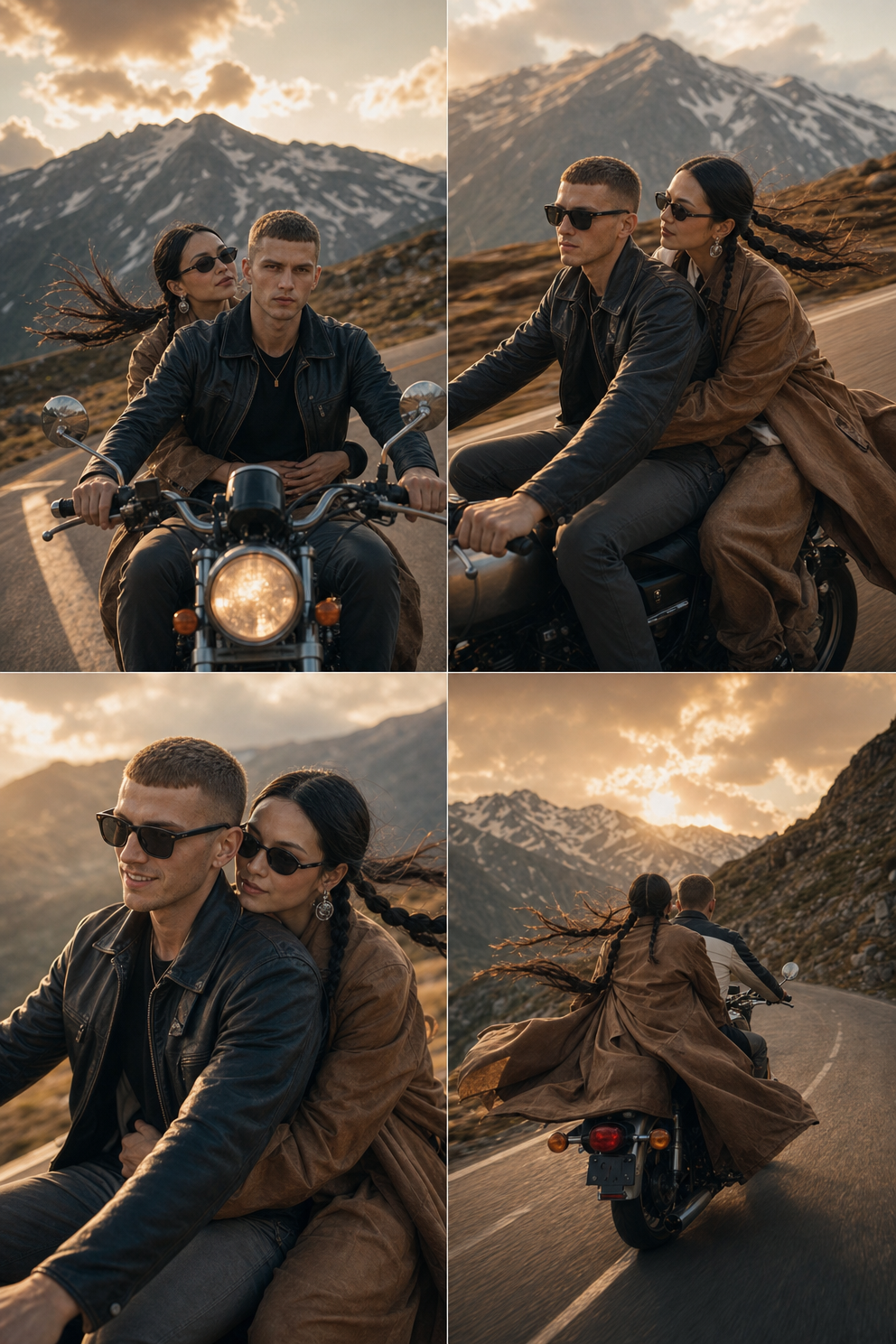
Golden-hour couple rides a classic bike

Golden-hour Matcha Sips in Luxury SUV
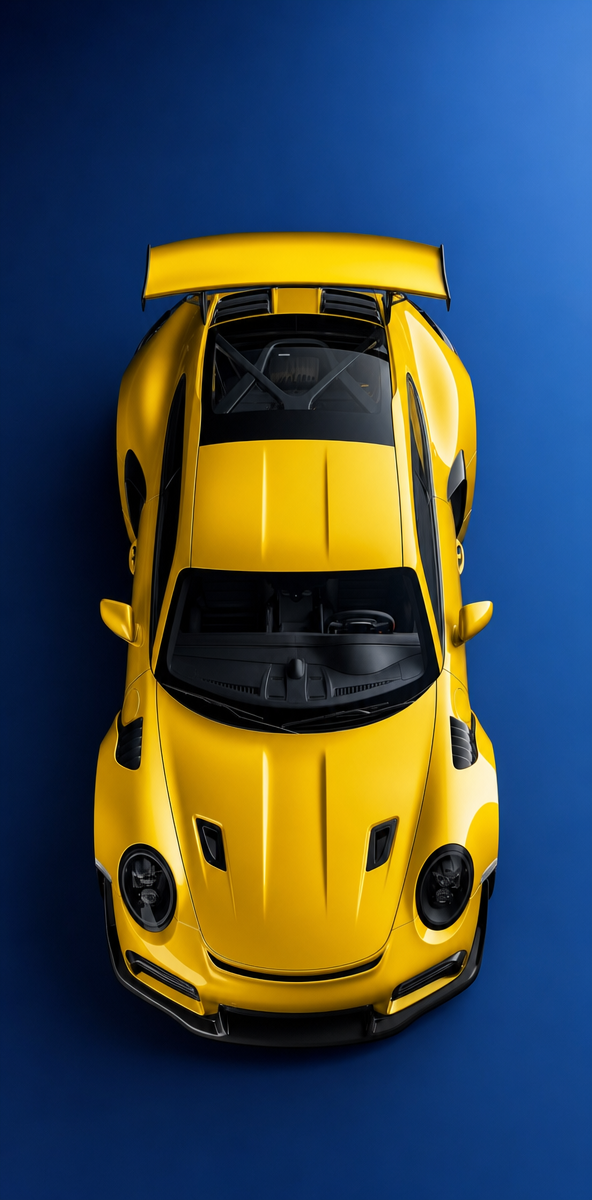
Top-Down Yellow Porsche GT2 RS