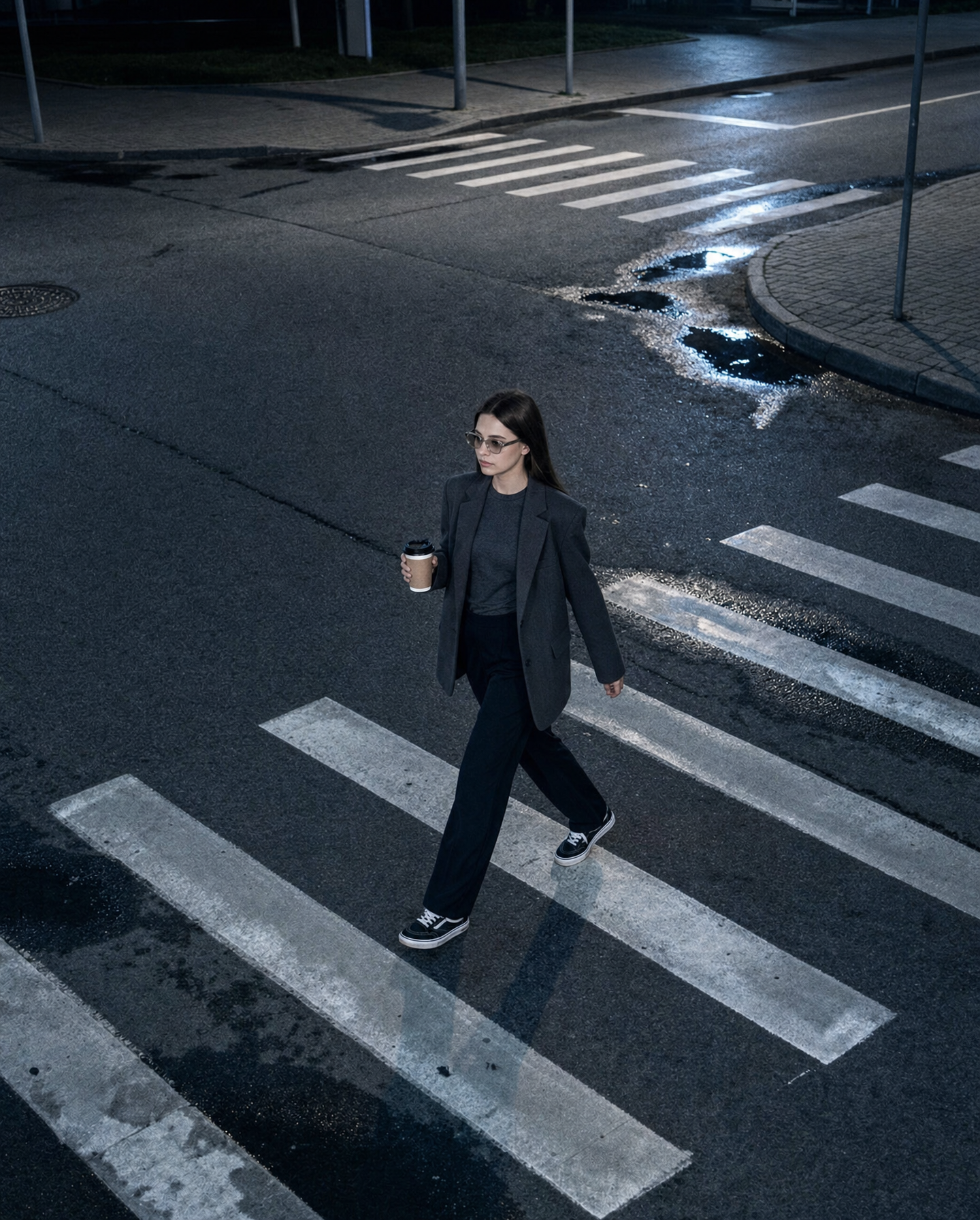
Why this works
The “high fixed security camera angle” and “candid-action” composition make the woman read as observed rather than posed, while the “red tracking box around her face,” “faint body-tracking silhouette,” and “small inset portrait” reinforce a watchful surveillance narrative. “Cool-blue LED street lighting,” “rain-slick asphalt,” and “wet asphalt reflections” supply the clinical noir atmosphere, with the image’s dominant black-and-white range keeping the frame stark and graphic. “Slight sensor noise/grain” and “realistic street textures” carry the believable security-footage finish instead of allowing the HUD graphics to feel decorative.
FAQ
→How do I make the woman more central and prominent in the frame?
Replace “high fixed security camera angle” with “medium-high fixed security camera angle, centered composition,” and add “woman occupies the central third of the frame, face and coffee cup clearly readable.” Keep “red tracking box around her face” but change “faint body-tracking silhouette” to “bright, clearly visible body-tracking outline” for stronger subject emphasis.
→How do I shift the mood from clinical noir to warmer, more human night realism?
Replace “cool-blue LED street lighting” and “tense, clinical noir mood” with “soft amber streetlamp lighting and a subdued, intimate night mood.” Change “no sodium-vapor warmth” to “gentle sodium-vapor warmth,” and add “warm highlights on the woman’s coat and coffee cup against cool shadowed pavement” while retaining “rain-slick asphalt” for reflective texture.
→How do I create a series of surveillance variations without losing the core concept?
Keep “photorealistic surveillance-camera aesthetic,” “slight sensor noise/grain,” and “HUD overlays,” then swap the action phrase “walks across a rain-slick urban crosswalk while holding a takeaway coffee cup” for variations such as “waits beneath a flickering bus-stop sign,” “enters a dim underground station,” or “stands beside a parked taxi.” Replace “small inset portrait” with “timestamp and camera ID panel” for a wider establishing frame, or with “zoomed evidence crop of the coffee cup” to make the prop central.
Learn the technique behind this
- Why can't AI spell, and how do I get readable text in an image? — Older diffusion models had no character-level representation of text, so they produced letterform-shaped texture instead of words.
- Why does AI get hands and faces wrong, and how do I fix it? — Hands fail because they're small in frame, extremely variable in pose, and self-occluding — the model has less usable signal per pixel than for any other body part.
- How do I keep the same character across multiple images? — Text prompts alone won't hold a face across images — a description defines a type, not a person.
Related prompts
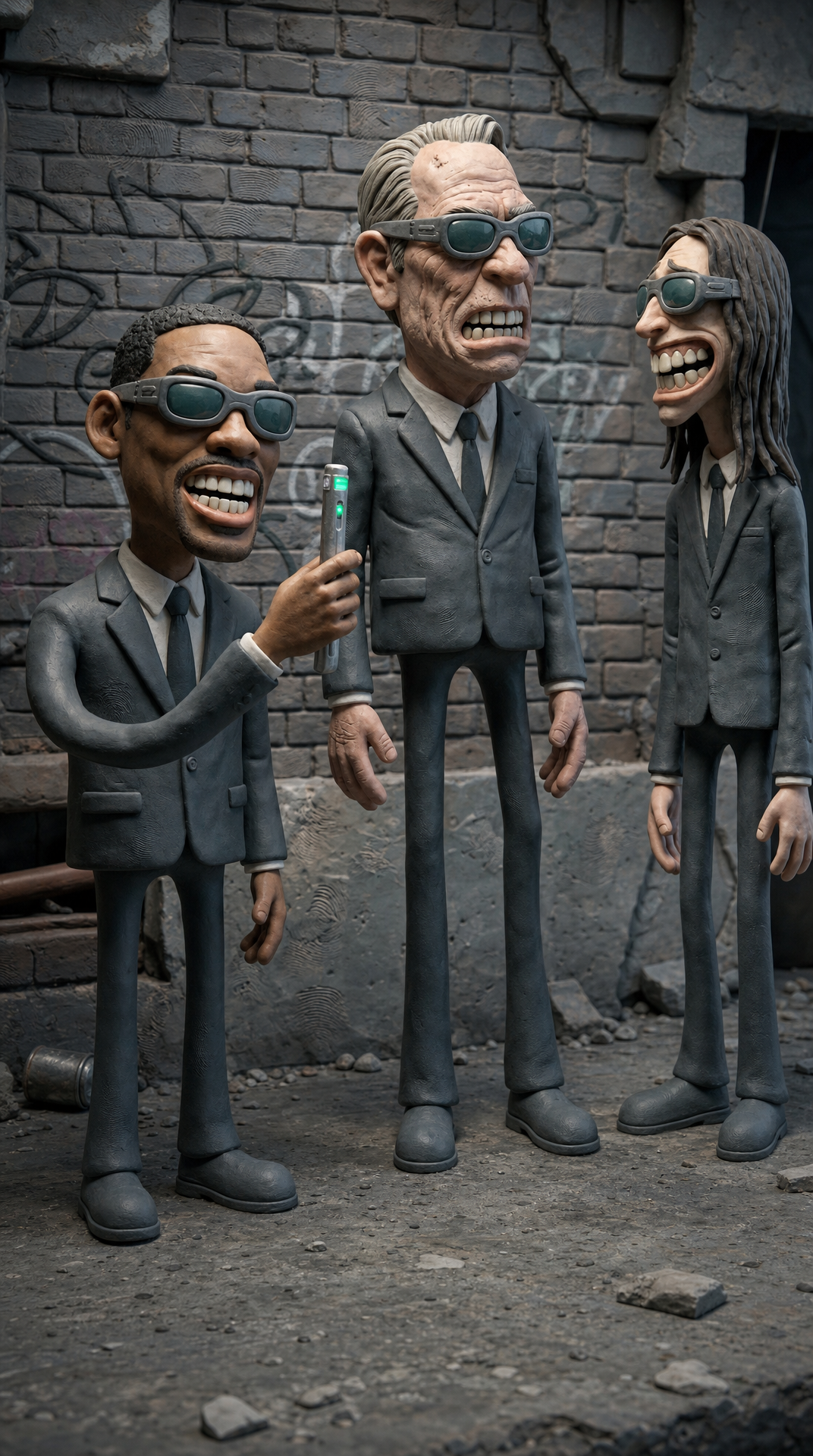
Grotesque Claymation Gangsters in Gritty Alley
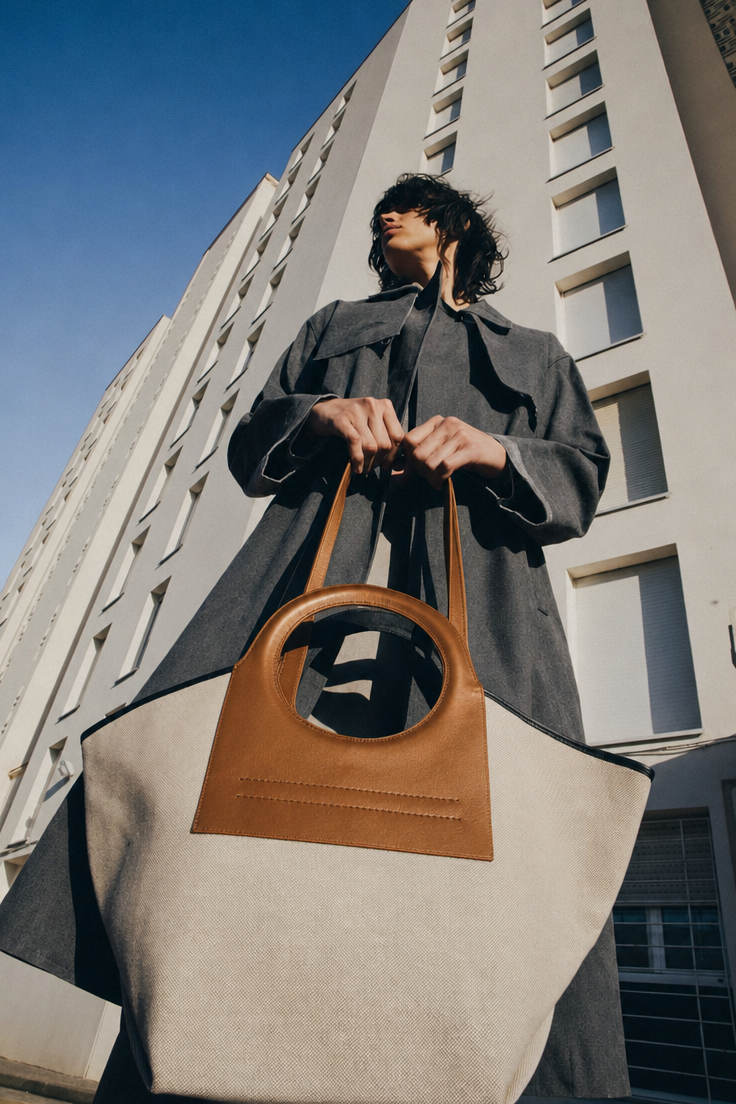
Charcoal coat with tan-handled tote
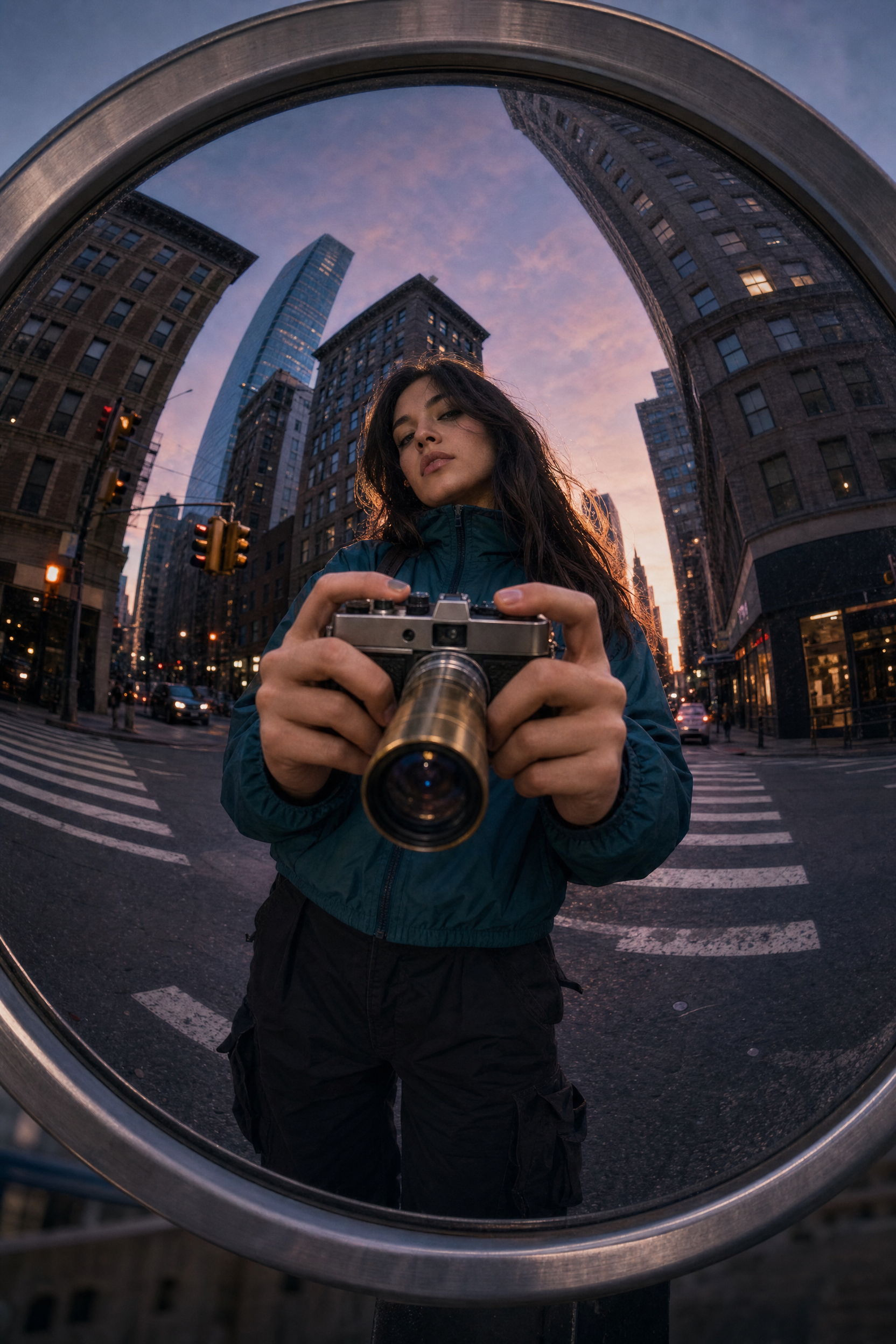
Woman in Teal Jacket Capturing Twilight Reflection
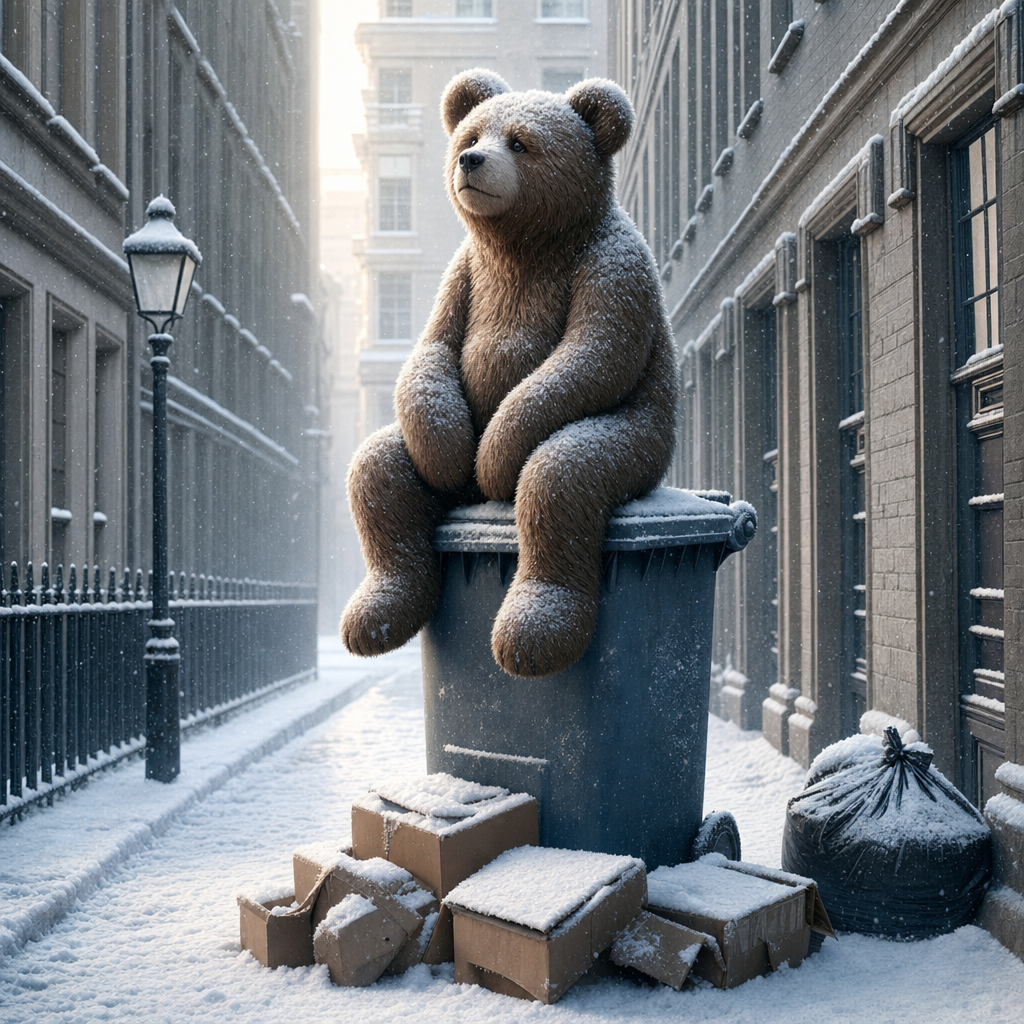
Stuffed Bear on Winter Dumpster at Dawn