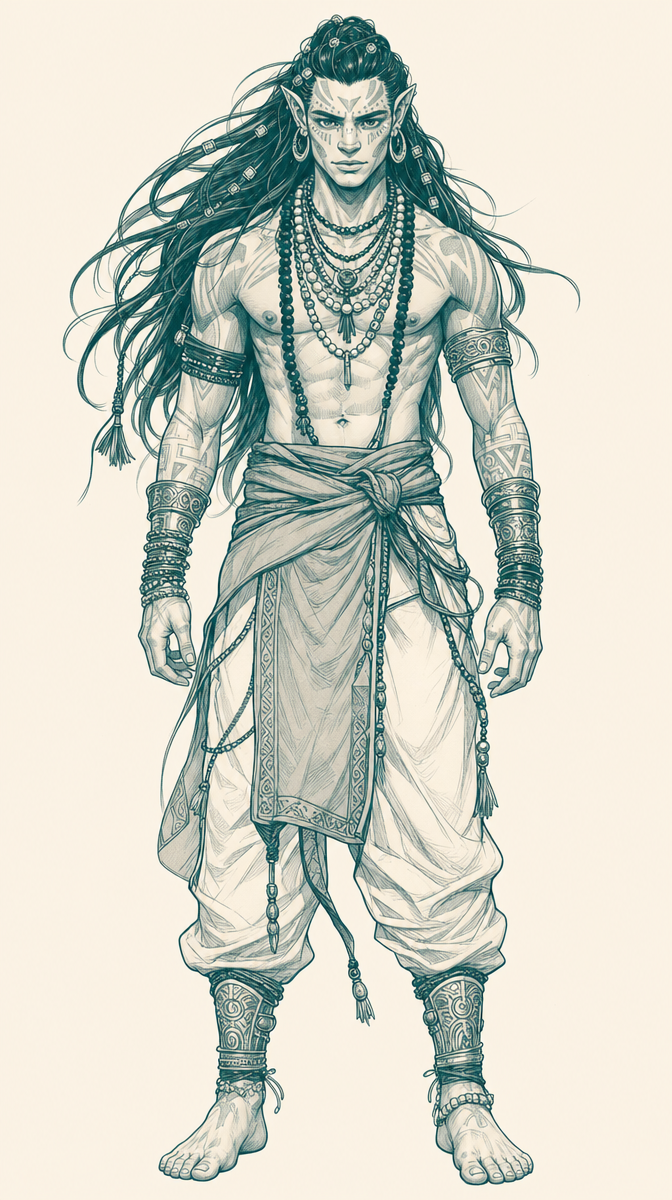
Why this works
The two-color restriction named directly in 'monochrome teal line art on a cream background' is what gives this its clinical read, not the alien subject itself - swap that phrase for full color and the blueprint feeling collapses instantly. 'Geometric grid overlay' plus 'dimension annotations, and reference arrows flanking the figure' are the actual load-bearing words that turn a character illustration into a spec sheet; without them you'd just have a line drawing of a person. 'Confident stance' and 'full body front-facing view' work together to keep the figure centered and legible against all that technical clutter, which is why the alien reads as a product on display rather than a candid portrait. The ornamental details - 'ornamental clips,' 'beaded necklaces,' 'arm cuffs' - give the linework something intricate to render, which matters because a schematic style with a plain subject tends to look empty.
FAQ
→How do I make this look less clinical and more like concept art?
Drop 'technical schematic style,' 'dimension annotations,' and 'reference arrows flanking the figure' entirely, and replace 'monochrome teal line art on a cream background' with something like 'painterly rendering with warm gradient lighting.' That removes the annotation clutter and the flat two-tone palette, which are the two things anchoring the clinical mood.
→How do I get a series of variations from this same prompt?
Keep 'humanoid alien figure with pointed ears, long flowing hair with ornamental clips' and the schematic framing fixed, then cycle the color phrase only - swap 'monochrome teal' for 'monochrome crimson,' 'monochrome violet,' or 'monochrome amber' each time. Since the grid, arrows, and annotations are what make this a coherent set, changing only the hue keyword gives you a matched family instead of unrelated images.
→How do I make the jewelry and fabric details more central instead of the whole figure?
Change the camera line from 'Full body front-facing view with anatomical blueprint framing' to something like 'close-up cropped view centered on neckline and shoulders with magnified detail callouts.' Also move 'intricate beaded necklaces' and 'draped fabric wraps and arm cuffs' earlier in the subject description so they're read as the primary focus rather than accessories on a full figure.
Learn the technique behind this
- Why can't AI spell, and how do I get readable text in an image? — Older diffusion models had no character-level representation of text, so they produced letterform-shaped texture instead of words.
- How do I keep the same character across multiple images? — Text prompts alone won't hold a face across images — a description defines a type, not a person.
- Do negative prompts work, and what should go in one? — Negative prompts work on models that support a separate negative conditioning channel — mainly Stable Diffusion and FLUX-family models.
Related prompts
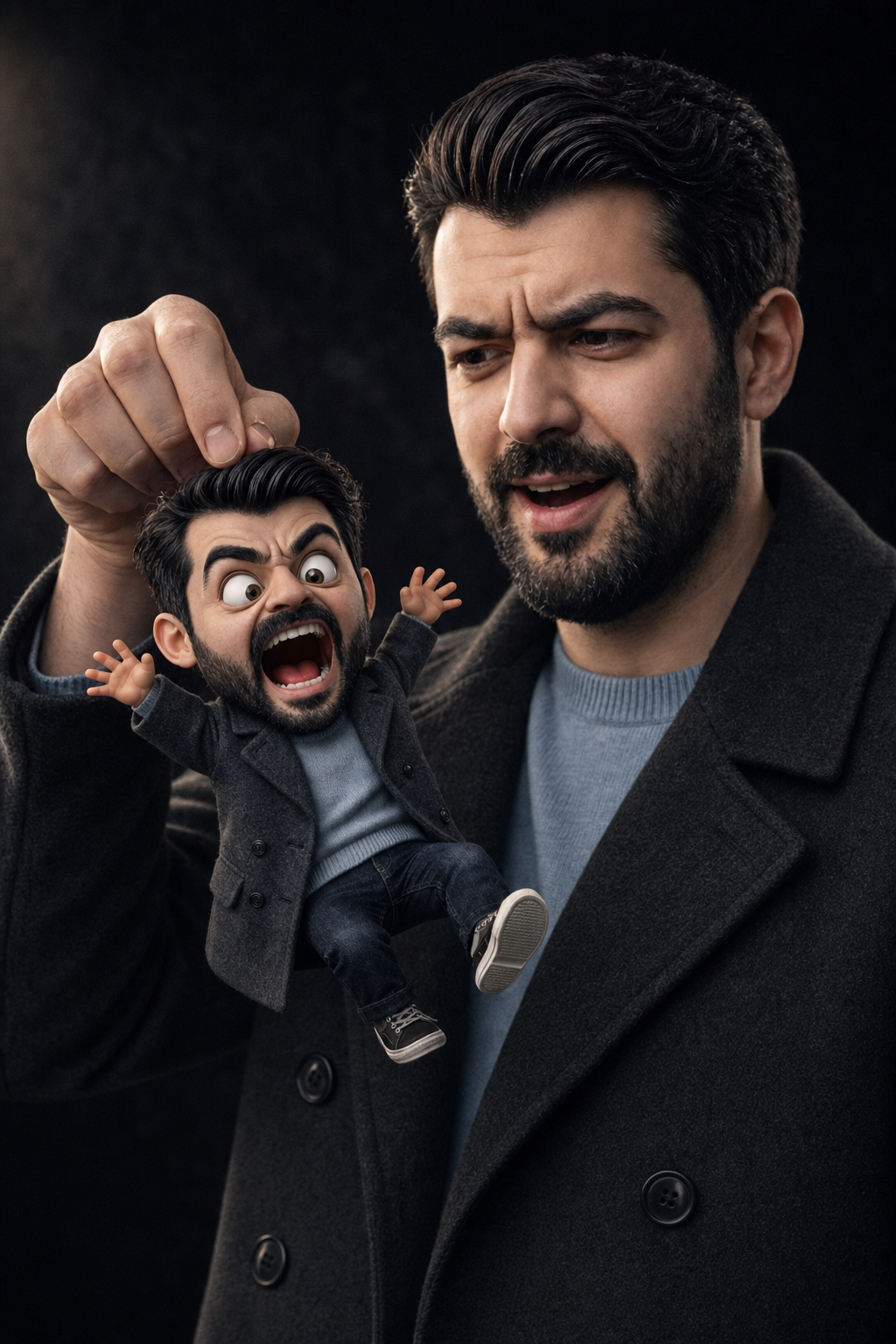
Surprised Man Holding Mini Cartoon Self
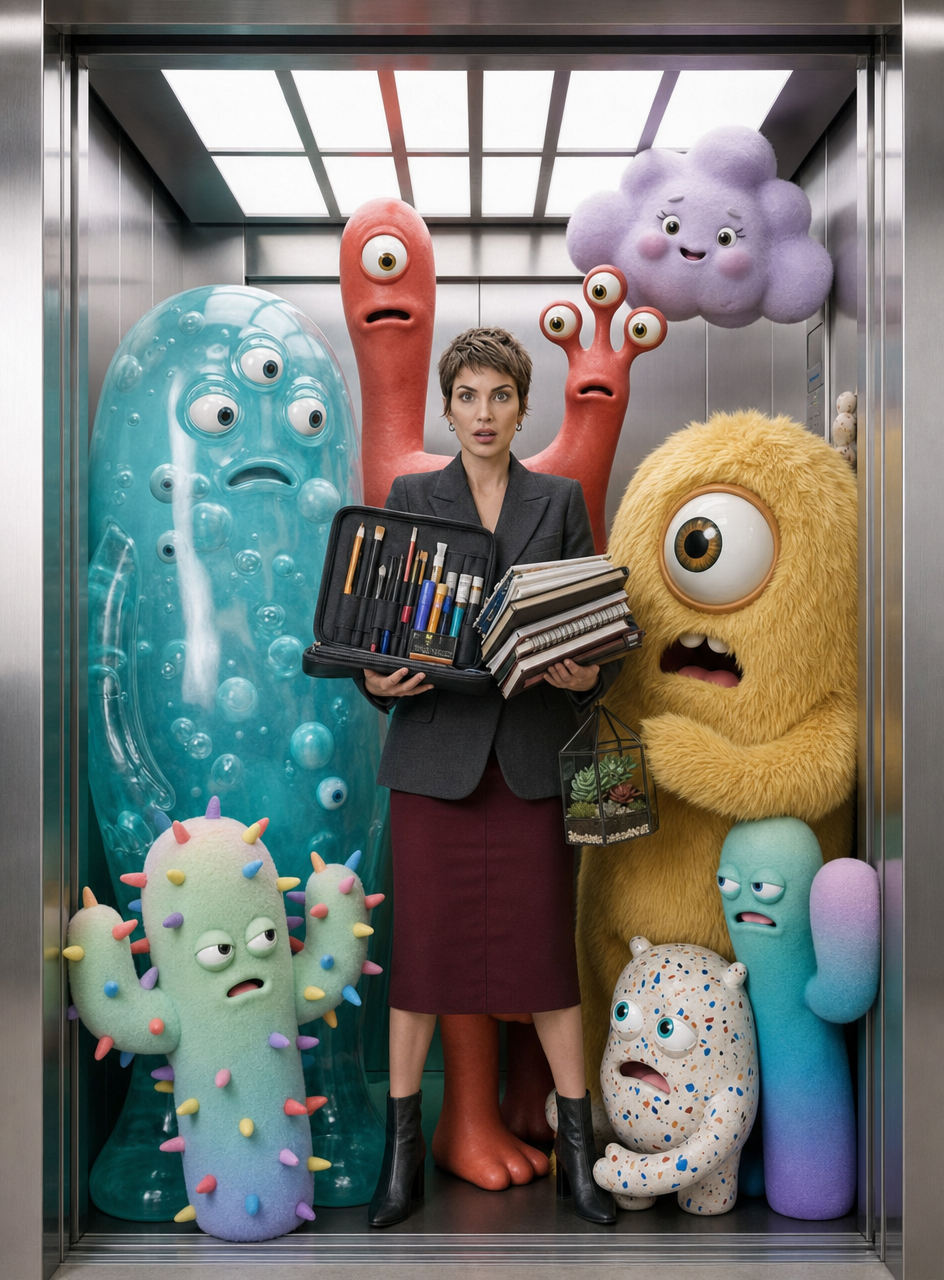
Charcoal-blazer woman with art monsters
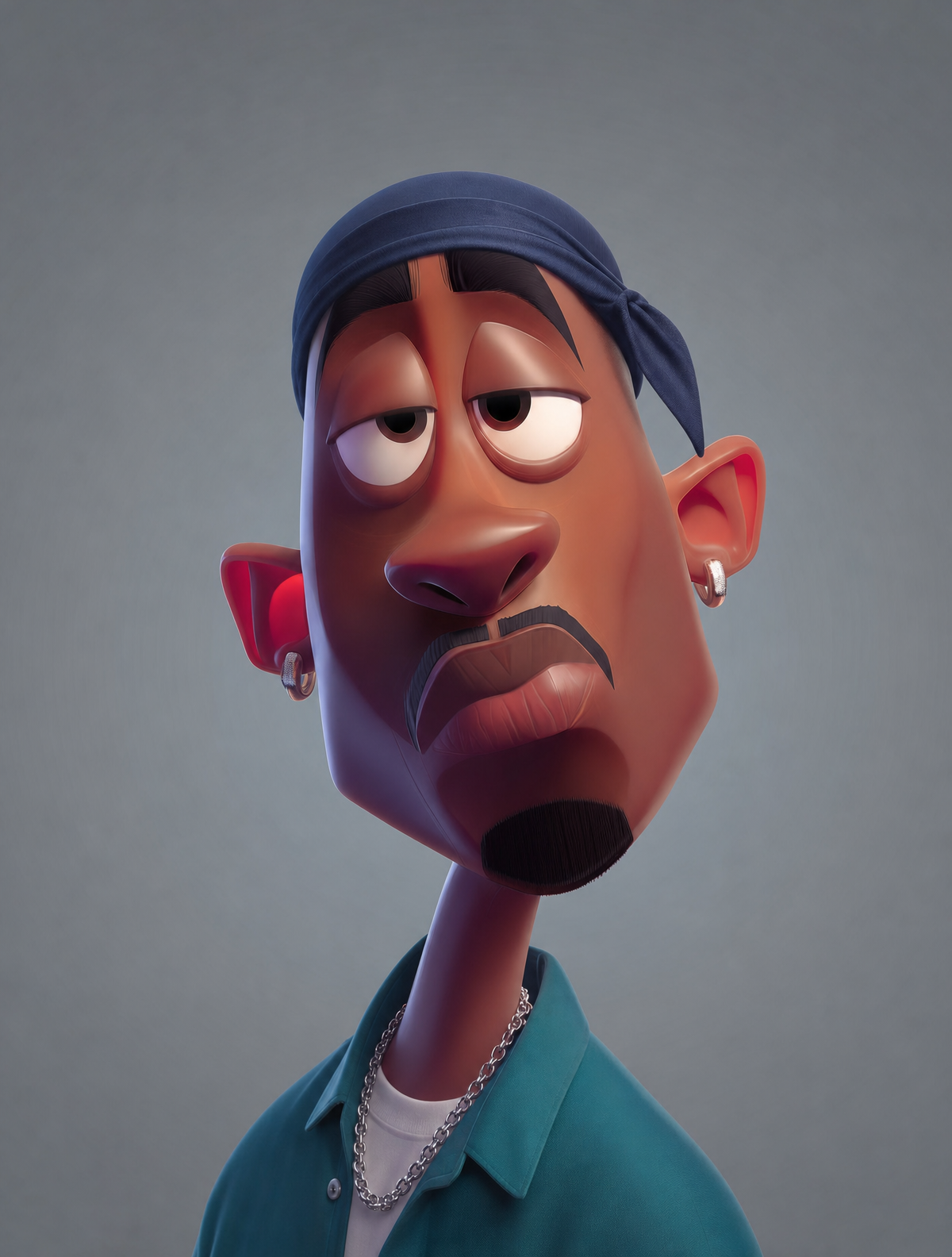
Laid-back 3D Caricature Portrait with Streetwear Style
Cozy woman with golden puppy companion