Why this works
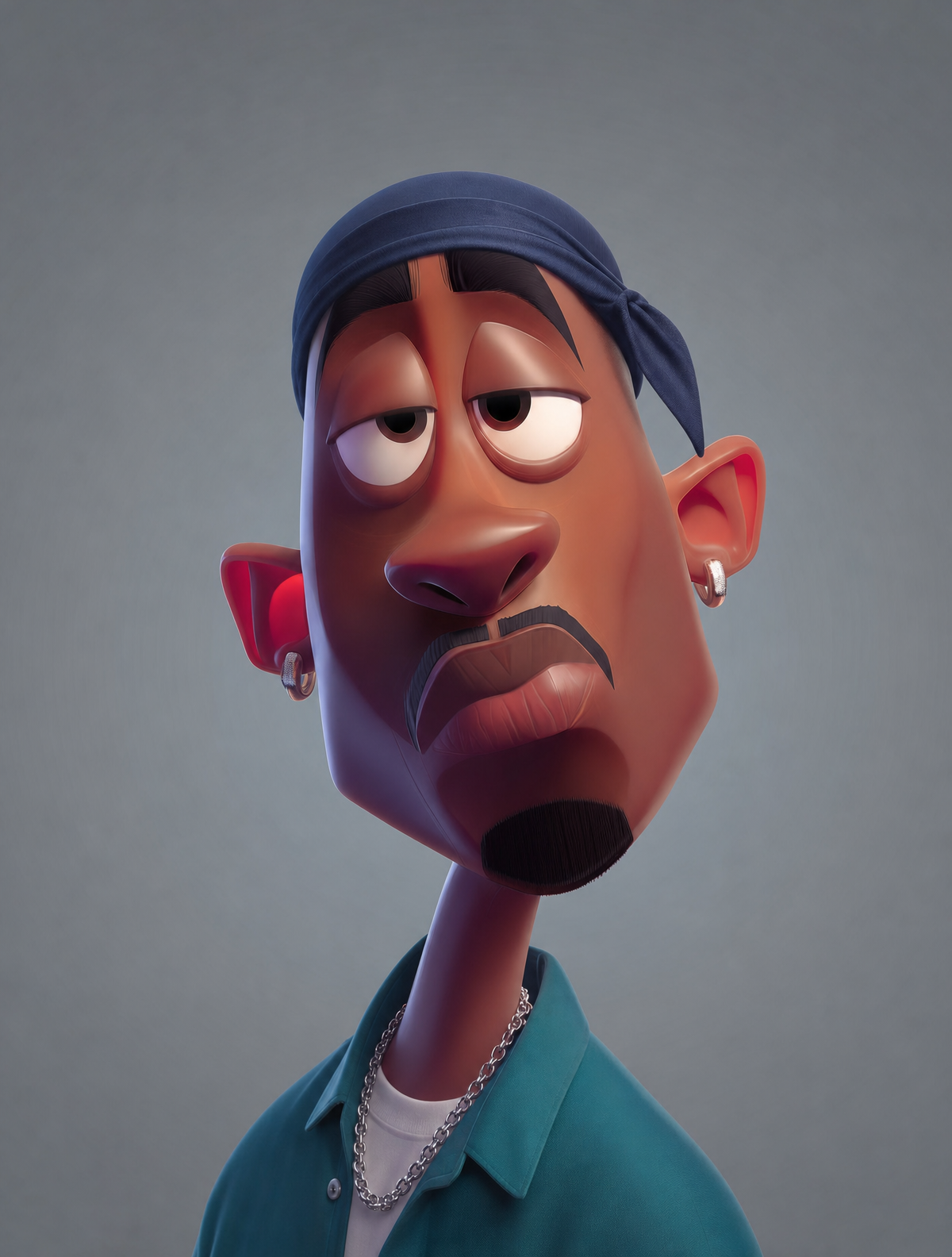
'Exaggerated elongated face' and 'heavy-lidded eyes' are the phrases doing the comedic heavy lifting, pushing the geometry into caricature territory while 'Pixar-style rendering' and 'smooth cartoon character design' keep the surfaces soft and appealing instead of grotesque. The 'plain neutral gray studio background' strips away any competing color so the navy do-rag and teal shirt read as a clean two-tone accent against skin tones, which is why the palette feels so controlled. 'Soft studio lighting' combined with 'high detail skin shading' is what gives the exaggerated features believable volume, so the face still looks sculpted rather than flat despite the cartoon stylization. 'Close-up portrait framing' forces all of that exaggeration into the frame at a scale where the tiny hoop earring and thin mustache become noticeable details rather than afterthoughts.
FAQ
→How do I make the mood feel more serious or dignified instead of humorous?
Tone down 'exaggerated elongated face' to something like 'gently stylized facial proportions' and drop 'heavy-lidded eyes' in favor of 'calm, focused eyes.' Swap 'Pixar-style rendering' for 'semi-realistic 3D character rendering' so the caricature edge softens into something closer to a dignified stylized portrait.
→How do I make the clothing and accessories more prominent instead of the face?
Change the framing from 'Close-up portrait framing' to 'medium shot framing' so the teal button-up shirt, silver chain necklace, and do-rag knot get more visible real estate. Add a phrase like 'detailed fabric texture on shirt and do-rag' to the style modifiers so the renderer prioritizes those surfaces over facial exaggeration.
→How do I build a series of variations from this same character?
Keep 'exaggerated elongated face, heavy-lidded eyes, thin mustache' and the Pixar-style rendering language fixed as the character's identity, then swap only the wardrobe and setting phrases. Try replacing 'navy blue do-rag' and 'teal button-up shirt' with different color pairs like 'burgundy beanie' and 'mustard cardigan,' and swap 'plain neutral gray studio background' for 'warm orange sunset backdrop' to get a same-character, different-scene set.
Learn the technique behind this
- Why can't AI spell, and how do I get readable text in an image? — Older diffusion models had no character-level representation of text, so they produced letterform-shaped texture instead of words.
- How do I keep the same character across multiple images? — Text prompts alone won't hold a face across images — a description defines a type, not a person.
- Why does AI get hands and faces wrong, and how do I fix it? — Hands fail because they're small in frame, extremely variable in pose, and self-occluding — the model has less usable signal per pixel than for any other body part.
Related prompts
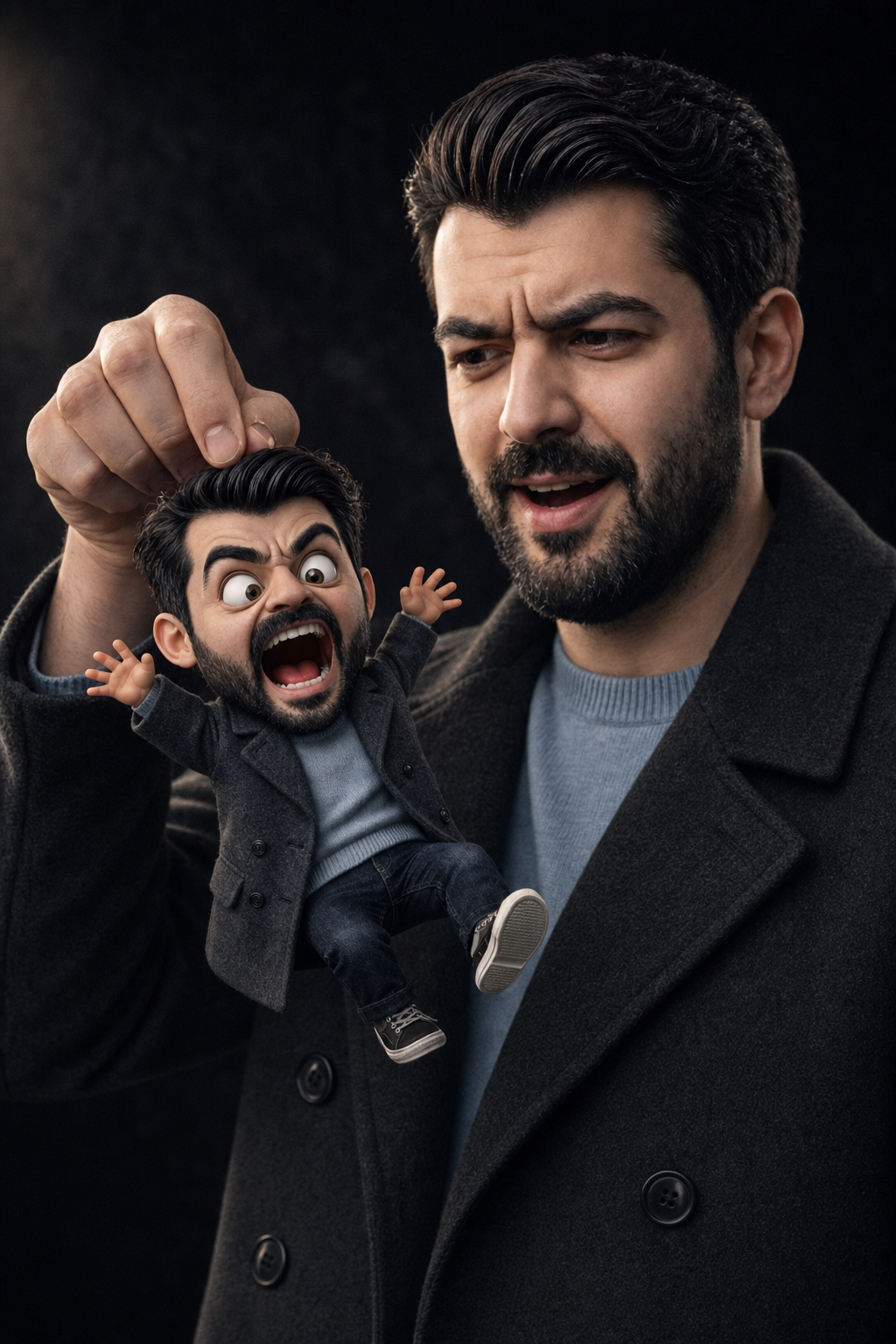
Surprised Man Holding Mini Cartoon Self
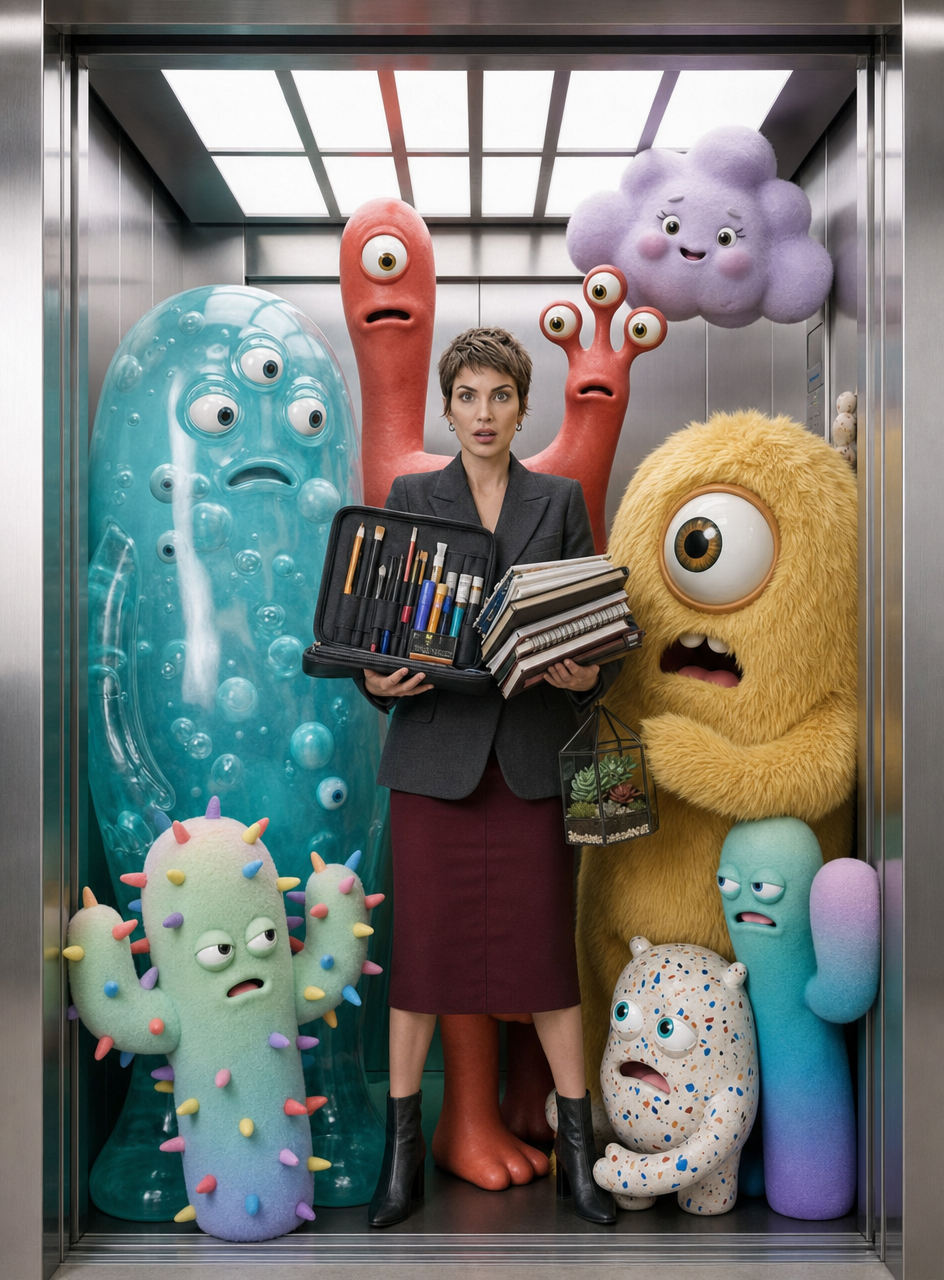
Charcoal-blazer woman with art monsters
Muscular Figure With Icy Thorn Crown
Auburn-haired woman in geometric blouse and sage blazer