Why this works
The phrase “dynamic low-angle composition” makes the muscular runner feel imposing, while “shallow depth of field on the runner” keeps him as the visual anchor against the valley. “Dramatic golden-hour sunlight cutting through mist and trees” supplies the warm gold highlights and gray atmospheric veil, while “vivid green tones” and “rich natural textures across leaves and grass” give the olive foliage its saturated, tactile presence. “Energetic motion blur on the grass and the runner’s movement” turns the winding trail and surrounding grasses into directional motion cues rather than static scenery.
FAQ
→How do I make the runner feel faster and more central?
Replace “shallow depth of field on the runner” with “tight shallow depth of field centered on the runner’s face and torso,” and strengthen “energetic motion blur on the grass and the runner’s movement” to “strong directional motion blur in the background and legs, with the face sharply frozen.” Keep “dynamic low-angle composition” to preserve his forceful presence.
→How do I change the scene to a cooler, more ominous tone?
Replace “dramatic golden-hour sunlight” and “warm sun highlights” with “cold overcast blue-gray light,” and change “vivid green tones with warm highlights” to “muted olive greens with slate-gray shadows.” For a heavier atmosphere, replace “light mist” with “dense ground fog obscuring the distant mountain valley.”
→How do I build a matching series with different runners or landscapes?
Keep the visual structure in “dynamic low-angle composition,” “shallow depth of field,” and “energetic motion blur,” then replace only “a muscular man” with a defined alternative such as “a female trail runner in a red windbreaker” and replace “mountain valley with dense foliage and a winding dirt trail” with “coastal cliff path with windblown dune grass.” Retain “golden-hour sunlight cutting through mist” so the variations share the same lighting signature.
Learn the technique behind this
- Why can't AI spell, and how do I get readable text in an image? — Older diffusion models had no character-level representation of text, so they produced letterform-shaped texture instead of words.
- How should a prompt be structured, and does word order matter? — A prompt that behaves predictably names one subject first, then what it is doing, then where, then the light, then the lens or medium, then the style.
- Which aspect ratio should I use, and how does it change the image? — Aspect ratio determines what the model composes, not how it's cropped afterwards.
Related prompts
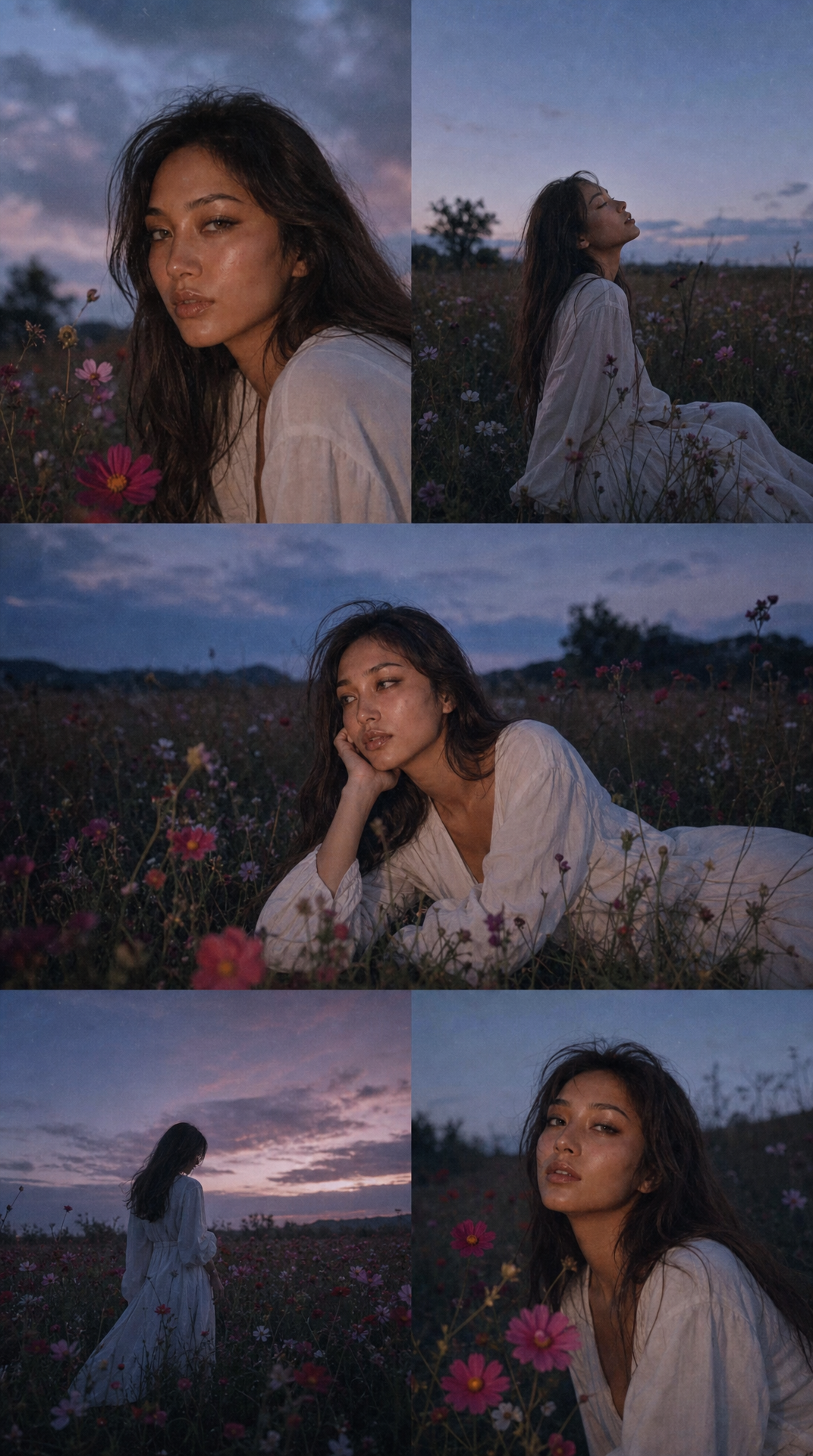
Solitary Woman in Twilight Wildflower Meadow
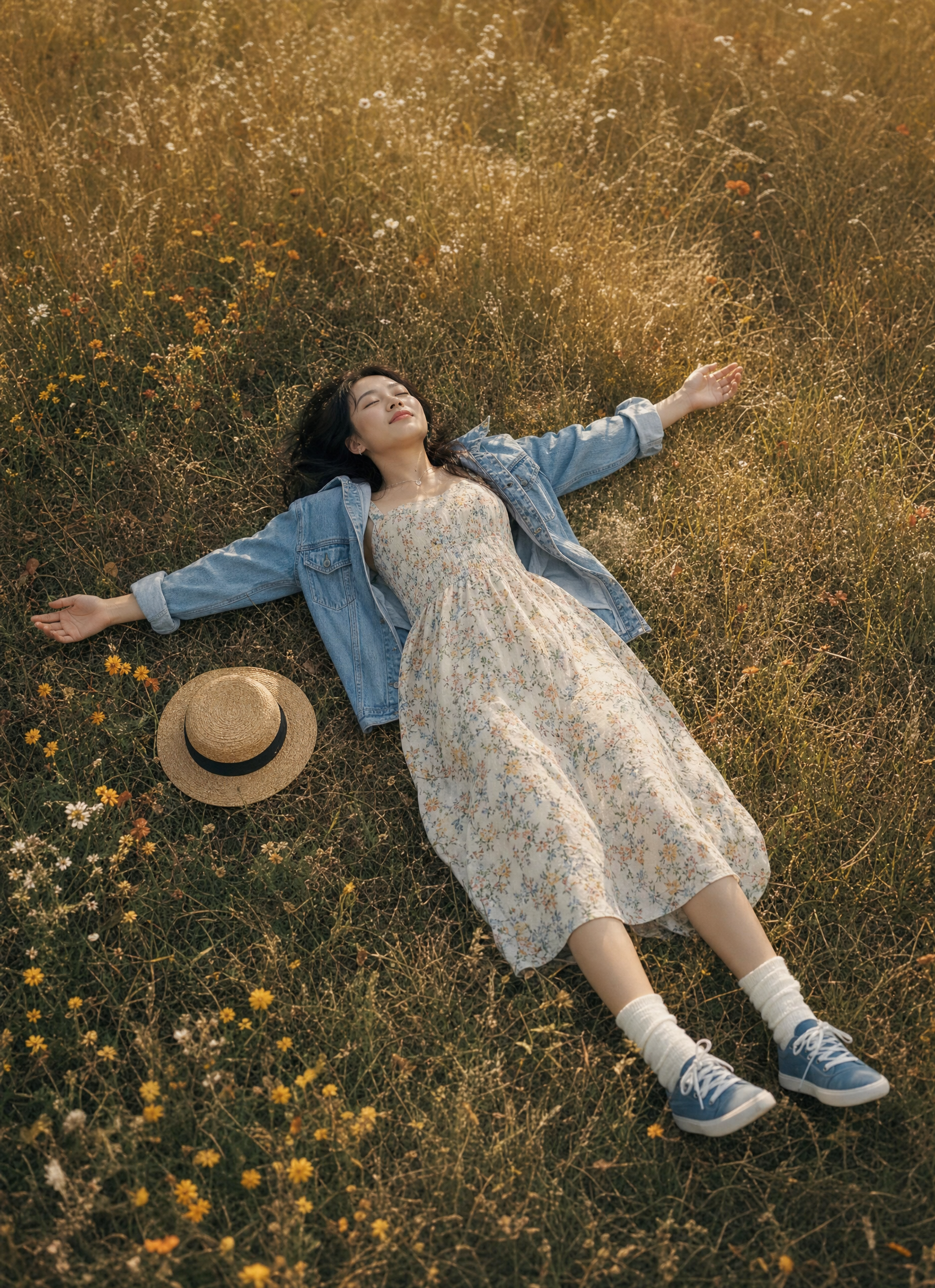
Woman Relaxing in Golden Autumn Field
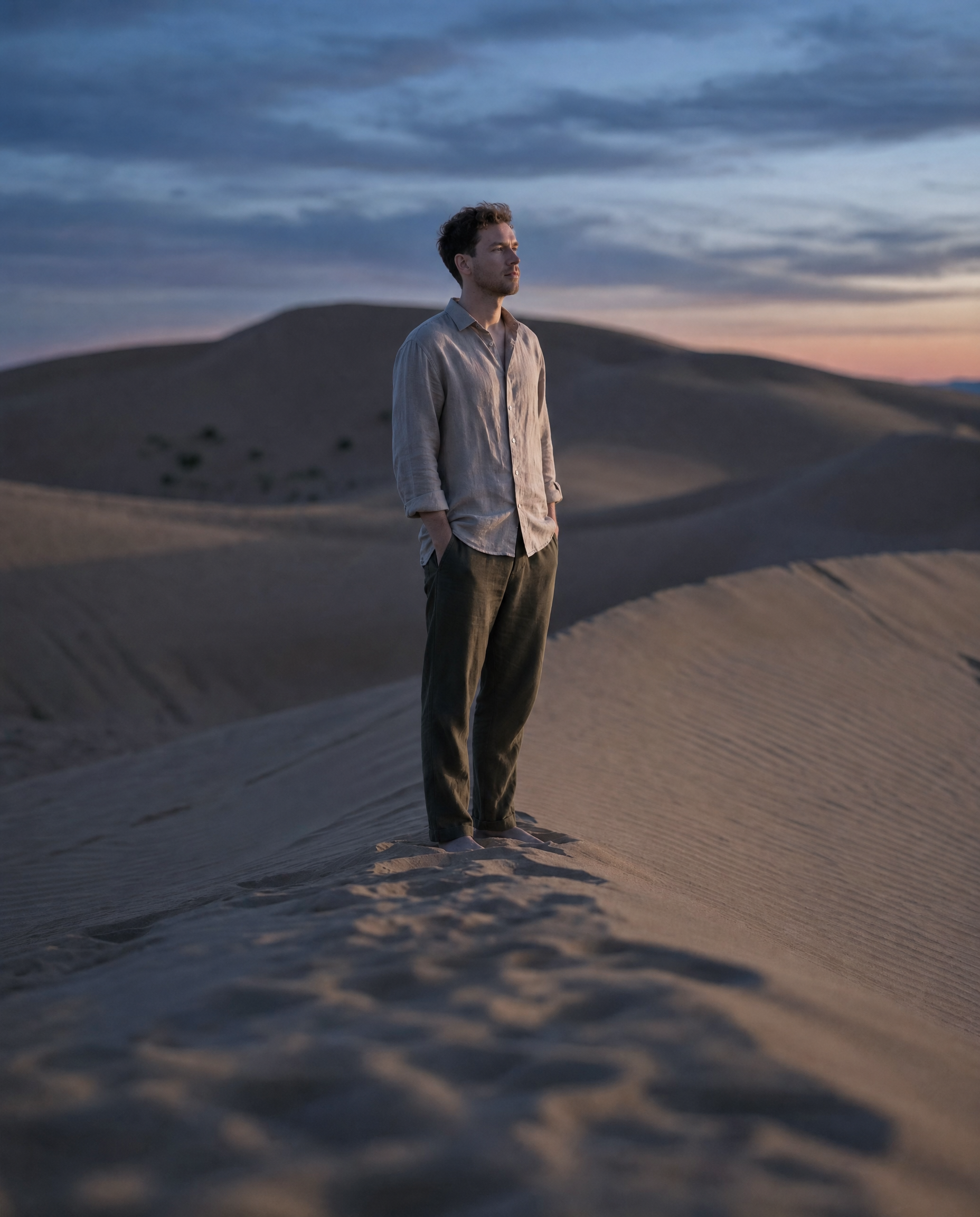
Man on sand dune in blue hour

Golden-hour surf under dramatic clouds